Overview
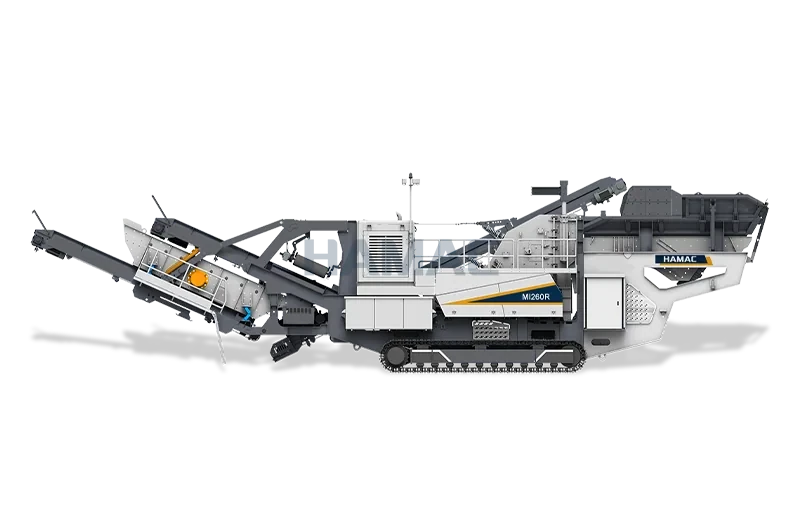
Practical, numbers-first guidance on the Crawler (Tracked) Impact Crusher TF Series — written for engineers specifying, buying and running crushing plants.
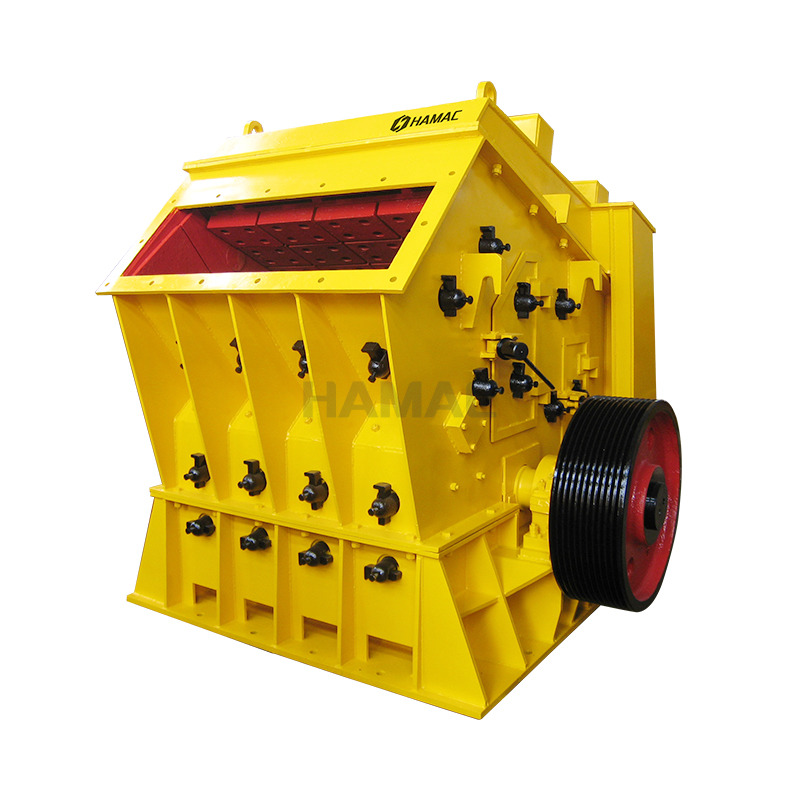
Abnormal noise / vibration
- Check for loose liner bolts or foreign metal in feed.
- Verify foundation bolts and coupling alignment.
- Listen for bearing distress; schedule replacement.
Low output
- Worn liners / blow bars reduce reduction.
- Wrong CSS / setting for target product.
- Screen blinding limits throughput.
Poor product shape
- Increase reduction in the shaping stage.
- Verify VSI rotor speed / anvil.
- Re-check screen mesh.
Reference data for this configuration
| Parameter | Reference value |
|---|---|
| Machine line | Crawler (Tracked) Impact Crusher TF Series |
| Category | Tracked Crushing Plants |
| Assumed duty | continuous quarry production |
| Evaluation horizon | single-project view |
These values are the starting point for a written proposal on crawler (tracked) impact crusher tf series; they are nominal and should be confirmed against a sample test before manufacture.
Published Crawler (Tracked) Impact Crusher TF Series model data
| Model | TF150 | TF250 | TF350 |
|---|---|---|---|
| Impact crusher | LF150 | LF250 | LF350 |
| Max. feeding size | 500 mm | 700 mm | 800 mm |
| Capacity | 100–200 t/h | 200–400 t/h | 300–500 t/h |
| Motor power | 90–200 kW | 180–250 kW | 200–400 kW |
| Return screen | 2YK1530 | 2YS1640 | YS1740 |
| Generator | 360 kW | 500 kW | 520 kW |
TF150 / TF250 / TF350 tracked impact crushers, 100–500 t/h, ideal for limestone, concrete and asphalt recycling. Read the table column by column against continuous quarry production: the model you pick is the one whose published range brackets your target tonnage, not simply the largest machine in the series. Availability, motor rating and shipping data are re-confirmed for a confined urban yard in the written HAMAC proposal.
Project profile these notes assume
| Assumption | Value |
|---|---|
| Operating duty | continuous quarry production |
| Primary objective | lowest cost per tonne |
| Evaluation horizon | single-project view |
| Site condition | a confined urban yard |
| Operating team | a rotating shift crew |
Change any one of these assumptions and the recommended configuration for crawler (tracked) impact crusher tf series may change. HAMAC re-runs the same checks against your own numbers once the enquiry data sheet is received.
From enquiry to the first saleable tonne
- Run a sieve analysis on a representative sample and attach the grading curve to the enquiry.
- Allocate screen area per deck; blinding and pegging are the most common hidden bottlenecks in a new plant.
- Survey the feed: the feed material; record top size, bulk density, moisture and clay content before fixing the flow sheet.
- Review the crusher chamber profile with the liner supplier against the feed material.
- Check bearing and lubrication arrangements against the ambient temperature range at the site.
- Book shipping, prepare the packing list and confirm the container loading plan.
- Set the maintenance stock list from the expected wear rate, not from a percentage of the equipment price.
- Include dust suppression, guarding, emergency stops and lock-out points in the layout drawing.
- Confirm site voltage, frequency and applicable conformity standards before manufacture.
For a rotating shift crew, the commissioning and training steps need more calendar time than the mechanical erection itself.
What to verify before you sign
- Saleable tonnes per hour at each product size, not gross crusher throughput, for your target tonnage.
- Choke-feed arrangement: surge bin, feeder control and level indication.
- Local service partner, technician travel time and visa requirements for your market.
- Energy draw in kW and the expected kWh per tonne at the design duty.
- Erection scope: supervision only, or full civil, mechanical and electrical installation.
- Closed-side setting range and whether automatic setting regulation is included.
- Whether the quoted t/h is achieved at continuous quarry production or under ideal laboratory feed.
- Dust and noise control designed to the local emission limits for your market.
- Wear-part interchangeability across machines in the same circuit.
Score each supplier against the same ten items and keep the score sheet with the purchase file for the single-project review.
Where the money actually goes
| Cost line | Indicative share | What moves the number |
|---|---|---|
| Equipment & drive packages | 54% | Model size, number of stages and automation level |
| Ocean freight & insurance | 8% | Destination port, container count and out-of-gauge cargo |
| Civil works & foundations | 8% | Soil conditions, dynamic loads and site preparation |
| Erection, commissioning & training | 7% | Local labour, supervision scope and schedule |
| First-year wear parts | 15% | Rock abrasiveness, liner grade and operating hours |
| Power, lubricants & consumables | 8% | kWh per tonne, local tariff and dust suppression water |
Model a low, base and high case for tonnes per liner set. The spread tells you more than a single optimistic estimate.
Mistakes that cost more than the machine
- Choosing screen apertures before the concrete or asphalt mix design is fixed.
- Assuming the manufacturer's warranty covers wear parts and consumables.
- Ignoring clay and moisture until the first wet season, when decks blind and chambers pack.
- Comparing quotations with different port terms and calling the lower number cheaper.
- Overlooking dust, noise and water permits in your market until erection has already started.
- Buying lowest cost per tonne on price alone and losing it in availability.
- Assuming a mobile plant can match a stationary line on high-tonnage, multi-product duty.
- Undersizing the screen, then blaming the crusher for a plant that never reaches your target tonnage.
On a confined urban yard, the civil and logistics items deserve as much attention as the crusher itself.
Commissioning checklist
- Test emergency stops, pull wires and interlock trips in sequence.
- Record the baseline grading curve for each product fraction.
- Verify chute liners, skirt rubber and impact bars after the first hour of feed.
- Check hydraulic pressure, accumulator pre-charge and tramp-release function.
- Verify rotation direction on every motor before coupling.
- Check lubrication levels, grease lines and oil cooler operation.
- Record power draw, tonnage and chamber pressure at steady state.
- Confirm the direction and tension of every belt under no load.
The commissioning record becomes the reference for every liner change in the single-project plan.