
01 / EQUIPMENT
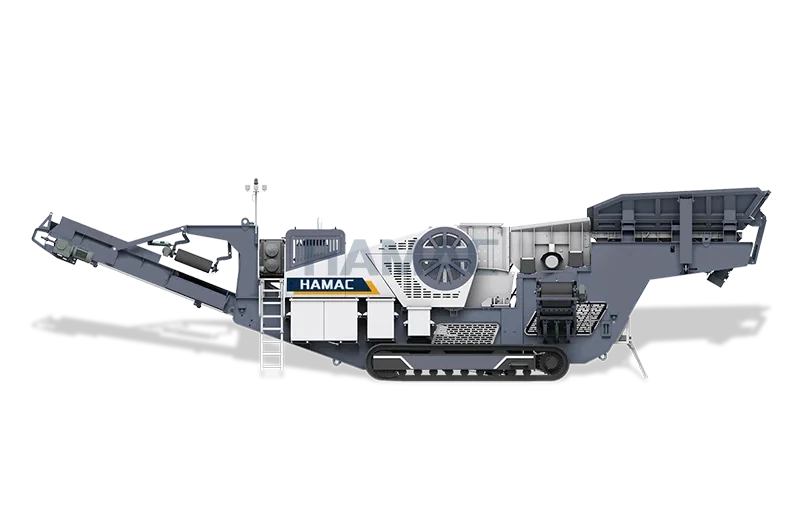
Tracked Jaw Crusher Plant
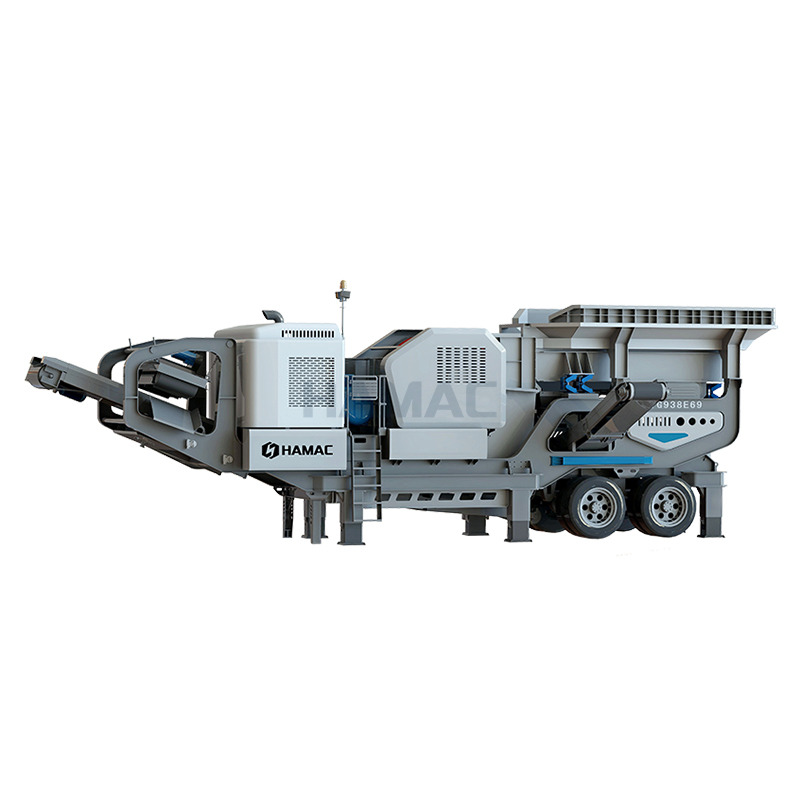
Take productivity to the next level with the HMC Series Tracked Jaw Crusher Plant. Easy to move, safer, and eco-friendly—unlo…
View detailsTracked crushing plants use crawler undercarriages and on-board diesel generators to work directly on the quarry face or demolition site without grid power.
Tracked crushing plants use crawler undercarriages and on-board diesel generators to work directly on the quarry face or demolition site without grid power.
Take productivity to the next level with the HMC Series Tracked Jaw Crusher Plant. Easy to move, safer, and eco-friendly—unlo…
View details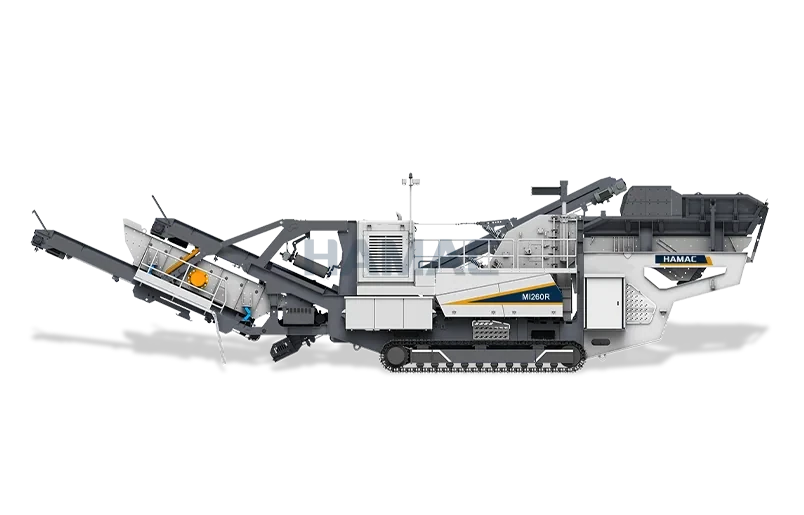
Boost your production with the HMC series Tracked Impact Crusher Plant—track-mounted for ultimate mobility, safety, and envir…
View details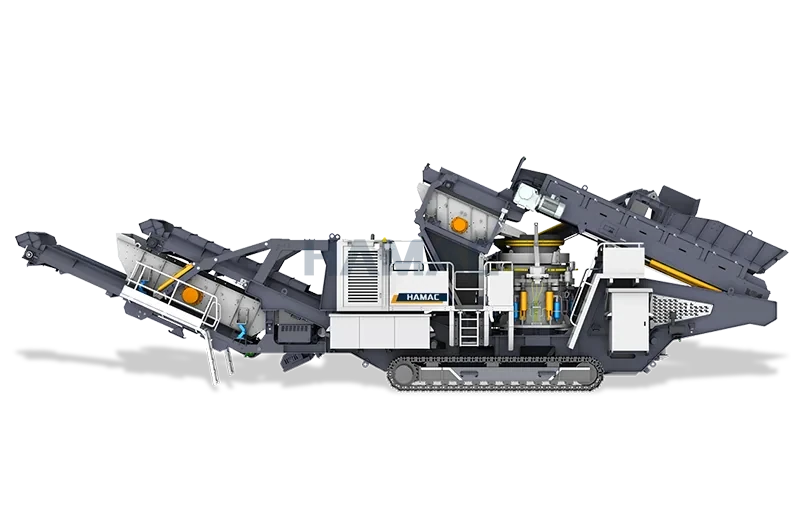
Maximize your productivity with the versatile Tracked Cone Crusher Plant! Perfect for aggregates production and recycling—eas…
View details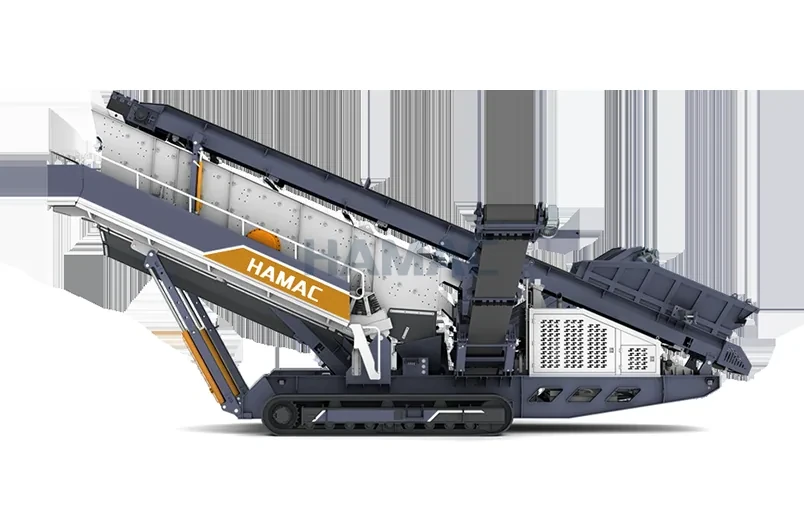
Maximize productivity with the HMC series Tracked Vibrating Screening Plant. Its mobility and performance make it the perfect…
View details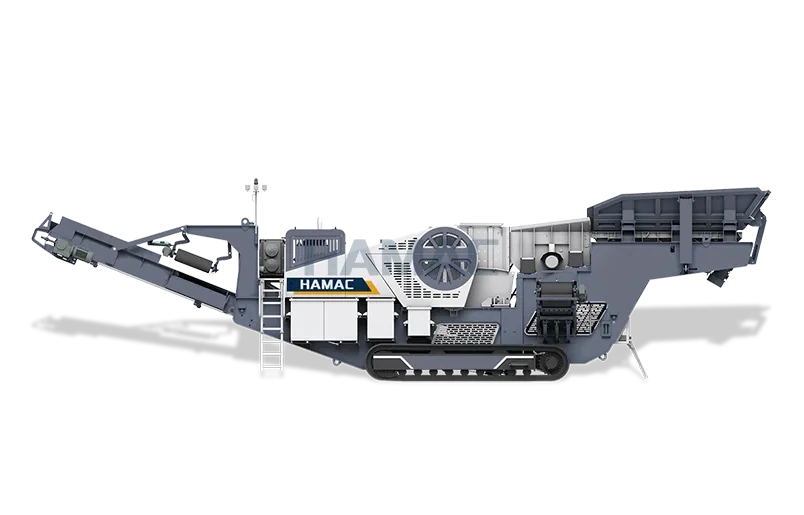
TC106 / TC116 / TC120 tracked jaw crushers with 600–740 mm max feed, 110–160 kW crusher power and on-board 300–360 kW generat…
View details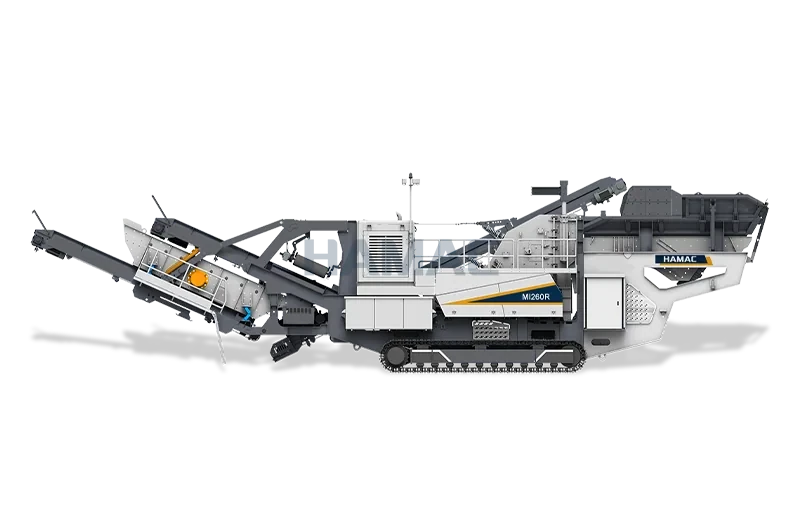
TF150 / TF250 / TF350 tracked impact crushers, 100–500 t/h, ideal for limestone, concrete and asphalt recycling.
View details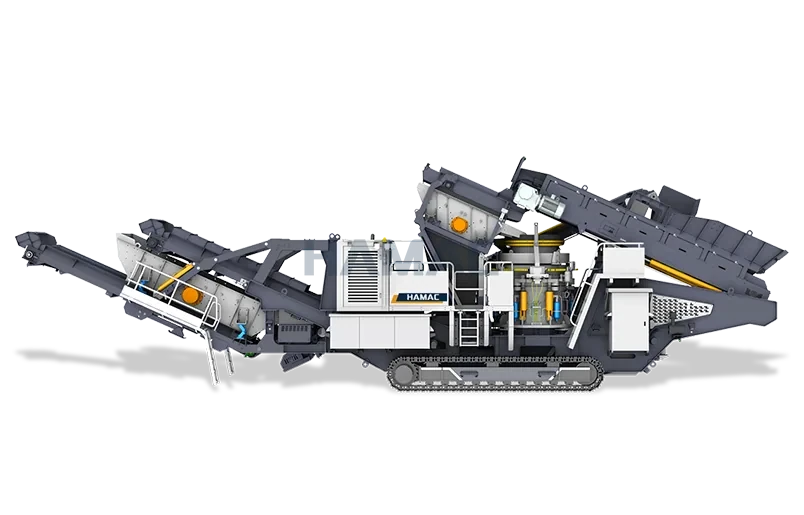
THP200 / THP300 / THP400 tracked cone crushers for secondary hard-rock crushing, 150–260 mm feed and 160–280 kW crusher power…
View details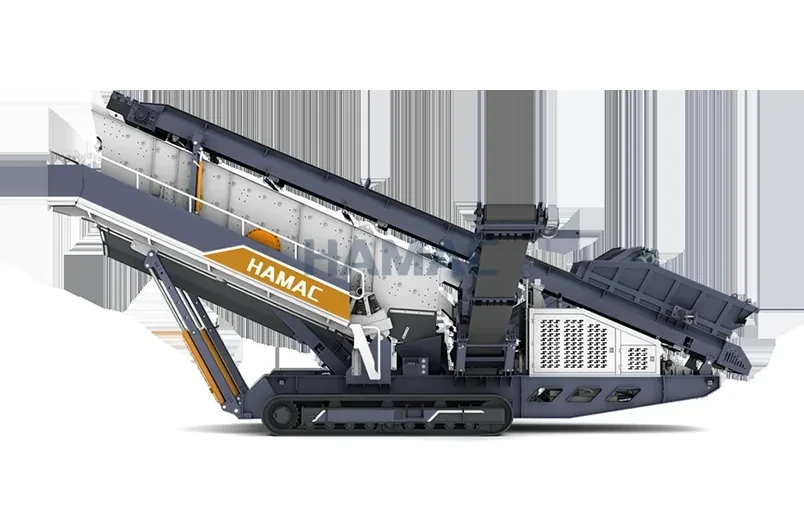
TS1860 / TS2160 tracked three-deck screens, 65–720 t/h, for standalone screening or closed-circuit mobile plants.
View detailsTracked Crushing Plants covers 8 HAMAC machine lines. Tracked crushing plants use crawler undercarriages and on-board diesel generators to work directly on the quarry face or demolition site without grid power. Crawler-mounted crushers move under radio remote control over soft ground and steep gradients. HAMAC supplies tracked jaw (TC), impact (TF), cone (THP) and screening (TS) stations with on-board generators from 300 to 520 kW, so a two- or three-stage train can operate entirely off-grid.
Start with the rock, then the capacity, then the product. Hard abrasive material requires compression crushing and appropriate liner grades; softer material can use impact crushing for better particle shape. Mobile or tracked versions are chosen when the site changes or grid power is unavailable.
| Plant capacity | Typical main machines | Circuit note |
|---|---|---|
| 50–100 t/h | PE500×750 / PE600×900 jaw + PF1010 impact or small cone | 1–2 screen decks, 1 mobile unit or a compact stationary line |
| 100–200 t/h | PE750×1060 jaw + HPT200 / PF1214 + 3YK1860 screen | The most common range for quarry and contractor projects |
| 200–300 t/h | PE900×1200 jaw + HPT300 / HP300 + 3YK2160 screen | Two-stage crushing with closed-circuit screening |
| 300–500 t/h | PE1000×1200 / C110 jaw + two cone crushers + 3YK2460 screens | Requires a proper stockpile, conveyor and dust-control design |
| 500–1000+ t/h | Multiple parallel crushing lines + modular screening towers | Engineered as a full plant with power, civil and automation design |
The same machine can behave very differently on granite, limestone or river pebble. Use the material guide below to shortlist a circuit before requesting a quotation.
| Material / duty | Typical circuit | Engineering note |
|---|---|---|
| Granite / basalt (hard, abrasive) | Jaw crusher → hydraulic cone crusher → VSI (optional) | Compression crushing; avoid impact crushers as wear cost rises sharply above ~150 MPa |
| Limestone / marble (soft–medium) | Jaw crusher → impact crusher → vibrating screen | Impact crushing gives excellent cubical shape and a high reduction ratio in one pass |
| River pebble / cobble | Jaw crusher → cone crusher → VSI sand maker | High silica content makes wear-part selection the main operating cost driver |
| Iron / copper / gold / manganese ore | Jaw crusher → cone crusher → screening → grinding mill | Feed size to the mill is usually controlled below 15–25 mm |
| Construction & demolition waste | Mobile impact crusher + screen + magnetic separator | Tracked or wheel mobile units avoid hauling waste off site |
| Coal / gypsum / calcite / barite | Crusher → YGM or MTW grinding mill → classifier | Product fineness is normally specified in mesh or microns, not millimetres |
Direct answers to the questions buyers ask most often.
Tracked Jaw Crusher Plant, Tracked Impact Crusher Plant, Tracked Cone Crusher Plant, Tracked Vibrating Screening Plant, Crawler (Tracked) Jaw Crusher TC Series, Crawler (Tracked) Impact Crusher TF Series, Crawler (Tracked) Cone Crusher THP Series, Crawler (Tracked) Vibrating Screen TS Series. All models and their published technical data are listed above.
Define the raw material and its compressive strength, maximum feed size, required t/h, product fractions and site conditions. HAMAC engineers then select the model, chamber / setting, screen area and conveyors.
Price scales with model size, motor specification, mobility and the number of machines in the line. Send your project data for an itemised FOB/CIF quotation within 24 hours.
Yes. HAMAC supplies matched wear parts with each machine, a recommended stock list, installation supervision, operator training and a 24-hour technical response target.
Yes. HAMAC plant designs combine feeding, crushing, screening, conveying, washing and dust control into one engineered circuit.
Our engineers will return a process flow, equipment list and budget quotation within 24 hours — at no cost and with no obligation.