Overview
Barite (Mohs 3, ~80 MPa, low abrasion): processing steps, equipment and cost notes for plant buyers.
Processing steps
- Primary crushing — jaw.
- Secondary / tertiary — jaw + grinding mill.
- Screening for graded products.
- Dewatering / handling.
Recommended equipment
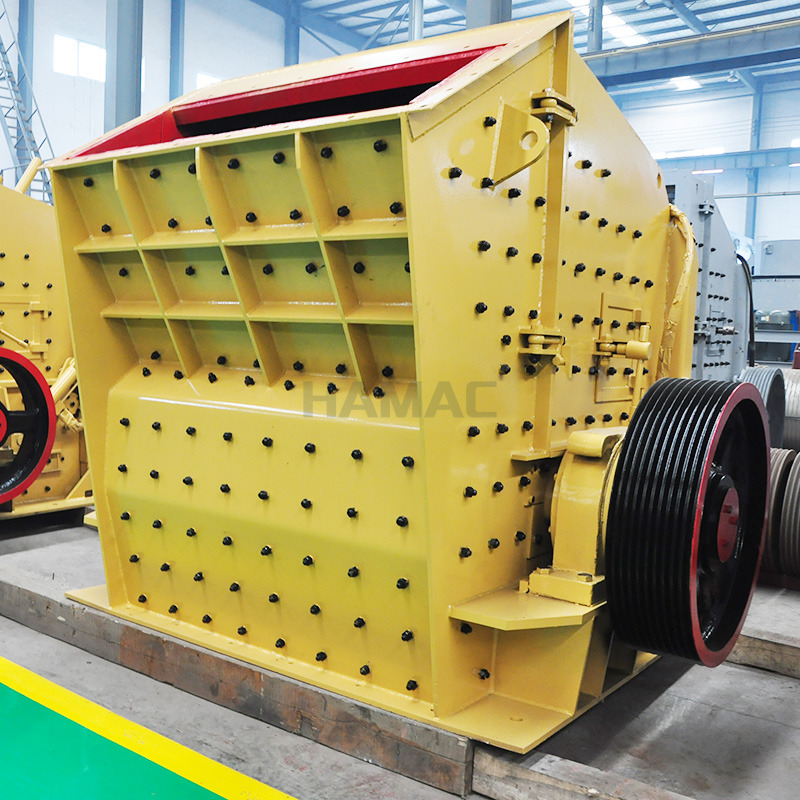
- PE Series Jaw Crusher
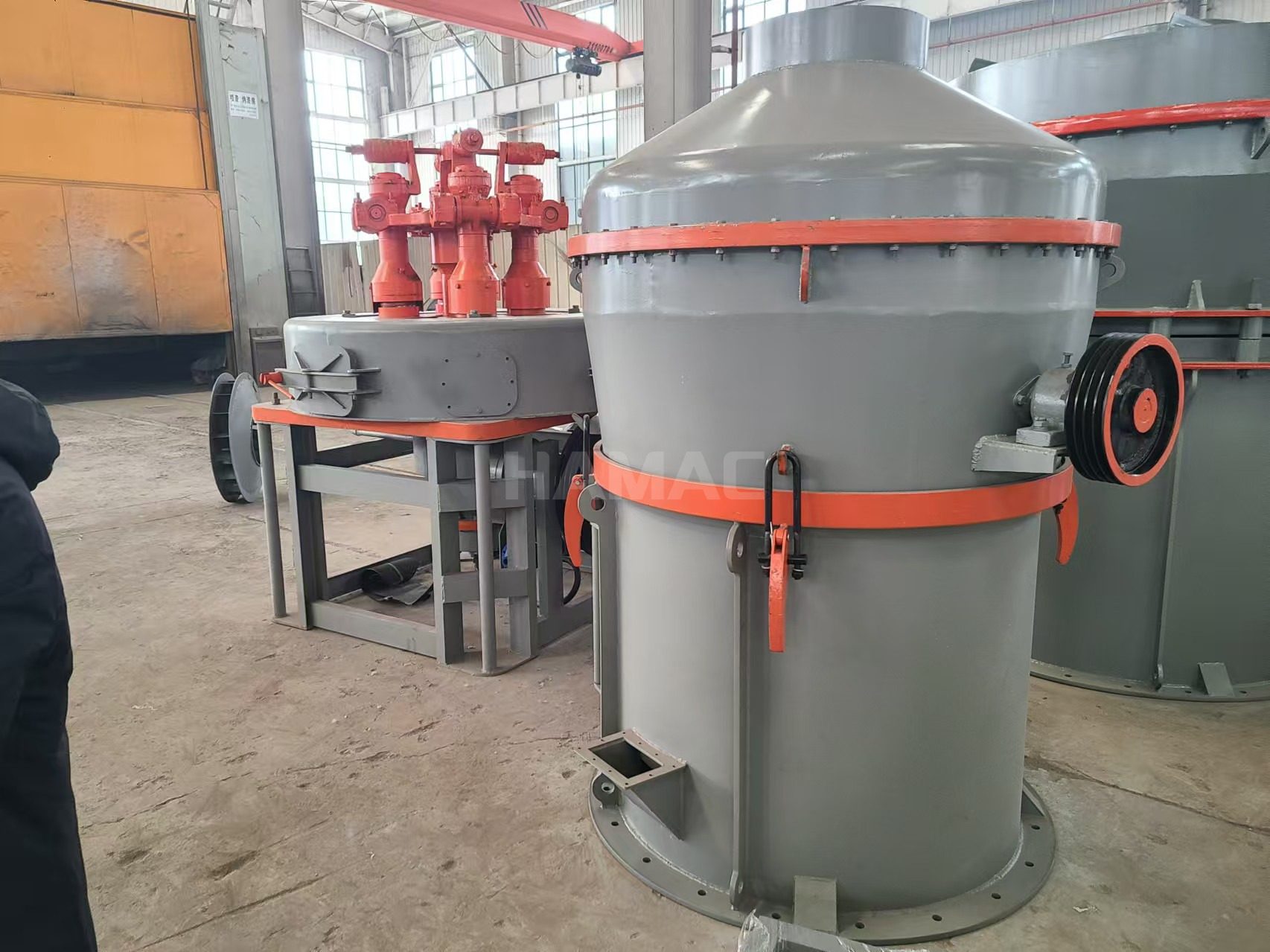
- MTW European Type Grinding Mill
Cost notes
Operating cost is dominated by wear parts on low-abrasion material; choose liner grade by rock, not price.
Reference data for this configuration
| Parameter | Reference value |
|---|---|
| Feed material | Barite |
| Mohs hardness | 3 |
| Compressive strength | ~80 MPa |
| Abrasiveness | Low |
| Recommended circuit | jaw + grinding mill |
| Assumed duty | mine pre-beneficiation feed |
| Evaluation horizon | three-year view |
The figures above are transcribed from published HAMAC data and from the material properties of barite; site measurements take precedence.
Project profile these notes assume
| Assumption | Value |
|---|---|
| Operating duty | mine pre-beneficiation feed |
| Primary objective | lowest energy per tonne |
| Evaluation horizon | three-year view |
| Site condition | a coastal export terminal |
| Operating team | a full-time plant team |
Change any one of these assumptions and the recommended configuration for barite crushing may change. HAMAC re-runs the same checks against your own numbers once the enquiry data sheet is received.
From enquiry to the first saleable tonne
- Verify the electrical single-line diagram, cable sizing and starter type with the local utility.
- Apply jaw + grinding mill; the reduction mechanism must suit low abrasion and a compressive strength near 80 MPa.
- Log tonnes per liner set and kWh per tonne from day one so you have a real cost baseline within a quarter.
- Survey the feed: Barite (Mohs 3, ~80 MPa, low abrasion); record top size, bulk density, moisture and clay content before fixing the flow sheet.
- Set the maintenance stock list from the expected wear rate, not from a percentage of the equipment price.
- Set the closed-side setting or rotor speed against the required product fractions, then verify the expected reduction ratio.
- Budget for water, dust extraction and spillage handling as part of the plant, not as an afterthought.
- Allocate screen area per deck; blinding and pegging are the most common hidden bottlenecks in a new plant.
- Review the crusher chamber profile with the liner supplier against Barite (Mohs 3, ~80 MPa, low abrasion).
On mine pre-beneficiation feed, step ordering matters: survey and sampling must precede the equipment list, or the plant is sized to a guess.
What to verify before you sign
- Maximum feed lump and gradation — a chamber that cannot accept the top size will bridge on day one.
- Delivery terms (FOB / CFR / CIF) with the destination port named explicitly.
- Whether the quoted t/h is achieved at mine pre-beneficiation feed or under ideal laboratory feed.
- Dust and noise control designed to the local emission limits for your market.
- Spare-parts consignment: one full liner or blow-bar set plus meshes, belts, bearings and seals.
- Ambient temperature, altitude and dust load derating for motors and hydraulics.
- Control system language, telemetry and remote diagnostics availability.
- Spare motor, gearbox and hydraulic pump lead times from the nearest HAMAC stock point.
- After-sales response time, technician availability and the warranty exclusions in writing.
Share this list with a full-time plant team as well as procurement; operators are the ones who live with the omissions.
Where the money actually goes
| Cost line | Indicative share | What moves the number |
|---|---|---|
| Equipment & drive packages | 54% | Model size, number of stages and automation level |
| Ocean freight & insurance | 8% | Destination port, container count and out-of-gauge cargo |
| Civil works & foundations | 8% | Soil conditions, dynamic loads and site preparation |
| Erection, commissioning & training | 7% | Local labour, supervision scope and schedule |
| First-year wear parts | 15% | Rock abrasiveness, liner grade and operating hours |
| Power, lubricants & consumables | 8% | kWh per tonne, local tariff and dust suppression water |
Freight to your market is volatile; ask for the quotation to state validity and the port basis rather than a single delivered number.
Mistakes that cost more than the machine
- Ordering no spares with the plant and waiting six weeks for the first liner set.
- Specifying motors for the wrong voltage or frequency and rewinding them on site.
- Omitting a bypass chute, so a single screen fault stops the whole line.
- Undersizing the screen, then blaming the crusher for a plant that never reaches your target tonnage.
- Overlooking dust, noise and water permits in your market until erection has already started.
- Skipping the acceptance test, so no one has a baseline to measure degradation against.
- Letting the mine pre-beneficiation feed duty be defined verbally instead of in the contract.
- Selecting the cheapest liner alloy for hard, high-silica rock and paying for it in change-outs.
Review the list with a full-time plant team before the order is placed — they will recognise most of them.
Commissioning checklist
- Verify chute liners, skirt rubber and impact bars after the first hour of feed.
- Measure noise and dust at the operator position against the local limit.
- Verify rotation direction on every motor before coupling.
- Calibrate the belt scale and any level probes against a known load.
- Check lubrication levels, grease lines and oil cooler operation.
- Introduce feed in graded steps: 25%, 50%, 75%, then full load.
- Record the baseline grading curve for each product fraction.
- Test emergency stops, pull wires and interlock trips in sequence.
Keep the signed record; it is the only defensible baseline for later performance disputes.