Overview
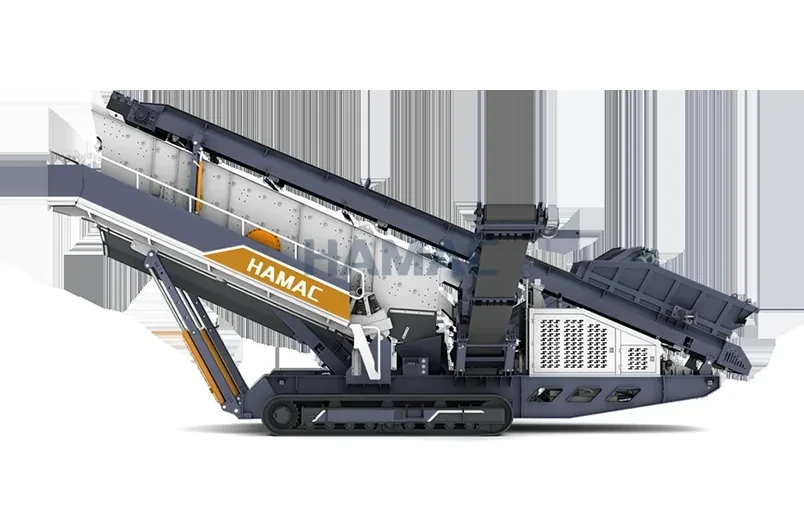
Buying a Crawler (Tracked) Vibrating Screen TS Series direct from HAMAC removes the trading margin and gives you engineering support from enquiry to commissioning.
Why buy direct
- One project manager for the whole order.
- Workshop assembly, test and container loading plan.
- Flow-sheet design, layout and foundation reference.
- Installation supervision, training and 24h technical response.
Export & documentation
Quoted FOB / CFR / CIF. Documentation applicable to your market (CE where required), Spanish manuals for LatAm, motors set to local voltage.
How to order
Send project data → receive design + budget in 24h → refine drawings → manufacture → install.
Reference data for this configuration
| Parameter | Reference value |
|---|---|
| Machine line | Crawler (Tracked) Vibrating Screen TS Series |
| Category | Tracked Crushing Plants |
| Assumed duty | contract crushing on short-term sites |
| Evaluation horizon | five-year view |
The figures above are transcribed from published HAMAC data and from the material properties of the feed; site measurements take precedence.
Published Crawler (Tracked) Vibrating Screen TS Series model data
| Model | TS1860 | TS2160 |
|---|---|---|
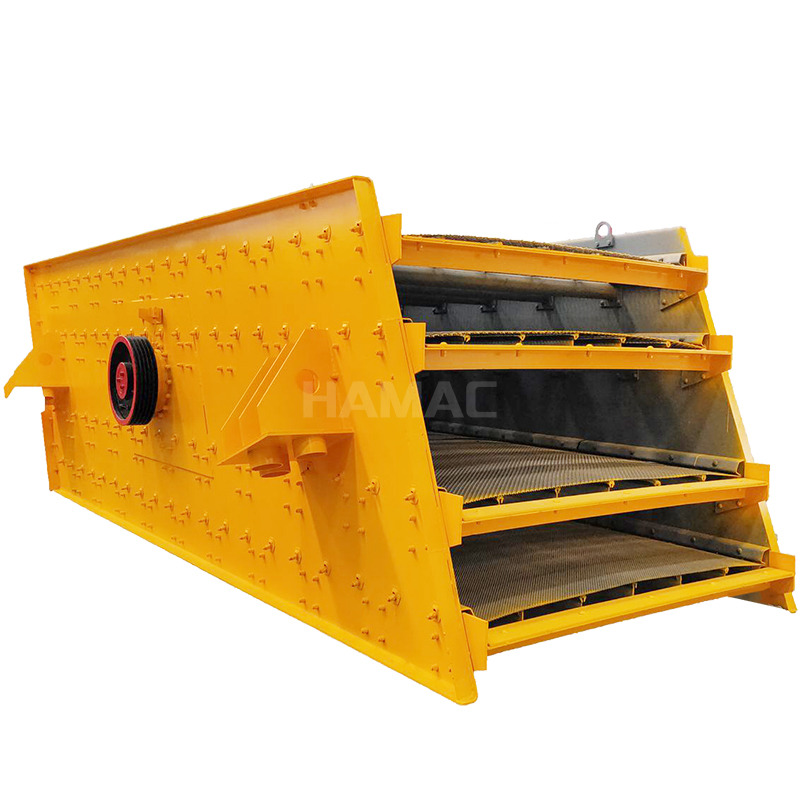
| Screen deck | 1800 × 6000 mm, 3 decks | 2100 × 6000 mm, 3 decks |
| Max. feeding size | ≤200 mm | ≤200 mm |
| Capacity | 65–586 t/h | 81–720 t/h |
| Motor power | 22 kW | 30 kW |
| Feeding conveyor | B1000 × 11.8 m | B1000 × 11.8 m |
| Generator | 360 kW | 500 kW |
TS1860 / TS2160 tracked three-deck screens, 65–720 t/h, for standalone screening or closed-circuit mobile plants. Read the table column by column against contract crushing on short-term sites: the model you pick is the one whose published range brackets your target tonnage, not simply the largest machine in the series. Availability, motor rating and shipping data are re-confirmed for an existing quarry bench in the written HAMAC proposal.
Project profile these notes assume
| Assumption | Value |
|---|---|
| Operating duty | contract crushing on short-term sites |
| Primary objective | maximum mechanical availability |
| Evaluation horizon | five-year view |
| Site condition | an existing quarry bench |
| Operating team | a mixed local and expatriate team |
Change any one of these assumptions and the recommended configuration for crawler (tracked) vibrating screen ts series may change. HAMAC re-runs the same checks against your own numbers once the enquiry data sheet is received.
From enquiry to the first saleable tonne
- Lay out conveyors, access ways, stockpile capacity and drainage before ordering steelwork.
- Choose compression or impact reduction according to hardness, silica content and required particle shape.
- Record the as-built settings and give the operator a written daily, weekly and monthly schedule.
- Include dust suppression, guarding, emergency stops and lock-out points in the layout drawing.
- Confirm site voltage, frequency and applicable conformity standards before manufacture.
- Review the crusher chamber profile with the liner supplier against the feed material.
- Check bearing and lubrication arrangements against the ambient temperature range at the site.
- Run a sieve analysis on a representative sample and attach the grading curve to the enquiry.
- Sequence delivery so foundations cure while the equipment is still in manufacture.
For a mixed local and expatriate team, the commissioning and training steps need more calendar time than the mechanical erection itself.
What to verify before you sign
- Closed-side setting range and whether automatic setting regulation is included.
- Spare motor, gearbox and hydraulic pump lead times from the nearest HAMAC stock point.
- Availability of a mixed local and expatriate team for liner changes and the lifting equipment on site.
- Maximum feed lump and gradation — a chamber that cannot accept the top size will bridge on day one.
- Choke-feed arrangement: surge bin, feeder control and level indication.
- Control system language, telemetry and remote diagnostics availability.
- Delivery terms (FOB / CFR / CIF) with the destination port named explicitly.
- Dust and noise control designed to the local emission limits for your market.
- Erection scope: supervision only, or full civil, mechanical and electrical installation.
Ask each supplier to price the same list. Quotations for crawler (tracked) vibrating screen ts series only become comparable when the scope is identical.
Where the money actually goes
| Cost line | Indicative share | What moves the number |
|---|---|---|
| Equipment & drive packages | 54% | Model size, number of stages and automation level |
| Ocean freight & insurance | 8% | Destination port, container count and out-of-gauge cargo |
| Civil works & foundations | 8% | Soil conditions, dynamic loads and site preparation |
| Erection, commissioning & training | 7% | Local labour, supervision scope and schedule |
| First-year wear parts | 15% | Rock abrasiveness, liner grade and operating hours |
| Power, lubricants & consumables | 8% | kWh per tonne, local tariff and dust suppression water |
A five-year view normally reverses the ranking of two otherwise similar offers once wear and energy are included.
Mistakes that cost more than the machine
- Letting the contract crushing on short-term sites duty be defined verbally instead of in the contract.
- Buying maximum mechanical availability on price alone and losing it in availability.
- Assuming a mobile plant can match a stationary line on high-tonnage, multi-product duty.
- Specifying motors for the wrong voltage or frequency and rewinding them on site.
- Skipping a geotechnical check and discovering settlement under the primary crusher at an existing quarry bench.
- Skipping the acceptance test, so no one has a baseline to measure degradation against.
- Leaving tramp-iron protection out of the scope to save a small percentage of capital.
- Choosing screen apertures before the concrete or asphalt mix design is fixed.
Every item on this list has cost someone a commissioning date; none of them requires new technology to avoid.
Commissioning checklist
- Check belt tracking, chute build-up and transfer-point dust.
- Confirm all guards, emergency stops and pull-wire switches function.
- Hand over the spare-parts list, manuals and maintenance schedule.
- Dry-run the plant empty for the specified period and record vibration.
- Verify rotation direction on every motor before coupling.
- Record the baseline grading curve for each product fraction.
- Introduce feed in graded steps: 25%, 50%, 75%, then full load.
- Sample each product fraction and compare with the specification.
On an existing quarry bench, allow extra time for the dust and noise measurements.