Overview
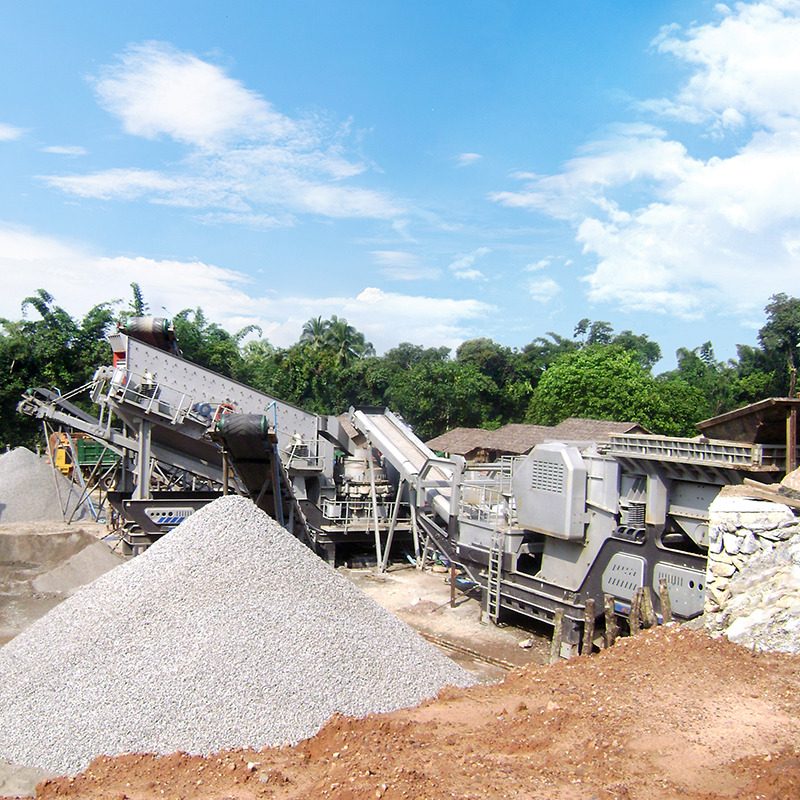
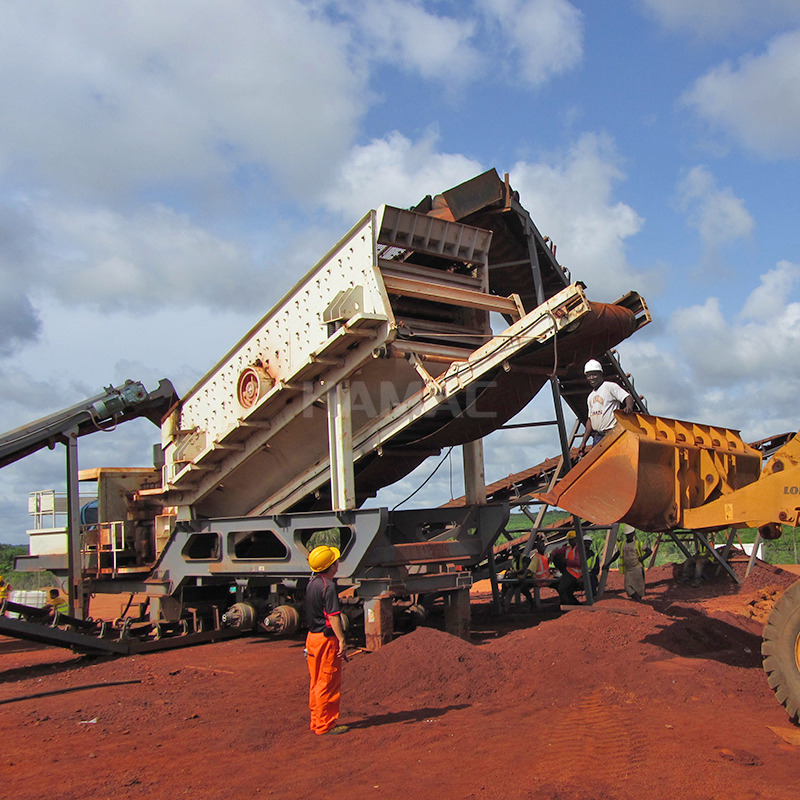
Copper ore crushing plant cost scales with capacity, mobility and wear-package grade. The table below gives an indicative bracket by plant size.
Indicative cost by capacity
| Plant size | Indicative scope | Cost driver |
|---|---|---|
| < 100 t/h | mobile jaw + screen | mobility & simplicity |
| 100–300 t/h | jaw + cone + screens | model size & liners |
| > 500 t/h | multi-stage stationary | throughput & automation |
What moves the price
- Capacity and number of crushing stages.
- Mobility (stationary < wheel < tracked).
- Wear-part grade and spare-parts package.
- Screen area, conveyors and dust control.
Get a budget
Send material, feed size, target t/h and products for a configured FOB / CIF budget within 24 hours.
Reference data for this configuration
| Parameter | Reference value |
|---|---|
| Feed material | Copper ore |
| Mohs hardness | 4 |
| Compressive strength | ~120 MPa |
| Abrasiveness | Medium |
| Recommended circuit | jaw + cone |
| Assumed duty | demolition and recycling duties |
| Evaluation horizon | ten-year view |
The figures above are transcribed from published HAMAC data and from the material properties of copper ore; site measurements take precedence.
Project profile these notes assume
| Assumption | Value |
|---|---|
| Operating duty | demolition and recycling duties |
| Primary objective | maximum mechanical availability |
| Evaluation horizon | ten-year view |
| Site condition | an existing quarry bench |
| Operating team | an owner-operator team |
Change any one of these assumptions and the recommended configuration for copper ore crushing may change. HAMAC re-runs the same checks against your own numbers once the enquiry data sheet is received.
From enquiry to the first saleable tonne
- Set the closed-side setting or rotor speed against the required product fractions, then verify the expected reduction ratio.
- Plan training for an owner-operator team on CSS adjustment, liner change-out and lock-out / tag-out.
- Run a sieve analysis on a representative sample and attach the grading curve to the enquiry.
- Record the as-built settings and give the operator a written daily, weekly and monthly schedule.
- Apply jaw + cone; the reduction mechanism must suit medium abrasion and a compressive strength near 120 MPa.
- Allocate screen area per deck; blinding and pegging are the most common hidden bottlenecks in a new plant.
- Commission with graded load, sample the product grading, then train operators on liner change-out and daily checks.
- Book shipping, prepare the packing list and confirm the container loading plan.
- Size the primary stage for your target tonnage with a 10–20% surge allowance — never on nameplate throughput alone.
Each step has an owner and a document: flow sheet, general arrangement, foundation reference, packing list and acceptance protocol.
What to verify before you sign
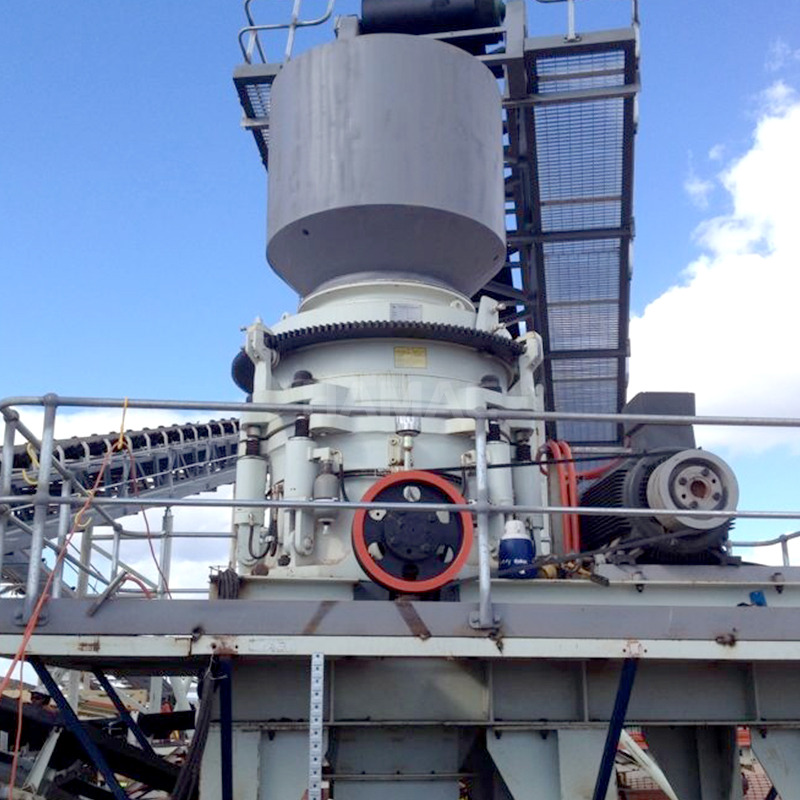
- Choke-feed arrangement: surge bin, feeder control and level indication.
- Closed-side setting range and whether automatic setting regulation is included.
- Availability of an owner-operator team for liner changes and the lifting equipment on site.
- Delivery terms (FOB / CFR / CIF) with the destination port named explicitly.
- Local service partner, technician travel time and visa requirements for your market.
- After-sales response time, technician availability and the warranty exclusions in writing.
- Spare motor, gearbox and hydraulic pump lead times from the nearest HAMAC stock point.
- Wear-part interchangeability across machines in the same circuit.
- Screen deck count, aperture and area; ask for the efficiency calculation, not just the mesh size.
Score each supplier against the same ten items and keep the score sheet with the purchase file for the ten-year review.
Where the money actually goes
| Cost line | Indicative share | What moves the number |
|---|---|---|
| Equipment & drive packages | 53% | Model size, number of stages and automation level |
| Ocean freight & insurance | 8% | Destination port, container count and out-of-gauge cargo |
| Civil works & foundations | 8% | Soil conditions, dynamic loads and site preparation |
| Erection, commissioning & training | 7% | Local labour, supervision scope and schedule |
| First-year wear parts | 16% | Rock abrasiveness, liner grade and operating hours |
| Power, lubricants & consumables | 8% | kWh per tonne, local tariff and dust suppression water |
Treat the percentages as a budgeting shape, not a quotation: HAMAC prices the equipment list in writing once the flow sheet is fixed.
Mistakes that cost more than the machine
- Choosing screen apertures before the concrete or asphalt mix design is fixed.
- Forgetting surge capacity — an intermittent loader starves the chamber and ruins particle shape.
- Buying maximum mechanical availability on price alone and losing it in availability.
- Leaving tramp-iron protection out of the scope to save a small percentage of capital.
- Undersizing the screen, then blaming the crusher for a plant that never reaches your target tonnage.
- Using one liner profile for both secondary and tertiary stages.
- Comparing quotations with different port terms and calling the lower number cheaper.
- Planning the crusher but not the conveyors, transfer chutes and stockpile capacity around it.
Every item on this list has cost someone a commissioning date; none of them requires new technology to avoid.
Commissioning checklist
- Measure and log the as-new CSS / setting for future wear comparison.
- Record power draw, tonnage and chamber pressure at steady state.
- Confirm all guards, emergency stops and pull-wire switches function.
- Agree the punch list, sign the hand-over protocol and file the as-built drawings.
- Confirm the direction and tension of every belt under no load.
- Introduce feed in graded steps: 25%, 50%, 75%, then full load.
- Test emergency stops, pull wires and interlock trips in sequence.
- Check hydraulic pressure, accumulator pre-charge and tramp-release function.
The commissioning record becomes the reference for every liner change in the ten-year plan.