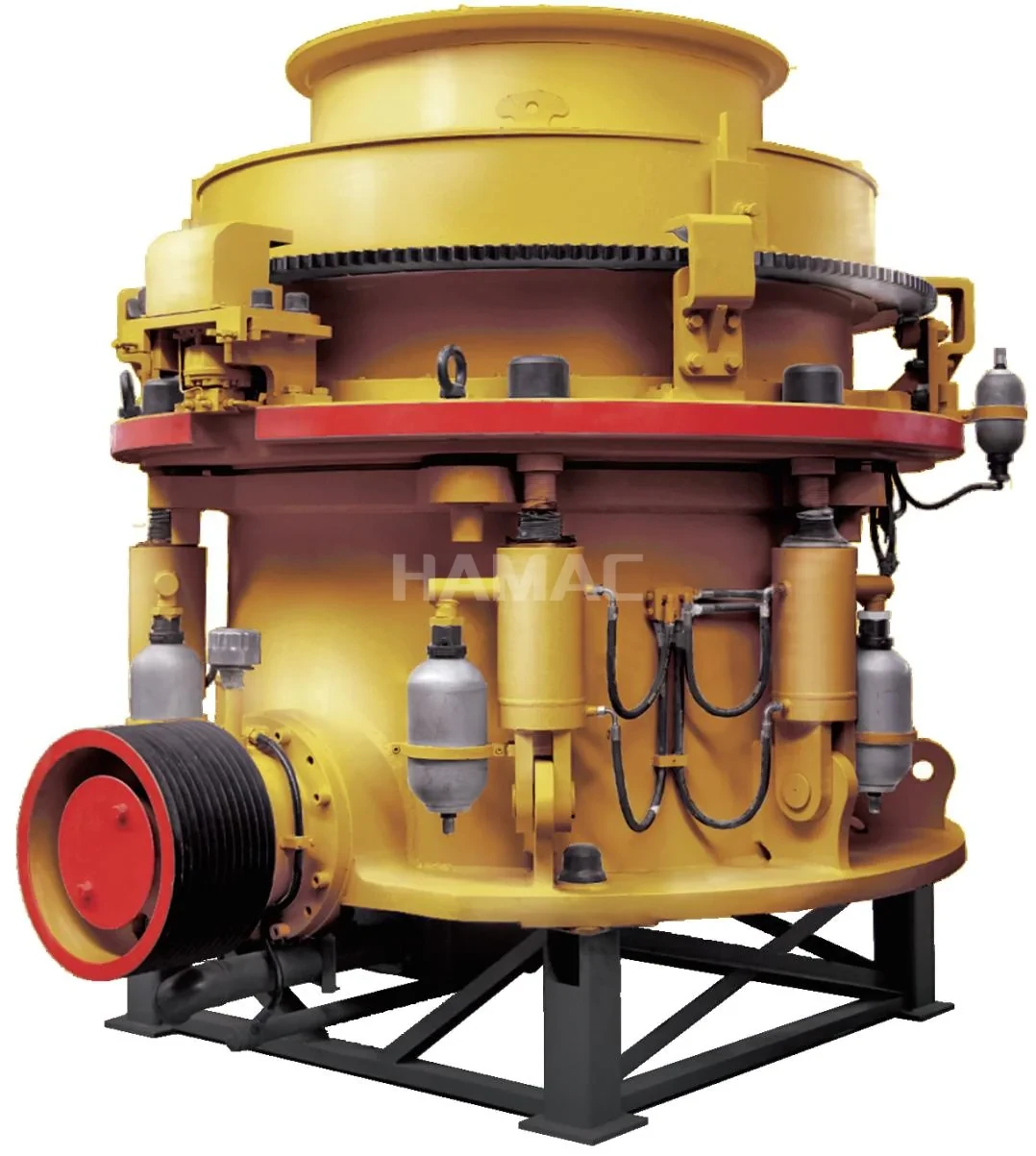
Overview
The HPT Multi-Cylinder Hydraulic Cone Crusher is applied across aggregates, mining, beneficiation and recycling. The material properties decide whether it is the right machine.
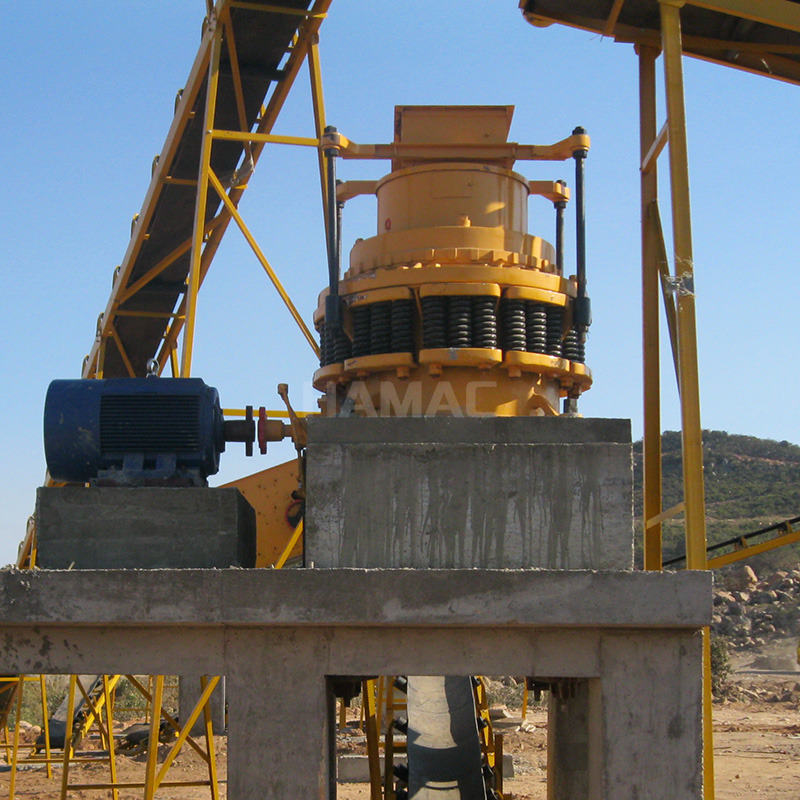
Materials it handles
- Hard rock: granite, basalt, andesite, gabbro.
- Soft rock: limestone, marble, dolomite.
- Ores: iron, copper, gold, manganese.
- Recycling: concrete, asphalt, C&D waste.
Industries
- Quarrying and construction aggregates.
- Metal ore crushing and beneficiation.
- Manufactured sand and road base.
- Cement raw meal and industrial minerals.
Typical configuration
Usually combined with a feeder, screen and conveyors into a complete circuit, or as a module in a mobile plant.
Reference data for this configuration
| Parameter | Reference value |
|---|---|
| Machine line | HPT Multi-Cylinder Hydraulic Cone Crusher |
| Category | Cone Crusher |
| Assumed duty | seasonal road-project supply |
| Evaluation horizon | five-year view |
Ask for the same table from any competing supplier; without it, an offer for hpt multi-cylinder hydraulic cone crusher cannot be compared on scope.
Published HPT Multi-Cylinder Hydraulic Cone Crusher model data
| Model | Installed power (kW) | Capacity range (t/h) | Dimensions (mm) |
|---|---|---|---|
| HPT100 | 90 | 45–140 | 1705 × 1510 × 1583 |
| HPT200 | 160 | 90–250 | 2135 × 1750 × 1927 |
| HPT300 | 220 | 110–440 | 2725 × 2110 × 2871 |
| HPT400 / HPT500 | On request | On request | On request |
Hydraulic multi-cylinder cone crusher for secondary and tertiary crushing of limestone through basalt, with 5–15% higher efficiency and 35–60% higher output than spring cone crushers. Read the table column by column against seasonal road-project supply: the model you pick is the one whose published range brackets your target tonnage, not simply the largest machine in the series. Availability, motor rating and shipping data are re-confirmed for a remote mine site in the written HAMAC proposal.
Project profile these notes assume
| Assumption | Value |
|---|---|
| Operating duty | seasonal road-project supply |
| Primary objective | simple operator maintenance |
| Evaluation horizon | five-year view |
| Site condition | a remote mine site |
| Operating team | a rotating shift crew |
Change any one of these assumptions and the recommended configuration for hpt multi-cylinder hydraulic cone crusher may change. HAMAC re-runs the same checks against your own numbers once the enquiry data sheet is received.
From enquiry to the first saleable tonne
- Choose compression or impact reduction according to hardness, silica content and required particle shape.
- Check bearing and lubrication arrangements against the ambient temperature range at the site.
- Run a sieve analysis on a representative sample and attach the grading curve to the enquiry.
- Confirm the haul-road and stockpile plan with a remote mine site in mind before fixing conveyor lengths.
- Budget for water, dust extraction and spillage handling as part of the plant, not as an afterthought.
- Commission with graded load, sample the product grading, then train operators on liner change-out and daily checks.
- Plan training for a rotating shift crew on CSS adjustment, liner change-out and lock-out / tag-out.
- Record the as-built settings and give the operator a written daily, weekly and monthly schedule.
- Verify the electrical single-line diagram, cable sizing and starter type with the local utility.
A HAMAC project manager stays with the order from the first data sheet through hand-over in your market.
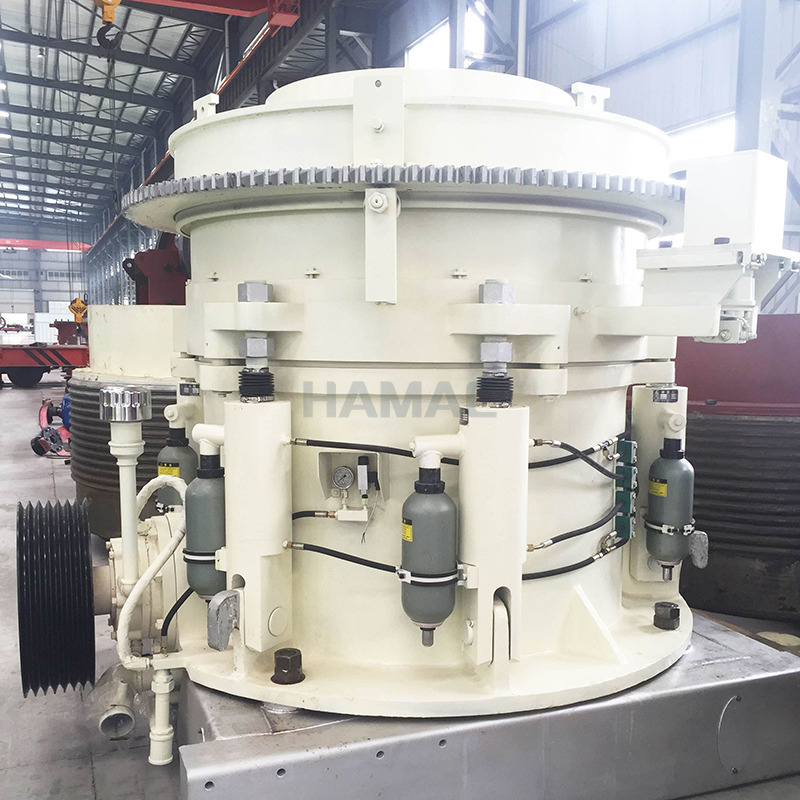
What to verify before you sign
- Whether the quoted t/h is achieved at seasonal road-project supply or under ideal laboratory feed.
- Energy draw in kW and the expected kWh per tonne at the design duty.
- Screen deck count, aperture and area; ask for the efficiency calculation, not just the mesh size.
- Wear-part interchangeability across machines in the same circuit.
- Tramp-iron protection — hydraulic release, magnet and metal detection on the feed belt.
- Decommissioning or relocation value at the end of a five-year horizon.
- After-sales response time, technician availability and the warranty exclusions in writing.
- Control system language, telemetry and remote diagnostics availability.
- Maximum feed lump and gradation — a chamber that cannot accept the top size will bridge on day one.
Ask each supplier to price the same list. Quotations for hpt multi-cylinder hydraulic cone crusher only become comparable when the scope is identical.
Where the money actually goes
| Cost line | Indicative share | What moves the number |
|---|---|---|
| Equipment & drive packages | 54% | Model size, number of stages and automation level |
| Ocean freight & insurance | 8% | Destination port, container count and out-of-gauge cargo |
| Civil works & foundations | 8% | Soil conditions, dynamic loads and site preparation |
| Erection, commissioning & training | 7% | Local labour, supervision scope and schedule |
| First-year wear parts | 15% | Rock abrasiveness, liner grade and operating hours |
| Power, lubricants & consumables | 8% | kWh per tonne, local tariff and dust suppression water |
The weighting shifts with hardness and scale — a hard feed pushes the wear line up, while a larger plant pushes equipment share up.
Mistakes that cost more than the machine
- Assuming a mobile plant can match a stationary line on high-tonnage, multi-product duty.
- Planning the crusher but not the conveyors, transfer chutes and stockpile capacity around it.
- Skipping the acceptance test, so no one has a baseline to measure degradation against.
- Leaving tramp-iron protection out of the scope to save a small percentage of capital.
- Skipping a geotechnical check and discovering settlement under the primary crusher at a remote mine site.
- Selecting the cheapest liner alloy for hard, high-silica rock and paying for it in change-outs.
- Forgetting surge capacity — an intermittent loader starves the chamber and ruins particle shape.
- Assuming the manufacturer's warranty covers wear parts and consumables.
Every item on this list has cost someone a commissioning date; none of them requires new technology to avoid.
Commissioning checklist
- Hand over the spare-parts list, manuals and maintenance schedule.
- Check lubrication levels, grease lines and oil cooler operation.
- Verify chute liners, skirt rubber and impact bars after the first hour of feed.
- Measure noise and dust at the operator position against the local limit.
- Dry-run the plant empty for the specified period and record vibration.
- Calibrate the belt scale and any level probes against a known load.
- Sample each product fraction and compare with the specification.
- Record power draw, tonnage and chamber pressure at steady state.
For a rotating shift crew, run through this list twice — once with the supervisor and once without.