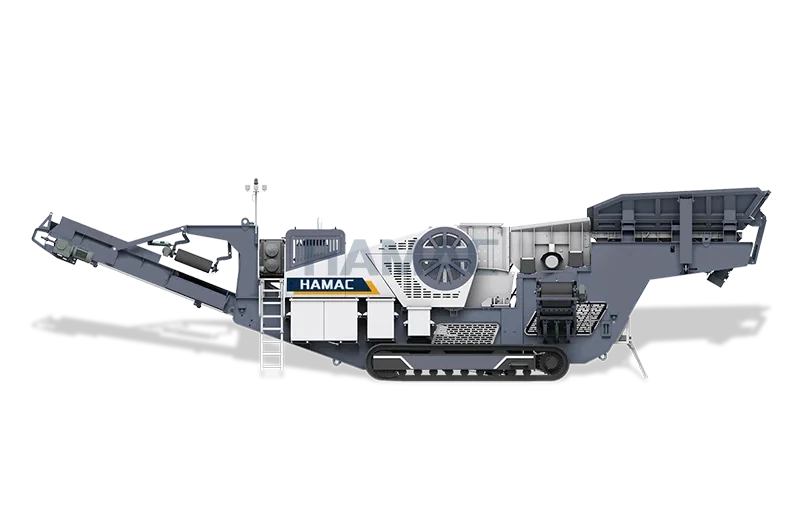
Overview
A simple, disciplined maintenance routine is the cheapest insurance against unplanned downtime on a Tracked Jaw Crusher Plant.
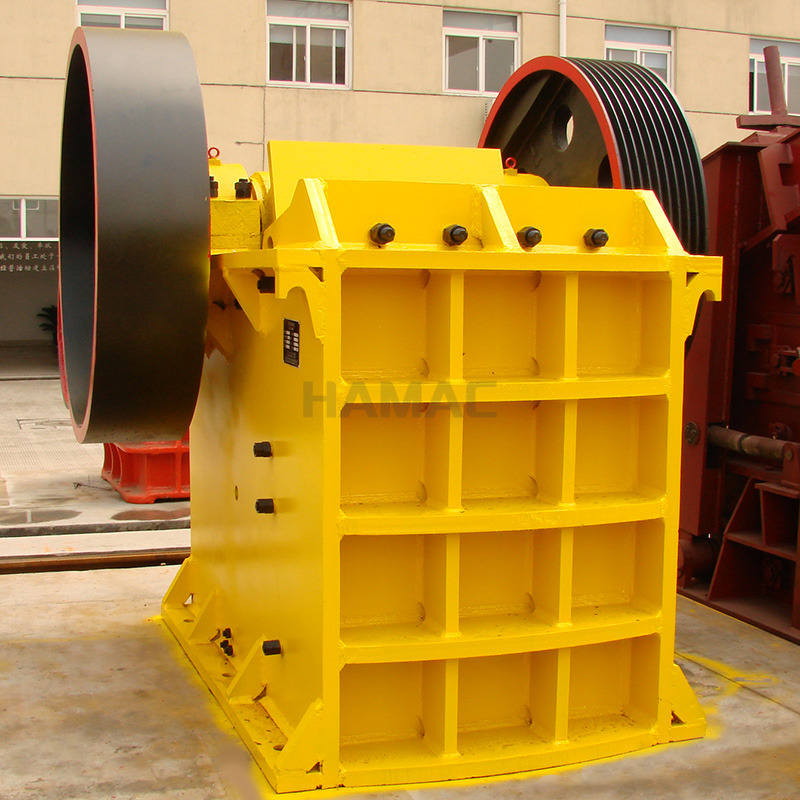
Daily
- Check lubrication levels and look for leaks.
- Inspect liners / blow bars for uneven wear.
- Listen for abnormal vibration or noise.
- Verify belt tension and guard position.
Weekly
- Grease bearings per the schedule.
- Check fasteners and hydraulic pressure.
- Clean screens and check mesh wear.
Monthly
- Measure liner wear and plan change-out.
- Inspect drives, couplings and motor.
- Review wear-part stock against lead time.
Safety
Lock-out / tag-out before any entry; never clear bridging under a running crusher; follow local standards and HAMAC manuals.
Reference data for this configuration
| Parameter | Reference value |
|---|---|
| Machine line | Tracked Jaw Crusher Plant |
| Category | Tracked Crushing Plants |
| Assumed duty | high-tonnage aggregate supply |
| Evaluation horizon | five-year view |
HAMAC engineers fill in the same fields on the project data sheet, which is why two plants of similar tonnage can still require different machines.
Published Tracked Jaw Crusher Plant model data
| Model | MJ150SE | MJ260E | MJ-350E | MJ-450SE |
|---|---|---|---|---|
| Feeder | ||||
| Volume(m³) | 4 | 6 | 6 | 6 |
| Feeding height(mm) | 3500 | 4357 | 4357 | 4357 |
| Maximum feed size(mm) | 430 | 560 | 630 | 720 |
| Crusher | ||||
| Host model | MC80 | MC106 | MC113 | MC120 |
| Feed opening(mm) | 800×510 | 1060X700 | 1130×750 | 1200×870 |
| Closed side setting(mm) | 40-175 | 70-200 | 70-200 | 70-200 |
Take productivity to the next level with the HMC Series Tracked Jaw Crusher Plant. Read the table column by column against high-tonnage aggregate supply: the model you pick is the one whose published range brackets your target tonnage, not simply the largest machine in the series. Availability, motor rating and shipping data are re-confirmed for a greenfield site in the written HAMAC proposal.
Project profile these notes assume
| Assumption | Value |
|---|---|
| Operating duty | high-tonnage aggregate supply |
| Primary objective | tight grading compliance |
| Evaluation horizon | five-year view |
| Site condition | a greenfield site |
| Operating team | a rotating shift crew |
Change any one of these assumptions and the recommended configuration for tracked jaw crusher plant may change. HAMAC re-runs the same checks against your own numbers once the enquiry data sheet is received.
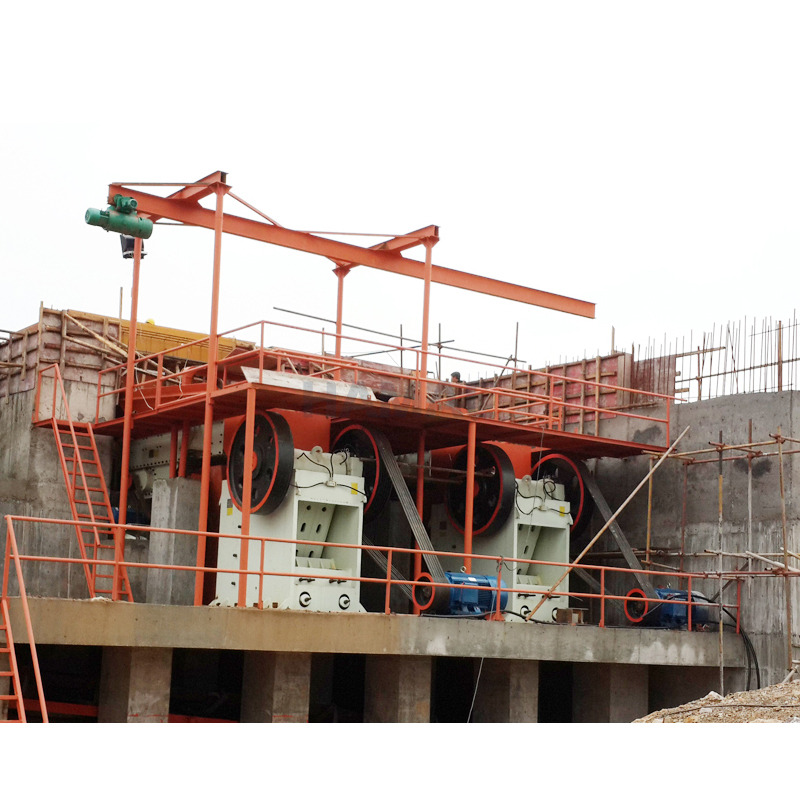
From enquiry to the first saleable tonne
- Log tonnes per liner set and kWh per tonne from day one so you have a real cost baseline within a quarter.
- Run a sieve analysis on a representative sample and attach the grading curve to the enquiry.
- Lay out conveyors, access ways, stockpile capacity and drainage before ordering steelwork.
- Size the primary stage for your target tonnage with a 10–20% surge allowance — never on nameplate throughput alone.
- Survey the feed: the feed material; record top size, bulk density, moisture and clay content before fixing the flow sheet.
- Confirm the haul-road and stockpile plan with a greenfield site in mind before fixing conveyor lengths.
- Book shipping, prepare the packing list and confirm the container loading plan.
- Confirm site voltage, frequency and applicable conformity standards before manufacture.
- Allocate screen area per deck; blinding and pegging are the most common hidden bottlenecks in a new plant.
Shortening this sequence is possible on a greenfield site, but only where the feed and product specification are already fully defined.
What to verify before you sign
- Product sampling points and the lab equipment needed for routine grading checks.
- Liner alloy: Mn18 with ceramic inserts matched to the rock, not to the lowest purchase price.
- Local service partner, technician travel time and visa requirements for your market.
- Delivery terms (FOB / CFR / CIF) with the destination port named explicitly.
- Written performance guarantee, sampling method and acceptance-test protocol.
- Decommissioning or relocation value at the end of a five-year horizon.
- Nameplate data for local voltage, frequency and the applicable conformity scheme.
- Whether the quoted t/h is achieved at high-tonnage aggregate supply or under ideal laboratory feed.
- After-sales response time, technician availability and the warranty exclusions in writing.
Share this list with a rotating shift crew as well as procurement; operators are the ones who live with the omissions.
Where the money actually goes
| Cost line | Indicative share | What moves the number |
|---|---|---|
| Equipment & drive packages | 54% | Model size, number of stages and automation level |
| Ocean freight & insurance | 8% | Destination port, container count and out-of-gauge cargo |
| Civil works & foundations | 8% | Soil conditions, dynamic loads and site preparation |
| Erection, commissioning & training | 7% | Local labour, supervision scope and schedule |
| First-year wear parts | 15% | Rock abrasiveness, liner grade and operating hours |
| Power, lubricants & consumables | 8% | kWh per tonne, local tariff and dust suppression water |
The weighting shifts with hardness and scale — a hard feed pushes the wear line up, while a larger plant pushes equipment share up.
Mistakes that cost more than the machine
- Letting the high-tonnage aggregate supply duty be defined verbally instead of in the contract.
- Overlooking dust, noise and water permits in your market until erection has already started.
- Forgetting surge capacity — an intermittent loader starves the chamber and ruins particle shape.
- Undersizing the screen, then blaming the crusher for a plant that never reaches your target tonnage.
- Omitting a bypass chute, so a single screen fault stops the whole line.
- Using one liner profile for both secondary and tertiary stages.
- Specifying motors for the wrong voltage or frequency and rewinding them on site.
- Leaving tramp-iron protection out of the scope to save a small percentage of capital.
For high-tonnage aggregate supply, protect the tight grading compliance requirement explicitly in the contract documents.
Commissioning checklist
- Test emergency stops, pull wires and interlock trips in sequence.
- Introduce feed in graded steps: 25%, 50%, 75%, then full load.
- Measure and log the as-new CSS / setting for future wear comparison.
- Calibrate the belt scale and any level probes against a known load.
- Record the baseline grading curve for each product fraction.
- Hand over the spare-parts list, manuals and maintenance schedule.
- Check belt tracking, chute build-up and transfer-point dust.
- Check lubrication levels, grease lines and oil cooler operation.
For a rotating shift crew, run through this list twice — once with the supervisor and once without.