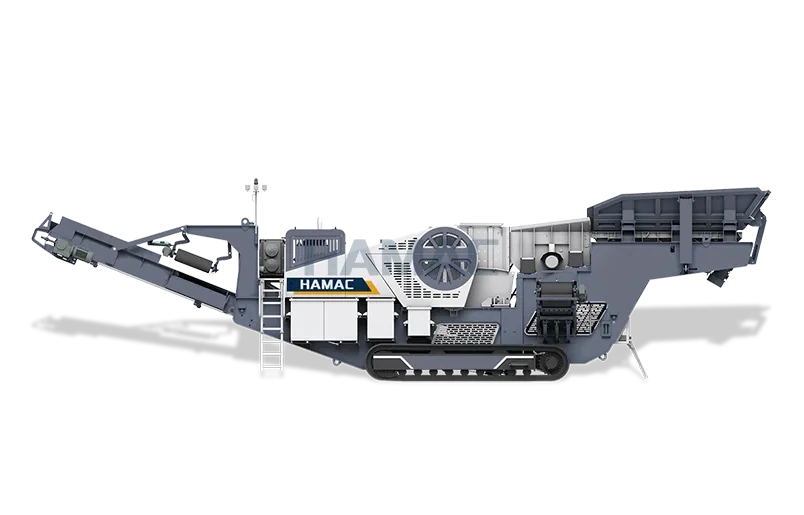
Overview
Practical, numbers-first guidance on the Crawler (Tracked) Jaw Crusher TC Series — written for engineers specifying, buying and running crushing plants.
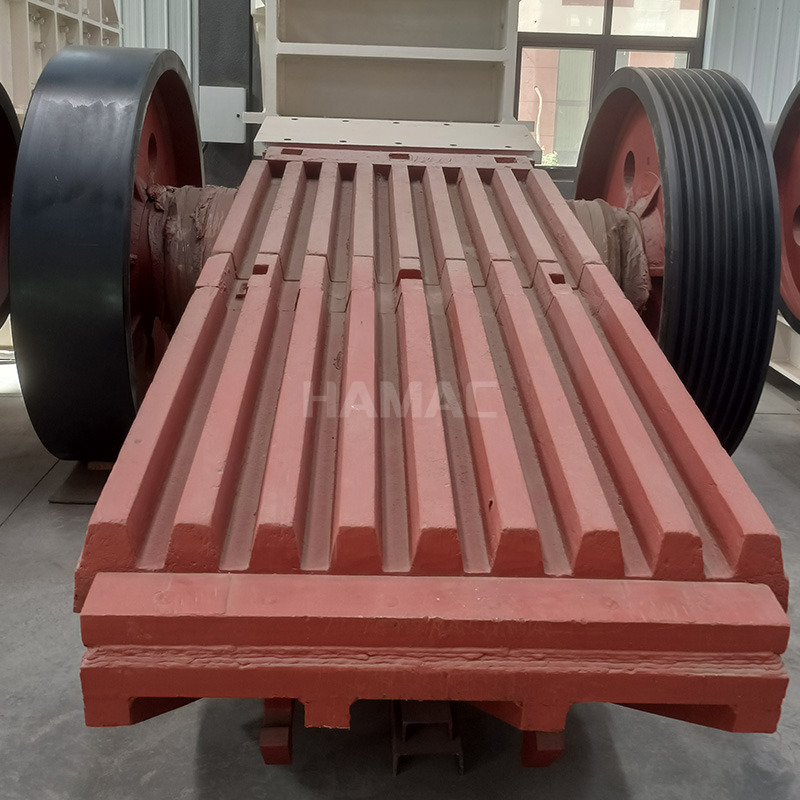
Abnormal noise / vibration
- Check for loose liner bolts or foreign metal in feed.
- Verify foundation bolts and coupling alignment.
- Listen for bearing distress; schedule replacement.
Low output
- Worn liners / blow bars reduce reduction.
- Wrong CSS / setting for target product.
- Screen blinding limits throughput.
Poor product shape
- Increase reduction in the shaping stage.
- Verify VSI rotor speed / anvil.
- Re-check screen mesh.
Reference data for this configuration
| Parameter | Reference value |
|---|---|
| Machine line | Crawler (Tracked) Jaw Crusher TC Series |
| Category | Tracked Crushing Plants |
| Assumed duty | demolition and recycling duties |
| Evaluation horizon | ten-year view |
Ask for the same table from any competing supplier; without it, an offer for crawler (tracked) jaw crusher tc series cannot be compared on scope.
Published Crawler (Tracked) Jaw Crusher TC Series model data
| Model | TC106 | TC116 | TC120 |
|---|---|---|---|
| Jaw crusher | C106 | C116 | C120 |
| Max. feeding size | 600 mm | 650 mm | 740 mm |
| Minimum outlet | 70–200 mm | 70–200 mm | 70–175 mm |
| Crusher motor | 110 kW | 132 kW | 160 kW |
| Main conveyor | B1000 × 12 m | B1000 × 12 m | B1000 × 12.9 m |
| Generator | 300 kW | 300 kW | 360 kW |
TC106 / TC116 / TC120 tracked jaw crushers with 600–740 mm max feed, 110–160 kW crusher power and on-board 300–360 kW generator. Read the table column by column against demolition and recycling duties: the model you pick is the one whose published range brackets your target tonnage, not simply the largest machine in the series. Availability, motor rating and shipping data are re-confirmed for a confined urban yard in the written HAMAC proposal.
Project profile these notes assume
| Assumption | Value |
|---|---|
| Operating duty | demolition and recycling duties |
| Primary objective | lowest energy per tonne |
| Evaluation horizon | ten-year view |
| Site condition | a confined urban yard |
| Operating team | an owner-operator team |
Change any one of these assumptions and the recommended configuration for crawler (tracked) jaw crusher tc series may change. HAMAC re-runs the same checks against your own numbers once the enquiry data sheet is received.
From enquiry to the first saleable tonne
- Budget for water, dust extraction and spillage handling as part of the plant, not as an afterthought.
- Commission with graded load, sample the product grading, then train operators on liner change-out and daily checks.
- Set the maintenance stock list from the expected wear rate, not from a percentage of the equipment price.
- Set the closed-side setting or rotor speed against the required product fractions, then verify the expected reduction ratio.
- Allocate screen area per deck; blinding and pegging are the most common hidden bottlenecks in a new plant.
- Confirm the haul-road and stockpile plan with a confined urban yard in mind before fixing conveyor lengths.
- Log tonnes per liner set and kWh per tonne from day one so you have a real cost baseline within a quarter.
- Review the crusher chamber profile with the liner supplier against the feed material.
- Choose compression or impact reduction according to hardness, silica content and required particle shape.
The sequence is deliberately front-loaded — decisions taken before manufacture are cheap, changes made on site are not.
What to verify before you sign
- Spare motor, gearbox and hydraulic pump lead times from the nearest HAMAC stock point.
- Decommissioning or relocation value at the end of a ten-year horizon.
- Whether the quoted t/h is achieved at demolition and recycling duties or under ideal laboratory feed.
- Tramp-iron protection — hydraulic release, magnet and metal detection on the feed belt.
- Local service partner, technician travel time and visa requirements for your market.
- Product sampling points and the lab equipment needed for routine grading checks.
- Maximum feed lump and gradation — a chamber that cannot accept the top size will bridge on day one.
- Dust and noise control designed to the local emission limits for your market.
- Delivery terms (FOB / CFR / CIF) with the destination port named explicitly.
For demolition and recycling duties, give the lowest energy per tonne line extra weight; a generic checklist will not rank the offers correctly.
Where the money actually goes
| Cost line | Indicative share | What moves the number |
|---|---|---|
| Equipment & drive packages | 54% | Model size, number of stages and automation level |
| Ocean freight & insurance | 8% | Destination port, container count and out-of-gauge cargo |
| Civil works & foundations | 8% | Soil conditions, dynamic loads and site preparation |
| Erection, commissioning & training | 7% | Local labour, supervision scope and schedule |
| First-year wear parts | 15% | Rock abrasiveness, liner grade and operating hours |
| Power, lubricants & consumables | 8% | kWh per tonne, local tariff and dust suppression water |
On demolition and recycling duties, the lowest energy per tonne objective changes which line deserves the most attention during value engineering.
Mistakes that cost more than the machine
- Leaving tramp-iron protection out of the scope to save a small percentage of capital.
- Specifying motors for the wrong voltage or frequency and rewinding them on site.
- Buying lowest energy per tonne on price alone and losing it in availability.
- Forgetting surge capacity — an intermittent loader starves the chamber and ruins particle shape.
- Omitting a bypass chute, so a single screen fault stops the whole line.
- Letting the demolition and recycling duties duty be defined verbally instead of in the contract.
- Planning the crusher but not the conveyors, transfer chutes and stockpile capacity around it.
- Overlooking dust, noise and water permits in your market until erection has already started.
For demolition and recycling duties, protect the lowest energy per tonne requirement explicitly in the contract documents.
Commissioning checklist
- Verify rotation direction on every motor before coupling.
- Sample each product fraction and compare with the specification.
- Check hydraulic pressure, accumulator pre-charge and tramp-release function.
- Measure and log the as-new CSS / setting for future wear comparison.
- Verify chute liners, skirt rubber and impact bars after the first hour of feed.
- Confirm the direction and tension of every belt under no load.
- Dry-run the plant empty for the specified period and record vibration.
- Record power draw, tonnage and chamber pressure at steady state.
For an owner-operator team, run through this list twice — once with the supervisor and once without.