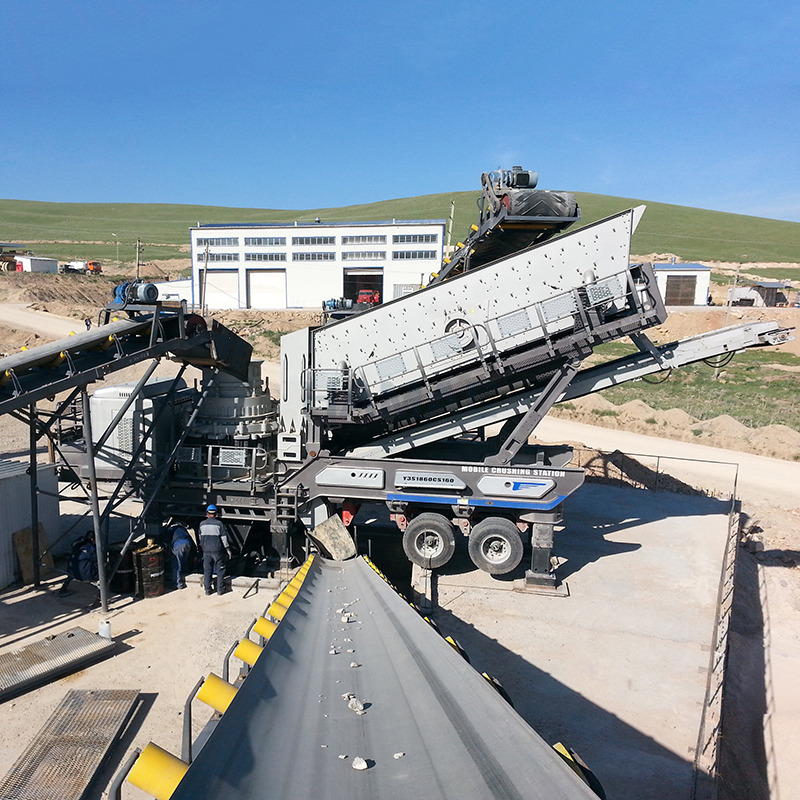
Overview
HAMAC equipment matched to road & railway ballast:
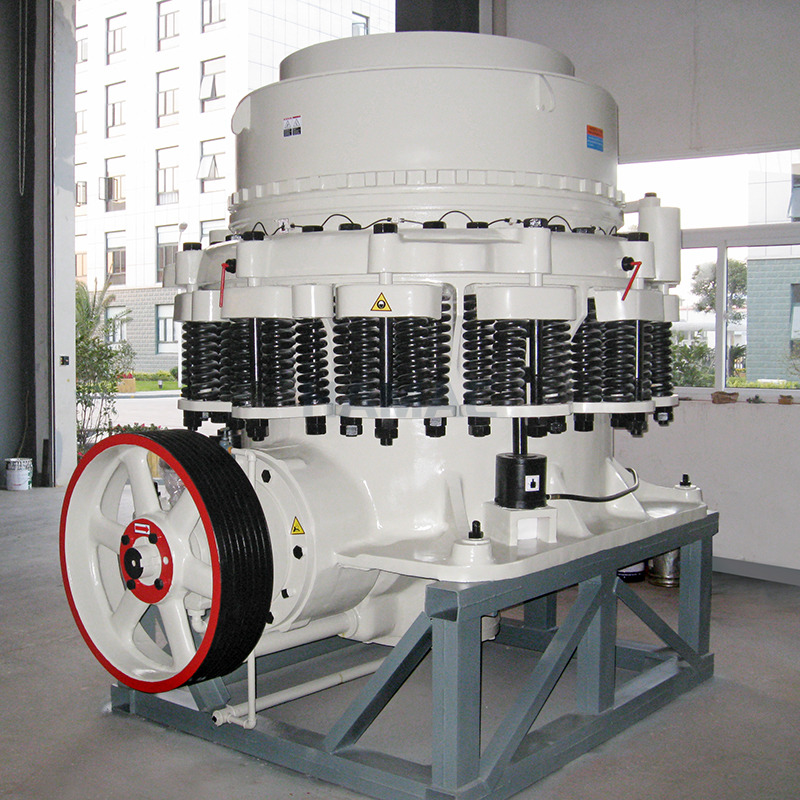
Equipment
- PE Series Jaw Crusher
- HPT Multi-Cylinder Hydraulic Cone Crusher
- VSI Vertical Shaft Impact Crusher (Sand Making Machine)
Reference data for this configuration
| Parameter | Reference value |
|---|---|
| Application | Road & Railway Ballast |
| Typical feed | Basalt, Granite, Andesite |
| Assumed duty | demolition and recycling duties |
| Evaluation horizon | three-year view |
These values are the starting point for a written proposal on the crushing and screening plant; they are nominal and should be confirmed against a sample test before manufacture.
Project profile these notes assume
| Assumption | Value |
|---|---|
| Operating duty | demolition and recycling duties |
| Primary objective | maximum mechanical availability |
| Evaluation horizon | three-year view |
| Site condition | a brownfield extension |
| Operating team | a small contractor crew |
Change any one of these assumptions and the recommended configuration for the crushing and screening plant may change. HAMAC re-runs the same checks against your own numbers once the enquiry data sheet is received.
From enquiry to the first saleable tonne
- Choose compression or impact reduction according to hardness, silica content and required particle shape.
- Record the as-built settings and give the operator a written daily, weekly and monthly schedule.
- Check bearing and lubrication arrangements against the ambient temperature range at the site.
- Include dust suppression, guarding, emergency stops and lock-out points in the layout drawing.
- Verify the electrical single-line diagram, cable sizing and starter type with the local utility.
- Book shipping, prepare the packing list and confirm the container loading plan.
- Confirm the haul-road and stockpile plan with a brownfield extension in mind before fixing conveyor lengths.
- Budget for water, dust extraction and spillage handling as part of the plant, not as an afterthought.
- Review the crusher chamber profile with the liner supplier against the feed material.
Most delays at this stage come from missing feed data rather than from manufacturing capacity.
What to verify before you sign
- Wear-part interchangeability across machines in the same circuit.
- Access for liner change-out — crane radius, lifting points and clearance around the chamber.
- Ambient temperature, altitude and dust load derating for motors and hydraulics.
- Tramp-iron protection — hydraulic release, magnet and metal detection on the feed belt.
- Saleable tonnes per hour at each product size, not gross crusher throughput, for your target tonnage.
- Whether the quoted t/h is achieved at demolition and recycling duties or under ideal laboratory feed.
- Written performance guarantee, sampling method and acceptance-test protocol.
- Nameplate data for local voltage, frequency and the applicable conformity scheme.
- Liner alloy: Mn22 matched to the rock, not to the lowest purchase price.
Bring this list to the design review — it is cheaper to resolve an omission on paper than during commissioning.
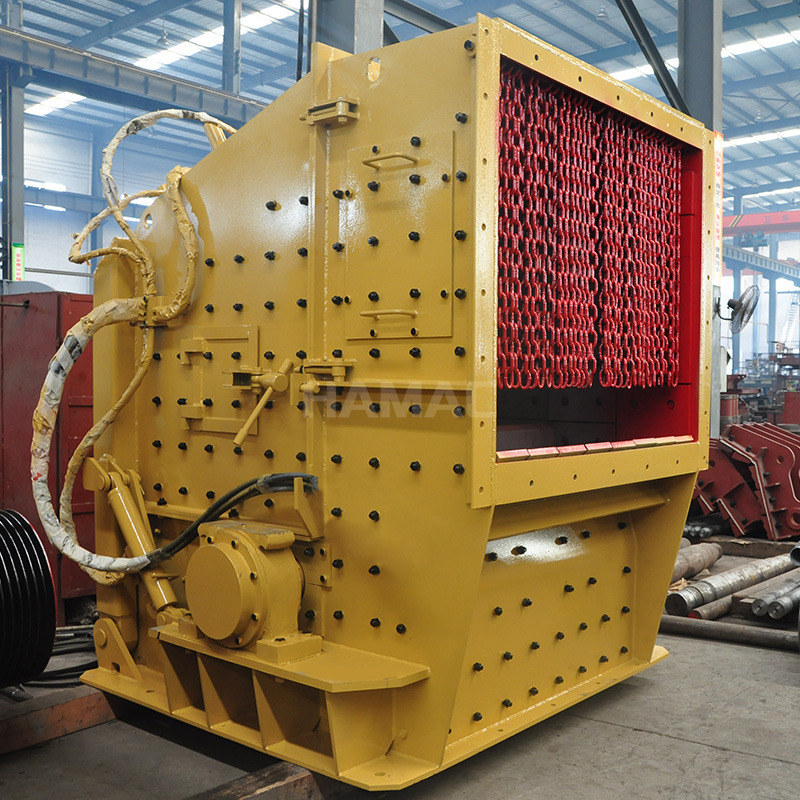
Where the money actually goes
| Cost line | Indicative share | What moves the number |
|---|---|---|
| Equipment & drive packages | 54% | Model size, number of stages and automation level |
| Ocean freight & insurance | 8% | Destination port, container count and out-of-gauge cargo |
| Civil works & foundations | 8% | Soil conditions, dynamic loads and site preparation |
| Erection, commissioning & training | 7% | Local labour, supervision scope and schedule |
| First-year wear parts | 15% | Rock abrasiveness, liner grade and operating hours |
| Power, lubricants & consumables | 8% | kWh per tonne, local tariff and dust suppression water |
A three-year view normally reverses the ranking of two otherwise similar offers once wear and energy are included.
Mistakes that cost more than the machine
- Assuming the manufacturer's warranty covers wear parts and consumables.
- Overlooking dust, noise and water permits in your market until erection has already started.
- Omitting a bypass chute, so a single screen fault stops the whole line.
- Comparing quotations with different port terms and calling the lower number cheaper.
- Buying on nameplate t/h without converting to saleable product at the specified fractions.
- Planning the crusher but not the conveyors, transfer chutes and stockpile capacity around it.
- Choosing screen apertures before the concrete or asphalt mix design is fixed.
- Specifying motors for the wrong voltage or frequency and rewinding them on site.
Review the list with a small contractor crew before the order is placed — they will recognise most of them.
Commissioning checklist
- Verify rotation direction on every motor before coupling.
- Test emergency stops, pull wires and interlock trips in sequence.
- Check belt tracking, chute build-up and transfer-point dust.
- Check lubrication levels, grease lines and oil cooler operation.
- Measure and log the as-new CSS / setting for future wear comparison.
- Confirm the direction and tension of every belt under no load.
- Confirm all guards, emergency stops and pull-wire switches function.
- Agree the punch list, sign the hand-over protocol and file the as-built drawings.
On a brownfield extension, allow extra time for the dust and noise measurements.