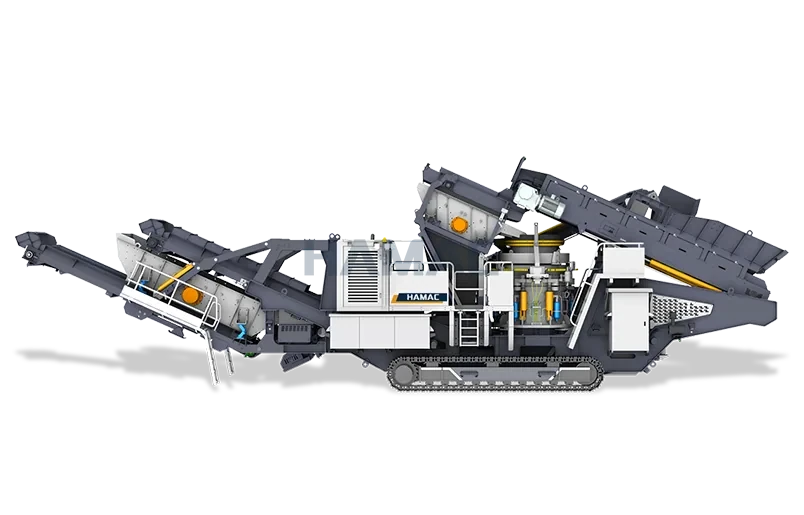
Overview
Practical, numbers-first guidance on the Crawler (Tracked) Cone Crusher THP Series — written for engineers specifying, buying and running crushing plants.
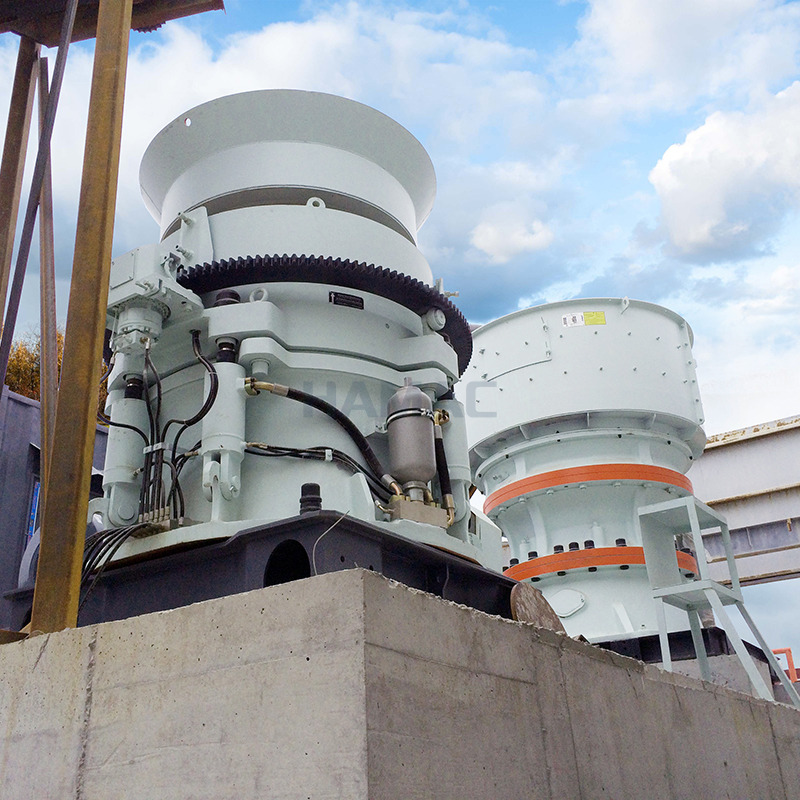
Preparation
- Confirm foundation per HAMAC layout.
- Check power and cable routing.
- Lift and level on grout.
Commissioning
- Dry run, then graded load.
- Set CSS and verify product.
- Train operators.
Reference data for this configuration
| Parameter | Reference value |
|---|---|
| Machine line | Crawler (Tracked) Cone Crusher THP Series |
| Category | Tracked Crushing Plants |
| Assumed duty | mine pre-beneficiation feed |
| Evaluation horizon | seven-year view |
Use the table as a checklist when comparing quotations for crawler (tracked) cone crusher thp series — a lower price often means one of these parameters was quietly reduced.
Published Crawler (Tracked) Cone Crusher THP Series model data
| Model | THP200 | THP300 | THP400 |
|---|---|---|---|
| Cone crusher | THP200 | THP300 | THP400 |
| Max. feeding size | 150 mm | 200 mm | 260 mm |
| Minimum outlet | 16 mm | 10 mm | 20 mm |
| Motor power | 160 kW | 220 kW | 280 kW |
| Return screen | YK1500×3800 | YK1600×4000 | YK1500×3800 |
| Generator | 320 kW | 500 kW | 500 kW |
THP200 / THP300 / THP400 tracked cone crushers for secondary hard-rock crushing, 150–260 mm feed and 160–280 kW crusher power. Read the table column by column against mine pre-beneficiation feed: the model you pick is the one whose published range brackets your target tonnage, not simply the largest machine in the series. Availability, motor rating and shipping data are re-confirmed for a remote mine site in the written HAMAC proposal.
Project profile these notes assume
| Assumption | Value |
|---|---|
| Operating duty | mine pre-beneficiation feed |
| Primary objective | lowest cost per tonne |
| Evaluation horizon | seven-year view |
| Site condition | a remote mine site |
| Operating team | a mixed local and expatriate team |
Change any one of these assumptions and the recommended configuration for crawler (tracked) cone crusher thp series may change. HAMAC re-runs the same checks against your own numbers once the enquiry data sheet is received.
From enquiry to the first saleable tonne
- Sequence delivery so foundations cure while the equipment is still in manufacture.
- Check bearing and lubrication arrangements against the ambient temperature range at the site.
- Record the as-built settings and give the operator a written daily, weekly and monthly schedule.
- Allocate screen area per deck; blinding and pegging are the most common hidden bottlenecks in a new plant.
- Lay out conveyors, access ways, stockpile capacity and drainage before ordering steelwork.
- Log tonnes per liner set and kWh per tonne from day one so you have a real cost baseline within a quarter.
- Confirm the haul-road and stockpile plan with a remote mine site in mind before fixing conveyor lengths.
- Verify the electrical single-line diagram, cable sizing and starter type with the local utility.
- Run a sieve analysis on a representative sample and attach the grading curve to the enquiry.
A realistic programme reserves time for permits, foundation curing and shipping to your market before any steel is cut.
What to verify before you sign
- Closed-side setting range and whether automatic setting regulation is included.
- Energy draw in kW and the expected kWh per tonne at the design duty.
- Erection scope: supervision only, or full civil, mechanical and electrical installation.
- Local service partner, technician travel time and visa requirements for your market.
- Product sampling points and the lab equipment needed for routine grading checks.
- Availability of a mixed local and expatriate team for liner changes and the lifting equipment on site.
- Written performance guarantee, sampling method and acceptance-test protocol.
- Ambient temperature, altitude and dust load derating for motors and hydraulics.
- Saleable tonnes per hour at each product size, not gross crusher throughput, for your target tonnage.
Bring this list to the design review — it is cheaper to resolve an omission on paper than during commissioning.
Where the money actually goes
| Cost line | Indicative share | What moves the number |
|---|---|---|
| Equipment & drive packages | 54% | Model size, number of stages and automation level |
| Ocean freight & insurance | 8% | Destination port, container count and out-of-gauge cargo |
| Civil works & foundations | 8% | Soil conditions, dynamic loads and site preparation |
| Erection, commissioning & training | 7% | Local labour, supervision scope and schedule |
| First-year wear parts | 15% | Rock abrasiveness, liner grade and operating hours |
| Power, lubricants & consumables | 8% | kWh per tonne, local tariff and dust suppression water |
Include downtime in the model. An unplanned liner change on a remote site costs far more than the casting itself.
Mistakes that cost more than the machine
- Overlooking dust, noise and water permits in your market until erection has already started.
- Omitting a bypass chute, so a single screen fault stops the whole line.
- Comparing quotations with different port terms and calling the lower number cheaper.
- Using one liner profile for both secondary and tertiary stages.
- Ordering no spares with the plant and waiting six weeks for the first liner set.
- Assuming a mobile plant can match a stationary line on high-tonnage, multi-product duty.
- Planning the crusher but not the conveyors, transfer chutes and stockpile capacity around it.
- Selecting the cheapest liner alloy for hard, high-silica rock and paying for it in change-outs.
Every item on this list has cost someone a commissioning date; none of them requires new technology to avoid.
Commissioning checklist
- Record the baseline grading curve for each product fraction.
- Hand over the spare-parts list, manuals and maintenance schedule.
- Sample each product fraction and compare with the specification.
- Confirm all guards, emergency stops and pull-wire switches function.
- Check lubrication levels, grease lines and oil cooler operation.
- Dry-run the plant empty for the specified period and record vibration.
- Measure noise and dust at the operator position against the local limit.
- Check belt tracking, chute build-up and transfer-point dust.
Keep the signed record; it is the only defensible baseline for later performance disputes.