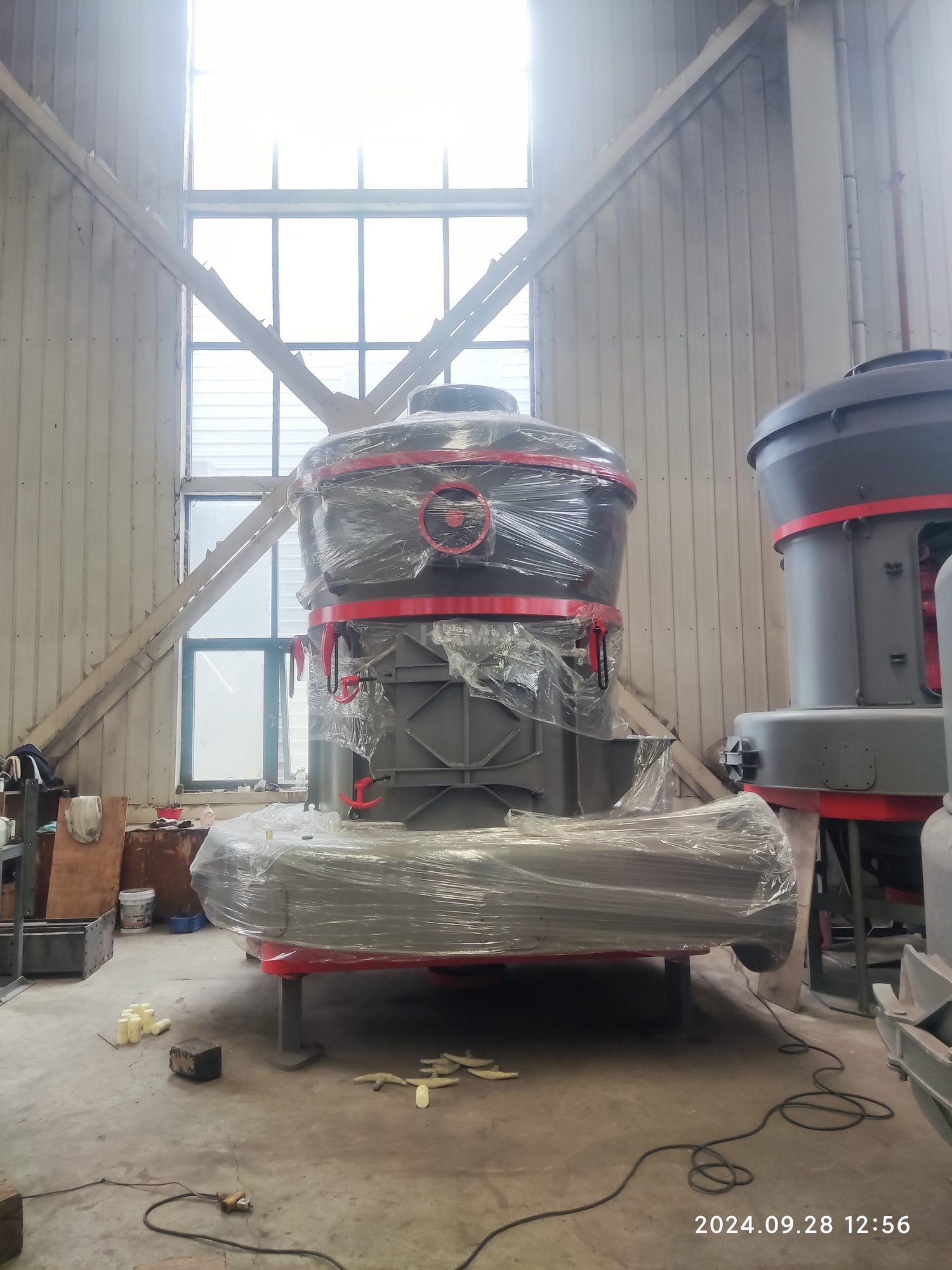
Overview
Practical, numbers-first guidance on the LM Vertical Coal Mill — written for engineers specifying, buying and running crushing plants.
Capacity factors
- Chamber / CSS and material.
- Feed gradation and moisture.
- Screen efficiency downstream.
- Continuous vs surge feed.
Rule of thumb
Rated capacity is stated at a given CSS and material; treat it as saleable product, not crusher throughput. Size the plant to 10–20% above target.
Reference data for this configuration
| Parameter | Reference value |
|---|---|
| Feed material | Coal |
| Mohs hardness | 2 |
| Compressive strength | ~40 MPa |
| Abrasiveness | Low |
| Recommended circuit | impact / jaw with gentle reduction |
| Machine line | LM Vertical Coal Mill |
| Category | Grinding Mills |
| Assumed duty | seasonal road-project supply |
| Evaluation horizon | three-year view |
Ask for the same table from any competing supplier; without it, an offer for lm vertical coal mill cannot be compared on scope.
Published LM Vertical Coal Mill model data
| Parameter | Typical value | Engineering note |
|---|---|---|
| Finished fineness | 20-400 mesh (0.8-0.045 mm) | Set at the classifier |
| Nominal capacity | 3-60 t/h | Varies with material and moisture |
| Maximum feed size | 30-50 mm | Requires pre-crushing |
| Typical materials | Limestone, calcite, gypsum, talc, barite | Mohs <= 7, moisture <= 6% |
| Power supply | 380 / 415 / 440 V, 50 or 60 Hz | Configured to destination grid |
LM Vertical Coal Mill for limestone, calcite, barite, gypsum, talc, dolomite, kaolin and coal powder projects, producing 20-400 mesh (0.8-0.045 mm) at 3-60 t/h with an integrated classifier and dust collection. Read the table column by column against seasonal road-project supply: the model you pick is the one whose published range brackets your target tonnage, not simply the largest machine in the series. Availability, motor rating and shipping data are re-confirmed for a remote mine site in the written HAMAC proposal.
Project profile these notes assume
| Assumption | Value |
|---|---|
| Operating duty | seasonal road-project supply |
| Primary objective | minimal civil works |
| Evaluation horizon | three-year view |
| Site condition | a remote mine site |
| Operating team | a small contractor crew |
Change any one of these assumptions and the recommended configuration for lm vertical coal mill may change. HAMAC re-runs the same checks against your own numbers once the enquiry data sheet is received.
From enquiry to the first saleable tonne
- Record the as-built settings and give the operator a written daily, weekly and monthly schedule.
- Commission with graded load, sample the product grading, then train operators on liner change-out and daily checks.
- Apply impact / jaw with gentle reduction; the reduction mechanism must suit low abrasion and a compressive strength near 40 MPa.
- Review the crusher chamber profile with the liner supplier against Coal (Mohs 2, ~40 MPa, low abrasion).
- Set the maintenance stock list from the expected wear rate, not from a percentage of the equipment price.
- Sequence delivery so foundations cure while the equipment is still in manufacture.
- Set the closed-side setting or rotor speed against the required product fractions, then verify the expected reduction ratio.
- Book shipping, prepare the packing list and confirm the container loading plan.
- Allocate screen area per deck; blinding and pegging are the most common hidden bottlenecks in a new plant.
A HAMAC project manager stays with the order from the first data sheet through hand-over in your market.
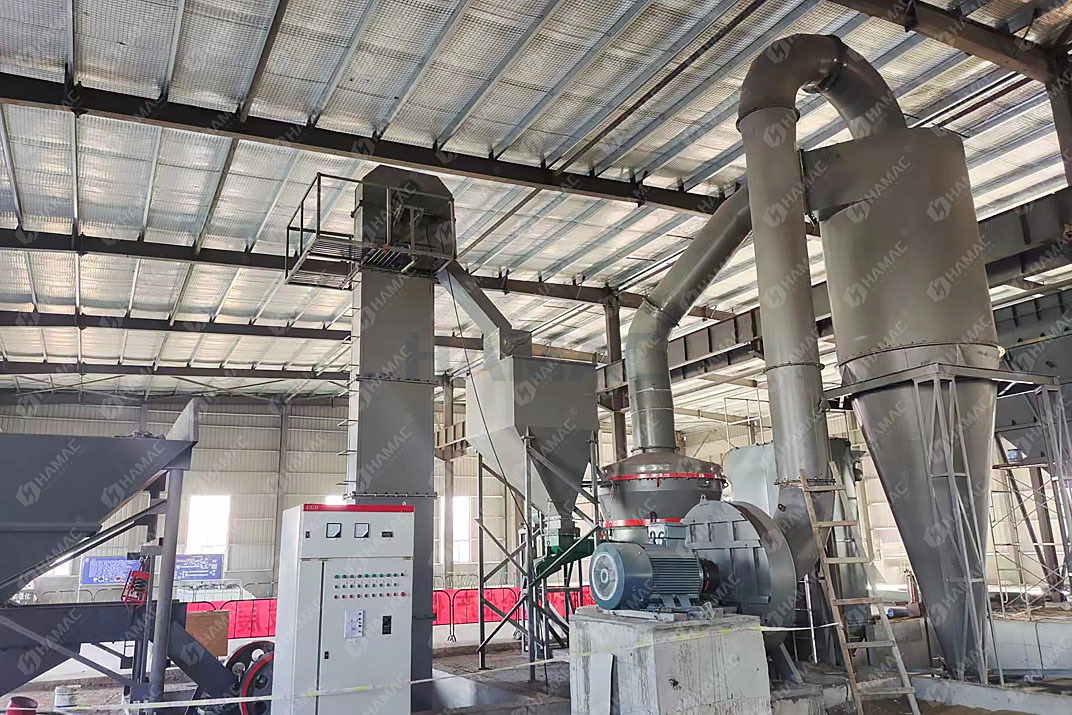
What to verify before you sign
- Dust and noise control designed to the local emission limits for your market.
- Choke-feed arrangement: surge bin, feeder control and level indication.
- Maximum feed lump and gradation — a chamber that cannot accept the top size will bridge on day one.
- Erection scope: supervision only, or full civil, mechanical and electrical installation.
- Saleable tonnes per hour at each product size, not gross crusher throughput, for your target tonnage.
- Delivery terms (FOB / CFR / CIF) with the destination port named explicitly.
- Access for liner change-out — crane radius, lifting points and clearance around the chamber.
- Control system language, telemetry and remote diagnostics availability.
- Availability of a small contractor crew for liner changes and the lifting equipment on site.
Score each supplier against the same ten items and keep the score sheet with the purchase file for the three-year review.
Where the money actually goes
| Cost line | Indicative share | What moves the number |
|---|---|---|
| Equipment & drive packages | 55% | Model size, number of stages and automation level |
| Ocean freight & insurance | 9% | Destination port, container count and out-of-gauge cargo |
| Civil works & foundations | 9% | Soil conditions, dynamic loads and site preparation |
| Erection, commissioning & training | 7% | Local labour, supervision scope and schedule |
| First-year wear parts | 13% | Rock abrasiveness, liner grade and operating hours |
| Power, lubricants & consumables | 7% | kWh per tonne, local tariff and dust suppression water |
For lm vertical coal mill at your target tonnage, wear parts and energy usually outweigh the difference between two purchase prices within three to five years.
Mistakes that cost more than the machine
- Specifying motors for the wrong voltage or frequency and rewinding them on site.
- Selecting the cheapest liner alloy for hard, high-silica rock and paying for it in change-outs.
- Comparing quotations with different port terms and calling the lower number cheaper.
- Using one liner profile for both secondary and tertiary stages.
- Ordering no spares with the plant and waiting six weeks for the first liner set.
- Assuming a mobile plant can match a stationary line on high-tonnage, multi-product duty.
- Forgetting surge capacity — an intermittent loader starves the chamber and ruins particle shape.
- Letting the seasonal road-project supply duty be defined verbally instead of in the contract.
Review the list with a small contractor crew before the order is placed — they will recognise most of them.
Commissioning checklist
- Verify rotation direction on every motor before coupling.
- Confirm all guards, emergency stops and pull-wire switches function.
- Check hydraulic pressure, accumulator pre-charge and tramp-release function.
- Introduce feed in graded steps: 25%, 50%, 75%, then full load.
- Verify chute liners, skirt rubber and impact bars after the first hour of feed.
- Measure and log the as-new CSS / setting for future wear comparison.
- Check belt tracking, chute build-up and transfer-point dust.
- Calibrate the belt scale and any level probes against a known load.
The commissioning record becomes the reference for every liner change in the three-year plan.