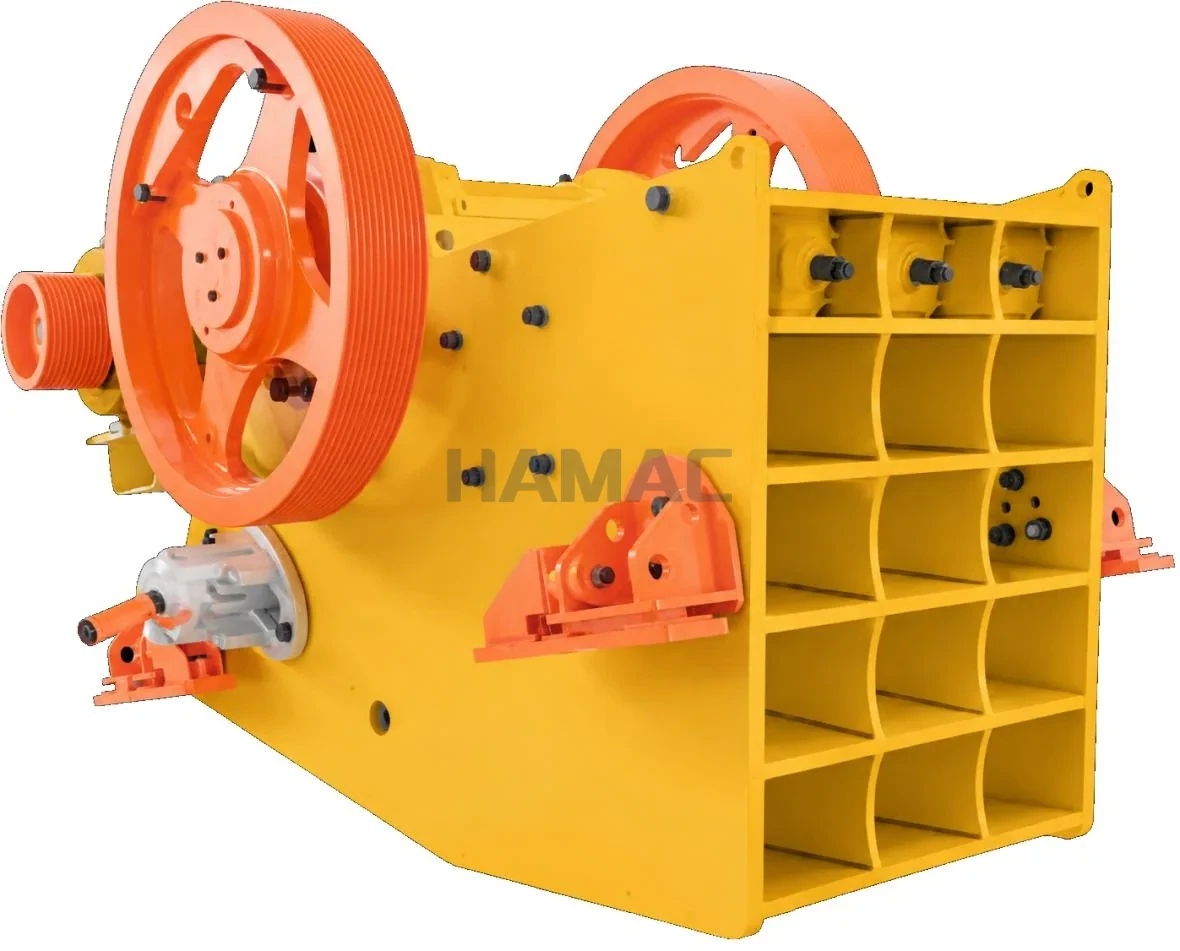
Overview
Practical, numbers-first guidance on the C Series Jaw Crusher — written for engineers specifying, buying and running crushing plants.
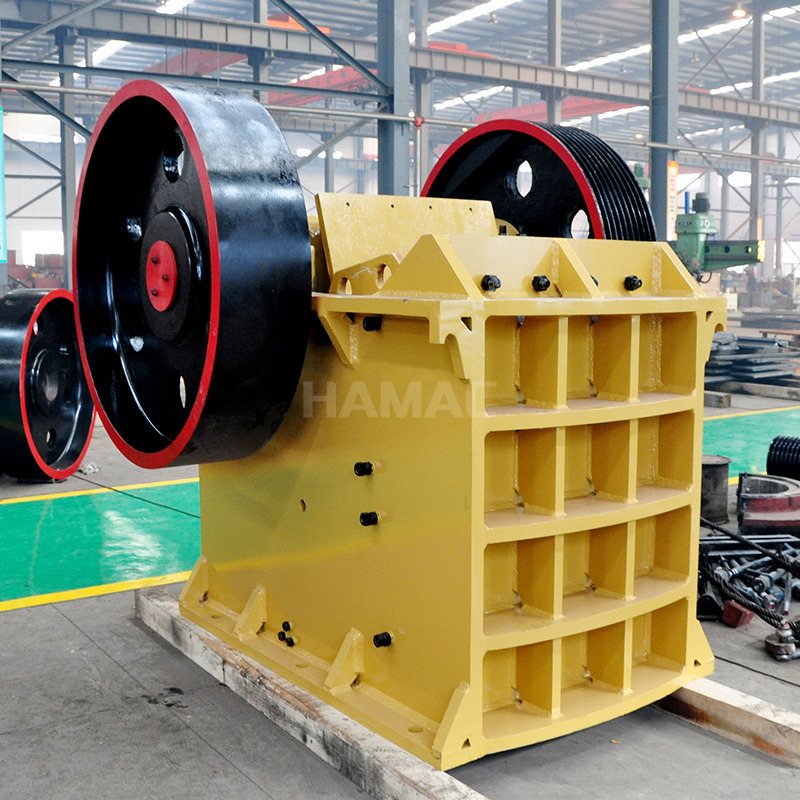
Abnormal noise / vibration
- Check for loose liner bolts or foreign metal in feed.
- Verify foundation bolts and coupling alignment.
- Listen for bearing distress; schedule replacement.
Low output
- Worn liners / blow bars reduce reduction.
- Wrong CSS / setting for target product.
- Screen blinding limits throughput.
Poor product shape
- Increase reduction in the shaping stage.
- Verify VSI rotor speed / anvil.
- Re-check screen mesh.
Reference data for this configuration
| Parameter | Reference value |
|---|---|
| Machine line | C Series Jaw Crusher |
| Category | Jaw Crusher |
| Assumed duty | mine pre-beneficiation feed |
| Evaluation horizon | ten-year view |
The figures above are transcribed from published HAMAC data and from the material properties of the feed; site measurements take precedence.
Published C Series Jaw Crusher model data
| C-series model | Typical mobile / modular configuration | Nominal plant capacity (t/h) | Source |
|---|---|---|---|
| SC96 / C96 | K3-C96-2C mobile jaw plant | 80–150 | HAMAC catalogue p.16 |
| SC106 / C106 | K3-C106-2C mobile jaw plant | 100–250 | HAMAC catalogue p.16 |
| SC110 / C110 | K3-C110-2C mobile jaw plant | 200–300 | HAMAC catalogue p.16 |
| C96 + HP200 | K3-C96-HP200-4C four-in-one plant | 100–200 | HAMAC catalogue p.18 |
| C96 + PFV1214 | K3-C96-PF1214-4C four-in-one plant | 100–200 | HAMAC catalogue p.18 |
New-generation C-series primary jaw crusher with higher structural strength, larger crushing ratio and lower cost per tonne than conventional PE machines. Read the table column by column against mine pre-beneficiation feed: the model you pick is the one whose published range brackets your target tonnage, not simply the largest machine in the series. Availability, motor rating and shipping data are re-confirmed for a greenfield site in the written HAMAC proposal.
Project profile these notes assume
| Assumption | Value |
|---|---|
| Operating duty | mine pre-beneficiation feed |
| Primary objective | minimal civil works |
| Evaluation horizon | ten-year view |
| Site condition | a greenfield site |
| Operating team | a full-time plant team |
Change any one of these assumptions and the recommended configuration for c series jaw crusher may change. HAMAC re-runs the same checks against your own numbers once the enquiry data sheet is received.
From enquiry to the first saleable tonne
- Run a sieve analysis on a representative sample and attach the grading curve to the enquiry.
- Review the crusher chamber profile with the liner supplier against the feed material.
- Set the maintenance stock list from the expected wear rate, not from a percentage of the equipment price.
- Set the closed-side setting or rotor speed against the required product fractions, then verify the expected reduction ratio.
- Record the as-built settings and give the operator a written daily, weekly and monthly schedule.
- Commission with graded load, sample the product grading, then train operators on liner change-out and daily checks.
- Sequence delivery so foundations cure while the equipment is still in manufacture.
- Plan training for a full-time plant team on CSS adjustment, liner change-out and lock-out / tag-out.
- Check bearing and lubrication arrangements against the ambient temperature range at the site.
Each step has an owner and a document: flow sheet, general arrangement, foundation reference, packing list and acceptance protocol.
What to verify before you sign
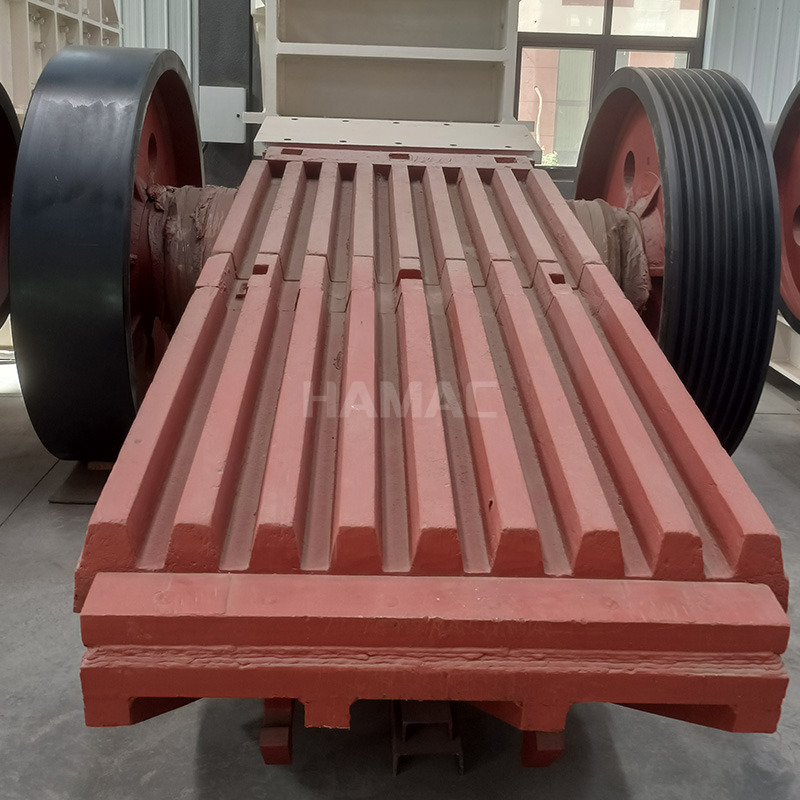
- Control system language, telemetry and remote diagnostics availability.
- Availability of a full-time plant team for liner changes and the lifting equipment on site.
- Closed-side setting range and whether automatic setting regulation is included.
- Maximum feed lump and gradation — a chamber that cannot accept the top size will bridge on day one.
- Energy draw in kW and the expected kWh per tonne at the design duty.
- Product sampling points and the lab equipment needed for routine grading checks.
- Decommissioning or relocation value at the end of a ten-year horizon.
- Guaranteed power draw and the minimal civil works trade-off it implies.
- Wear-part interchangeability across machines in the same circuit.
Share this list with a full-time plant team as well as procurement; operators are the ones who live with the omissions.
Where the money actually goes
| Cost line | Indicative share | What moves the number |
|---|---|---|
| Equipment & drive packages | 54% | Model size, number of stages and automation level |
| Ocean freight & insurance | 8% | Destination port, container count and out-of-gauge cargo |
| Civil works & foundations | 8% | Soil conditions, dynamic loads and site preparation |
| Erection, commissioning & training | 7% | Local labour, supervision scope and schedule |
| First-year wear parts | 15% | Rock abrasiveness, liner grade and operating hours |
| Power, lubricants & consumables | 8% | kWh per tonne, local tariff and dust suppression water |
On mine pre-beneficiation feed, the minimal civil works objective changes which line deserves the most attention during value engineering.
Mistakes that cost more than the machine
- Choosing screen apertures before the concrete or asphalt mix design is fixed.
- Specifying motors for the wrong voltage or frequency and rewinding them on site.
- Assuming a mobile plant can match a stationary line on high-tonnage, multi-product duty.
- Omitting a bypass chute, so a single screen fault stops the whole line.
- Letting the mine pre-beneficiation feed duty be defined verbally instead of in the contract.
- Planning the crusher but not the conveyors, transfer chutes and stockpile capacity around it.
- Leaving tramp-iron protection out of the scope to save a small percentage of capital.
- Skipping the acceptance test, so no one has a baseline to measure degradation against.
Every item on this list has cost someone a commissioning date; none of them requires new technology to avoid.
Commissioning checklist
- Confirm the direction and tension of every belt under no load.
- Hand over the spare-parts list, manuals and maintenance schedule.
- Check hydraulic pressure, accumulator pre-charge and tramp-release function.
- Sample each product fraction and compare with the specification.
- Confirm all guards, emergency stops and pull-wire switches function.
- Calibrate the belt scale and any level probes against a known load.
- Dry-run the plant empty for the specified period and record vibration.
- Record the baseline grading curve for each product fraction.
For a full-time plant team, run through this list twice — once with the supervisor and once without.