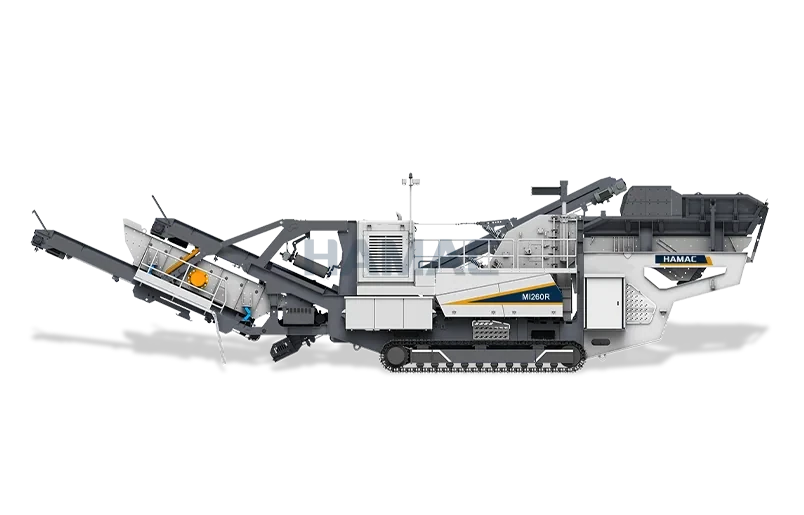
Overview
Practical, numbers-first guidance on the Tracked Impact Crusher Plant — written for engineers specifying, buying and running crushing plants.
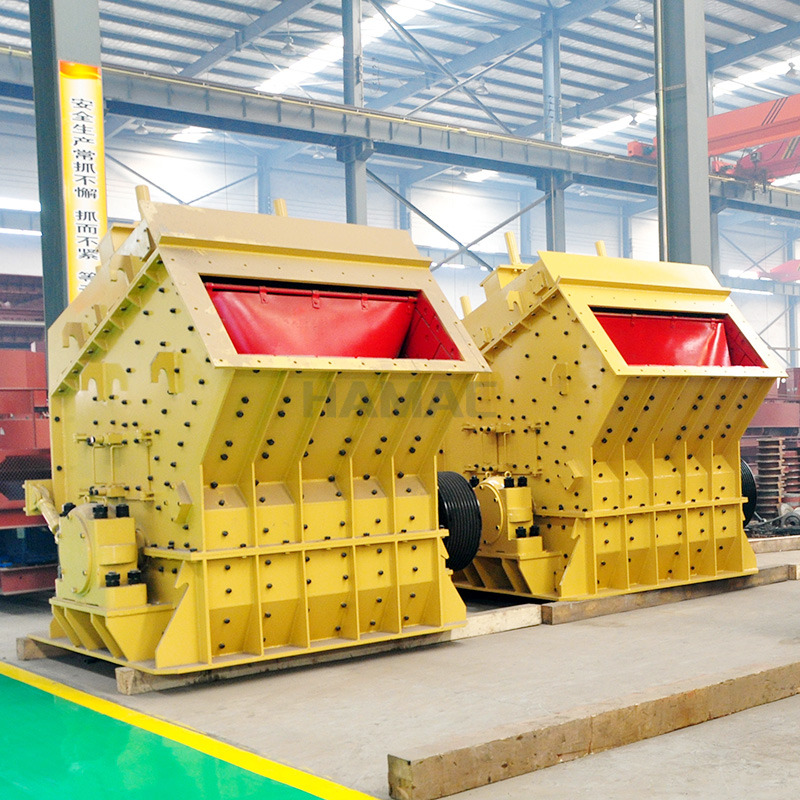
Capacity factors
- Chamber / CSS and material.
- Feed gradation and moisture.
- Screen efficiency downstream.
- Continuous vs surge feed.
Rule of thumb
Rated capacity is stated at a given CSS and material; treat it as saleable product, not crusher throughput. Size the plant to 10–20% above target.
Reference data for this configuration
| Parameter | Reference value |
|---|---|
| Machine line | Tracked Impact Crusher Plant |
| Category | Tracked Crushing Plants |
| Assumed duty | contract crushing on short-term sites |
| Evaluation horizon | five-year view |
These values are the starting point for a written proposal on tracked impact crusher plant; they are nominal and should be confirmed against a sample test before manufacture.
Published Tracked Impact Crusher Plant model data
| Model | MI260RE | MI350RE |
|---|---|---|
| Feeder | ||
| Volume(m³) | 7 | 7.5 |
| Feeding height(mm) | 4222 | 4124 |
| Maximum feed size(mm) | 600 | 600 |
| Feeding capacity(t/h) | 300 | 400 |
| Crusher | ||
| Host model | MIX2 | MIX3 |
| Return screen length×width(mm) | 1540x3600 | 1740x5000 |
Boost your production with the HMC series Tracked Impact Crusher Plant—track-mounted for ultimate mobility, safety, and environmental care. Read the table column by column against contract crushing on short-term sites: the model you pick is the one whose published range brackets your target tonnage, not simply the largest machine in the series. Availability, motor rating and shipping data are re-confirmed for a remote mine site in the written HAMAC proposal.
Project profile these notes assume
| Assumption | Value |
|---|---|
| Operating duty | contract crushing on short-term sites |
| Primary objective | minimal civil works |
| Evaluation horizon | five-year view |
| Site condition | a remote mine site |
| Operating team | a mixed local and expatriate team |
Change any one of these assumptions and the recommended configuration for tracked impact crusher plant may change. HAMAC re-runs the same checks against your own numbers once the enquiry data sheet is received.
From enquiry to the first saleable tonne
- Confirm the haul-road and stockpile plan with a remote mine site in mind before fixing conveyor lengths.
- Lay out conveyors, access ways, stockpile capacity and drainage before ordering steelwork.
- Survey the feed: the feed material; record top size, bulk density, moisture and clay content before fixing the flow sheet.
- Record the as-built settings and give the operator a written daily, weekly and monthly schedule.
- Set the maintenance stock list from the expected wear rate, not from a percentage of the equipment price.
- Define the acceptance test: sampling points, test duration, moisture range and who signs the protocol.
- Check bearing and lubrication arrangements against the ambient temperature range at the site.
- Allocate screen area per deck; blinding and pegging are the most common hidden bottlenecks in a new plant.
- Run a sieve analysis on a representative sample and attach the grading curve to the enquiry.
For a mixed local and expatriate team, the commissioning and training steps need more calendar time than the mechanical erection itself.
What to verify before you sign
- Control system language, telemetry and remote diagnostics availability.
- Tramp-iron protection — hydraulic release, magnet and metal detection on the feed belt.
- Choke-feed arrangement: surge bin, feeder control and level indication.
- Closed-side setting range and whether automatic setting regulation is included.
- Spare-parts consignment: one full liner or blow-bar set plus meshes, belts, bearings and seals.
- Access for liner change-out — crane radius, lifting points and clearance around the chamber.
- Ambient temperature, altitude and dust load derating for motors and hydraulics.
- After-sales response time, technician availability and the warranty exclusions in writing.
- Nameplate data for local voltage, frequency and the applicable conformity scheme.
Bring this list to the design review — it is cheaper to resolve an omission on paper than during commissioning.
Where the money actually goes
| Cost line | Indicative share | What moves the number |
|---|---|---|
| Equipment & drive packages | 54% | Model size, number of stages and automation level |
| Ocean freight & insurance | 8% | Destination port, container count and out-of-gauge cargo |
| Civil works & foundations | 8% | Soil conditions, dynamic loads and site preparation |
| Erection, commissioning & training | 7% | Local labour, supervision scope and schedule |
| First-year wear parts | 15% | Rock abrasiveness, liner grade and operating hours |
| Power, lubricants & consumables | 8% | kWh per tonne, local tariff and dust suppression water |
Include downtime in the model. An unplanned liner change on a remote site costs far more than the casting itself.
Mistakes that cost more than the machine
- Comparing quotations with different port terms and calling the lower number cheaper.
- Ignoring clay and moisture until the first wet season, when decks blind and chambers pack.
- Omitting a bypass chute, so a single screen fault stops the whole line.
- Using one liner profile for both secondary and tertiary stages.
- Assuming the manufacturer's warranty covers wear parts and consumables.
- Skipping a geotechnical check and discovering settlement under the primary crusher at a remote mine site.
- Assuming a mobile plant can match a stationary line on high-tonnage, multi-product duty.
- Leaving tramp-iron protection out of the scope to save a small percentage of capital.
Every item on this list has cost someone a commissioning date; none of them requires new technology to avoid.
Commissioning checklist
- Measure noise and dust at the operator position against the local limit.
- Check lubrication levels, grease lines and oil cooler operation.
- Test emergency stops, pull wires and interlock trips in sequence.
- Record the baseline grading curve for each product fraction.
- Confirm the direction and tension of every belt under no load.
- Confirm all guards, emergency stops and pull-wire switches function.
- Dry-run the plant empty for the specified period and record vibration.
- Check hydraulic pressure, accumulator pre-charge and tramp-release function.
Keep the signed record; it is the only defensible baseline for later performance disputes.