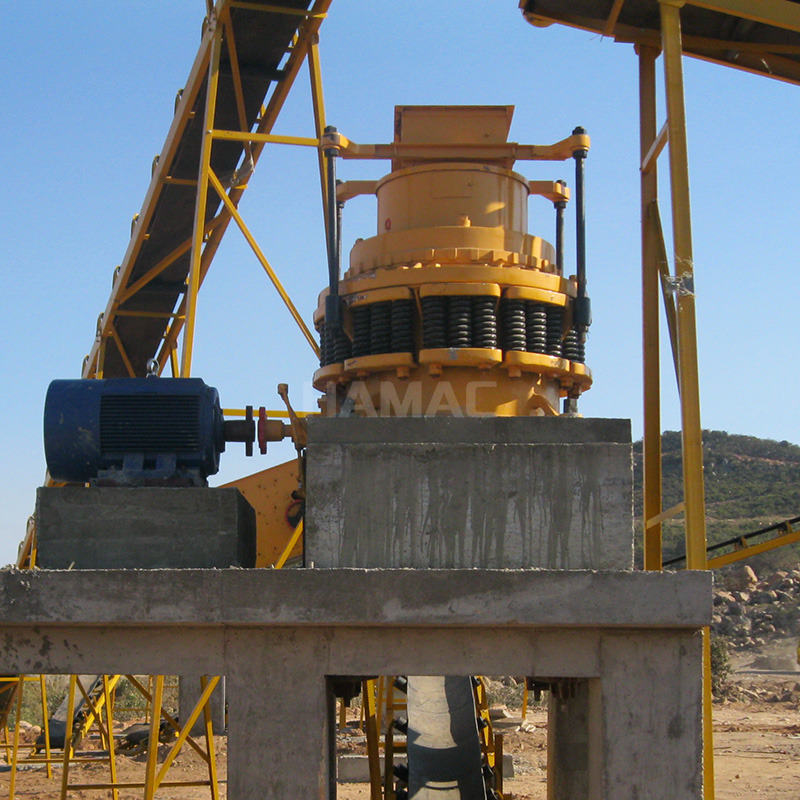
Overview
A concise, practical explanation of conveyor belt selection for crusher plants for anyone specifying or operating a crushing plant.
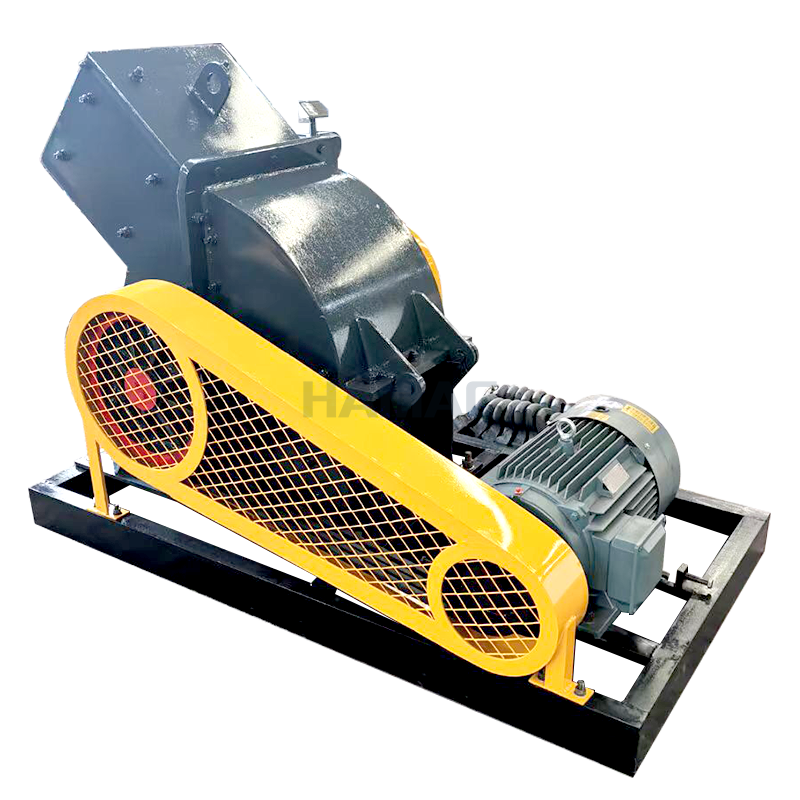
Selection
- Width / speed for peak t/h.
- Carcass grade for impact and tension.
- Covers for abrasion / weather.
Reference data for this configuration
| Parameter | Reference value |
|---|---|
| Assumed duty | seasonal road-project supply |
| Evaluation horizon | five-year view |
Treat this as a living sheet. Every revision of the flow sheet for your market should update the same fields so the equipment list stays traceable.
Project profile these notes assume
| Assumption | Value |
|---|---|
| Operating duty | seasonal road-project supply |
| Primary objective | simple operator maintenance |
| Evaluation horizon | five-year view |
| Site condition | a coastal export terminal |
| Operating team | an owner-operator team |
Change any one of these assumptions and the recommended configuration for the crushing and screening plant may change. HAMAC re-runs the same checks against your own numbers once the enquiry data sheet is received.
From enquiry to the first saleable tonne
- Confirm site voltage, frequency and applicable conformity standards before manufacture.
- Commission with graded load, sample the product grading, then train operators on liner change-out and daily checks.
- Allocate screen area per deck; blinding and pegging are the most common hidden bottlenecks in a new plant.
- Plan training for an owner-operator team on CSS adjustment, liner change-out and lock-out / tag-out.
- Choose compression or impact reduction according to hardness, silica content and required particle shape.
- Size the primary stage for your target tonnage with a 10–20% surge allowance — never on nameplate throughput alone.
- Confirm the haul-road and stockpile plan with a coastal export terminal in mind before fixing conveyor lengths.
- Book shipping, prepare the packing list and confirm the container loading plan.
- Verify the electrical single-line diagram, cable sizing and starter type with the local utility.
The sequence is deliberately front-loaded — decisions taken before manufacture are cheap, changes made on site are not.
What to verify before you sign
- Guaranteed power draw and the simple operator maintenance trade-off it implies.
- Access for liner change-out — crane radius, lifting points and clearance around the chamber.
- Decommissioning or relocation value at the end of a five-year horizon.
- Wear-part interchangeability across machines in the same circuit.
- Local service partner, technician travel time and visa requirements for your market.
- Delivery terms (FOB / CFR / CIF) with the destination port named explicitly.
- Spare motor, gearbox and hydraulic pump lead times from the nearest HAMAC stock point.
- Liner alloy: Mn13 matched to the rock, not to the lowest purchase price.
- Choke-feed arrangement: surge bin, feeder control and level indication.
The cheapest offer usually wins on equipment and loses on one of the last six items — freight terms, spares or the acceptance test.
Where the money actually goes
| Cost line | Indicative share | What moves the number |
|---|---|---|
| Equipment & drive packages | 54% | Model size, number of stages and automation level |
| Ocean freight & insurance | 8% | Destination port, container count and out-of-gauge cargo |
| Civil works & foundations | 8% | Soil conditions, dynamic loads and site preparation |
| Erection, commissioning & training | 7% | Local labour, supervision scope and schedule |
| First-year wear parts | 15% | Rock abrasiveness, liner grade and operating hours |
| Power, lubricants & consumables | 8% | kWh per tonne, local tariff and dust suppression water |
On seasonal road-project supply, the simple operator maintenance objective changes which line deserves the most attention during value engineering.
Mistakes that cost more than the machine
- Planning the crusher but not the conveyors, transfer chutes and stockpile capacity around it.
- Leaving tramp-iron protection out of the scope to save a small percentage of capital.
- Comparing quotations with different port terms and calling the lower number cheaper.
- Assuming a mobile plant can match a stationary line on high-tonnage, multi-product duty.
- Letting the seasonal road-project supply duty be defined verbally instead of in the contract.
- Ignoring clay and moisture until the first wet season, when decks blind and chambers pack.
- Assuming the manufacturer's warranty covers wear parts and consumables.
- Ordering no spares with the plant and waiting six weeks for the first liner set.
Review the list with an owner-operator team before the order is placed — they will recognise most of them.
Commissioning checklist
- Hand over the spare-parts list, manuals and maintenance schedule.
- Check lubrication levels, grease lines and oil cooler operation.
- Calibrate the belt scale and any level probes against a known load.
- Sample each product fraction and compare with the specification.
- Confirm all guards, emergency stops and pull-wire switches function.
- Dry-run the plant empty for the specified period and record vibration.
- Confirm the direction and tension of every belt under no load.
- Agree the punch list, sign the hand-over protocol and file the as-built drawings.
Keep the signed record; it is the only defensible baseline for later performance disputes.