Overview
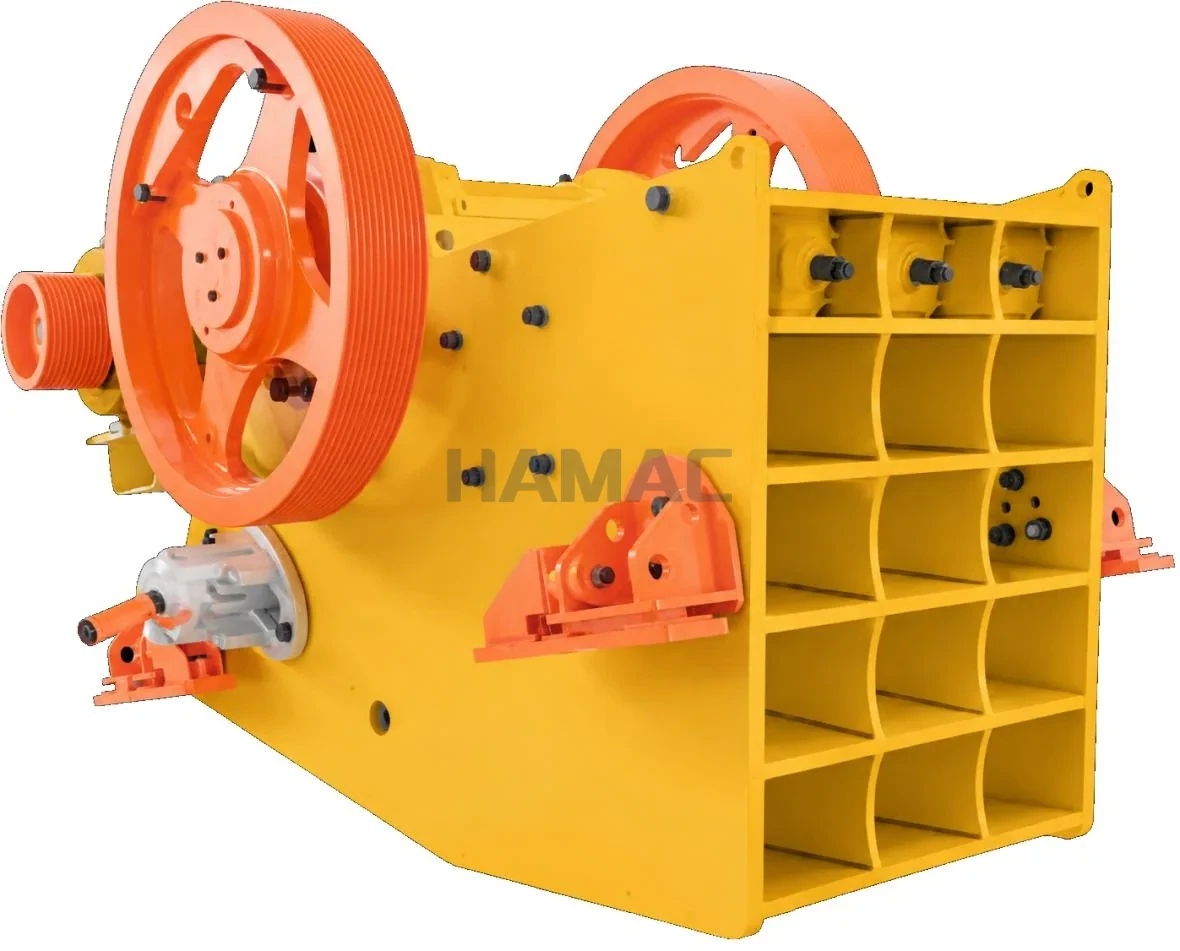
Practical, numbers-first guidance on the C Series Jaw Crusher — written for engineers specifying, buying and running crushing plants.
Capacity factors
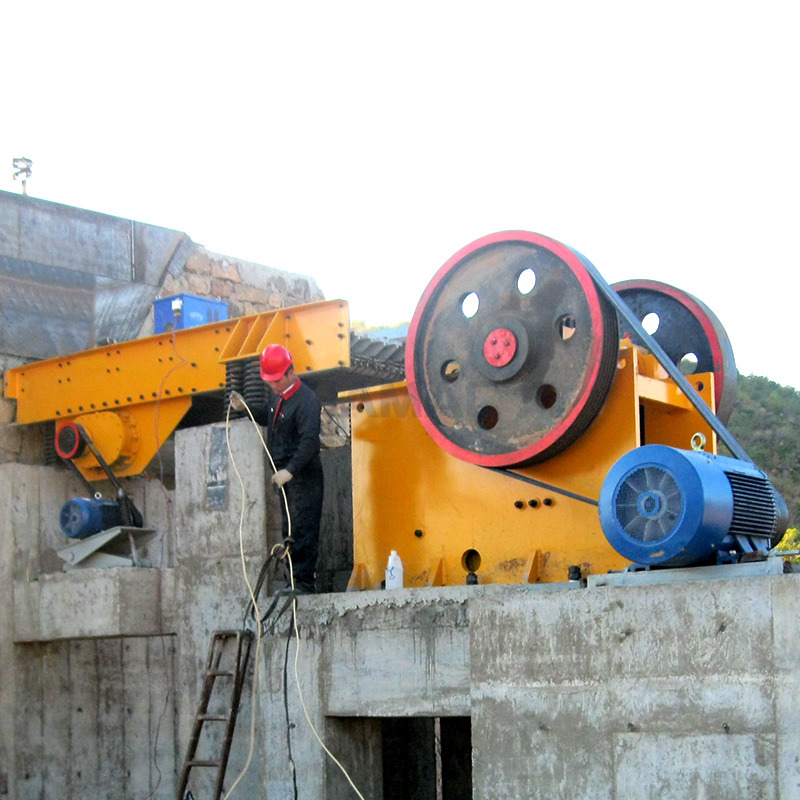
- Chamber / CSS and material.
- Feed gradation and moisture.
- Screen efficiency downstream.
- Continuous vs surge feed.
Rule of thumb
Rated capacity is stated at a given CSS and material; treat it as saleable product, not crusher throughput. Size the plant to 10–20% above target.
Reference data for this configuration
| Parameter | Reference value |
|---|---|
| Machine line | C Series Jaw Crusher |
| Category | Jaw Crusher |
| Assumed duty | manufactured-sand production |
| Evaluation horizon | ten-year view |
Ask for the same table from any competing supplier; without it, an offer for c series jaw crusher cannot be compared on scope.
Published C Series Jaw Crusher model data
| C-series model | Typical mobile / modular configuration | Nominal plant capacity (t/h) | Source |
|---|---|---|---|
| SC96 / C96 | K3-C96-2C mobile jaw plant | 80–150 | HAMAC catalogue p.16 |
| SC106 / C106 | K3-C106-2C mobile jaw plant | 100–250 | HAMAC catalogue p.16 |
| SC110 / C110 | K3-C110-2C mobile jaw plant | 200–300 | HAMAC catalogue p.16 |
| C96 + HP200 | K3-C96-HP200-4C four-in-one plant | 100–200 | HAMAC catalogue p.18 |
| C96 + PFV1214 | K3-C96-PF1214-4C four-in-one plant | 100–200 | HAMAC catalogue p.18 |
New-generation C-series primary jaw crusher with higher structural strength, larger crushing ratio and lower cost per tonne than conventional PE machines. Read the table column by column against manufactured-sand production: the model you pick is the one whose published range brackets your target tonnage, not simply the largest machine in the series. Availability, motor rating and shipping data are re-confirmed for a confined urban yard in the written HAMAC proposal.
Project profile these notes assume
| Assumption | Value |
|---|---|
| Operating duty | manufactured-sand production |
| Primary objective | minimal civil works |
| Evaluation horizon | ten-year view |
| Site condition | a confined urban yard |
| Operating team | a rotating shift crew |
Change any one of these assumptions and the recommended configuration for c series jaw crusher may change. HAMAC re-runs the same checks against your own numbers once the enquiry data sheet is received.
From enquiry to the first saleable tonne
- Plan training for a rotating shift crew on CSS adjustment, liner change-out and lock-out / tag-out.
- Verify the electrical single-line diagram, cable sizing and starter type with the local utility.
- Check bearing and lubrication arrangements against the ambient temperature range at the site.
- Allocate screen area per deck; blinding and pegging are the most common hidden bottlenecks in a new plant.
- Size the primary stage for your target tonnage with a 10–20% surge allowance — never on nameplate throughput alone.
- Include dust suppression, guarding, emergency stops and lock-out points in the layout drawing.
- Run a sieve analysis on a representative sample and attach the grading curve to the enquiry.
- Confirm site voltage, frequency and applicable conformity standards before manufacture.
- Record the as-built settings and give the operator a written daily, weekly and monthly schedule.
The sequence is deliberately front-loaded — decisions taken before manufacture are cheap, changes made on site are not.
What to verify before you sign
- Spare-parts consignment: one full liner or blow-bar set plus meshes, belts, bearings and seals.
- Dust and noise control designed to the local emission limits for your market.
- Access for liner change-out — crane radius, lifting points and clearance around the chamber.
- Guaranteed power draw and the minimal civil works trade-off it implies.
- Maximum feed lump and gradation — a chamber that cannot accept the top size will bridge on day one.
- Delivery terms (FOB / CFR / CIF) with the destination port named explicitly.
- Closed-side setting range and whether automatic setting regulation is included.
- Erection scope: supervision only, or full civil, mechanical and electrical installation.
- Screen deck count, aperture and area; ask for the efficiency calculation, not just the mesh size.
The cheapest offer usually wins on equipment and loses on one of the last six items — freight terms, spares or the acceptance test.
Where the money actually goes
| Cost line | Indicative share | What moves the number |
|---|---|---|
| Equipment & drive packages | 54% | Model size, number of stages and automation level |
| Ocean freight & insurance | 8% | Destination port, container count and out-of-gauge cargo |
| Civil works & foundations | 8% | Soil conditions, dynamic loads and site preparation |
| Erection, commissioning & training | 7% | Local labour, supervision scope and schedule |
| First-year wear parts | 15% | Rock abrasiveness, liner grade and operating hours |
| Power, lubricants & consumables | 8% | kWh per tonne, local tariff and dust suppression water |
Treat the percentages as a budgeting shape, not a quotation: HAMAC prices the equipment list in writing once the flow sheet is fixed.
Mistakes that cost more than the machine
- Choosing screen apertures before the concrete or asphalt mix design is fixed.
- Skipping the acceptance test, so no one has a baseline to measure degradation against.
- Letting the manufactured-sand production duty be defined verbally instead of in the contract.
- Ignoring clay and moisture until the first wet season, when decks blind and chambers pack.
- Overlooking dust, noise and water permits in your market until erection has already started.
- Comparing quotations with different port terms and calling the lower number cheaper.
- Skipping a geotechnical check and discovering settlement under the primary crusher at a confined urban yard.
- Buying minimal civil works on price alone and losing it in availability.
On a confined urban yard, the civil and logistics items deserve as much attention as the crusher itself.
Commissioning checklist
- Check hydraulic pressure, accumulator pre-charge and tramp-release function.
- Measure noise and dust at the operator position against the local limit.
- Hand over the spare-parts list, manuals and maintenance schedule.
- Sample each product fraction and compare with the specification.
- Confirm all guards, emergency stops and pull-wire switches function.
- Record the baseline grading curve for each product fraction.
- Record power draw, tonnage and chamber pressure at steady state.
- Agree the punch list, sign the hand-over protocol and file the as-built drawings.
On a confined urban yard, allow extra time for the dust and noise measurements.