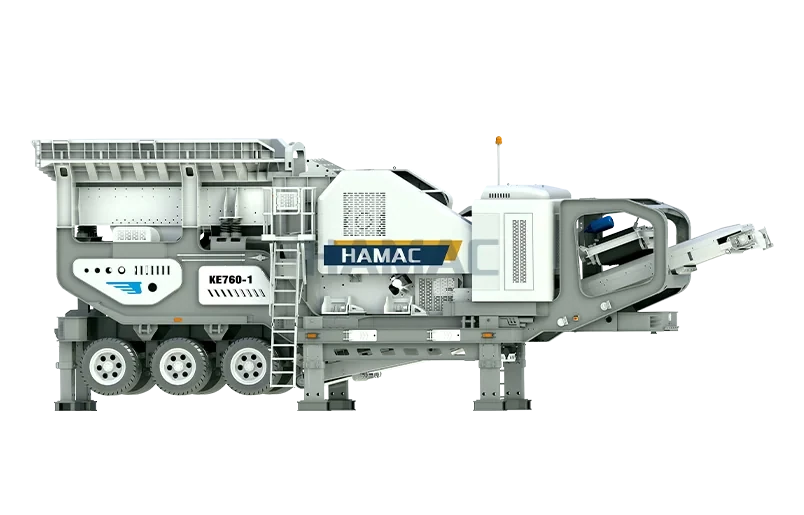
Overview
Practical, numbers-first guidance on the Mobile Jaw Crusher Plant — written for engineers specifying, buying and running crushing plants.
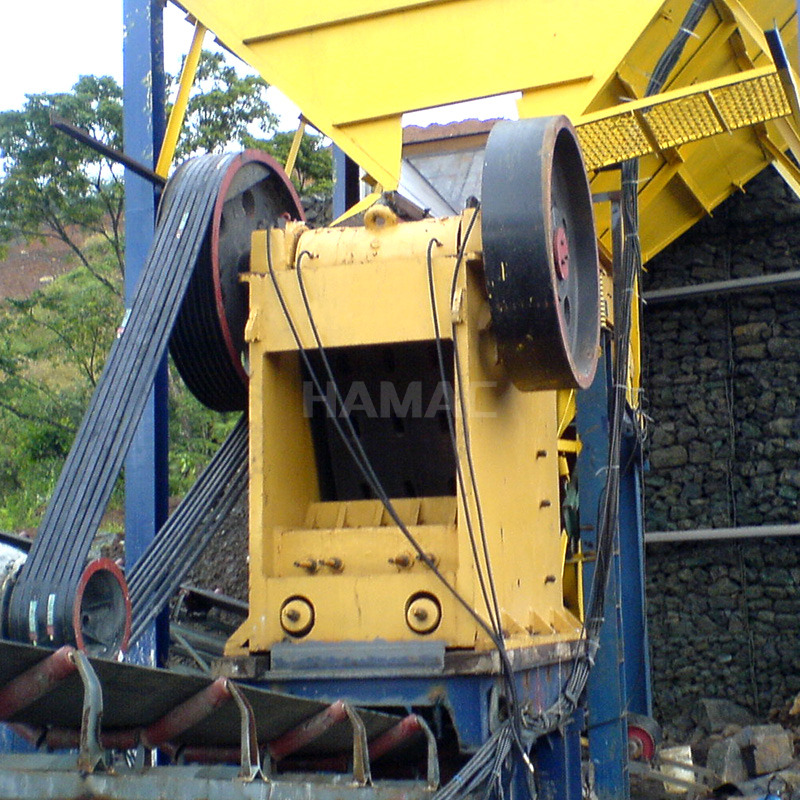
Abnormal noise / vibration
- Check for loose liner bolts or foreign metal in feed.
- Verify foundation bolts and coupling alignment.
- Listen for bearing distress; schedule replacement.
Low output
- Worn liners / blow bars reduce reduction.
- Wrong CSS / setting for target product.
- Screen blinding limits throughput.
Poor product shape
- Increase reduction in the shaping stage.
- Verify VSI rotor speed / anvil.
- Re-check screen mesh.
Reference data for this configuration
| Parameter | Reference value |
|---|---|
| Machine line | Mobile Jaw Crusher Plant |
| Category | Wheel Type Mobile Crushers |
| Assumed duty | contract crushing on short-term sites |
| Evaluation horizon | ten-year view |
Where a value is shown as nominal, the written proposal states the guaranteed figure for your material, feed grading and ten-year operating plan.
Published Mobile Jaw Crusher Plant model data
| Model | Discharge Adjustment | Nominal Capacity | Dimension | Magnetic Separator | Axles |
|---|---|---|---|---|---|
| MJ69 | 95-165 mm | 30-85 m³/h | 11097×3759×3500 mm | RCYD800 | Double |
| MJC96 | 60-175 mm | 60-200 m³/h | 11097×3759×3500 mm | RCYD800 | Double |
| MJ750 | 80-180 mm | 72-150 m³/h | 13300×2900×4440 mm | RCYD1000 | Three |
| MJC106 | 70-200 mm | 100-300 m³/h | 13300×2900×4440 mm | RCYD1000 | Three |
The tire-type mobilejaw crusher mobile is a mobile primary crushing equipment composed of vibratingfeeder, jaw crusher, conveyor belt and other components. Read the table column by column against contract crushing on short-term sites: the model you pick is the one whose published range brackets your target tonnage, not simply the largest machine in the series. Availability, motor rating and shipping data are re-confirmed for a confined urban yard in the written HAMAC proposal.
Project profile these notes assume
| Assumption | Value |
|---|---|
| Operating duty | contract crushing on short-term sites |
| Primary objective | tight grading compliance |
| Evaluation horizon | ten-year view |
| Site condition | a confined urban yard |
| Operating team | a small contractor crew |
Change any one of these assumptions and the recommended configuration for mobile jaw crusher plant may change. HAMAC re-runs the same checks against your own numbers once the enquiry data sheet is received.
From enquiry to the first saleable tonne
- Sequence delivery so foundations cure while the equipment is still in manufacture.
- Set the closed-side setting or rotor speed against the required product fractions, then verify the expected reduction ratio.
- Survey the feed: the feed material; record top size, bulk density, moisture and clay content before fixing the flow sheet.
- Confirm the haul-road and stockpile plan with a confined urban yard in mind before fixing conveyor lengths.
- Log tonnes per liner set and kWh per tonne from day one so you have a real cost baseline within a quarter.
- Include dust suppression, guarding, emergency stops and lock-out points in the layout drawing.
- Review the crusher chamber profile with the liner supplier against the feed material.
- Record the as-built settings and give the operator a written daily, weekly and monthly schedule.
- Choose compression or impact reduction according to hardness, silica content and required particle shape.
On contract crushing on short-term sites, step ordering matters: survey and sampling must precede the equipment list, or the plant is sized to a guess.
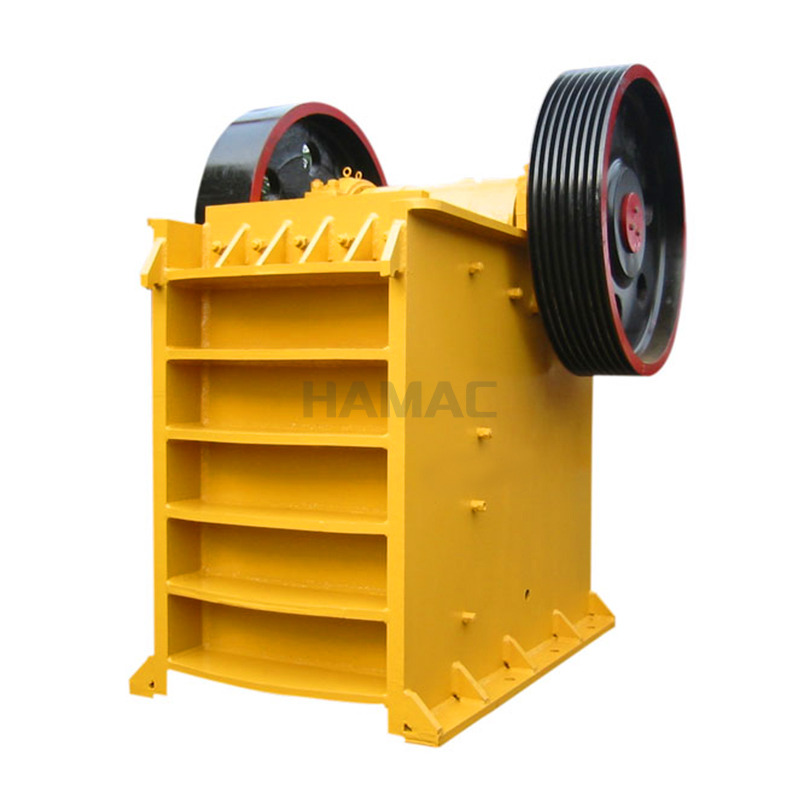
What to verify before you sign
- Dust and noise control designed to the local emission limits for your market.
- Closed-side setting range and whether automatic setting regulation is included.
- Erection scope: supervision only, or full civil, mechanical and electrical installation.
- Screen deck count, aperture and area; ask for the efficiency calculation, not just the mesh size.
- Maximum feed lump and gradation — a chamber that cannot accept the top size will bridge on day one.
- Control system language, telemetry and remote diagnostics availability.
- Saleable tonnes per hour at each product size, not gross crusher throughput, for your target tonnage.
- Decommissioning or relocation value at the end of a ten-year horizon.
- Delivery terms (FOB / CFR / CIF) with the destination port named explicitly.
For contract crushing on short-term sites, give the tight grading compliance line extra weight; a generic checklist will not rank the offers correctly.
Where the money actually goes
| Cost line | Indicative share | What moves the number |
|---|---|---|
| Equipment & drive packages | 54% | Model size, number of stages and automation level |
| Ocean freight & insurance | 8% | Destination port, container count and out-of-gauge cargo |
| Civil works & foundations | 8% | Soil conditions, dynamic loads and site preparation |
| Erection, commissioning & training | 7% | Local labour, supervision scope and schedule |
| First-year wear parts | 15% | Rock abrasiveness, liner grade and operating hours |
| Power, lubricants & consumables | 8% | kWh per tonne, local tariff and dust suppression water |
On contract crushing on short-term sites, the tight grading compliance objective changes which line deserves the most attention during value engineering.
Mistakes that cost more than the machine
- Forgetting surge capacity — an intermittent loader starves the chamber and ruins particle shape.
- Using one liner profile for both secondary and tertiary stages.
- Overlooking dust, noise and water permits in your market until erection has already started.
- Assuming a mobile plant can match a stationary line on high-tonnage, multi-product duty.
- Selecting the cheapest liner alloy for hard, high-silica rock and paying for it in change-outs.
- Skipping a geotechnical check and discovering settlement under the primary crusher at a confined urban yard.
- Buying on nameplate t/h without converting to saleable product at the specified fractions.
- Assuming the manufacturer's warranty covers wear parts and consumables.
On a confined urban yard, the civil and logistics items deserve as much attention as the crusher itself.
Commissioning checklist
- Calibrate the belt scale and any level probes against a known load.
- Check hydraulic pressure, accumulator pre-charge and tramp-release function.
- Introduce feed in graded steps: 25%, 50%, 75%, then full load.
- Verify chute liners, skirt rubber and impact bars after the first hour of feed.
- Confirm the direction and tension of every belt under no load.
- Dry-run the plant empty for the specified period and record vibration.
- Test emergency stops, pull wires and interlock trips in sequence.
- Measure and log the as-new CSS / setting for future wear comparison.
Keep the signed record; it is the only defensible baseline for later performance disputes.