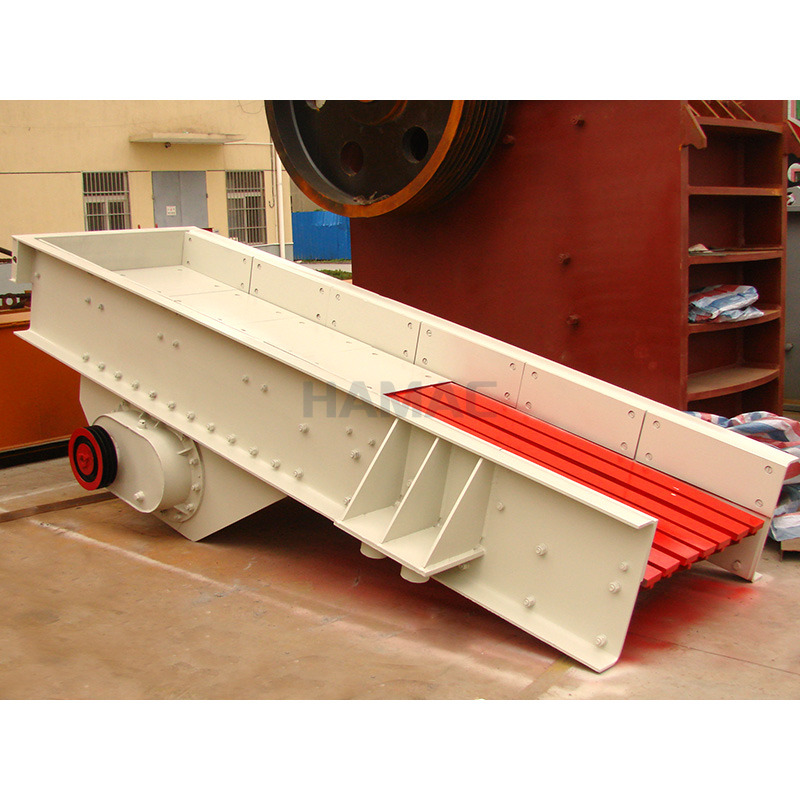
Overview
Compression crushing, premium liners. HAMAC designs crushing, screening and grinding circuits for hard rock across capacities.
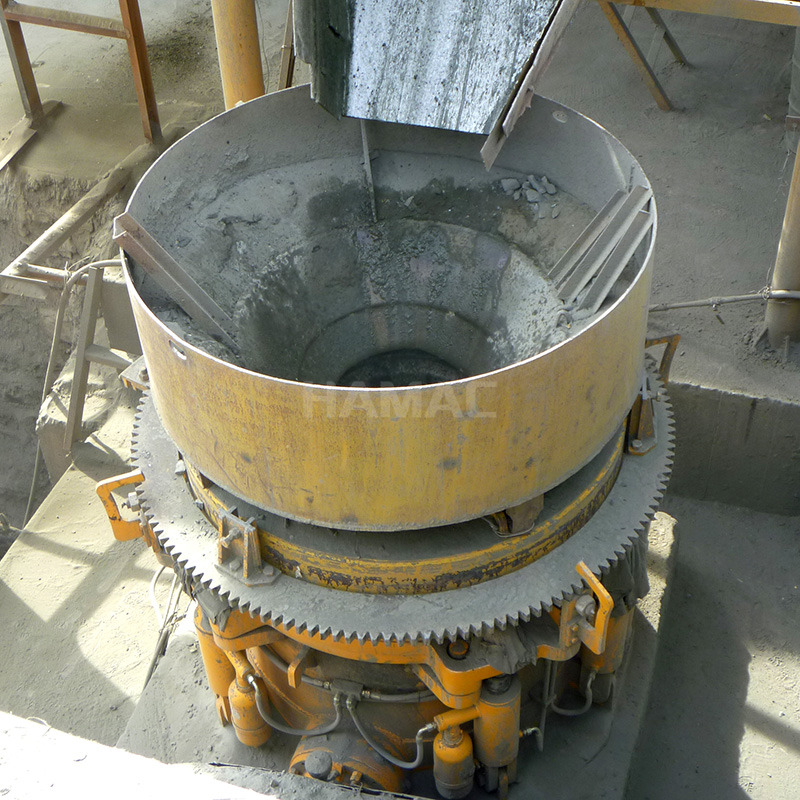
Scope
- Granite (Mohs 6.5, ~180 MPa)
- Basalt (Mohs 6, ~200 MPa)
- Andesite (Mohs 6, ~170 MPa)
- Gabbro (Mohs 6, ~180 MPa)
Typical flow
Feed → primary → secondary/tertiary → screening → (VSI / grinding) → stockpile.
Reference data for this configuration
| Parameter | Reference value |
|---|---|
| Application | Hard Rock |
| Typical feed | Granite, Basalt, Andesite, Gabbro |
| Assumed duty | high-tonnage aggregate supply |
| Evaluation horizon | ten-year view |
These values are the starting point for a written proposal on the crushing and screening plant; they are nominal and should be confirmed against a sample test before manufacture.
Project profile these notes assume
| Assumption | Value |
|---|---|
| Operating duty | high-tonnage aggregate supply |
| Primary objective | strict product cubicity |
| Evaluation horizon | ten-year view |
| Site condition | a coastal export terminal |
| Operating team | a mixed local and expatriate team |
Change any one of these assumptions and the recommended configuration for the crushing and screening plant may change. HAMAC re-runs the same checks against your own numbers once the enquiry data sheet is received.
From enquiry to the first saleable tonne
- Define the acceptance test: sampling points, test duration, moisture range and who signs the protocol.
- Confirm site voltage, frequency and applicable conformity standards before manufacture.
- Set the maintenance stock list from the expected wear rate, not from a percentage of the equipment price.
- Set the closed-side setting or rotor speed against the required product fractions, then verify the expected reduction ratio.
- Size the primary stage for your target tonnage with a 10–20% surge allowance — never on nameplate throughput alone.
- Choose compression or impact reduction according to hardness, silica content and required particle shape.
- Review the crusher chamber profile with the liner supplier against the feed material.
- Lay out conveyors, access ways, stockpile capacity and drainage before ordering steelwork.
- Verify the electrical single-line diagram, cable sizing and starter type with the local utility.
A HAMAC project manager stays with the order from the first data sheet through hand-over in your market.
What to verify before you sign
- Written performance guarantee, sampling method and acceptance-test protocol.
- Saleable tonnes per hour at each product size, not gross crusher throughput, for your target tonnage.
- Decommissioning or relocation value at the end of a ten-year horizon.
- Control system language, telemetry and remote diagnostics availability.
- Erection scope: supervision only, or full civil, mechanical and electrical installation.
- Wear-part interchangeability across machines in the same circuit.
- Spare-parts consignment: one full liner or blow-bar set plus meshes, belts, bearings and seals.
- Product sampling points and the lab equipment needed for routine grading checks.
- After-sales response time, technician availability and the warranty exclusions in writing.
Score each supplier against the same ten items and keep the score sheet with the purchase file for the ten-year review.
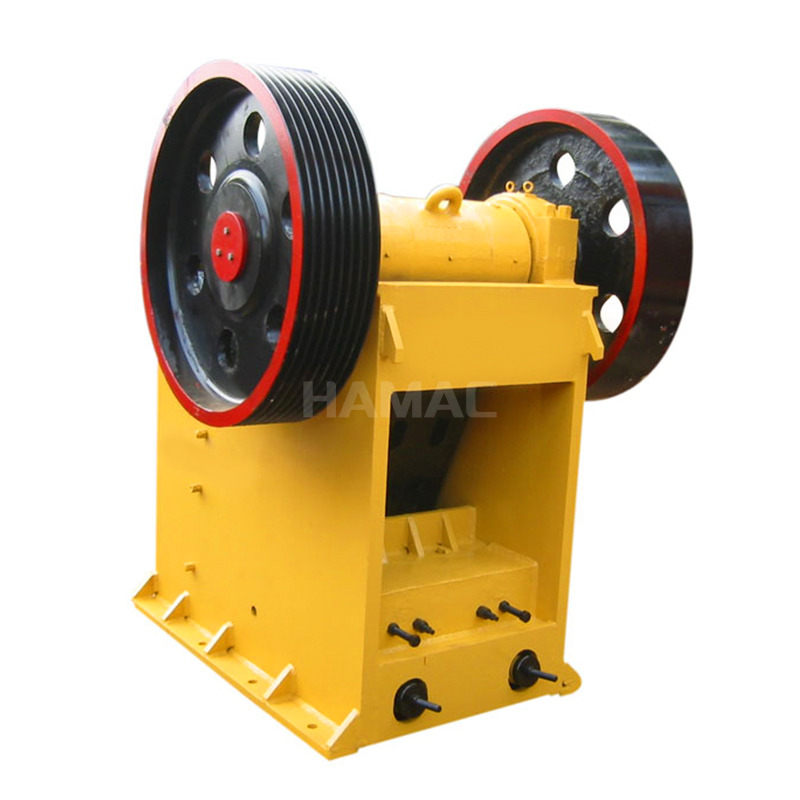
Where the money actually goes
| Cost line | Indicative share | What moves the number |
|---|---|---|
| Equipment & drive packages | 54% | Model size, number of stages and automation level |
| Ocean freight & insurance | 8% | Destination port, container count and out-of-gauge cargo |
| Civil works & foundations | 8% | Soil conditions, dynamic loads and site preparation |
| Erection, commissioning & training | 7% | Local labour, supervision scope and schedule |
| First-year wear parts | 15% | Rock abrasiveness, liner grade and operating hours |
| Power, lubricants & consumables | 8% | kWh per tonne, local tariff and dust suppression water |
A ten-year view normally reverses the ranking of two otherwise similar offers once wear and energy are included.
Mistakes that cost more than the machine
- Assuming a mobile plant can match a stationary line on high-tonnage, multi-product duty.
- Forgetting surge capacity — an intermittent loader starves the chamber and ruins particle shape.
- Using one liner profile for both secondary and tertiary stages.
- Omitting a bypass chute, so a single screen fault stops the whole line.
- Buying strict product cubicity on price alone and losing it in availability.
- Buying on nameplate t/h without converting to saleable product at the specified fractions.
- Skipping the acceptance test, so no one has a baseline to measure degradation against.
- Choosing screen apertures before the concrete or asphalt mix design is fixed.
Every item on this list has cost someone a commissioning date; none of them requires new technology to avoid.
Commissioning checklist
- Sample each product fraction and compare with the specification.
- Check belt tracking, chute build-up and transfer-point dust.
- Hand over the spare-parts list, manuals and maintenance schedule.
- Confirm all guards, emergency stops and pull-wire switches function.
- Check hydraulic pressure, accumulator pre-charge and tramp-release function.
- Agree the punch list, sign the hand-over protocol and file the as-built drawings.
- Verify rotation direction on every motor before coupling.
- Record the baseline grading curve for each product fraction.
For a mixed local and expatriate team, run through this list twice — once with the supervisor and once without.