Overview
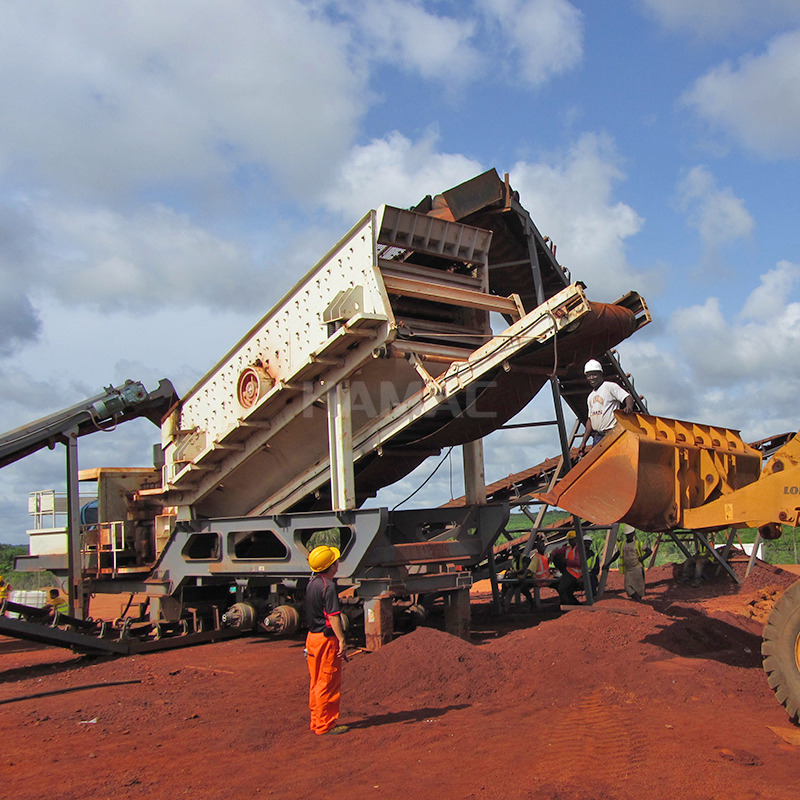
Selected HAMAC references relevant to soft rock:
References
- 100-120tph mobile crushing and screening plant in Algeria
- 100-120tph mobile crushing and screening plant in Chile
- 1500t/d Gold Ore Processing Plant in Tanzania
- 150-180tph stationary crushing and screening plant in Jamaica
- 150tph stationary crushing and screening plant in Iraq
Reference data for this configuration
| Parameter | Reference value |
|---|---|
| Application | Soft Rock |
| Typical feed | Limestone, Marble, Dolomite |
| Assumed duty | manufactured-sand production |
| Evaluation horizon | three-year view |
Use the table as a checklist when comparing quotations for the crushing and screening plant — a lower price often means one of these parameters was quietly reduced.
Project profile these notes assume
| Assumption | Value |
|---|---|
| Operating duty | manufactured-sand production |
| Primary objective | strict product cubicity |
| Evaluation horizon | three-year view |
| Site condition | a coastal export terminal |
| Operating team | a full-time plant team |
Change any one of these assumptions and the recommended configuration for the crushing and screening plant may change. HAMAC re-runs the same checks against your own numbers once the enquiry data sheet is received.
From enquiry to the first saleable tonne
- Set the closed-side setting or rotor speed against the required product fractions, then verify the expected reduction ratio.
- Sequence delivery so foundations cure while the equipment is still in manufacture.
- Allocate screen area per deck; blinding and pegging are the most common hidden bottlenecks in a new plant.
- Set the maintenance stock list from the expected wear rate, not from a percentage of the equipment price.
- Define the acceptance test: sampling points, test duration, moisture range and who signs the protocol.
- Plan training for a full-time plant team on CSS adjustment, liner change-out and lock-out / tag-out.
- Confirm the haul-road and stockpile plan with a coastal export terminal in mind before fixing conveyor lengths.
- Survey the feed: the feed material; record top size, bulk density, moisture and clay content before fixing the flow sheet.
- Choose compression or impact reduction according to hardness, silica content and required particle shape.
A HAMAC project manager stays with the order from the first data sheet through hand-over in your market.
What to verify before you sign
- Product sampling points and the lab equipment needed for routine grading checks.
- Decommissioning or relocation value at the end of a three-year horizon.
- Erection scope: supervision only, or full civil, mechanical and electrical installation.
- Guaranteed power draw and the strict product cubicity trade-off it implies.
- Control system language, telemetry and remote diagnostics availability.
- Liner alloy: Mn18 matched to the rock, not to the lowest purchase price.
- Access for liner change-out — crane radius, lifting points and clearance around the chamber.
- Local service partner, technician travel time and visa requirements for your market.
- Tramp-iron protection — hydraulic release, magnet and metal detection on the feed belt.
The relative weight of each item changes with the project: wear parts dominate on abrasive rock, availability dominates on remote sites.
Where the money actually goes
| Cost line | Indicative share | What moves the number |
|---|---|---|
| Equipment & drive packages | 54% | Model size, number of stages and automation level |
| Ocean freight & insurance | 8% | Destination port, container count and out-of-gauge cargo |
| Civil works & foundations | 8% | Soil conditions, dynamic loads and site preparation |
| Erection, commissioning & training | 7% | Local labour, supervision scope and schedule |
| First-year wear parts | 15% | Rock abrasiveness, liner grade and operating hours |
| Power, lubricants & consumables | 8% | kWh per tonne, local tariff and dust suppression water |
Include downtime in the model. An unplanned liner change on a remote site costs far more than the casting itself.
Mistakes that cost more than the machine
- Planning the crusher but not the conveyors, transfer chutes and stockpile capacity around it.
- Leaving tramp-iron protection out of the scope to save a small percentage of capital.
- Overlooking dust, noise and water permits in your market until erection has already started.
- Buying strict product cubicity on price alone and losing it in availability.
- Comparing quotations with different port terms and calling the lower number cheaper.
- Ordering no spares with the plant and waiting six weeks for the first liner set.
- Assuming the manufacturer's warranty covers wear parts and consumables.
- Forgetting surge capacity — an intermittent loader starves the chamber and ruins particle shape.
For manufactured-sand production, protect the strict product cubicity requirement explicitly in the contract documents.
Commissioning checklist
- Introduce feed in graded steps: 25%, 50%, 75%, then full load.
- Test emergency stops, pull wires and interlock trips in sequence.
- Agree the punch list, sign the hand-over protocol and file the as-built drawings.
- Sample each product fraction and compare with the specification.
- Check hydraulic pressure, accumulator pre-charge and tramp-release function.
- Confirm all guards, emergency stops and pull-wire switches function.
- Dry-run the plant empty for the specified period and record vibration.
- Record the baseline grading curve for each product fraction.
The commissioning record becomes the reference for every liner change in the three-year plan.