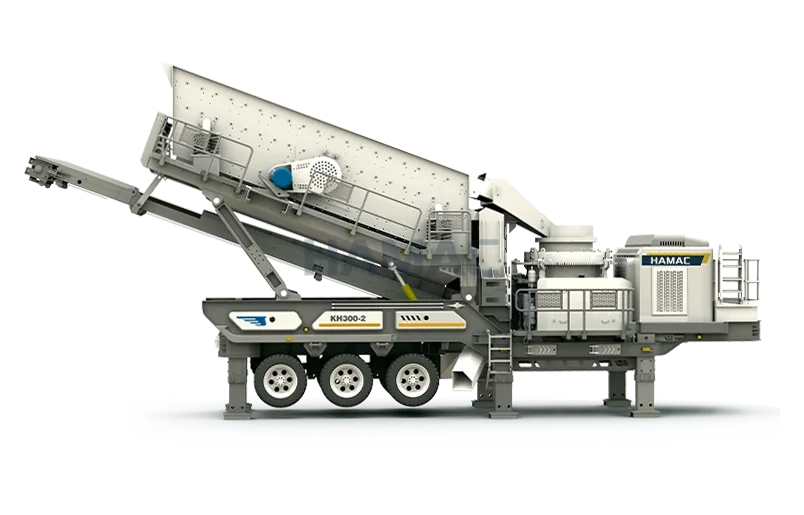
Overview
Buying a Mobile Cone Crusher Plant direct from HAMAC removes the trading margin and gives you engineering support from enquiry to commissioning.
Why buy direct
- One project manager for the whole order.
- Workshop assembly, test and container loading plan.
- Flow-sheet design, layout and foundation reference.
- Installation supervision, training and 24h technical response.
Export & documentation
Quoted FOB / CFR / CIF. Documentation applicable to your market (CE where required), Spanish manuals for LatAm, motors set to local voltage.
How to order
Send project data → receive design + budget in 24h → refine drawings → manufacture → install.
Reference data for this configuration
| Parameter | Reference value |
|---|---|
| Machine line | Mobile Cone Crusher Plant |
| Category | Wheel Type Mobile Crushers |
| Assumed duty | contract crushing on short-term sites |
| Evaluation horizon | ten-year view |
Use the table as a checklist when comparing quotations for mobile cone crusher plant — a lower price often means one of these parameters was quietly reduced.
Published Mobile Cone Crusher Plant model data
| Model | MC75 | MC160 | MC300 |
|---|---|---|---|
| Transportation Length | 14000 mm | 14500 mm | 14500 mm |
| Transportation Width | 3100 mm | 3100 mm | 3100 mm |
| Transportation Height | 4300 mm | 4500 mm | 4500 mm |
| Weight | 38.2 t | 49.5 t | 43 t |
| Axles | Double | Double | Three |
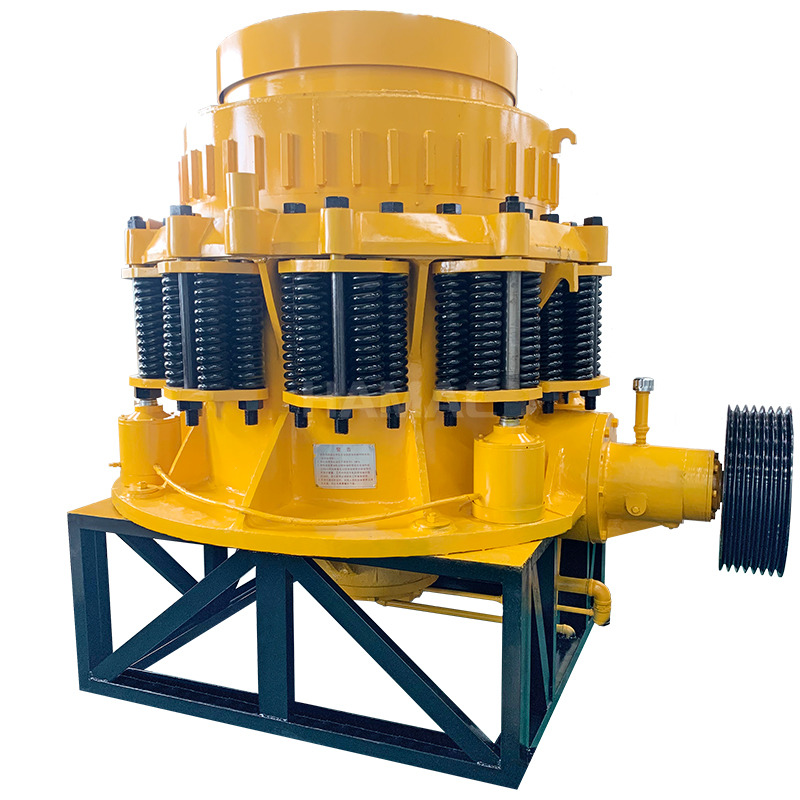
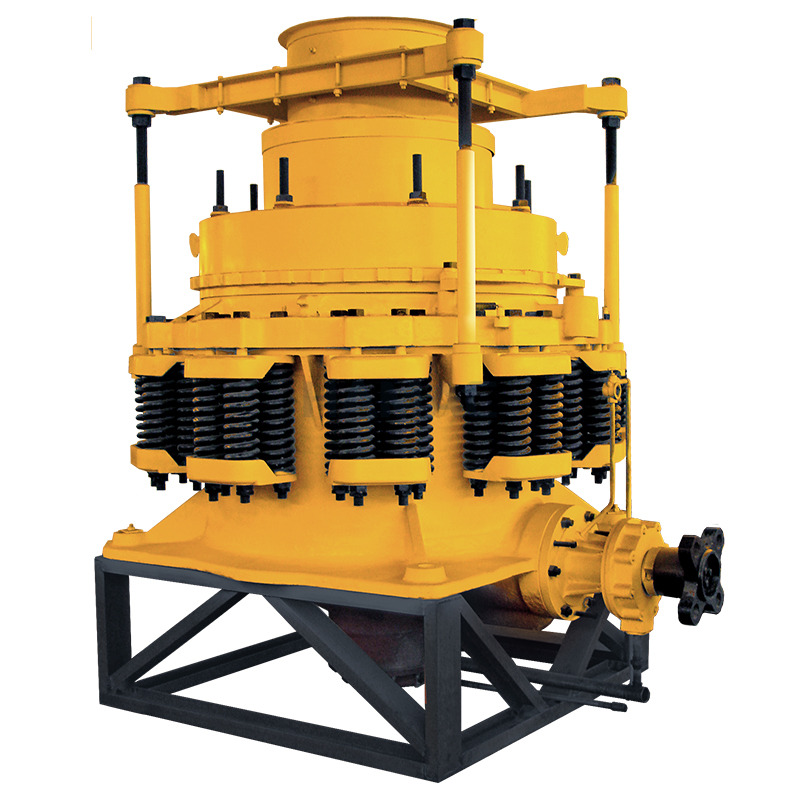
| Cone Crusher | 3FT | 4.25FT | HP300 |
| Belt Conveyor for Discharging | B650×7M | B800×7.5M | B800×7.5M |
| Belt Conveyor for Return Material 1# | B650×9.5M | B800×9.5M | B800×9.5M |
Mobile cone crushing plant is a new type of rock crusher, designed to overcome ground and environmental obstacles. Read the table column by column against contract crushing on short-term sites: the model you pick is the one whose published range brackets your target tonnage, not simply the largest machine in the series. Availability, motor rating and shipping data are re-confirmed for a coastal export terminal in the written HAMAC proposal.
Project profile these notes assume
| Assumption | Value |
|---|---|
| Operating duty | contract crushing on short-term sites |
| Primary objective | maximum mechanical availability |
| Evaluation horizon | ten-year view |
| Site condition | a coastal export terminal |
| Operating team | a mixed local and expatriate team |
Change any one of these assumptions and the recommended configuration for mobile cone crusher plant may change. HAMAC re-runs the same checks against your own numbers once the enquiry data sheet is received.
From enquiry to the first saleable tonne
- Budget for water, dust extraction and spillage handling as part of the plant, not as an afterthought.
- Run a sieve analysis on a representative sample and attach the grading curve to the enquiry.
- Set the closed-side setting or rotor speed against the required product fractions, then verify the expected reduction ratio.
- Commission with graded load, sample the product grading, then train operators on liner change-out and daily checks.
- Define the acceptance test: sampling points, test duration, moisture range and who signs the protocol.
- Choose compression or impact reduction according to hardness, silica content and required particle shape.
- Confirm site voltage, frequency and applicable conformity standards before manufacture.
- Book shipping, prepare the packing list and confirm the container loading plan.
- Review the crusher chamber profile with the liner supplier against the feed material.
For a mixed local and expatriate team, the commissioning and training steps need more calendar time than the mechanical erection itself.
What to verify before you sign
- Access for liner change-out — crane radius, lifting points and clearance around the chamber.
- Closed-side setting range and whether automatic setting regulation is included.
- Delivery terms (FOB / CFR / CIF) with the destination port named explicitly.
- After-sales response time, technician availability and the warranty exclusions in writing.
- Erection scope: supervision only, or full civil, mechanical and electrical installation.
- Saleable tonnes per hour at each product size, not gross crusher throughput, for your target tonnage.
- Guaranteed power draw and the maximum mechanical availability trade-off it implies.
- Spare-parts consignment: one full liner or blow-bar set plus meshes, belts, bearings and seals.
- Spare motor, gearbox and hydraulic pump lead times from the nearest HAMAC stock point.
Share this list with a mixed local and expatriate team as well as procurement; operators are the ones who live with the omissions.
Where the money actually goes
| Cost line | Indicative share | What moves the number |
|---|---|---|
| Equipment & drive packages | 54% | Model size, number of stages and automation level |
| Ocean freight & insurance | 8% | Destination port, container count and out-of-gauge cargo |
| Civil works & foundations | 8% | Soil conditions, dynamic loads and site preparation |
| Erection, commissioning & training | 7% | Local labour, supervision scope and schedule |
| First-year wear parts | 15% | Rock abrasiveness, liner grade and operating hours |
| Power, lubricants & consumables | 8% | kWh per tonne, local tariff and dust suppression water |
For mobile cone crusher plant at your target tonnage, wear parts and energy usually outweigh the difference between two purchase prices within three to five years.
Mistakes that cost more than the machine
- Comparing quotations with different port terms and calling the lower number cheaper.
- Overlooking dust, noise and water permits in your market until erection has already started.
- Using one liner profile for both secondary and tertiary stages.
- Assuming a mobile plant can match a stationary line on high-tonnage, multi-product duty.
- Buying on nameplate t/h without converting to saleable product at the specified fractions.
- Forgetting surge capacity — an intermittent loader starves the chamber and ruins particle shape.
- Ignoring clay and moisture until the first wet season, when decks blind and chambers pack.
- Skipping a geotechnical check and discovering settlement under the primary crusher at a coastal export terminal.
For contract crushing on short-term sites, protect the maximum mechanical availability requirement explicitly in the contract documents.
Commissioning checklist
- Sample each product fraction and compare with the specification.
- Verify chute liners, skirt rubber and impact bars after the first hour of feed.
- Measure and log the as-new CSS / setting for future wear comparison.
- Measure noise and dust at the operator position against the local limit.
- Verify rotation direction on every motor before coupling.
- Check belt tracking, chute build-up and transfer-point dust.
- Hand over the spare-parts list, manuals and maintenance schedule.
- Agree the punch list, sign the hand-over protocol and file the as-built drawings.
Keep the signed record; it is the only defensible baseline for later performance disputes.