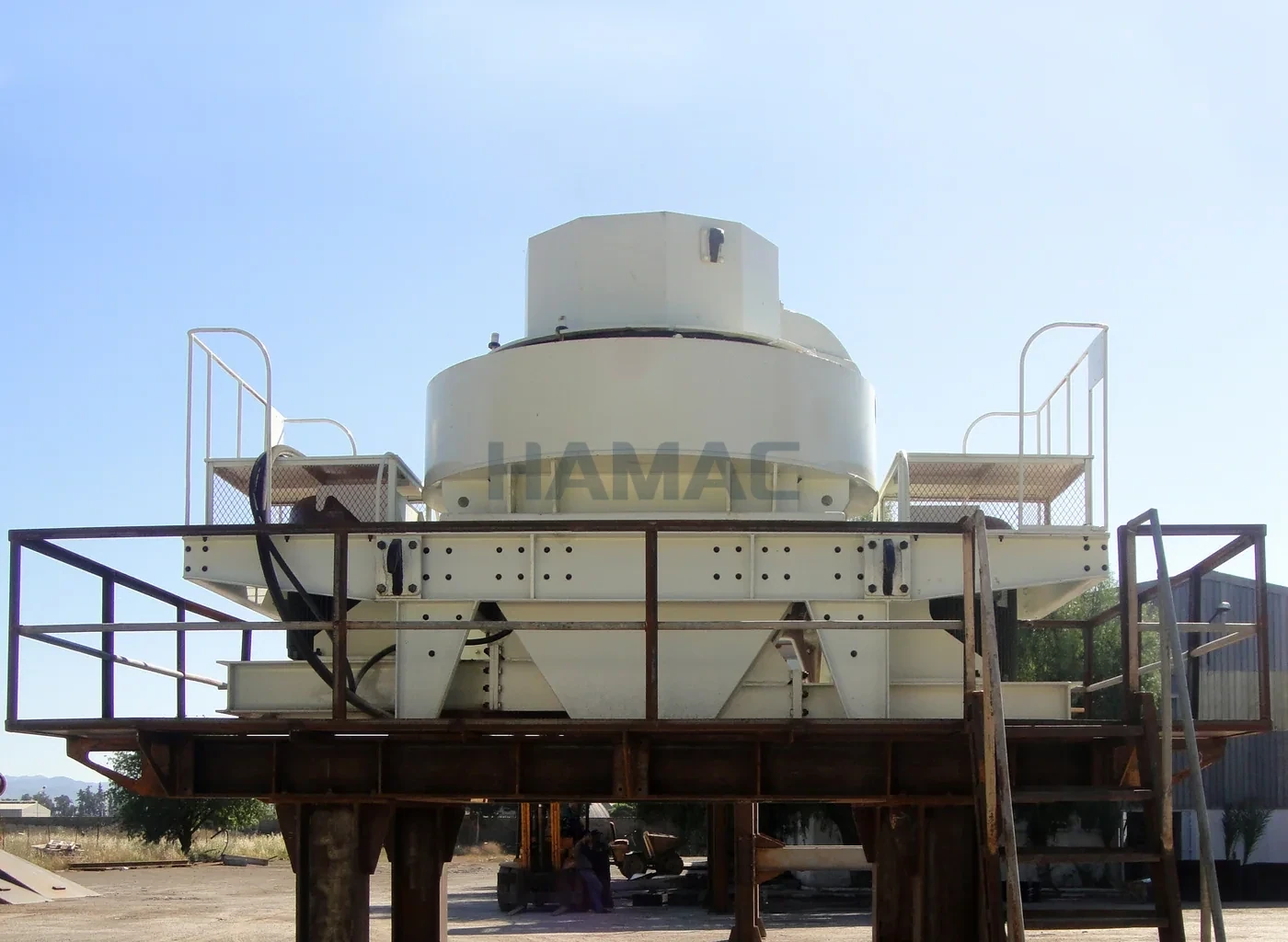
Overview
This page brings together the published VSI Vertical Shaft Impact Crusher (Sand Making Machine) model data and the practical details of importing it into Myanmar — power supply, standards, shipping and commissioning. Popular feed materials in the market include Limestone, Aggregates.
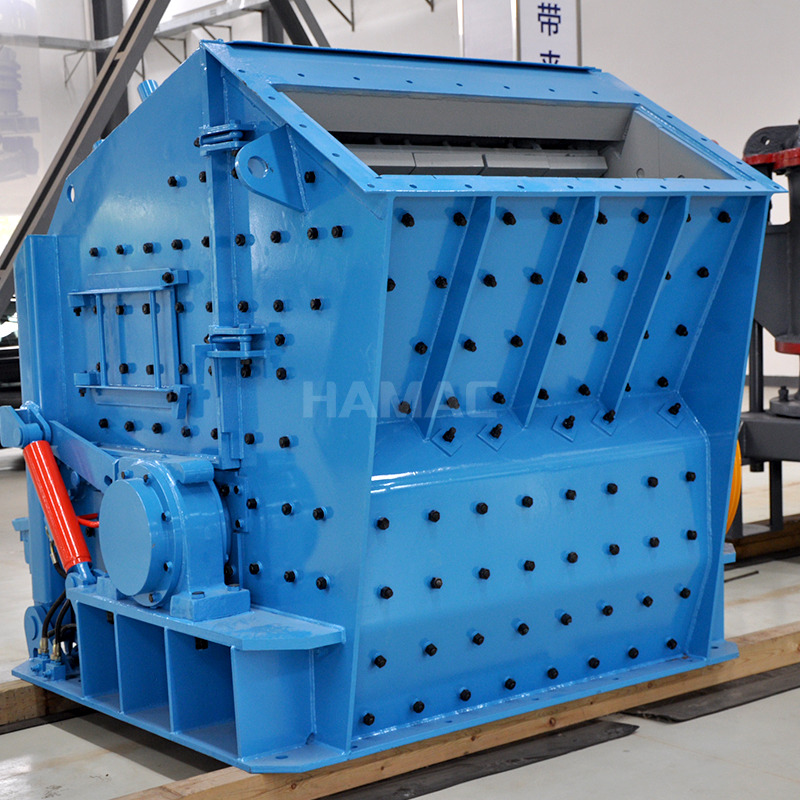
Published VSI Vertical Shaft Impact Crusher (Sand Making Machine) data
| Published parameter | Nominal value |
|---|---|
| VSI7611 | ≤35 60–90 |
| VSI7615 | ≤35 70–140 |
| VSI8518 | ≤40 100–130 |
| VSI8522 | ≤40 120–160 |
| VSI9526 | ≤45 150–190 |
| VSI9532 | ≤45 180–220 |
Local conditions in Myanmar
- Destination port: Yangon.
- Site supply: 380V 50Hz.
- Standards: MSS.
- Common materials: Limestone, Aggregates.
- Region: Asia.
Delivery scope
HAMAC quotes FOB, CFR or CIF to Yangon, sets motors and starters to 380V 50Hz, and supplies the certificate set applicable to MSS. Workshop assembly, test, container loading plan and installation supervision are included in a turnkey scope.
Reference data for this configuration
| Parameter | Reference value |
|---|---|
| Destination port | Yangon |
| Site supply | 380V 50Hz |
| Local standards | MSS |
| Region | Asia |
| Machine line | VSI Vertical Shaft Impact Crusher (Sand Making Machine) |
| Category | Sand Making & Washing |
| Assumed duty | manufactured-sand production |
| Evaluation horizon | ten-year view |
The figures above are transcribed from published HAMAC data and from the material properties of the feed; site measurements take precedence.
Published VSI Vertical Shaft Impact Crusher (Sand Making Machine) model data
| Model | Max. feeding size (mm) | Nominal through capacity (t/h) | Motor power (kW) |
|---|---|---|---|
| VSI7611 | ≤35 | 60–90 | 55×2 |
| VSI7615 | ≤35 | 70–140 | 75×2 |
| VSI8518 | ≤40 | 100–130 | 90×2 |
| VSI8522 | ≤40 | 120–160 | 110×2 |
| VSI9526 | ≤45 | 150–190 | 132×2 |
| VSI9532 | ≤45 | 180–220 | 160×2 |
| VSI1140 | ≤50 | 225–260 | 200×2 |
| VSI1145 | ≤50 | 250–300 | 220×2 |
VSI sand making machine, 60–500 t/h, for manufactured sand and aggregate shaping with rock-on-rock crushing and interchangeable wear parts. Read the table column by column against manufactured-sand production: the model you pick is the one whose published range brackets your target tonnage, not simply the largest machine in the series. Availability, motor rating and shipping data are re-confirmed for a remote mine site in the written HAMAC proposal.
Project profile these notes assume
| Assumption | Value |
|---|---|
| Operating duty | manufactured-sand production |
| Primary objective | strict product cubicity |
| Evaluation horizon | ten-year view |
| Site condition | a remote mine site |
| Operating team | a mixed local and expatriate team |
Change any one of these assumptions and the recommended configuration for vsi vertical shaft impact crusher (sand making machine) may change. HAMAC re-runs the same checks against your own numbers once the enquiry data sheet is received.
From enquiry to the first saleable tonne
- Sequence delivery so foundations cure while the equipment is still in manufacture.
- Confirm the haul-road and stockpile plan with a remote mine site in mind before fixing conveyor lengths.
- Lay out conveyors, access ways, stockpile capacity and drainage before ordering steelwork.
- Specify motors, starters and documentation for 380V 50Hz and MSS before manufacture.
- Include dust suppression, guarding, emergency stops and lock-out points in the layout drawing.
- Check bearing and lubrication arrangements against the ambient temperature range at the site.
- Plan training for a mixed local and expatriate team on CSS adjustment, liner change-out and lock-out / tag-out.
- Log tonnes per liner set and kWh per tonne from day one so you have a real cost baseline within a quarter.
- Set the closed-side setting or rotor speed against the required product fractions, then verify the expected reduction ratio.
A HAMAC project manager stays with the order from the first data sheet through hand-over in Myanmar.
What to verify before you sign
- Control system language, telemetry and remote diagnostics availability.
- Ambient temperature, altitude and dust load derating for motors and hydraulics.
- Spare-parts consignment: one full liner or blow-bar set plus meshes, belts, bearings and seals.
- Closed-side setting range and whether automatic setting regulation is included.
- Saleable tonnes per hour at each product size, not gross crusher throughput, for your target tonnage.
- Local service partner, technician travel time and visa requirements for Myanmar.
- After-sales response time, technician availability and the warranty exclusions in writing.
- Screen deck count, aperture and area; ask for the efficiency calculation, not just the mesh size.
- Delivery terms (FOB / CFR / CIF) with the destination port named explicitly.
Bring this list to the design review — it is cheaper to resolve an omission on paper than during commissioning.
Where the money actually goes
| Cost line | Indicative share | What moves the number |
|---|---|---|
| Equipment & drive packages | 53% | Model size, number of stages and automation level |
| Ocean freight & insurance | 11% | Destination port, container count and out-of-gauge cargo |
| Civil works & foundations | 8% | Soil conditions, dynamic loads and site preparation |
| Erection, commissioning & training | 7% | Local labour, supervision scope and schedule |
| First-year wear parts | 14% | Rock abrasiveness, liner grade and operating hours |
| Power, lubricants & consumables | 7% | kWh per tonne, local tariff and dust suppression water |
Model a low, base and high case for tonnes per liner set. The spread tells you more than a single optimistic estimate.
Mistakes that cost more than the machine
- Planning the crusher but not the conveyors, transfer chutes and stockpile capacity around it.
- Comparing quotations with different port terms and calling the lower number cheaper.
- Choosing screen apertures before the concrete or asphalt mix design is fixed.
- Forgetting surge capacity — an intermittent loader starves the chamber and ruins particle shape.
- Undersizing the screen, then blaming the crusher for a plant that never reaches your target tonnage.
- Letting the manufactured-sand production duty be defined verbally instead of in the contract.
- Selecting the cheapest liner alloy for hard, high-silica rock and paying for it in change-outs.
- Skipping a geotechnical check and discovering settlement under the primary crusher at a remote mine site.
Review the list with a mixed local and expatriate team before the order is placed — they will recognise most of them.
Commissioning checklist
- Record the baseline grading curve for each product fraction.
- Introduce feed in graded steps: 25%, 50%, 75%, then full load.
- Check hydraulic pressure, accumulator pre-charge and tramp-release function.
- Measure and log the as-new CSS / setting for future wear comparison.
- Test emergency stops, pull wires and interlock trips in sequence.
- Sample each product fraction and compare with the specification.
- Check lubrication levels, grease lines and oil cooler operation.
- Check belt tracking, chute build-up and transfer-point dust.
For a mixed local and expatriate team, run through this list twice — once with the supervisor and once without.