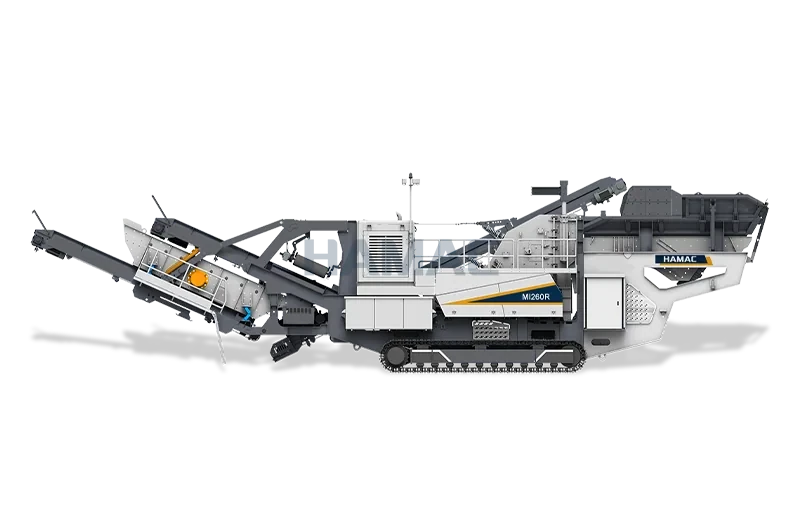
Overview
Buying a Crawler (Tracked) Impact Crusher TF Series direct from HAMAC removes the trading margin and gives you engineering support from enquiry to commissioning.
Why buy direct
- One project manager for the whole order.
- Workshop assembly, test and container loading plan.
- Flow-sheet design, layout and foundation reference.
- Installation supervision, training and 24h technical response.
Export & documentation
Quoted FOB / CFR / CIF. Documentation applicable to your market (CE where required), Spanish manuals for LatAm, motors set to local voltage.
How to order
Send project data → receive design + budget in 24h → refine drawings → manufacture → install.
Reference data for this configuration
| Parameter | Reference value |
|---|---|
| Machine line | Crawler (Tracked) Impact Crusher TF Series |
| Category | Tracked Crushing Plants |
| Assumed duty | high-tonnage aggregate supply |
| Evaluation horizon | three-year view |
At high-tonnage aggregate supply, the ranking of these parameters changes: simple operator maintenance usually becomes the deciding constraint rather than the headline tonnage.
Published Crawler (Tracked) Impact Crusher TF Series model data
| Model | TF150 | TF250 | TF350 |
|---|---|---|---|
| Impact crusher | LF150 | LF250 | LF350 |
| Max. feeding size | 500 mm | 700 mm | 800 mm |
| Capacity | 100–200 t/h | 200–400 t/h | 300–500 t/h |
| Motor power | 90–200 kW | 180–250 kW | 200–400 kW |
| Return screen | 2YK1530 | 2YS1640 | YS1740 |
| Generator | 360 kW | 500 kW | 520 kW |
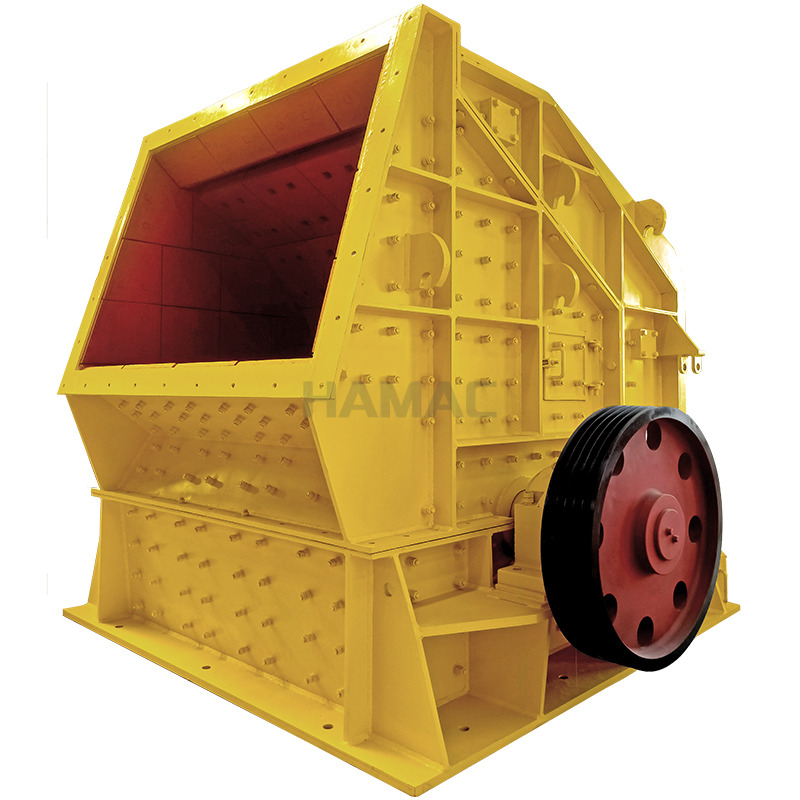
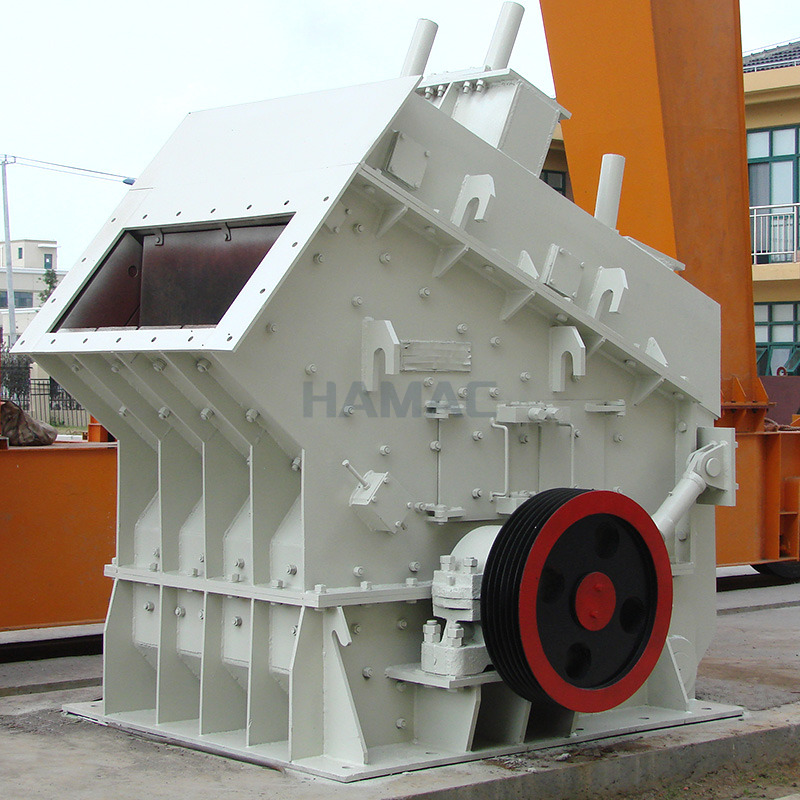
TF150 / TF250 / TF350 tracked impact crushers, 100–500 t/h, ideal for limestone, concrete and asphalt recycling. Read the table column by column against high-tonnage aggregate supply: the model you pick is the one whose published range brackets your target tonnage, not simply the largest machine in the series. Availability, motor rating and shipping data are re-confirmed for a remote mine site in the written HAMAC proposal.
Project profile these notes assume
| Assumption | Value |
|---|---|
| Operating duty | high-tonnage aggregate supply |
| Primary objective | simple operator maintenance |
| Evaluation horizon | three-year view |
| Site condition | a remote mine site |
| Operating team | a mixed local and expatriate team |
Change any one of these assumptions and the recommended configuration for crawler (tracked) impact crusher tf series may change. HAMAC re-runs the same checks against your own numbers once the enquiry data sheet is received.
From enquiry to the first saleable tonne
- Size the primary stage for your target tonnage with a 10–20% surge allowance — never on nameplate throughput alone.
- Record the as-built settings and give the operator a written daily, weekly and monthly schedule.
- Lay out conveyors, access ways, stockpile capacity and drainage before ordering steelwork.
- Book shipping, prepare the packing list and confirm the container loading plan.
- Run a sieve analysis on a representative sample and attach the grading curve to the enquiry.
- Choose compression or impact reduction according to hardness, silica content and required particle shape.
- Check bearing and lubrication arrangements against the ambient temperature range at the site.
- Budget for water, dust extraction and spillage handling as part of the plant, not as an afterthought.
- Commission with graded load, sample the product grading, then train operators on liner change-out and daily checks.
A realistic programme reserves time for permits, foundation curing and shipping to your market before any steel is cut.
What to verify before you sign
- Product sampling points and the lab equipment needed for routine grading checks.
- Wear-part interchangeability across machines in the same circuit.
- Closed-side setting range and whether automatic setting regulation is included.
- After-sales response time, technician availability and the warranty exclusions in writing.
- Energy draw in kW and the expected kWh per tonne at the design duty.
- Written performance guarantee, sampling method and acceptance-test protocol.
- Local service partner, technician travel time and visa requirements for your market.
- Guaranteed power draw and the simple operator maintenance trade-off it implies.
- Dust and noise control designed to the local emission limits for your market.
Bring this list to the design review — it is cheaper to resolve an omission on paper than during commissioning.
Where the money actually goes
| Cost line | Indicative share | What moves the number |
|---|---|---|
| Equipment & drive packages | 54% | Model size, number of stages and automation level |
| Ocean freight & insurance | 8% | Destination port, container count and out-of-gauge cargo |
| Civil works & foundations | 8% | Soil conditions, dynamic loads and site preparation |
| Erection, commissioning & training | 7% | Local labour, supervision scope and schedule |
| First-year wear parts | 15% | Rock abrasiveness, liner grade and operating hours |
| Power, lubricants & consumables | 8% | kWh per tonne, local tariff and dust suppression water |
Model a low, base and high case for tonnes per liner set. The spread tells you more than a single optimistic estimate.
Mistakes that cost more than the machine
- Comparing quotations with different port terms and calling the lower number cheaper.
- Skipping a geotechnical check and discovering settlement under the primary crusher at a remote mine site.
- Skipping the acceptance test, so no one has a baseline to measure degradation against.
- Undersizing the screen, then blaming the crusher for a plant that never reaches your target tonnage.
- Overlooking dust, noise and water permits in your market until erection has already started.
- Ignoring clay and moisture until the first wet season, when decks blind and chambers pack.
- Specifying motors for the wrong voltage or frequency and rewinding them on site.
- Ordering no spares with the plant and waiting six weeks for the first liner set.
For high-tonnage aggregate supply, protect the simple operator maintenance requirement explicitly in the contract documents.
Commissioning checklist
- Record the baseline grading curve for each product fraction.
- Measure noise and dust at the operator position against the local limit.
- Record power draw, tonnage and chamber pressure at steady state.
- Dry-run the plant empty for the specified period and record vibration.
- Test emergency stops, pull wires and interlock trips in sequence.
- Verify chute liners, skirt rubber and impact bars after the first hour of feed.
- Agree the punch list, sign the hand-over protocol and file the as-built drawings.
- Check hydraulic pressure, accumulator pre-charge and tramp-release function.
Keep the signed record; it is the only defensible baseline for later performance disputes.