Overview
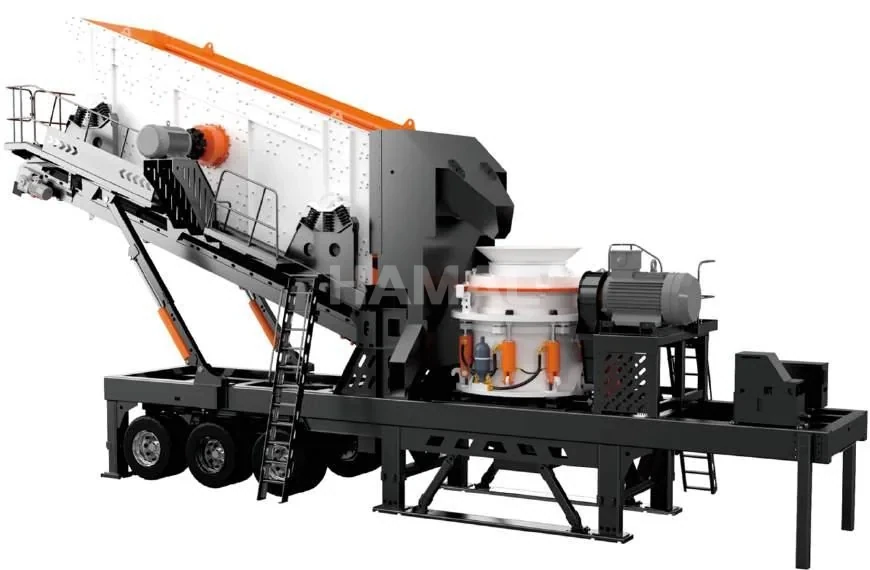
Buying a Mobile VSI Crusher Plant (Tertiary Crushing) direct from HAMAC removes the trading margin and gives you engineering support from enquiry to commissioning.
Why buy direct
- One project manager for the whole order.
- Workshop assembly, test and container loading plan.
- Flow-sheet design, layout and foundation reference.
- Installation supervision, training and 24h technical response.
Export & documentation
Quoted FOB / CFR / CIF. Documentation applicable to your market (CE where required), Spanish manuals for LatAm, motors set to local voltage.
How to order
Send project data → receive design + budget in 24h → refine drawings → manufacture → install.
Reference data for this configuration
| Parameter | Reference value |
|---|---|
| Machine line | Mobile VSI Crusher Plant (Tertiary Crushing) |
| Category | Wheel Type Mobile Crushers |
| Assumed duty | high-tonnage aggregate supply |
| Evaluation horizon | five-year view |
Ask for the same table from any competing supplier; without it, an offer for mobile vsi crusher plant (tertiary crushing) cannot be compared on scope.
Published Mobile VSI Crusher Plant (Tertiary Crushing) model data
| Model | VSI unit | Belt feeder | Vibrating screen | Capacity (t/h) |
|---|---|---|---|---|
| K3-V7615-1C | VS17615 | B1000 | 3YK1848 | 50–150 |
| K3-V8522-1C | VS18522 | B1000 | 3YK1548 | 100–200 |
| K3-V9532-1C | VS19532 | B1200 | 3YK1848 | 150–300 |
| K3-V1145-1C | VS11145 | B1200 | — | 200–400 |
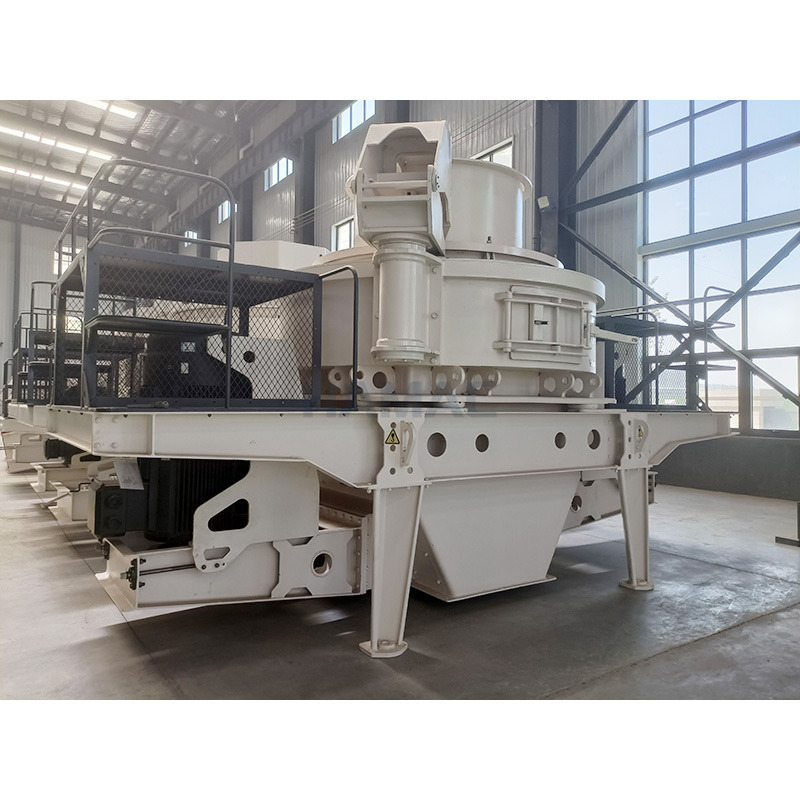
K3 series wheel-mounted VSI plant for third-stage crushing, 50–400 t/h, for complete sand making or high-quality shaped aggregate. Read the table column by column against high-tonnage aggregate supply: the model you pick is the one whose published range brackets your target tonnage, not simply the largest machine in the series. Availability, motor rating and shipping data are re-confirmed for a greenfield site in the written HAMAC proposal.
Project profile these notes assume
| Assumption | Value |
|---|---|
| Operating duty | high-tonnage aggregate supply |
| Primary objective | simple operator maintenance |
| Evaluation horizon | five-year view |
| Site condition | a greenfield site |
| Operating team | an owner-operator team |
Change any one of these assumptions and the recommended configuration for mobile vsi crusher plant (tertiary crushing) may change. HAMAC re-runs the same checks against your own numbers once the enquiry data sheet is received.
From enquiry to the first saleable tonne
- Include dust suppression, guarding, emergency stops and lock-out points in the layout drawing.
- Confirm site voltage, frequency and applicable conformity standards before manufacture.
- Confirm the haul-road and stockpile plan with a greenfield site in mind before fixing conveyor lengths.
- Record the as-built settings and give the operator a written daily, weekly and monthly schedule.
- Allocate screen area per deck; blinding and pegging are the most common hidden bottlenecks in a new plant.
- Plan training for an owner-operator team on CSS adjustment, liner change-out and lock-out / tag-out.
- Size the primary stage for your target tonnage with a 10–20% surge allowance — never on nameplate throughput alone.
- Run a sieve analysis on a representative sample and attach the grading curve to the enquiry.
- Survey the feed: the feed material; record top size, bulk density, moisture and clay content before fixing the flow sheet.
For an owner-operator team, the commissioning and training steps need more calendar time than the mechanical erection itself.
What to verify before you sign
- Spare motor, gearbox and hydraulic pump lead times from the nearest HAMAC stock point.
- Erection scope: supervision only, or full civil, mechanical and electrical installation.
- Energy draw in kW and the expected kWh per tonne at the design duty.
- Tramp-iron protection — hydraulic release, magnet and metal detection on the feed belt.
- Saleable tonnes per hour at each product size, not gross crusher throughput, for your target tonnage.
- Written performance guarantee, sampling method and acceptance-test protocol.
- After-sales response time, technician availability and the warranty exclusions in writing.
- Availability of an owner-operator team for liner changes and the lifting equipment on site.
- Screen deck count, aperture and area; ask for the efficiency calculation, not just the mesh size.
The cheapest offer usually wins on equipment and loses on one of the last six items — freight terms, spares or the acceptance test.
Where the money actually goes
| Cost line | Indicative share | What moves the number |
|---|---|---|
| Equipment & drive packages | 54% | Model size, number of stages and automation level |
| Ocean freight & insurance | 8% | Destination port, container count and out-of-gauge cargo |
| Civil works & foundations | 8% | Soil conditions, dynamic loads and site preparation |
| Erection, commissioning & training | 7% | Local labour, supervision scope and schedule |
| First-year wear parts | 15% | Rock abrasiveness, liner grade and operating hours |
| Power, lubricants & consumables | 8% | kWh per tonne, local tariff and dust suppression water |
Freight to your market is volatile; ask for the quotation to state validity and the port basis rather than a single delivered number.
Mistakes that cost more than the machine
- Assuming the manufacturer's warranty covers wear parts and consumables.
- Selecting the cheapest liner alloy for hard, high-silica rock and paying for it in change-outs.
- Skipping the acceptance test, so no one has a baseline to measure degradation against.
- Specifying motors for the wrong voltage or frequency and rewinding them on site.
- Skipping a geotechnical check and discovering settlement under the primary crusher at a greenfield site.
- Using one liner profile for both secondary and tertiary stages.
- Planning the crusher but not the conveyors, transfer chutes and stockpile capacity around it.
- Overlooking dust, noise and water permits in your market until erection has already started.
For high-tonnage aggregate supply, protect the simple operator maintenance requirement explicitly in the contract documents.
Commissioning checklist
- Agree the punch list, sign the hand-over protocol and file the as-built drawings.
- Check belt tracking, chute build-up and transfer-point dust.
- Record the baseline grading curve for each product fraction.
- Check hydraulic pressure, accumulator pre-charge and tramp-release function.
- Calibrate the belt scale and any level probes against a known load.
- Confirm the direction and tension of every belt under no load.
- Verify chute liners, skirt rubber and impact bars after the first hour of feed.
- Check lubrication levels, grease lines and oil cooler operation.
The commissioning record becomes the reference for every liner change in the five-year plan.