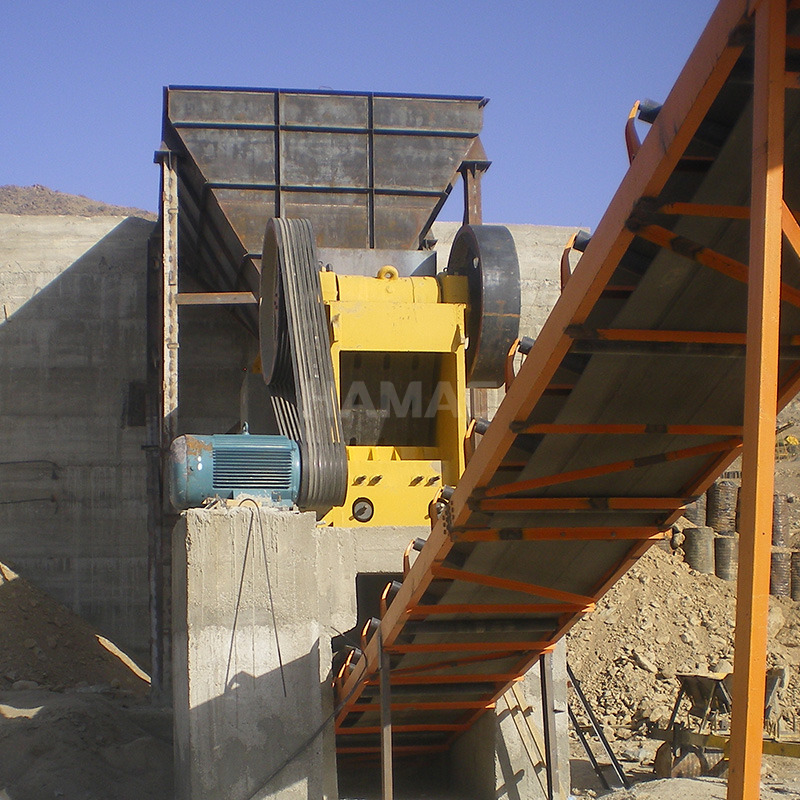
Overview
A concise, practical explanation of vibrating screen capacity & mesh selection for anyone specifying or operating a crushing plant.
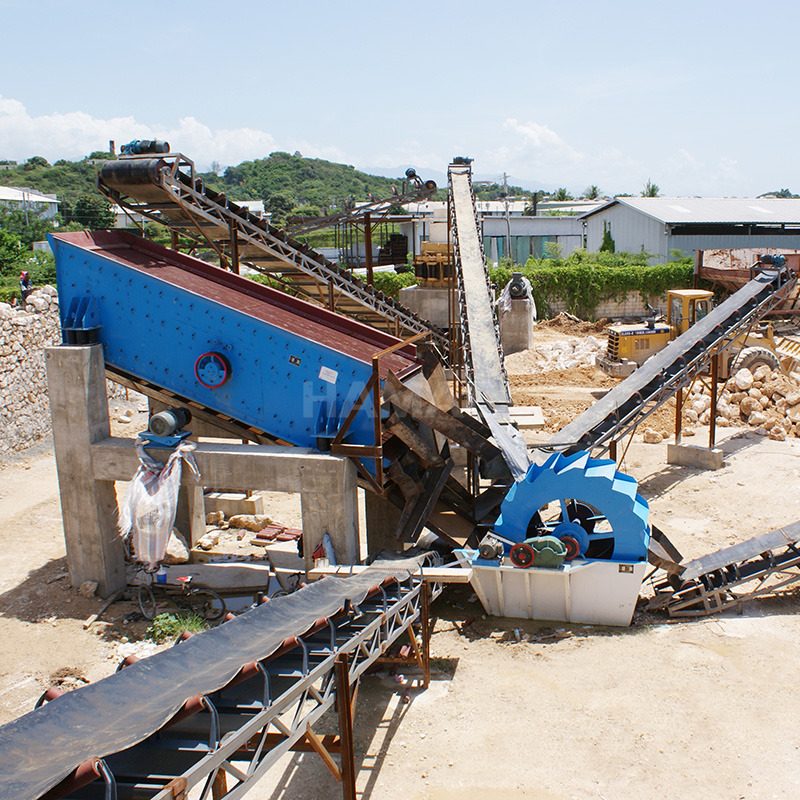
Capacity
Throughput depends on deck area, opening, material and moisture; undersizing screens bottlenecks the whole plant.
Mesh selection
- Match opening to product size.
- Punchplate for coarse, wire for fine.
- Consider anti-blinding for damp material.
Reference data for this configuration
| Parameter | Reference value |
|---|---|
| Assumed duty | contract crushing on short-term sites |
| Evaluation horizon | seven-year view |
Ask for the same table from any competing supplier; without it, an offer for the crushing and screening plant cannot be compared on scope.
Project profile these notes assume
| Assumption | Value |
|---|---|
| Operating duty | contract crushing on short-term sites |
| Primary objective | lowest energy per tonne |
| Evaluation horizon | seven-year view |
| Site condition | a coastal export terminal |
| Operating team | a full-time plant team |
Change any one of these assumptions and the recommended configuration for the crushing and screening plant may change. HAMAC re-runs the same checks against your own numbers once the enquiry data sheet is received.
From enquiry to the first saleable tonne
- Record the as-built settings and give the operator a written daily, weekly and monthly schedule.
- Commission with graded load, sample the product grading, then train operators on liner change-out and daily checks.
- Confirm the haul-road and stockpile plan with a coastal export terminal in mind before fixing conveyor lengths.
- Run a sieve analysis on a representative sample and attach the grading curve to the enquiry.
- Set the maintenance stock list from the expected wear rate, not from a percentage of the equipment price.
- Confirm site voltage, frequency and applicable conformity standards before manufacture.
- Review the crusher chamber profile with the liner supplier against the feed material.
- Choose compression or impact reduction according to hardness, silica content and required particle shape.
- Lay out conveyors, access ways, stockpile capacity and drainage before ordering steelwork.
A HAMAC project manager stays with the order from the first data sheet through hand-over in your market.
What to verify before you sign
- Energy draw in kW and the expected kWh per tonne at the design duty.
- Spare motor, gearbox and hydraulic pump lead times from the nearest HAMAC stock point.
- Delivery terms (FOB / CFR / CIF) with the destination port named explicitly.
- Erection scope: supervision only, or full civil, mechanical and electrical installation.
- Choke-feed arrangement: surge bin, feeder control and level indication.
- Written performance guarantee, sampling method and acceptance-test protocol.
- Whether the quoted t/h is achieved at contract crushing on short-term sites or under ideal laboratory feed.
- Guaranteed power draw and the lowest energy per tonne trade-off it implies.
- Wear-part interchangeability across machines in the same circuit.
The relative weight of each item changes with the project: wear parts dominate on abrasive rock, availability dominates on remote sites.
Where the money actually goes
| Cost line | Indicative share | What moves the number |
|---|---|---|
| Equipment & drive packages | 54% | Model size, number of stages and automation level |
| Ocean freight & insurance | 8% | Destination port, container count and out-of-gauge cargo |
| Civil works & foundations | 8% | Soil conditions, dynamic loads and site preparation |
| Erection, commissioning & training | 7% | Local labour, supervision scope and schedule |
| First-year wear parts | 15% | Rock abrasiveness, liner grade and operating hours |
| Power, lubricants & consumables | 8% | kWh per tonne, local tariff and dust suppression water |
A seven-year view normally reverses the ranking of two otherwise similar offers once wear and energy are included.
Mistakes that cost more than the machine
- Assuming the manufacturer's warranty covers wear parts and consumables.
- Letting the contract crushing on short-term sites duty be defined verbally instead of in the contract.
- Buying on nameplate t/h without converting to saleable product at the specified fractions.
- Planning the crusher but not the conveyors, transfer chutes and stockpile capacity around it.
- Overlooking dust, noise and water permits in your market until erection has already started.
- Omitting a bypass chute, so a single screen fault stops the whole line.
- Ordering no spares with the plant and waiting six weeks for the first liner set.
- Specifying motors for the wrong voltage or frequency and rewinding them on site.
For contract crushing on short-term sites, protect the lowest energy per tonne requirement explicitly in the contract documents.
Commissioning checklist
- Dry-run the plant empty for the specified period and record vibration.
- Measure noise and dust at the operator position against the local limit.
- Record power draw, tonnage and chamber pressure at steady state.
- Hand over the spare-parts list, manuals and maintenance schedule.
- Confirm the direction and tension of every belt under no load.
- Agree the punch list, sign the hand-over protocol and file the as-built drawings.
- Verify chute liners, skirt rubber and impact bars after the first hour of feed.
- Sample each product fraction and compare with the specification.
Keep the signed record; it is the only defensible baseline for later performance disputes.