Overview
The Sand Powder Vertical Mill is offered across several model sizes. Price depends on capacity, wear-package grade, mobility (stationary, wheel or tracked) and the level of automation, not on a single list price.
What drives the price
- Model size and rated capacity — larger rotors / chambers cost more.
- Mobility: stationary < wheel-mounted < tracked (tracked adds hydraulic & engine cost).
- Motor specification and starter (soft-start / VFD) and local voltage.
- Wear-parts grade (Mn13 / Mn18 / Mn22 / high-chrome) and spare-parts package.
- Control system: relay panel vs PLC with remote monitoring.
Typical price brackets
Entry models for contractor use start in the low five-figure USD range; mid-size export configurations are typically six-figure; large tracked or fully automated lines are higher. Exact numbers depend on the technical specification — request a written quotation rather than a ballpark.
How to get an accurate quote
Send material, feed size, target t/h and product sizes. HAMAC returns a flow sheet, equipment list and FOB / CFR / CIF price within 24 hours.
Reference data for this configuration
| Parameter | Reference value |
|---|---|
| Machine line | Sand Powder Vertical Mill |
| Category | Grinding Mills |
| Assumed duty | demolition and recycling duties |
| Evaluation horizon | seven-year view |
Ask for the same table from any competing supplier; without it, an offer for sand powder vertical mill cannot be compared on scope.
Published Sand Powder Vertical Mill model data
| Parameter | Typical value | Engineering note |
|---|---|---|
| Finished fineness | 0-3 mm coarse powder | Set at the classifier |
| Nominal capacity | 15-90 t/h | Varies with material and moisture |
| Maximum feed size | 40-80 mm | Requires pre-crushing |
| Typical materials | Limestone, calcite, gypsum, talc, barite | Mohs <= 7, moisture <= 6% |
| Power supply | 380 / 415 / 440 V, 50 or 60 Hz | Configured to destination grid |
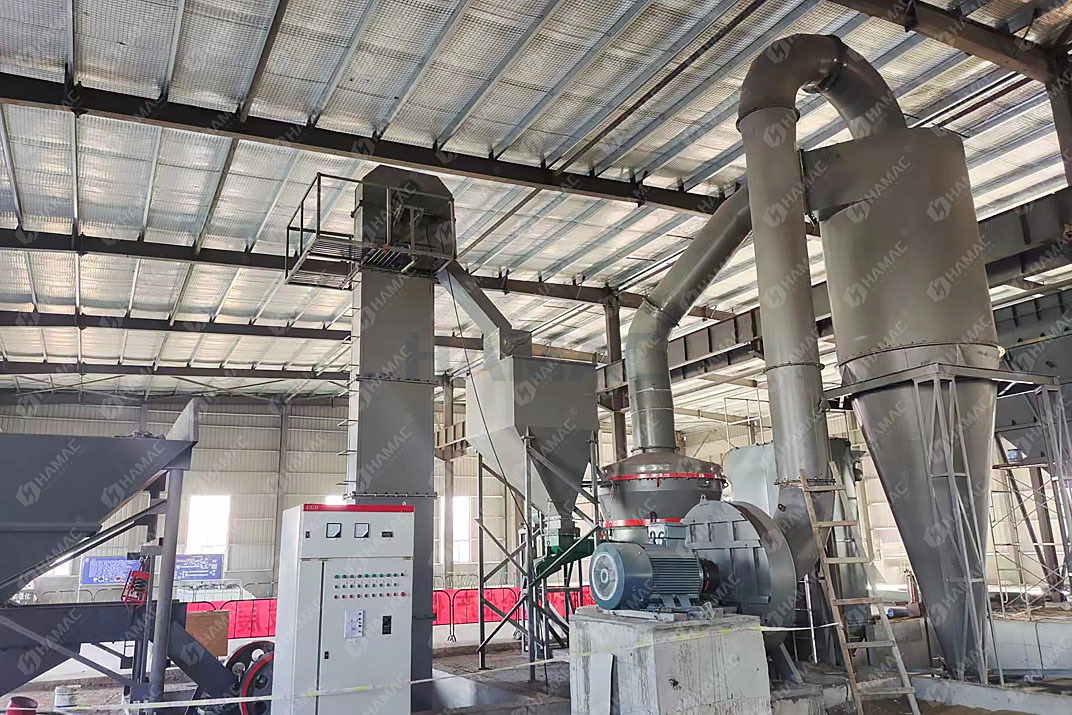
Sand Powder Vertical Mill for manufactured sand correction, dry-mix mortar and coarse mineral powder, producing 0-3 mm coarse powder at 15-90 t/h with an integrated classifier and dust collection. Read the table column by column against demolition and recycling duties: the model you pick is the one whose published range brackets your target tonnage, not simply the largest machine in the series. Availability, motor rating and shipping data are re-confirmed for a greenfield site in the written HAMAC proposal.
Project profile these notes assume
| Assumption | Value |
|---|---|
| Operating duty | demolition and recycling duties |
| Primary objective | tight grading compliance |
| Evaluation horizon | seven-year view |
| Site condition | a greenfield site |
| Operating team | a rotating shift crew |
Change any one of these assumptions and the recommended configuration for sand powder vertical mill may change. HAMAC re-runs the same checks against your own numbers once the enquiry data sheet is received.
From enquiry to the first saleable tonne
- Check bearing and lubrication arrangements against the ambient temperature range at the site.
- Include dust suppression, guarding, emergency stops and lock-out points in the layout drawing.
- Book shipping, prepare the packing list and confirm the container loading plan.
- Log tonnes per liner set and kWh per tonne from day one so you have a real cost baseline within a quarter.
- Review the crusher chamber profile with the liner supplier against the feed material.
- Define the acceptance test: sampling points, test duration, moisture range and who signs the protocol.
- Set the maintenance stock list from the expected wear rate, not from a percentage of the equipment price.
- Allocate screen area per deck; blinding and pegging are the most common hidden bottlenecks in a new plant.
- Budget for water, dust extraction and spillage handling as part of the plant, not as an afterthought.
Most delays at this stage come from missing feed data rather than from manufacturing capacity.
What to verify before you sign
- Spare-parts consignment: one full liner or blow-bar set plus meshes, belts, bearings and seals.
- Nameplate data for local voltage, frequency and the applicable conformity scheme.
- Closed-side setting range and whether automatic setting regulation is included.
- Saleable tonnes per hour at each product size, not gross crusher throughput, for your target tonnage.
- Guaranteed power draw and the tight grading compliance trade-off it implies.
- Ambient temperature, altitude and dust load derating for motors and hydraulics.
- Written performance guarantee, sampling method and acceptance-test protocol.
- Whether the quoted t/h is achieved at demolition and recycling duties or under ideal laboratory feed.
- After-sales response time, technician availability and the warranty exclusions in writing.
Share this list with a rotating shift crew as well as procurement; operators are the ones who live with the omissions.
Where the money actually goes
| Cost line | Indicative share | What moves the number |
|---|---|---|
| Equipment & drive packages | 54% | Model size, number of stages and automation level |
| Ocean freight & insurance | 8% | Destination port, container count and out-of-gauge cargo |
| Civil works & foundations | 8% | Soil conditions, dynamic loads and site preparation |
| Erection, commissioning & training | 7% | Local labour, supervision scope and schedule |
| First-year wear parts | 15% | Rock abrasiveness, liner grade and operating hours |
| Power, lubricants & consumables | 8% | kWh per tonne, local tariff and dust suppression water |
Model a low, base and high case for tonnes per liner set. The spread tells you more than a single optimistic estimate.
Mistakes that cost more than the machine
- Letting the demolition and recycling duties duty be defined verbally instead of in the contract.
- Assuming a mobile plant can match a stationary line on high-tonnage, multi-product duty.
- Skipping the acceptance test, so no one has a baseline to measure degradation against.
- Comparing quotations with different port terms and calling the lower number cheaper.
- Forgetting surge capacity — an intermittent loader starves the chamber and ruins particle shape.
- Using one liner profile for both secondary and tertiary stages.
- Skipping a geotechnical check and discovering settlement under the primary crusher at a greenfield site.
- Specifying motors for the wrong voltage or frequency and rewinding them on site.
Review the list with a rotating shift crew before the order is placed — they will recognise most of them.
Commissioning checklist
- Confirm the direction and tension of every belt under no load.
- Calibrate the belt scale and any level probes against a known load.
- Measure and log the as-new CSS / setting for future wear comparison.
- Verify chute liners, skirt rubber and impact bars after the first hour of feed.
- Introduce feed in graded steps: 25%, 50%, 75%, then full load.
- Record power draw, tonnage and chamber pressure at steady state.
- Check hydraulic pressure, accumulator pre-charge and tramp-release function.
- Agree the punch list, sign the hand-over protocol and file the as-built drawings.
For a rotating shift crew, run through this list twice — once with the supervisor and once without.