Overview
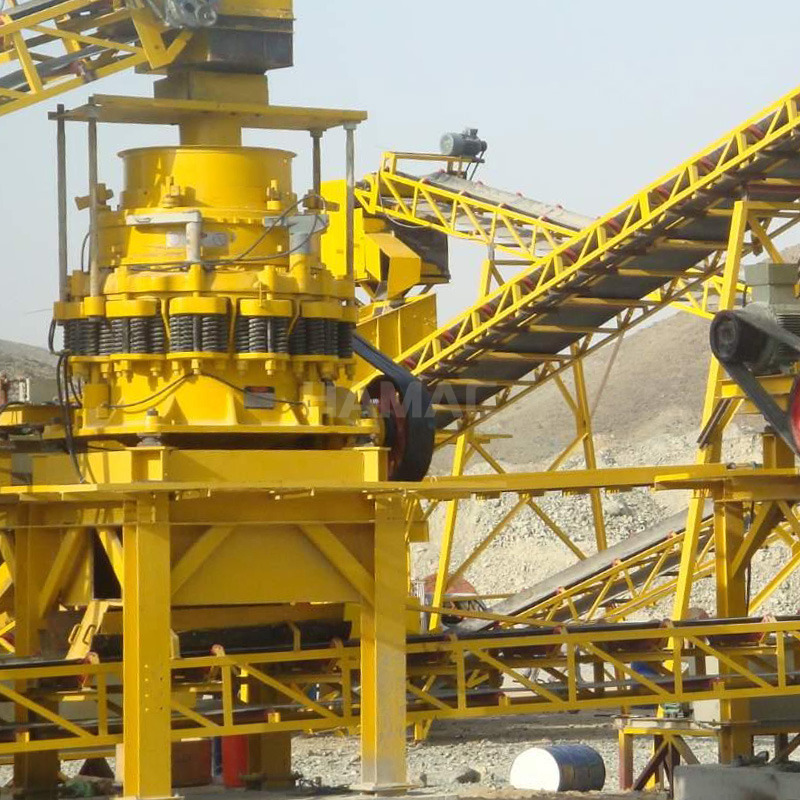
A 500–800 tph crushing plant is one of the most requested export sizes. Main machines: dual primary + multi-cone. Large quarry / mine feed.
Why mobile at this size
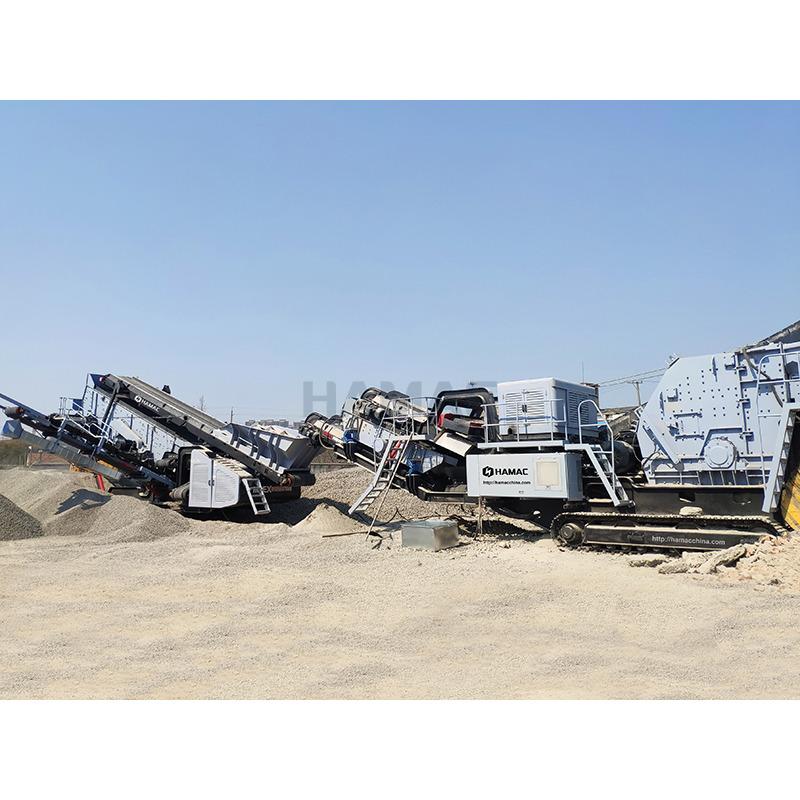
- Fast relocation between benches / sites.
- Plug-and-produce, low civil work.
- Diesel-electric or grid power options.
Mobile types
- Wheel-mounted: lower cost, needs a tow.
- Tracked: self-propelled, rough terrain.
- 3-in-1 / 4-in-1: combined crush + screen.
Reference data for this configuration
| Parameter | Reference value |
|---|---|
| Design capacity | 500–800 t/h |
| Typical main line | dual primary + multi-cone |
| Scale note | Large quarry / mine feed. |
| Assumed duty | high-tonnage aggregate supply |
| Evaluation horizon | single-project view |
Use the table as a checklist when comparing quotations for the crushing and screening plant — a lower price often means one of these parameters was quietly reduced.
Project profile these notes assume
| Assumption | Value |
|---|---|
| Operating duty | high-tonnage aggregate supply |
| Primary objective | strict product cubicity |
| Evaluation horizon | single-project view |
| Site condition | a remote mine site |
| Operating team | a rotating shift crew |
Change any one of these assumptions and the recommended configuration for the crushing and screening plant may change. HAMAC re-runs the same checks against your own numbers once the enquiry data sheet is received.
From enquiry to the first saleable tonne
- Budget for water, dust extraction and spillage handling as part of the plant, not as an afterthought.
- Review the crusher chamber profile with the liner supplier against the feed material.
- Sequence delivery so foundations cure while the equipment is still in manufacture.
- Choose compression or impact reduction according to hardness, silica content and required particle shape.
- Run a sieve analysis on a representative sample and attach the grading curve to the enquiry.
- Lay out the dual primary + multi-cone arrangement with straight conveyor runs and crane access for liner changes.
- Include dust suppression, guarding, emergency stops and lock-out points in the layout drawing.
- Commission with graded load, sample the product grading, then train operators on liner change-out and daily checks.
- Confirm site voltage, frequency and applicable conformity standards before manufacture.
On high-tonnage aggregate supply, step ordering matters: survey and sampling must precede the equipment list, or the plant is sized to a guess.
What to verify before you sign
- Availability of a rotating shift crew for liner changes and the lifting equipment on site.
- Ambient temperature, altitude and dust load derating for motors and hydraulics.
- Delivery terms (FOB / CFR / CIF) with the destination port named explicitly.
- Maximum feed lump and gradation — a chamber that cannot accept the top size will bridge on day one.
- Spare-parts consignment: one full liner or blow-bar set plus meshes, belts, bearings and seals.
- Control system language, telemetry and remote diagnostics availability.
- Written performance guarantee, sampling method and acceptance-test protocol.
- Liner alloy: Mn18 with ceramic inserts matched to the rock, not to the lowest purchase price.
- After-sales response time, technician availability and the warranty exclusions in writing.
Ask each supplier to price the same list. Quotations for the crushing and screening plant only become comparable when the scope is identical.
Where the money actually goes
| Cost line | Indicative share | What moves the number |
|---|---|---|
| Equipment & drive packages | 55% | Model size, number of stages and automation level |
| Ocean freight & insurance | 8% | Destination port, container count and out-of-gauge cargo |
| Civil works & foundations | 8% | Soil conditions, dynamic loads and site preparation |
| Erection, commissioning & training | 7% | Local labour, supervision scope and schedule |
| First-year wear parts | 14% | Rock abrasiveness, liner grade and operating hours |
| Power, lubricants & consumables | 8% | kWh per tonne, local tariff and dust suppression water |
Freight to your market is volatile; ask for the quotation to state validity and the port basis rather than a single delivered number.
Mistakes that cost more than the machine
- Buying strict product cubicity on price alone and losing it in availability.
- Choosing screen apertures before the concrete or asphalt mix design is fixed.
- Omitting a bypass chute, so a single screen fault stops the whole line.
- Skipping a geotechnical check and discovering settlement under the primary crusher at a remote mine site.
- Planning the crusher but not the conveyors, transfer chutes and stockpile capacity around it.
- Using one liner profile for both secondary and tertiary stages.
- Letting the high-tonnage aggregate supply duty be defined verbally instead of in the contract.
- Assuming the manufacturer's warranty covers wear parts and consumables.
For high-tonnage aggregate supply, protect the strict product cubicity requirement explicitly in the contract documents.
Commissioning checklist
- Record power draw, tonnage and chamber pressure at steady state.
- Check lubrication levels, grease lines and oil cooler operation.
- Test emergency stops, pull wires and interlock trips in sequence.
- Verify rotation direction on every motor before coupling.
- Check hydraulic pressure, accumulator pre-charge and tramp-release function.
- Dry-run the plant empty for the specified period and record vibration.
- Confirm all guards, emergency stops and pull-wire switches function.
- Verify chute liners, skirt rubber and impact bars after the first hour of feed.
On a remote mine site, allow extra time for the dust and noise measurements.