Overview
Choosing a Vibrating Feeder starts with the rock and the target product, not a catalogue number. The steps below turn your project data into a defensible model choice.
1. Start with the material
- Hard, abrasive rock (granite, basalt, quartz): compression crushing, premium Mn liners.
- Soft rock (limestone, marble, dolomite): impact crushing for shape at lower cost.
- High silica (river pebble, quartz): plan VSI + wear budget.
2. Size to saleable t/h
Add 10–20% surge to nameplate capacity; undersizing is a permanent bottleneck, oversizing wastes capital.
3. Match the product grading
Product size and shape (flakiness index) decide chamber and screen deck setup.
Pre-order checklist
- Feed size and max lump.
- Required t/h and product fractions.
- Site power (voltage / frequency) and mobility need.
- Local standards (CE, GOST, etc.).
Reference data for this configuration
| Parameter | Reference value |
|---|---|
| Machine line | Vibrating Feeder |
| Category | Supporting Equipments |
| Assumed duty | mine pre-beneficiation feed |
| Evaluation horizon | ten-year view |
At mine pre-beneficiation feed, the ranking of these parameters changes: lowest cost per tonne usually becomes the deciding constraint rather than the headline tonnage.
Published Vibrating Feeder model data
| Model | Specification | Feeding size | Rotation speed | Capacity | Power | Weight |
|---|---|---|---|---|---|---|
| ZSW3090 | 900x3000 mm | 400 mm | 600~850 rpm | 90-180 t/h | 11 kw | 3450 kg |
| ZSW3896 | 960x3800 mm | 500 mm | 600~850 rpm | 120-210 t/h | 15 kw | 4450 kg |
| ZSW4211 | 1100x4200 mm | 650 mm | 600~850 rpm | 180-400 t/h | 15 kw | 4750 kg |
| ZSW4911 | 1100x4900 mm | 650 mm | 600~850 rpm | 250-480 t/h | 22 kw | 5350 kg |
| ZSW4913 | 1300x4900 mm | 750 mm | 600~850 rpm | 340-600 t/h | 22 kw | 6350 kg |
| ZSW6013 | 1300x6000 mm | 750 mm | 600~850 rpm | 340-600 t/h | 30 kw | 7800 kg |
| ZSW6015 | 1500x6000 mm | 1000 mm | 600~850 rpm | 400-800 t/h | 37 kw | 8900 kg |
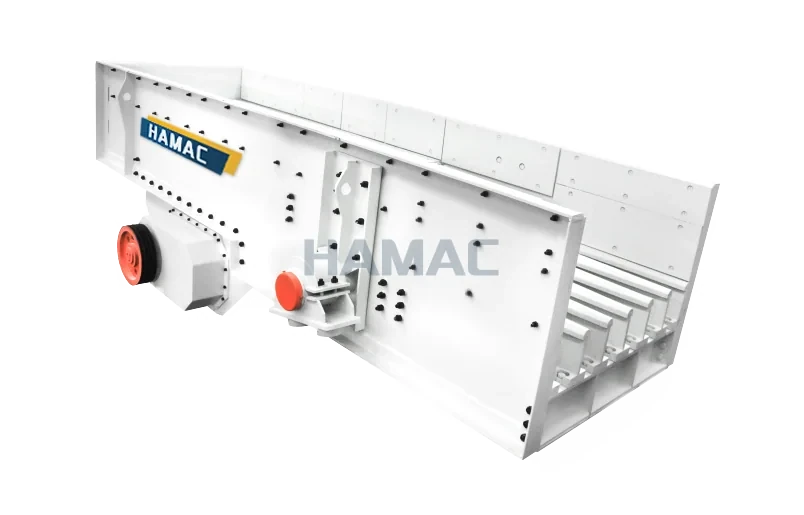
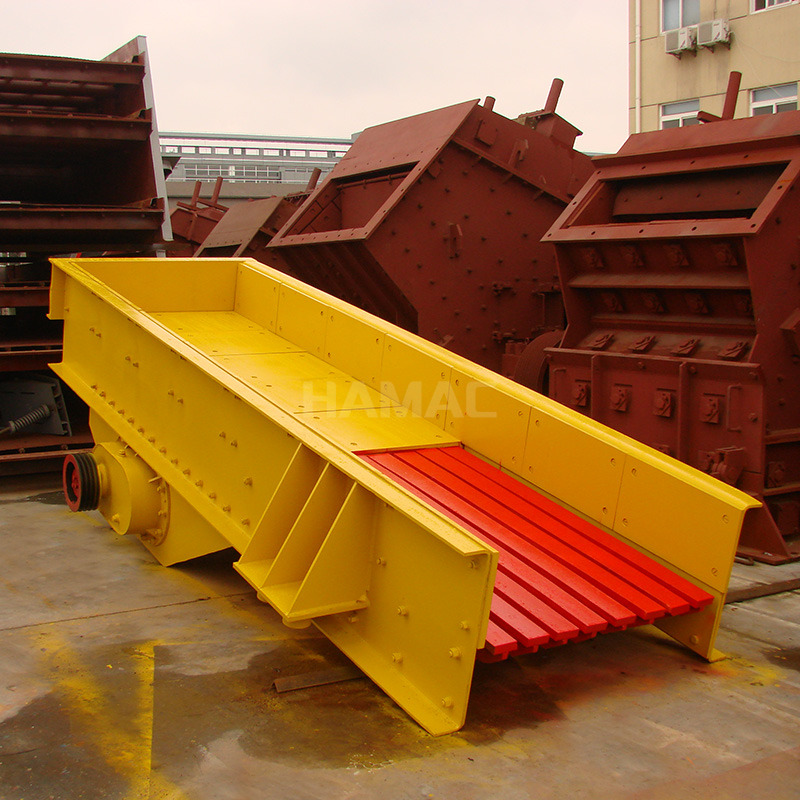
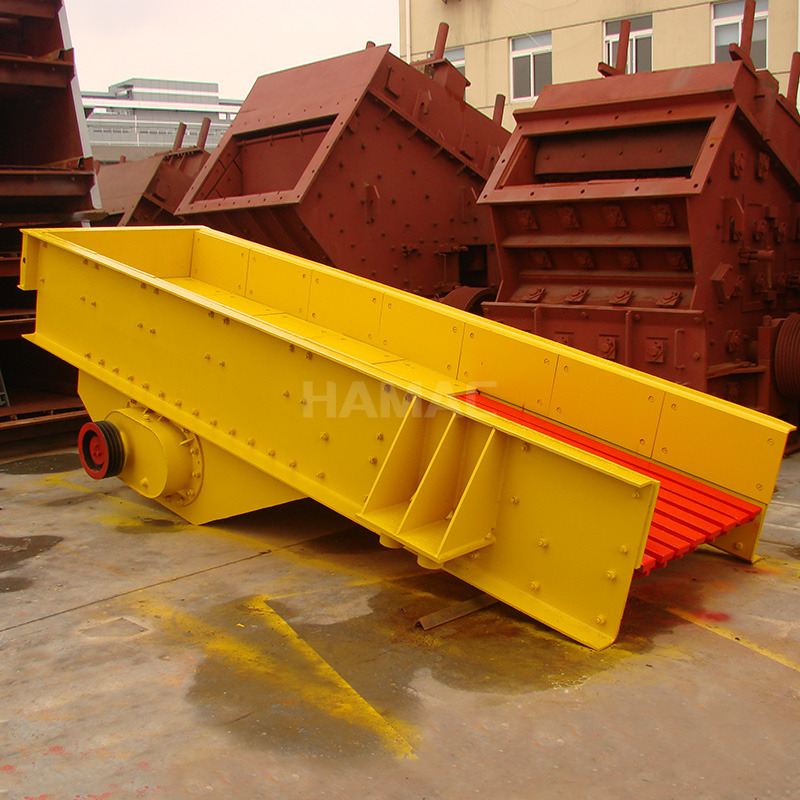
The Vibrating Feeder is an efficient feeding equipment designed to deliver materials continuously and evenly from the hopper to crushers in various industries, including mining, coal, chemical, and construction. Read the table column by column against mine pre-beneficiation feed: the model you pick is the one whose published range brackets your target tonnage, not simply the largest machine in the series. Availability, motor rating and shipping data are re-confirmed for a coastal export terminal in the written HAMAC proposal.
Project profile these notes assume
| Assumption | Value |
|---|---|
| Operating duty | mine pre-beneficiation feed |
| Primary objective | lowest cost per tonne |
| Evaluation horizon | ten-year view |
| Site condition | a coastal export terminal |
| Operating team | an owner-operator team |
Change any one of these assumptions and the recommended configuration for vibrating feeder may change. HAMAC re-runs the same checks against your own numbers once the enquiry data sheet is received.
From enquiry to the first saleable tonne
- Log tonnes per liner set and kWh per tonne from day one so you have a real cost baseline within a quarter.
- Verify the electrical single-line diagram, cable sizing and starter type with the local utility.
- Sequence delivery so foundations cure while the equipment is still in manufacture.
- Set the closed-side setting or rotor speed against the required product fractions, then verify the expected reduction ratio.
- Book shipping, prepare the packing list and confirm the container loading plan.
- Set the maintenance stock list from the expected wear rate, not from a percentage of the equipment price.
- Define the acceptance test: sampling points, test duration, moisture range and who signs the protocol.
- Choose compression or impact reduction according to hardness, silica content and required particle shape.
- Include dust suppression, guarding, emergency stops and lock-out points in the layout drawing.
Most delays at this stage come from missing feed data rather than from manufacturing capacity.
What to verify before you sign
- Erection scope: supervision only, or full civil, mechanical and electrical installation.
- Tramp-iron protection — hydraulic release, magnet and metal detection on the feed belt.
- Spare-parts consignment: one full liner or blow-bar set plus meshes, belts, bearings and seals.
- Control system language, telemetry and remote diagnostics availability.
- Screen deck count, aperture and area; ask for the efficiency calculation, not just the mesh size.
- Maximum feed lump and gradation — a chamber that cannot accept the top size will bridge on day one.
- Ambient temperature, altitude and dust load derating for motors and hydraulics.
- Nameplate data for local voltage, frequency and the applicable conformity scheme.
- Delivery terms (FOB / CFR / CIF) with the destination port named explicitly.
Ask each supplier to price the same list. Quotations for vibrating feeder only become comparable when the scope is identical.
Where the money actually goes
| Cost line | Indicative share | What moves the number |
|---|---|---|
| Equipment & drive packages | 54% | Model size, number of stages and automation level |
| Ocean freight & insurance | 8% | Destination port, container count and out-of-gauge cargo |
| Civil works & foundations | 8% | Soil conditions, dynamic loads and site preparation |
| Erection, commissioning & training | 7% | Local labour, supervision scope and schedule |
| First-year wear parts | 15% | Rock abrasiveness, liner grade and operating hours |
| Power, lubricants & consumables | 8% | kWh per tonne, local tariff and dust suppression water |
Treat the percentages as a budgeting shape, not a quotation: HAMAC prices the equipment list in writing once the flow sheet is fixed.
Mistakes that cost more than the machine
- Letting the mine pre-beneficiation feed duty be defined verbally instead of in the contract.
- Using one liner profile for both secondary and tertiary stages.
- Choosing screen apertures before the concrete or asphalt mix design is fixed.
- Undersizing the screen, then blaming the crusher for a plant that never reaches your target tonnage.
- Assuming the manufacturer's warranty covers wear parts and consumables.
- Buying on nameplate t/h without converting to saleable product at the specified fractions.
- Buying lowest cost per tonne on price alone and losing it in availability.
- Selecting the cheapest liner alloy for hard, high-silica rock and paying for it in change-outs.
For mine pre-beneficiation feed, protect the lowest cost per tonne requirement explicitly in the contract documents.
Commissioning checklist
- Check hydraulic pressure, accumulator pre-charge and tramp-release function.
- Verify chute liners, skirt rubber and impact bars after the first hour of feed.
- Measure and log the as-new CSS / setting for future wear comparison.
- Confirm all guards, emergency stops and pull-wire switches function.
- Calibrate the belt scale and any level probes against a known load.
- Agree the punch list, sign the hand-over protocol and file the as-built drawings.
- Test emergency stops, pull wires and interlock trips in sequence.
- Check lubrication levels, grease lines and oil cooler operation.
Keep the signed record; it is the only defensible baseline for later performance disputes.