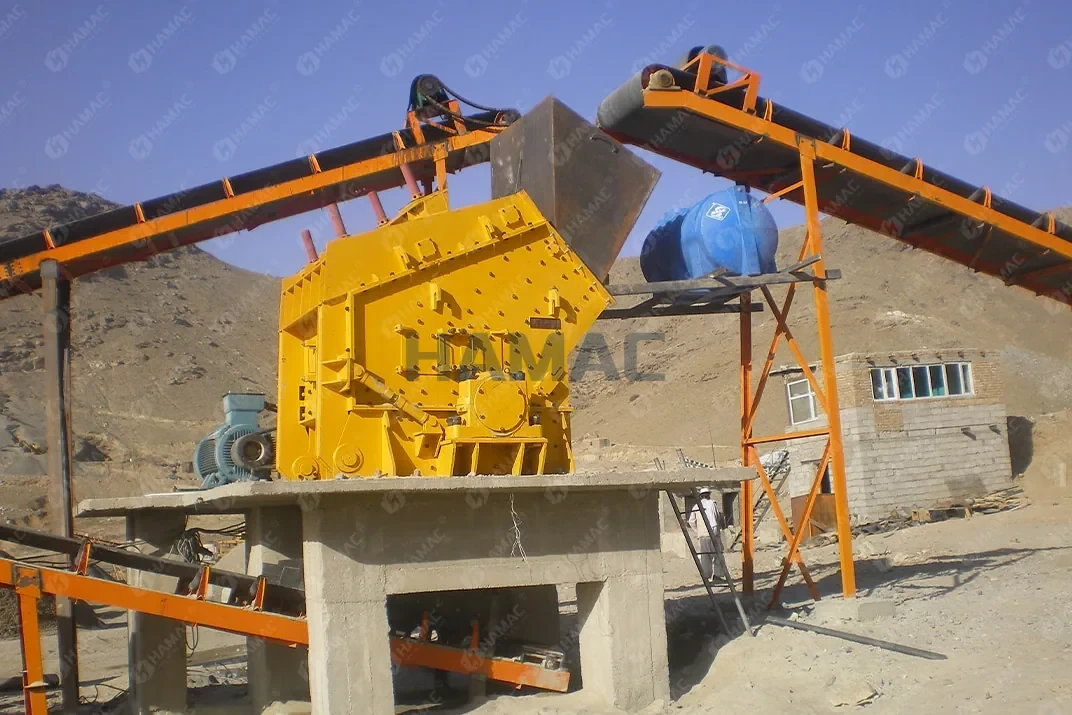
Overview
The PF Impact Crusher is applied across aggregates, mining, beneficiation and recycling. The material properties decide whether it is the right machine.
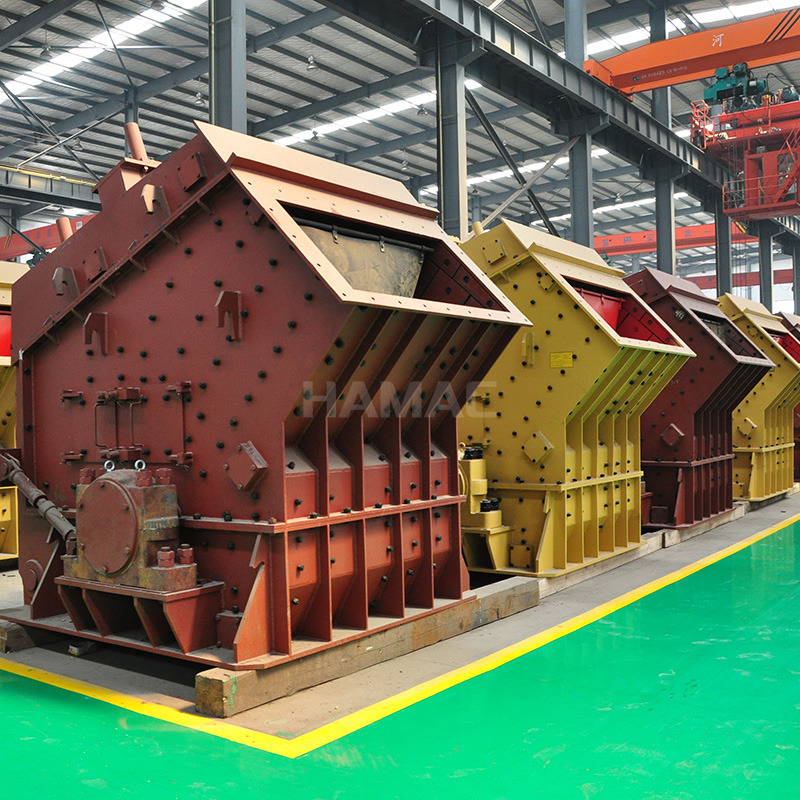
Materials it handles
- Hard rock: granite, basalt, andesite, gabbro.
- Soft rock: limestone, marble, dolomite.
- Ores: iron, copper, gold, manganese.
- Recycling: concrete, asphalt, C&D waste.
Industries
- Quarrying and construction aggregates.
- Metal ore crushing and beneficiation.
- Manufactured sand and road base.
- Cement raw meal and industrial minerals.
Typical configuration
Usually combined with a feeder, screen and conveyors into a complete circuit, or as a module in a mobile plant.
Reference data for this configuration
| Parameter | Reference value |
|---|---|
| Machine line | PF Impact Crusher |
| Category | Impact Crusher |
| Assumed duty | high-tonnage aggregate supply |
| Evaluation horizon | ten-year view |
Treat this as a living sheet. Every revision of the flow sheet for your market should update the same fields so the equipment list stays traceable.
Published PF Impact Crusher model data
| Model | Rotor size | Feed opening | Max. Feeding size | Capacity | Motor Power | Weight | Overall dimension |
|---|---|---|---|---|---|---|---|
| PF-1007 | Φ1000×700 mm | 400×730 mm | 300 mm | 30-70 t/h | 37-45 kW | 12 t | 2330×1660×2300 mm |
| PF-1010 | Φ1000×1050 mm | 400×1080 mm | 350 mm | 50-90 t/h | 45-55 kW | 15 t | 2370×1700×2390 mm |
| PF-1210 | Φ1250×1050 mm | 400×1080 mm | 350 mm | 70-130 t/h | 110 kW | 17.7 t | 2680×2160×2800 mm |
| PF-1214 | Φ1250×1400 mm | 400×1430 mm | 350 mm | 100-180 t/h | 132 kW | 22.4 t | 2650×2460×2800 mm |
| PF-1315 | Φ1320×1500 mm | 860×1520 mm | 500 mm | 130-250 t/h | 220 kW | 27 t | 3180×2720×2620 mm |
| PF-1520 | Φ1500×2000 mm | 830×2040 mm | 700 mm | 300-550 t/h | 315-400 kW | 50.6 t | 3959×3564×3330 mm |
| PF-1620 | Φ1600×2000 mm | 2000×1600 mm | 500 mm | 400-700 t/h | 400-500 kW | 58 t | 4259×3660×3450 mm |
| PF-1820 | Φ1800×2000 mm | 1260×2040 mm | 800 mm | 600-800 t/h | 630-710 kW | 83.21 t | 4400×3866×4009 mm |
The impact crusher (impact crusher) is a new generation of impact crusher developed in combination with the specific working conditions of the sand and gravel. Read the table column by column against high-tonnage aggregate supply: the model you pick is the one whose published range brackets your target tonnage, not simply the largest machine in the series. Availability, motor rating and shipping data are re-confirmed for a confined urban yard in the written HAMAC proposal.
Project profile these notes assume
| Assumption | Value |
|---|---|
| Operating duty | high-tonnage aggregate supply |
| Primary objective | lowest energy per tonne |
| Evaluation horizon | ten-year view |
| Site condition | a confined urban yard |
| Operating team | an owner-operator team |
Change any one of these assumptions and the recommended configuration for pf impact crusher may change. HAMAC re-runs the same checks against your own numbers once the enquiry data sheet is received.
From enquiry to the first saleable tonne
- Survey the feed: the feed material; record top size, bulk density, moisture and clay content before fixing the flow sheet.
- Record the as-built settings and give the operator a written daily, weekly and monthly schedule.
- Book shipping, prepare the packing list and confirm the container loading plan.
- Confirm the haul-road and stockpile plan with a confined urban yard in mind before fixing conveyor lengths.
- Set the closed-side setting or rotor speed against the required product fractions, then verify the expected reduction ratio.
- Budget for water, dust extraction and spillage handling as part of the plant, not as an afterthought.
- Define the acceptance test: sampling points, test duration, moisture range and who signs the protocol.
- Set the maintenance stock list from the expected wear rate, not from a percentage of the equipment price.
- Choose compression or impact reduction according to hardness, silica content and required particle shape.
The sequence is deliberately front-loaded — decisions taken before manufacture are cheap, changes made on site are not.
What to verify before you sign
- After-sales response time, technician availability and the warranty exclusions in writing.
- Product sampling points and the lab equipment needed for routine grading checks.
- Ambient temperature, altitude and dust load derating for motors and hydraulics.
- Erection scope: supervision only, or full civil, mechanical and electrical installation.
- Screen deck count, aperture and area; ask for the efficiency calculation, not just the mesh size.
- Decommissioning or relocation value at the end of a ten-year horizon.
- Wear-part interchangeability across machines in the same circuit.
- Nameplate data for local voltage, frequency and the applicable conformity scheme.
- Spare-parts consignment: one full liner or blow-bar set plus meshes, belts, bearings and seals.
Bring this list to the design review — it is cheaper to resolve an omission on paper than during commissioning.
Where the money actually goes
| Cost line | Indicative share | What moves the number |
|---|---|---|
| Equipment & drive packages | 54% | Model size, number of stages and automation level |
| Ocean freight & insurance | 8% | Destination port, container count and out-of-gauge cargo |
| Civil works & foundations | 8% | Soil conditions, dynamic loads and site preparation |
| Erection, commissioning & training | 7% | Local labour, supervision scope and schedule |
| First-year wear parts | 15% | Rock abrasiveness, liner grade and operating hours |
| Power, lubricants & consumables | 8% | kWh per tonne, local tariff and dust suppression water |
On high-tonnage aggregate supply, the lowest energy per tonne objective changes which line deserves the most attention during value engineering.
Mistakes that cost more than the machine
- Assuming the manufacturer's warranty covers wear parts and consumables.
- Using one liner profile for both secondary and tertiary stages.
- Selecting the cheapest liner alloy for hard, high-silica rock and paying for it in change-outs.
- Planning the crusher but not the conveyors, transfer chutes and stockpile capacity around it.
- Ignoring clay and moisture until the first wet season, when decks blind and chambers pack.
- Letting the high-tonnage aggregate supply duty be defined verbally instead of in the contract.
- Overlooking dust, noise and water permits in your market until erection has already started.
- Skipping the acceptance test, so no one has a baseline to measure degradation against.
Every item on this list has cost someone a commissioning date; none of them requires new technology to avoid.
Commissioning checklist
- Verify chute liners, skirt rubber and impact bars after the first hour of feed.
- Introduce feed in graded steps: 25%, 50%, 75%, then full load.
- Verify rotation direction on every motor before coupling.
- Record the baseline grading curve for each product fraction.
- Confirm the direction and tension of every belt under no load.
- Agree the punch list, sign the hand-over protocol and file the as-built drawings.
- Dry-run the plant empty for the specified period and record vibration.
- Calibrate the belt scale and any level probes against a known load.
For an owner-operator team, run through this list twice — once with the supervisor and once without.