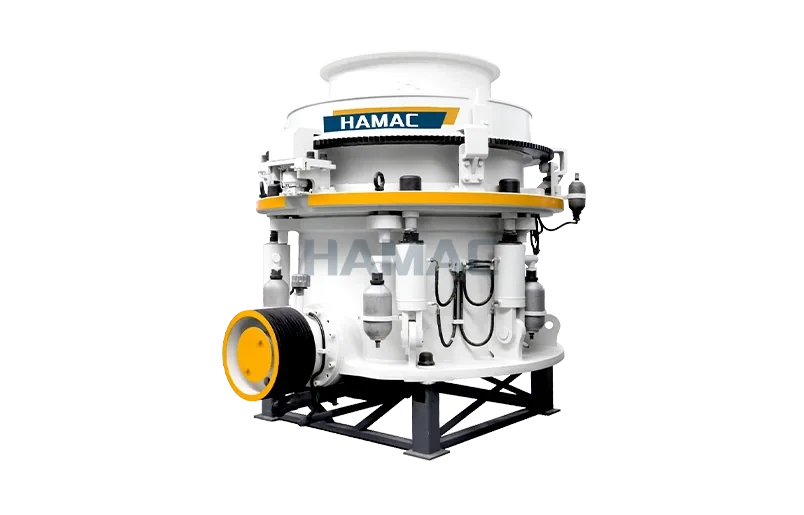
Overview
The HP Hydraulic Cone Crusher is applied across aggregates, mining, beneficiation and recycling. The material properties decide whether it is the right machine.
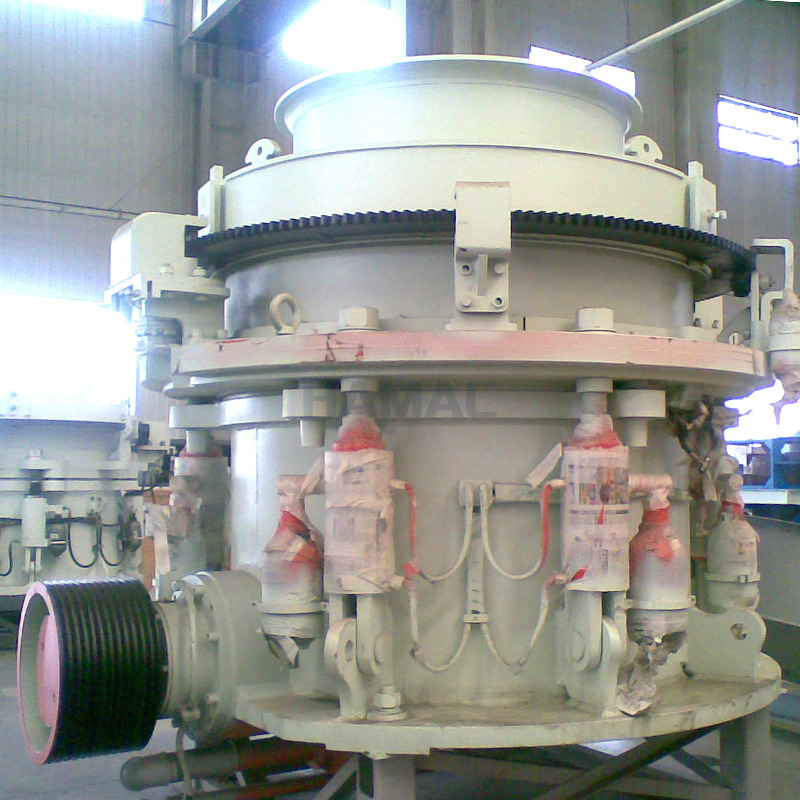
Materials it handles
- Hard rock: granite, basalt, andesite, gabbro.
- Soft rock: limestone, marble, dolomite.
- Ores: iron, copper, gold, manganese.
- Recycling: concrete, asphalt, C&D waste.
Industries
- Quarrying and construction aggregates.
- Metal ore crushing and beneficiation.
- Manufactured sand and road base.
- Cement raw meal and industrial minerals.
Typical configuration
Usually combined with a feeder, screen and conveyors into a complete circuit, or as a module in a mobile plant.
Reference data for this configuration
| Parameter | Reference value |
|---|---|
| Machine line | HP Hydraulic Cone Crusher |
| Category | Cone Crusher |
| Assumed duty | manufactured-sand production |
| Evaluation horizon | ten-year view |
Treat this as a living sheet. Every revision of the flow sheet for your market should update the same fields so the equipment list stays traceable.
Published HP Hydraulic Cone Crusher model data
| Model | Crushing Chamber | Standard type | Short head type | Power | Capacity |
|---|---|---|---|---|---|
| Feeding opening | Min. Discharge opening | Feeding opening | Min. Discharge opening | ||
| HPT200 | Extra Coarse(EC) | ||||
| Coarse(C) | 185 mm | 19 mm | 76 mm | 10 mm | |
| Medium(M) | 125 mm | 17 mm | 54 mm | 6 mm | |
| Fine(F) | 95 mm | 13 mm | 23 mm | 6 mm | |
| Extra fine(EF) | 10 mm | 5 mm | |||
| HPT300 | Extra Coarse(EC) | 230 mm | 25 mm | ||
| Coarse(C) | 210 mm | 20 mm | 10 mm |
HP Series of highly efficient Hydraulic Cone Crusher is a world-level cone crusher introduced with the up-to-the-minute technology of Germany. Read the table column by column against manufactured-sand production: the model you pick is the one whose published range brackets your target tonnage, not simply the largest machine in the series. Availability, motor rating and shipping data are re-confirmed for a brownfield extension in the written HAMAC proposal.
Project profile these notes assume
| Assumption | Value |
|---|---|
| Operating duty | manufactured-sand production |
| Primary objective | fast mobilisation |
| Evaluation horizon | ten-year view |
| Site condition | a brownfield extension |
| Operating team | a mixed local and expatriate team |
Change any one of these assumptions and the recommended configuration for hp hydraulic cone crusher may change. HAMAC re-runs the same checks against your own numbers once the enquiry data sheet is received.
From enquiry to the first saleable tonne
- Verify the electrical single-line diagram, cable sizing and starter type with the local utility.
- Sequence delivery so foundations cure while the equipment is still in manufacture.
- Set the maintenance stock list from the expected wear rate, not from a percentage of the equipment price.
- Review the crusher chamber profile with the liner supplier against the feed material.
- Budget for water, dust extraction and spillage handling as part of the plant, not as an afterthought.
- Check bearing and lubrication arrangements against the ambient temperature range at the site.
- Record the as-built settings and give the operator a written daily, weekly and monthly schedule.
- Confirm site voltage, frequency and applicable conformity standards before manufacture.
- Run a sieve analysis on a representative sample and attach the grading curve to the enquiry.
For a mixed local and expatriate team, the commissioning and training steps need more calendar time than the mechanical erection itself.
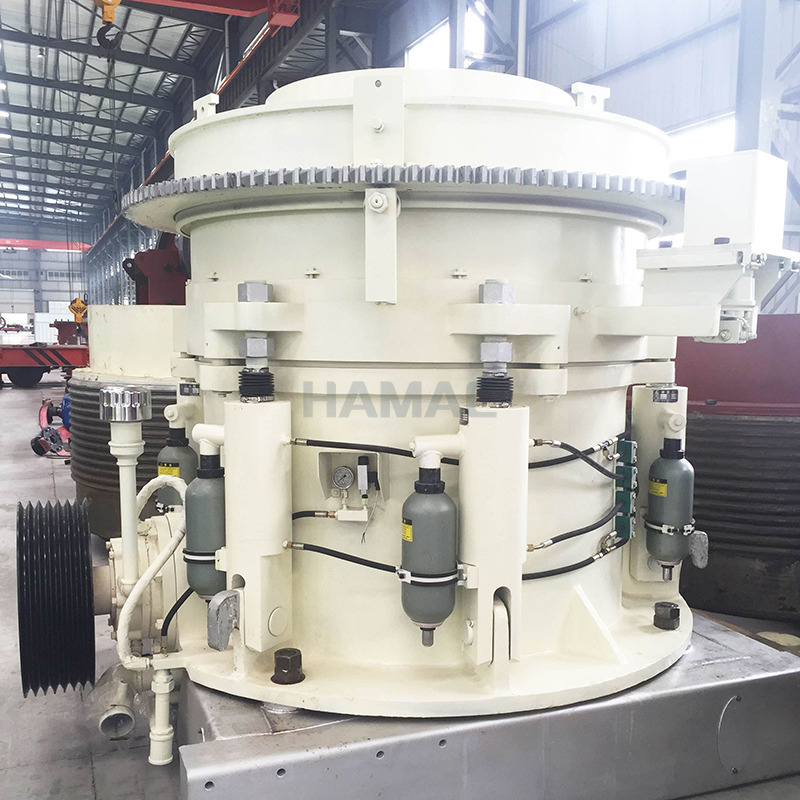
What to verify before you sign
- Whether the quoted t/h is achieved at manufactured-sand production or under ideal laboratory feed.
- Energy draw in kW and the expected kWh per tonne at the design duty.
- Availability of a mixed local and expatriate team for liner changes and the lifting equipment on site.
- Screen deck count, aperture and area; ask for the efficiency calculation, not just the mesh size.
- Delivery terms (FOB / CFR / CIF) with the destination port named explicitly.
- Written performance guarantee, sampling method and acceptance-test protocol.
- Liner alloy: Mn18 with ceramic inserts matched to the rock, not to the lowest purchase price.
- Product sampling points and the lab equipment needed for routine grading checks.
- Erection scope: supervision only, or full civil, mechanical and electrical installation.
For manufactured-sand production, give the fast mobilisation line extra weight; a generic checklist will not rank the offers correctly.
Where the money actually goes
| Cost line | Indicative share | What moves the number |
|---|---|---|
| Equipment & drive packages | 54% | Model size, number of stages and automation level |
| Ocean freight & insurance | 8% | Destination port, container count and out-of-gauge cargo |
| Civil works & foundations | 8% | Soil conditions, dynamic loads and site preparation |
| Erection, commissioning & training | 7% | Local labour, supervision scope and schedule |
| First-year wear parts | 15% | Rock abrasiveness, liner grade and operating hours |
| Power, lubricants & consumables | 8% | kWh per tonne, local tariff and dust suppression water |
Model a low, base and high case for tonnes per liner set. The spread tells you more than a single optimistic estimate.
Mistakes that cost more than the machine
- Using one liner profile for both secondary and tertiary stages.
- Letting the manufactured-sand production duty be defined verbally instead of in the contract.
- Overlooking dust, noise and water permits in your market until erection has already started.
- Ordering no spares with the plant and waiting six weeks for the first liner set.
- Selecting the cheapest liner alloy for hard, high-silica rock and paying for it in change-outs.
- Skipping a geotechnical check and discovering settlement under the primary crusher at a brownfield extension.
- Undersizing the screen, then blaming the crusher for a plant that never reaches your target tonnage.
- Forgetting surge capacity — an intermittent loader starves the chamber and ruins particle shape.
For manufactured-sand production, protect the fast mobilisation requirement explicitly in the contract documents.
Commissioning checklist
- Calibrate the belt scale and any level probes against a known load.
- Measure and log the as-new CSS / setting for future wear comparison.
- Measure noise and dust at the operator position against the local limit.
- Check lubrication levels, grease lines and oil cooler operation.
- Agree the punch list, sign the hand-over protocol and file the as-built drawings.
- Record power draw, tonnage and chamber pressure at steady state.
- Record the baseline grading curve for each product fraction.
- Test emergency stops, pull wires and interlock trips in sequence.
Keep the signed record; it is the only defensible baseline for later performance disputes.