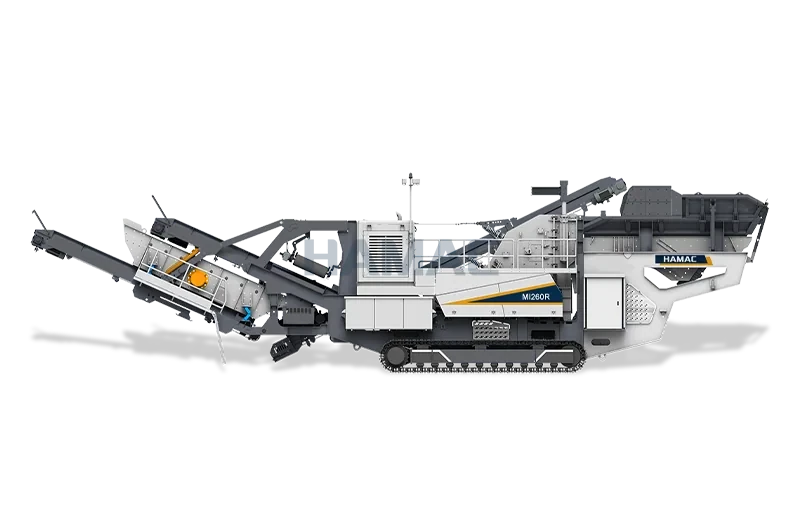
Overview
The Crawler (Tracked) Impact Crusher TF Series is applied across aggregates, mining, beneficiation and recycling. The material properties decide whether it is the right machine.
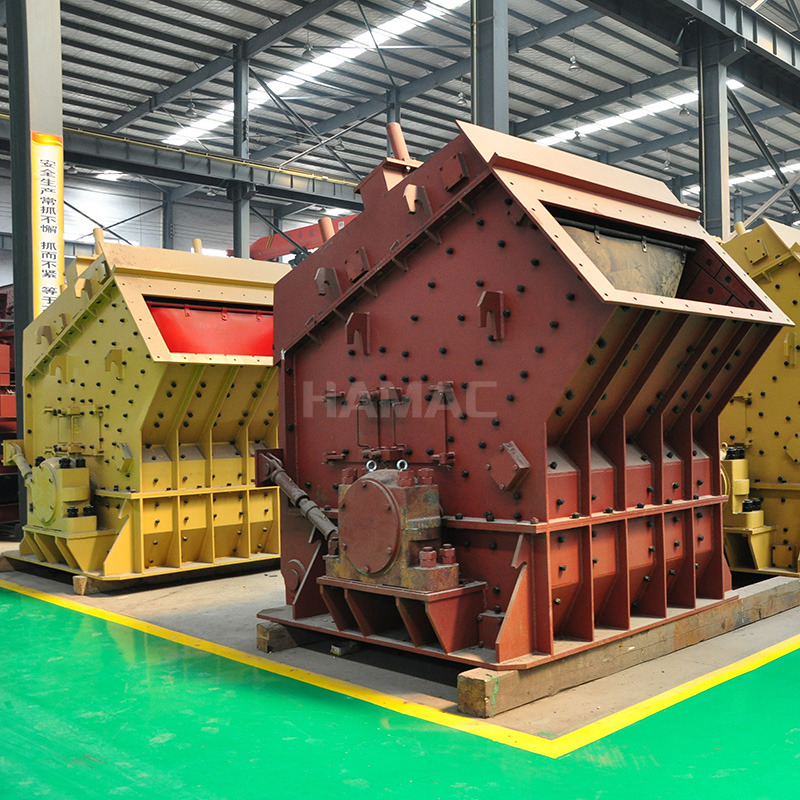
Materials it handles
- Hard rock: granite, basalt, andesite, gabbro.
- Soft rock: limestone, marble, dolomite.
- Ores: iron, copper, gold, manganese.
- Recycling: concrete, asphalt, C&D waste.
Industries
- Quarrying and construction aggregates.
- Metal ore crushing and beneficiation.
- Manufactured sand and road base.
- Cement raw meal and industrial minerals.
Typical configuration
Usually combined with a feeder, screen and conveyors into a complete circuit, or as a module in a mobile plant.
Reference data for this configuration
| Parameter | Reference value |
|---|---|
| Machine line | Crawler (Tracked) Impact Crusher TF Series |
| Category | Tracked Crushing Plants |
| Assumed duty | manufactured-sand production |
| Evaluation horizon | three-year view |
Where a value is shown as nominal, the written proposal states the guaranteed figure for your material, feed grading and three-year operating plan.
Published Crawler (Tracked) Impact Crusher TF Series model data
| Model | TF150 | TF250 | TF350 |
|---|---|---|---|
| Impact crusher | LF150 | LF250 | LF350 |
| Max. feeding size | 500 mm | 700 mm | 800 mm |
| Capacity | 100–200 t/h | 200–400 t/h | 300–500 t/h |
| Motor power | 90–200 kW | 180–250 kW | 200–400 kW |
| Return screen | 2YK1530 | 2YS1640 | YS1740 |
| Generator | 360 kW | 500 kW | 520 kW |
TF150 / TF250 / TF350 tracked impact crushers, 100–500 t/h, ideal for limestone, concrete and asphalt recycling. Read the table column by column against manufactured-sand production: the model you pick is the one whose published range brackets your target tonnage, not simply the largest machine in the series. Availability, motor rating and shipping data are re-confirmed for a brownfield extension in the written HAMAC proposal.
Project profile these notes assume
| Assumption | Value |
|---|---|
| Operating duty | manufactured-sand production |
| Primary objective | lowest cost per tonne |
| Evaluation horizon | three-year view |
| Site condition | a brownfield extension |
| Operating team | a small contractor crew |
Change any one of these assumptions and the recommended configuration for crawler (tracked) impact crusher tf series may change. HAMAC re-runs the same checks against your own numbers once the enquiry data sheet is received.
From enquiry to the first saleable tonne
- Include dust suppression, guarding, emergency stops and lock-out points in the layout drawing.
- Book shipping, prepare the packing list and confirm the container loading plan.
- Record the as-built settings and give the operator a written daily, weekly and monthly schedule.
- Budget for water, dust extraction and spillage handling as part of the plant, not as an afterthought.
- Allocate screen area per deck; blinding and pegging are the most common hidden bottlenecks in a new plant.
- Check bearing and lubrication arrangements against the ambient temperature range at the site.
- Choose compression or impact reduction according to hardness, silica content and required particle shape.
- Define the acceptance test: sampling points, test duration, moisture range and who signs the protocol.
- Review the crusher chamber profile with the liner supplier against the feed material.
Each step has an owner and a document: flow sheet, general arrangement, foundation reference, packing list and acceptance protocol.
What to verify before you sign
- Nameplate data for local voltage, frequency and the applicable conformity scheme.
- Screen deck count, aperture and area; ask for the efficiency calculation, not just the mesh size.
- Whether the quoted t/h is achieved at manufactured-sand production or under ideal laboratory feed.
- Availability of a small contractor crew for liner changes and the lifting equipment on site.
- Liner alloy: Mn13 matched to the rock, not to the lowest purchase price.
- Maximum feed lump and gradation — a chamber that cannot accept the top size will bridge on day one.
- Guaranteed power draw and the lowest cost per tonne trade-off it implies.
- Tramp-iron protection — hydraulic release, magnet and metal detection on the feed belt.
- Wear-part interchangeability across machines in the same circuit.
The cheapest offer usually wins on equipment and loses on one of the last six items — freight terms, spares or the acceptance test.
Where the money actually goes
| Cost line | Indicative share | What moves the number |
|---|---|---|
| Equipment & drive packages | 54% | Model size, number of stages and automation level |
| Ocean freight & insurance | 8% | Destination port, container count and out-of-gauge cargo |
| Civil works & foundations | 8% | Soil conditions, dynamic loads and site preparation |
| Erection, commissioning & training | 7% | Local labour, supervision scope and schedule |
| First-year wear parts | 15% | Rock abrasiveness, liner grade and operating hours |
| Power, lubricants & consumables | 8% | kWh per tonne, local tariff and dust suppression water |
Include downtime in the model. An unplanned liner change on a remote site costs far more than the casting itself.
Mistakes that cost more than the machine
- Planning the crusher but not the conveyors, transfer chutes and stockpile capacity around it.
- Omitting a bypass chute, so a single screen fault stops the whole line.
- Buying lowest cost per tonne on price alone and losing it in availability.
- Using one liner profile for both secondary and tertiary stages.
- Letting the manufactured-sand production duty be defined verbally instead of in the contract.
- Assuming the manufacturer's warranty covers wear parts and consumables.
- Skipping a geotechnical check and discovering settlement under the primary crusher at a brownfield extension.
- Choosing screen apertures before the concrete or asphalt mix design is fixed.
Review the list with a small contractor crew before the order is placed — they will recognise most of them.
Commissioning checklist
- Check lubrication levels, grease lines and oil cooler operation.
- Check hydraulic pressure, accumulator pre-charge and tramp-release function.
- Record the baseline grading curve for each product fraction.
- Dry-run the plant empty for the specified period and record vibration.
- Test emergency stops, pull wires and interlock trips in sequence.
- Confirm all guards, emergency stops and pull-wire switches function.
- Record power draw, tonnage and chamber pressure at steady state.
- Agree the punch list, sign the hand-over protocol and file the as-built drawings.
Keep the signed record; it is the only defensible baseline for later performance disputes.