Overview
HAMAC supplies crushing and grinding equipment to Zimbabwe, shipped to Beira and quoted to local standards (SAZS). Power is configured for 380V 50Hz.
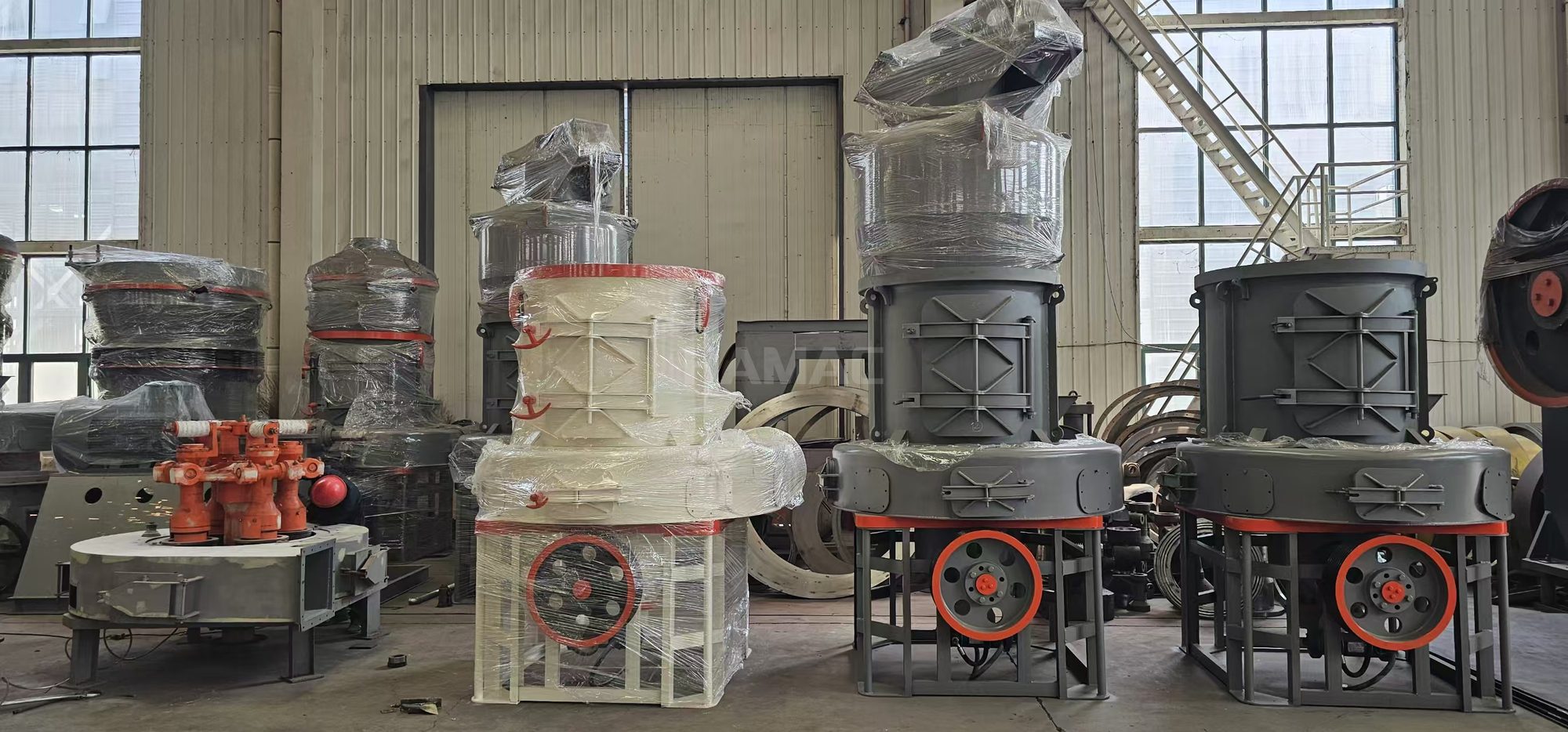
Crushing equipment for Zimbabwe
- Popular material: Gold ore, Chrome.
- Destination port: Beira.
- Voltage / frequency: 380V 50Hz.
- Standards: SAZS.
What HAMAC provides
- Plant design for gold ore and your capacity.
- Equipment configured to 380V 50Hz and SAZS.
- FOB / CFR / CIF quotation to Beira.
- Installation supervision, training and spare parts.
Logistics & documentation
HAMAC handles packing, container loading plan and the documentation required for Zimbabwe, including certificates applicable to your market.
Reference data for this configuration
| Parameter | Reference value |
|---|---|
| Destination port | Beira |
| Site supply | 380V 50Hz |
| Local standards | SAZS |
| Region | Africa |
| Assumed duty | seasonal road-project supply |
| Evaluation horizon | seven-year view |
Use the table as a checklist when comparing quotations for the crushing and screening plant — a lower price often means one of these parameters was quietly reduced.
Project profile these notes assume
| Assumption | Value |
|---|---|
| Operating duty | seasonal road-project supply |
| Primary objective | lowest cost per tonne |
| Evaluation horizon | seven-year view |
| Site condition | an existing quarry bench |
| Operating team | an owner-operator team |
Change any one of these assumptions and the recommended configuration for the crushing and screening plant may change. HAMAC re-runs the same checks against your own numbers once the enquiry data sheet is received.
From enquiry to the first saleable tonne
- Review the crusher chamber profile with the liner supplier against the feed material.
- Budget for water, dust extraction and spillage handling as part of the plant, not as an afterthought.
- Include dust suppression, guarding, emergency stops and lock-out points in the layout drawing.
- Allocate screen area per deck; blinding and pegging are the most common hidden bottlenecks in a new plant.
- Run a sieve analysis on a representative sample and attach the grading curve to the enquiry.
- Commission with graded load, sample the product grading, then train operators on liner change-out and daily checks.
- Check bearing and lubrication arrangements against the ambient temperature range at the site.
- Set the maintenance stock list from the expected wear rate, not from a percentage of the equipment price.
- Sequence delivery so foundations cure while the equipment is still in manufacture.
A realistic programme reserves time for permits, foundation curing and shipping to Zimbabwe before any steel is cut.
What to verify before you sign
- Control system language, telemetry and remote diagnostics availability.
- After-sales response time, technician availability and the warranty exclusions in writing.
- Product sampling points and the lab equipment needed for routine grading checks.
- Access for liner change-out — crane radius, lifting points and clearance around the chamber.
- Availability of an owner-operator team for liner changes and the lifting equipment on site.
- Ambient temperature, altitude and dust load derating for motors and hydraulics.
- Energy draw in kW and the expected kWh per tonne at the design duty.
- Spare motor, gearbox and hydraulic pump lead times from the nearest HAMAC stock point.
- Screen deck count, aperture and area; ask for the efficiency calculation, not just the mesh size.
Share this list with an owner-operator team as well as procurement; operators are the ones who live with the omissions.
Where the money actually goes
| Cost line | Indicative share | What moves the number |
|---|---|---|
| Equipment & drive packages | 53% | Model size, number of stages and automation level |
| Ocean freight & insurance | 11% | Destination port, container count and out-of-gauge cargo |
| Civil works & foundations | 8% | Soil conditions, dynamic loads and site preparation |
| Erection, commissioning & training | 7% | Local labour, supervision scope and schedule |
| First-year wear parts | 14% | Rock abrasiveness, liner grade and operating hours |
| Power, lubricants & consumables | 7% | kWh per tonne, local tariff and dust suppression water |
Model a low, base and high case for tonnes per liner set. The spread tells you more than a single optimistic estimate.
Mistakes that cost more than the machine
- Planning the crusher but not the conveyors, transfer chutes and stockpile capacity around it.
- Ordering no spares with the plant and waiting six weeks for the first liner set.
- Selecting the cheapest liner alloy for hard, high-silica rock and paying for it in change-outs.
- Comparing quotations with different port terms and calling the lower number cheaper.
- Letting the seasonal road-project supply duty be defined verbally instead of in the contract.
- Forgetting surge capacity — an intermittent loader starves the chamber and ruins particle shape.
- Specifying motors for the wrong voltage or frequency and rewinding them on site.
- Choosing screen apertures before the concrete or asphalt mix design is fixed.
For seasonal road-project supply, protect the lowest cost per tonne requirement explicitly in the contract documents.
Commissioning checklist
- Check lubrication levels, grease lines and oil cooler operation.
- Test emergency stops, pull wires and interlock trips in sequence.
- Confirm the direction and tension of every belt under no load.
- Record power draw, tonnage and chamber pressure at steady state.
- Verify chute liners, skirt rubber and impact bars after the first hour of feed.
- Hand over the spare-parts list, manuals and maintenance schedule.
- Check hydraulic pressure, accumulator pre-charge and tramp-release function.
- Sample each product fraction and compare with the specification.
Keep the signed record; it is the only defensible baseline for later performance disputes.