Overview
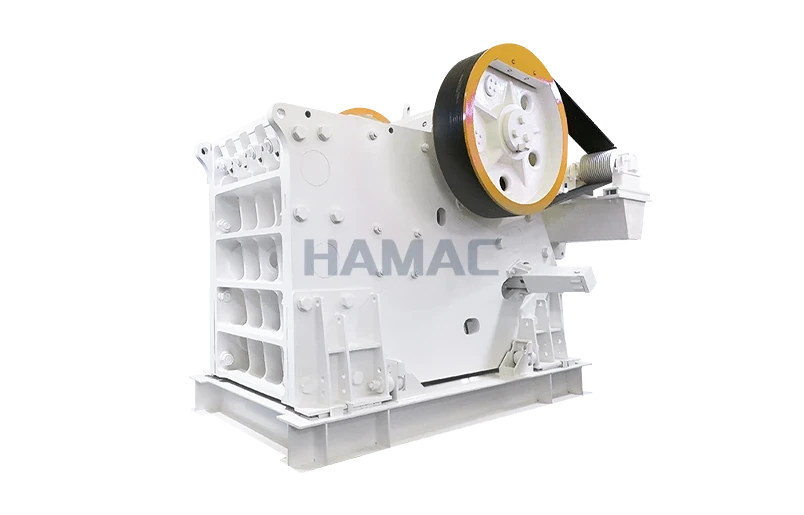
Practical, numbers-first guidance on the European Tech. Jaw Crusher — written for engineers specifying, buying and running crushing plants.
Abnormal noise / vibration
- Check for loose liner bolts or foreign metal in feed.
- Verify foundation bolts and coupling alignment.
- Listen for bearing distress; schedule replacement.
Low output
- Worn liners / blow bars reduce reduction.
- Wrong CSS / setting for target product.
- Screen blinding limits throughput.
Poor product shape
- Increase reduction in the shaping stage.
- Verify VSI rotor speed / anvil.
- Re-check screen mesh.
Reference data for this configuration
| Parameter | Reference value |
|---|---|
| Machine line | European Tech. Jaw Crusher |
| Category | Jaw Crusher |
| Assumed duty | cement raw-meal preparation |
| Evaluation horizon | seven-year view |
Use the table as a checklist when comparing quotations for european tech. jaw crusher — a lower price often means one of these parameters was quietly reduced.
Published European Tech. Jaw Crusher model data
| Model | Feed opening | Motor Power | Rotation speed | Jaw plate length | Max single part weight | Total weight |
|---|---|---|---|---|---|---|
| 6CX80 | 800×510 mm | 75 kW | 350 rpm | 1100 mm | 2870 kg | 7520 kg |
| 6CX96 | 930×580 mm | 75(90) kW | 300 rpm | 1380 mm | 4500 kg | 12000 kg |
| 6CX106 | 1060×700 mm | 110 kW | 280 rpm | 1450 mm | 7800 kg | 19000 kg |
| 6CX110 | 1100×850 mm | 132(160) kW | 230 rpm | 1800 mm | 9000 kg | 25060 kg |
| 6CX125 | 1250×950 mm | 160(132) kW | 220 rpm | 2000 mm | 12960 kg | 36700 kg |
| 6CX140 | 1400×1070 mm | 200(160) kW | 220 rpm | 2100 mm | 15950 kg | 45300 kg |
| 6CX145 | 1400×1100 mm | 200 kW | 220 rpm | 2300 mm | 18600 kg | 53800 kg |
| 6CX160 | 1600×1200 mm | 250(200) kW | 220 rpm | 2500 mm | 21380 kg | 68600 kg |
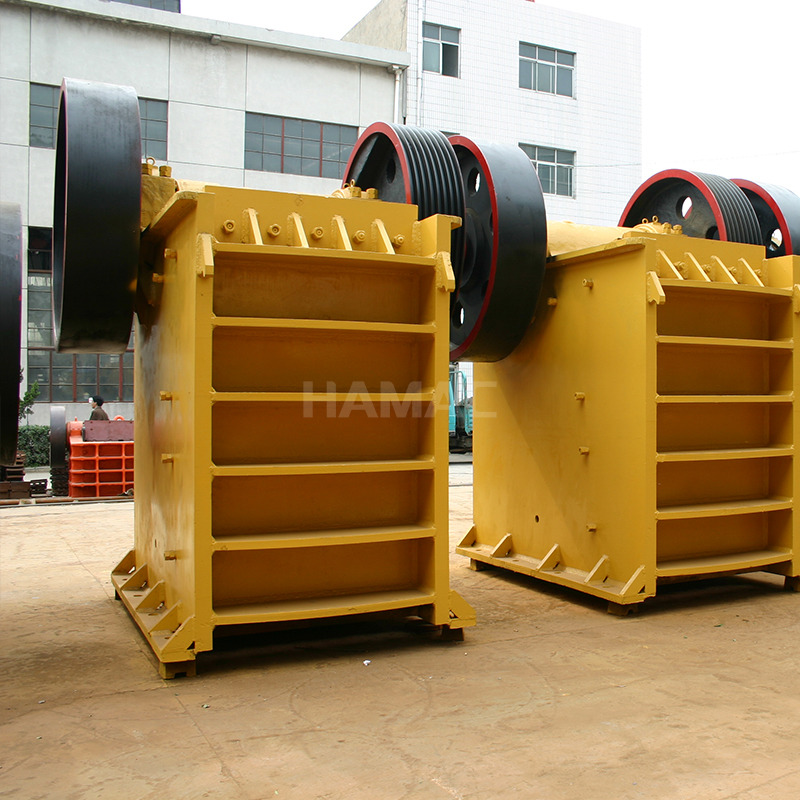
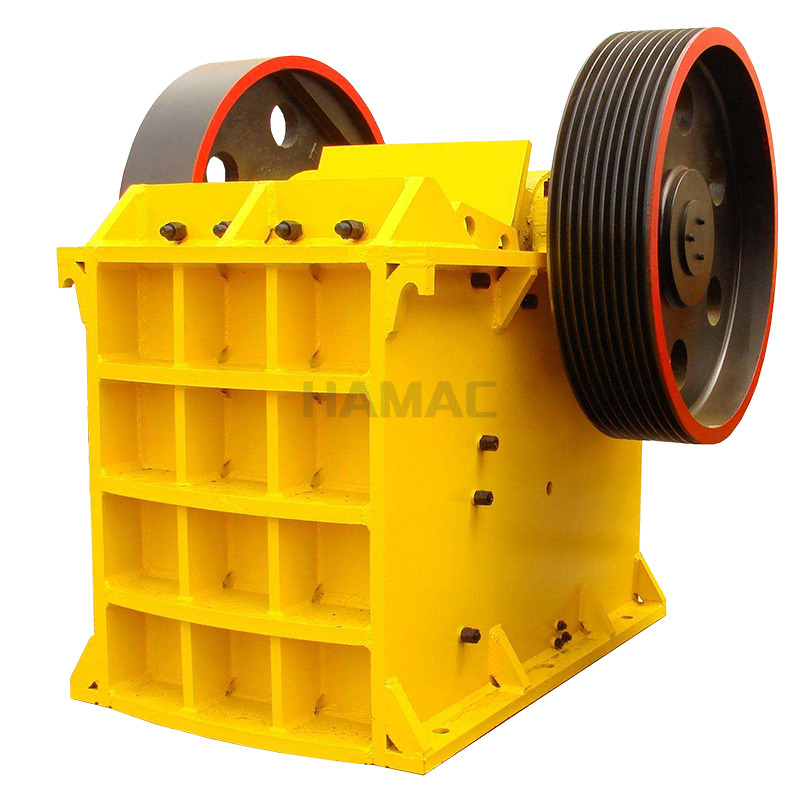
The European Tech. jaw crusher, developed using advanced international crushing technology, is designed for high-efficiency crushing of hard, abrasive materials. Read the table column by column against cement raw-meal preparation: the model you pick is the one whose published range brackets your target tonnage, not simply the largest machine in the series. Availability, motor rating and shipping data are re-confirmed for a confined urban yard in the written HAMAC proposal.
Project profile these notes assume
| Assumption | Value |
|---|---|
| Operating duty | cement raw-meal preparation |
| Primary objective | strict product cubicity |
| Evaluation horizon | seven-year view |
| Site condition | a confined urban yard |
| Operating team | a small contractor crew |
Change any one of these assumptions and the recommended configuration for european tech. jaw crusher may change. HAMAC re-runs the same checks against your own numbers once the enquiry data sheet is received.
From enquiry to the first saleable tonne
- Plan training for a small contractor crew on CSS adjustment, liner change-out and lock-out / tag-out.
- Check bearing and lubrication arrangements against the ambient temperature range at the site.
- Set the maintenance stock list from the expected wear rate, not from a percentage of the equipment price.
- Review the crusher chamber profile with the liner supplier against the feed material.
- Book shipping, prepare the packing list and confirm the container loading plan.
- Budget for water, dust extraction and spillage handling as part of the plant, not as an afterthought.
- Size the primary stage for your target tonnage with a 10–20% surge allowance — never on nameplate throughput alone.
- Sequence delivery so foundations cure while the equipment is still in manufacture.
- Record the as-built settings and give the operator a written daily, weekly and monthly schedule.
The sequence is deliberately front-loaded — decisions taken before manufacture are cheap, changes made on site are not.
What to verify before you sign
- Guaranteed power draw and the strict product cubicity trade-off it implies.
- Control system language, telemetry and remote diagnostics availability.
- Screen deck count, aperture and area; ask for the efficiency calculation, not just the mesh size.
- Decommissioning or relocation value at the end of a seven-year horizon.
- Dust and noise control designed to the local emission limits for your market.
- Ambient temperature, altitude and dust load derating for motors and hydraulics.
- Liner alloy: Mn18 with ceramic inserts matched to the rock, not to the lowest purchase price.
- Availability of a small contractor crew for liner changes and the lifting equipment on site.
- Choke-feed arrangement: surge bin, feeder control and level indication.
The relative weight of each item changes with the project: wear parts dominate on abrasive rock, availability dominates on remote sites.
Where the money actually goes
| Cost line | Indicative share | What moves the number |
|---|---|---|
| Equipment & drive packages | 54% | Model size, number of stages and automation level |
| Ocean freight & insurance | 8% | Destination port, container count and out-of-gauge cargo |
| Civil works & foundations | 8% | Soil conditions, dynamic loads and site preparation |
| Erection, commissioning & training | 7% | Local labour, supervision scope and schedule |
| First-year wear parts | 15% | Rock abrasiveness, liner grade and operating hours |
| Power, lubricants & consumables | 8% | kWh per tonne, local tariff and dust suppression water |
Treat the percentages as a budgeting shape, not a quotation: HAMAC prices the equipment list in writing once the flow sheet is fixed.
Mistakes that cost more than the machine
- Selecting the cheapest liner alloy for hard, high-silica rock and paying for it in change-outs.
- Overlooking dust, noise and water permits in your market until erection has already started.
- Planning the crusher but not the conveyors, transfer chutes and stockpile capacity around it.
- Assuming a mobile plant can match a stationary line on high-tonnage, multi-product duty.
- Leaving tramp-iron protection out of the scope to save a small percentage of capital.
- Comparing quotations with different port terms and calling the lower number cheaper.
- Assuming the manufacturer's warranty covers wear parts and consumables.
- Forgetting surge capacity — an intermittent loader starves the chamber and ruins particle shape.
Review the list with a small contractor crew before the order is placed — they will recognise most of them.
Commissioning checklist
- Check belt tracking, chute build-up and transfer-point dust.
- Record the baseline grading curve for each product fraction.
- Agree the punch list, sign the hand-over protocol and file the as-built drawings.
- Verify rotation direction on every motor before coupling.
- Check hydraulic pressure, accumulator pre-charge and tramp-release function.
- Introduce feed in graded steps: 25%, 50%, 75%, then full load.
- Confirm the direction and tension of every belt under no load.
- Measure and log the as-new CSS / setting for future wear comparison.
For a small contractor crew, run through this list twice — once with the supervisor and once without.