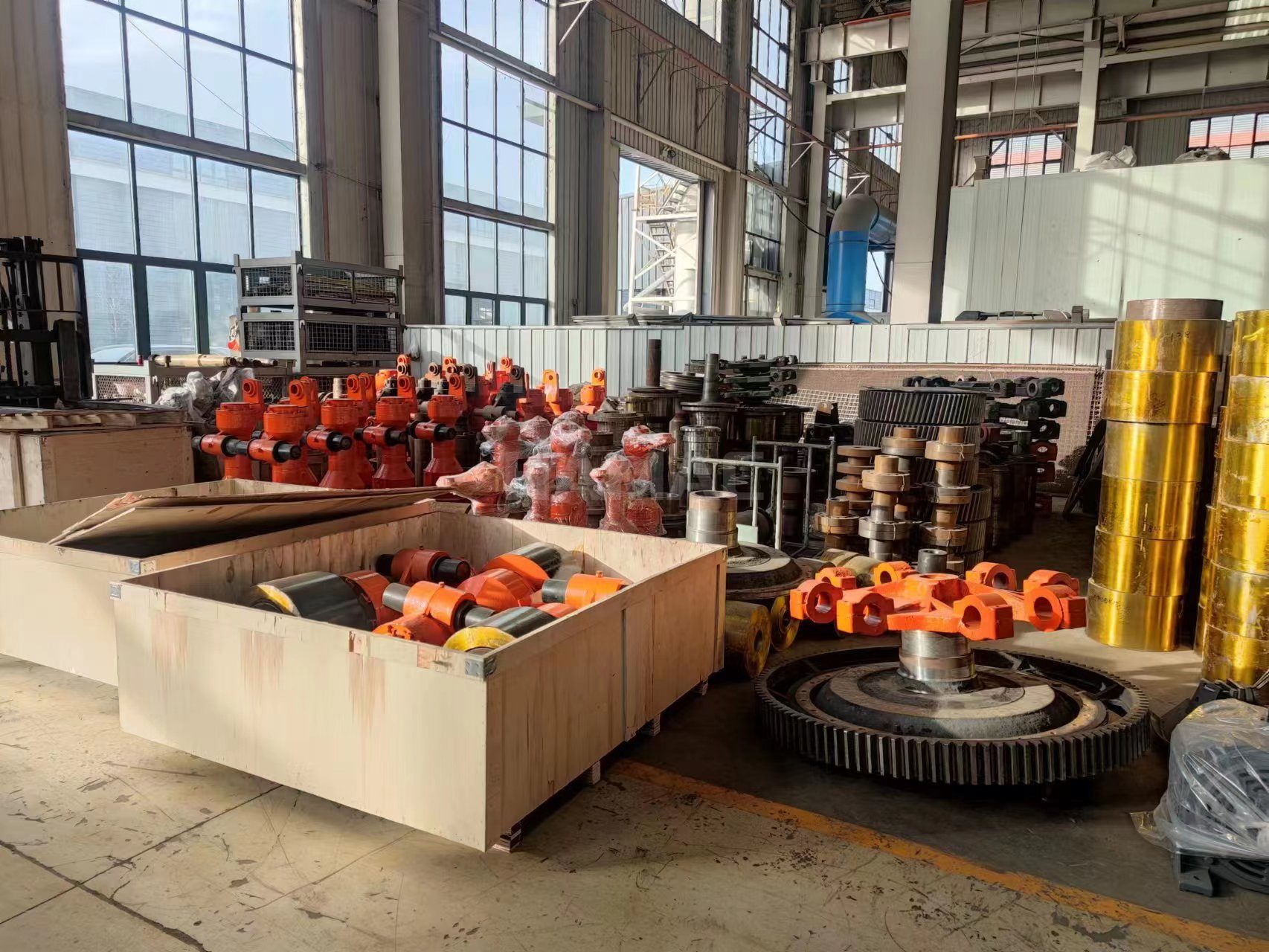
Overview
Practical, numbers-first guidance on the TGM Trapezium Mill — written for engineers specifying, buying and running crushing plants.
Capacity factors
- Chamber / CSS and material.
- Feed gradation and moisture.
- Screen efficiency downstream.
- Continuous vs surge feed.
Rule of thumb
Rated capacity is stated at a given CSS and material; treat it as saleable product, not crusher throughput. Size the plant to 10–20% above target.
Reference data for this configuration
| Parameter | Reference value |
|---|---|
| Machine line | TGM Trapezium Mill |
| Category | Grinding Mills |
| Assumed duty | demolition and recycling duties |
| Evaluation horizon | five-year view |
At demolition and recycling duties, the ranking of these parameters changes: lowest energy per tonne usually becomes the deciding constraint rather than the headline tonnage.
Published TGM Trapezium Mill model data
| Parameter | Typical value | Engineering note |
|---|---|---|
| Finished fineness | 20-400 mesh (0.8-0.045 mm) | Set at the classifier |
| Nominal capacity | 3-60 t/h | Varies with material and moisture |
| Maximum feed size | 30-50 mm | Requires pre-crushing |
| Typical materials | Limestone, calcite, gypsum, talc, barite | Mohs <= 7, moisture <= 6% |
| Power supply | 380 / 415 / 440 V, 50 or 60 Hz | Configured to destination grid |
TGM Trapezium Mill for limestone, calcite, barite, gypsum, talc, dolomite, kaolin and coal powder projects, producing 20-400 mesh (0.8-0.045 mm) at 3-60 t/h with an integrated classifier and dust collection. Read the table column by column against demolition and recycling duties: the model you pick is the one whose published range brackets your target tonnage, not simply the largest machine in the series. Availability, motor rating and shipping data are re-confirmed for a brownfield extension in the written HAMAC proposal.
Project profile these notes assume
| Assumption | Value |
|---|---|
| Operating duty | demolition and recycling duties |
| Primary objective | lowest energy per tonne |
| Evaluation horizon | five-year view |
| Site condition | a brownfield extension |
| Operating team | a rotating shift crew |
Change any one of these assumptions and the recommended configuration for tgm trapezium mill may change. HAMAC re-runs the same checks against your own numbers once the enquiry data sheet is received.
From enquiry to the first saleable tonne
- Set the closed-side setting or rotor speed against the required product fractions, then verify the expected reduction ratio.
- Confirm the haul-road and stockpile plan with a brownfield extension in mind before fixing conveyor lengths.
- Confirm site voltage, frequency and applicable conformity standards before manufacture.
- Include dust suppression, guarding, emergency stops and lock-out points in the layout drawing.
- Allocate screen area per deck; blinding and pegging are the most common hidden bottlenecks in a new plant.
- Run a sieve analysis on a representative sample and attach the grading curve to the enquiry.
- Commission with graded load, sample the product grading, then train operators on liner change-out and daily checks.
- Sequence delivery so foundations cure while the equipment is still in manufacture.
- Record the as-built settings and give the operator a written daily, weekly and monthly schedule.
A realistic programme reserves time for permits, foundation curing and shipping to your market before any steel is cut.
What to verify before you sign
- Tramp-iron protection — hydraulic release, magnet and metal detection on the feed belt.
- Dust and noise control designed to the local emission limits for your market.
- Erection scope: supervision only, or full civil, mechanical and electrical installation.
- Spare-parts consignment: one full liner or blow-bar set plus meshes, belts, bearings and seals.
- Decommissioning or relocation value at the end of a five-year horizon.
- Choke-feed arrangement: surge bin, feeder control and level indication.
- Energy draw in kW and the expected kWh per tonne at the design duty.
- Guaranteed power draw and the lowest energy per tonne trade-off it implies.
- Ambient temperature, altitude and dust load derating for motors and hydraulics.
Bring this list to the design review — it is cheaper to resolve an omission on paper than during commissioning.
Where the money actually goes
| Cost line | Indicative share | What moves the number |
|---|---|---|
| Equipment & drive packages | 54% | Model size, number of stages and automation level |
| Ocean freight & insurance | 8% | Destination port, container count and out-of-gauge cargo |
| Civil works & foundations | 8% | Soil conditions, dynamic loads and site preparation |
| Erection, commissioning & training | 7% | Local labour, supervision scope and schedule |
| First-year wear parts | 15% | Rock abrasiveness, liner grade and operating hours |
| Power, lubricants & consumables | 8% | kWh per tonne, local tariff and dust suppression water |
Include downtime in the model. An unplanned liner change on a remote site costs far more than the casting itself.
Mistakes that cost more than the machine
- Omitting a bypass chute, so a single screen fault stops the whole line.
- Selecting the cheapest liner alloy for hard, high-silica rock and paying for it in change-outs.
- Planning the crusher but not the conveyors, transfer chutes and stockpile capacity around it.
- Overlooking dust, noise and water permits in your market until erection has already started.
- Choosing screen apertures before the concrete or asphalt mix design is fixed.
- Forgetting surge capacity — an intermittent loader starves the chamber and ruins particle shape.
- Comparing quotations with different port terms and calling the lower number cheaper.
- Ordering no spares with the plant and waiting six weeks for the first liner set.
For demolition and recycling duties, protect the lowest energy per tonne requirement explicitly in the contract documents.
Commissioning checklist
- Agree the punch list, sign the hand-over protocol and file the as-built drawings.
- Dry-run the plant empty for the specified period and record vibration.
- Record the baseline grading curve for each product fraction.
- Verify chute liners, skirt rubber and impact bars after the first hour of feed.
- Measure noise and dust at the operator position against the local limit.
- Record power draw, tonnage and chamber pressure at steady state.
- Hand over the spare-parts list, manuals and maintenance schedule.
- Confirm all guards, emergency stops and pull-wire switches function.
Keep the signed record; it is the only defensible baseline for later performance disputes.