Overview
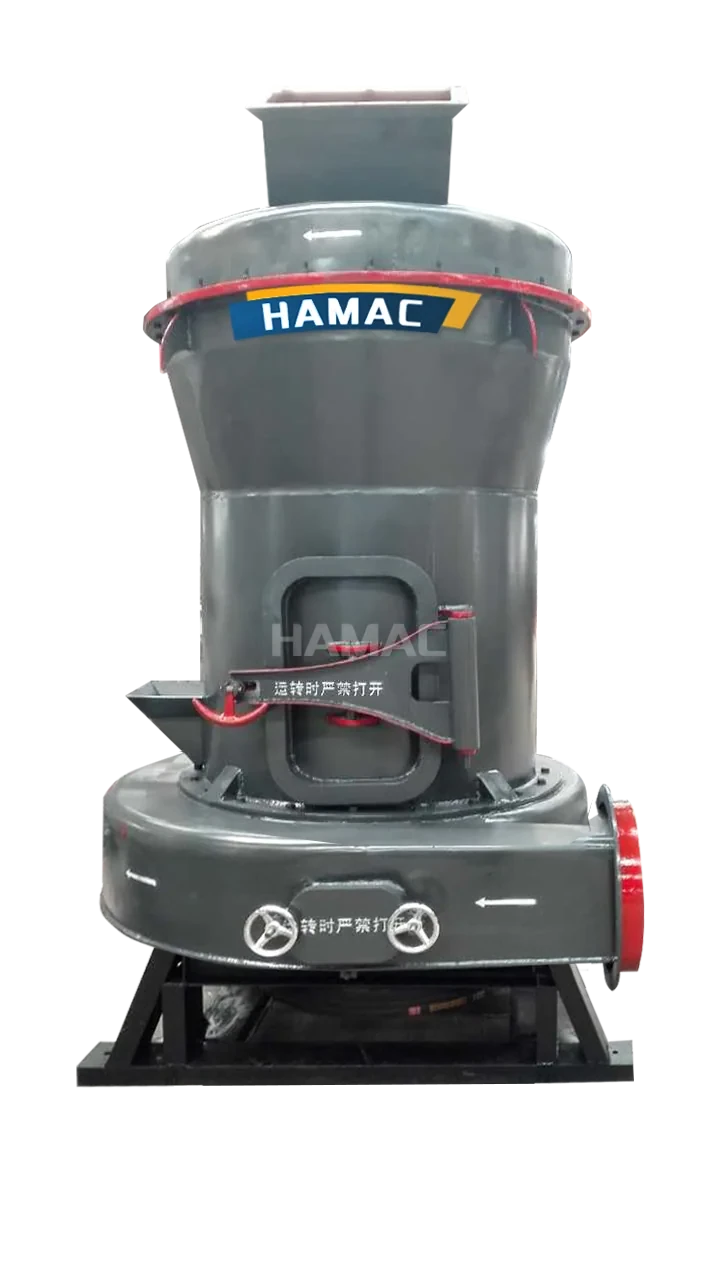
Practical, numbers-first guidance on the YGM High Pressure Grinding Mill — written for engineers specifying, buying and running crushing plants.
How it compares
- Primary reduction vs a gyratory for very high tonnage.
- Compression (cone) vs impact for shape vs wear.
- Mobile vs stationary for your site.
When to pick this machine
YGM High Pressure Grinding Mill is chosen when its reduction mechanism and capacity match your material and product spec.
Reference data for this configuration
| Parameter | Reference value |
|---|---|
| Machine line | YGM High Pressure Grinding Mill |
| Category | Grinding Mills |
| Assumed duty | manufactured-sand production |
| Evaluation horizon | ten-year view |
Treat this as a living sheet. Every revision of the flow sheet for your market should update the same fields so the equipment list stays traceable.
Published YGM High Pressure Grinding Mill model data
| Model | Roller Qty | Roller Size | Ring Size | Feed Size | Product Size | Output | Speed | Power |
|---|---|---|---|---|---|---|---|---|
| YGM65 | 3 | 210×150 mm | 650×150 mm | < 15 mm | 0.613-0.033 mm | 0.4-1.8 t | 160 rpm | 15 kw |
| YGM75 | 3 | 260×150 mm | 780×150 mm | < 15 mm | 0.613-0.033 mm | 1-3 t | 160 rpm | 18.5 kw |
| YGM85 | 3 | 270×140 mm | 830×140 mm | < 20 mm | 0.613-0.033 mm | 1.2-4.6 t | 150 rpm | 22 kw |
| YGM95B | 3-4 | 300×160 mm | 900×160 mm | < 25 mm | 0.613-0.033 mm | 1.5-4.8 t | 150 rpm | 30 kw |
| YGM95 | 4 | 310×170 mm | 950×170 mm | < 25 mm | 0.613-0.033 mm | 2.1-5.6 t | 130 rpm | 37 kw |
| YGM130 | 4 | 410×210 mm | 1280×210 mm | < 30 mm | 0.95-0.033 mm | 3-9.5 t | 103 rpm | 75 kw |
| YGM1500 | 4 | 420×280 mm | 1510×280 mm | < 30 mm | 0.95-0.033 mm | 5-15 t | 103 rpm | 90 kw |
| YGM160 | 5 | 440×270 mm | 1600×270 mm | < 35 mm | 1.9-0.045 mm | 8-16 t | 82 rpm | 132 kw |
Raymond Mill is an important industrial grinding equipment widely used in various industries. Read the table column by column against manufactured-sand production: the model you pick is the one whose published range brackets your target tonnage, not simply the largest machine in the series. Availability, motor rating and shipping data are re-confirmed for a remote mine site in the written HAMAC proposal.
Project profile these notes assume
| Assumption | Value |
|---|---|
| Operating duty | manufactured-sand production |
| Primary objective | minimal civil works |
| Evaluation horizon | ten-year view |
| Site condition | a remote mine site |
| Operating team | a full-time plant team |
Change any one of these assumptions and the recommended configuration for ygm high pressure grinding mill may change. HAMAC re-runs the same checks against your own numbers once the enquiry data sheet is received.
From enquiry to the first saleable tonne
- Set the closed-side setting or rotor speed against the required product fractions, then verify the expected reduction ratio.
- Lay out conveyors, access ways, stockpile capacity and drainage before ordering steelwork.
- Run a sieve analysis on a representative sample and attach the grading curve to the enquiry.
- Confirm site voltage, frequency and applicable conformity standards before manufacture.
- Verify the electrical single-line diagram, cable sizing and starter type with the local utility.
- Choose compression or impact reduction according to hardness, silica content and required particle shape.
- Sequence delivery so foundations cure while the equipment is still in manufacture.
- Commission with graded load, sample the product grading, then train operators on liner change-out and daily checks.
- Survey the feed: the feed material; record top size, bulk density, moisture and clay content before fixing the flow sheet.
A realistic programme reserves time for permits, foundation curing and shipping to your market before any steel is cut.
What to verify before you sign
- Dust and noise control designed to the local emission limits for your market.
- Choke-feed arrangement: surge bin, feeder control and level indication.
- Closed-side setting range and whether automatic setting regulation is included.
- Access for liner change-out — crane radius, lifting points and clearance around the chamber.
- Availability of a full-time plant team for liner changes and the lifting equipment on site.
- Whether the quoted t/h is achieved at manufactured-sand production or under ideal laboratory feed.
- Spare motor, gearbox and hydraulic pump lead times from the nearest HAMAC stock point.
- Maximum feed lump and gradation — a chamber that cannot accept the top size will bridge on day one.
- Product sampling points and the lab equipment needed for routine grading checks.
The relative weight of each item changes with the project: wear parts dominate on abrasive rock, availability dominates on remote sites.
Where the money actually goes
| Cost line | Indicative share | What moves the number |
|---|---|---|
| Equipment & drive packages | 54% | Model size, number of stages and automation level |
| Ocean freight & insurance | 8% | Destination port, container count and out-of-gauge cargo |
| Civil works & foundations | 8% | Soil conditions, dynamic loads and site preparation |
| Erection, commissioning & training | 7% | Local labour, supervision scope and schedule |
| First-year wear parts | 15% | Rock abrasiveness, liner grade and operating hours |
| Power, lubricants & consumables | 8% | kWh per tonne, local tariff and dust suppression water |
Model a low, base and high case for tonnes per liner set. The spread tells you more than a single optimistic estimate.
Mistakes that cost more than the machine
- Forgetting surge capacity — an intermittent loader starves the chamber and ruins particle shape.
- Ordering no spares with the plant and waiting six weeks for the first liner set.
- Assuming the manufacturer's warranty covers wear parts and consumables.
- Omitting a bypass chute, so a single screen fault stops the whole line.
- Planning the crusher but not the conveyors, transfer chutes and stockpile capacity around it.
- Skipping the acceptance test, so no one has a baseline to measure degradation against.
- Letting the manufactured-sand production duty be defined verbally instead of in the contract.
- Using one liner profile for both secondary and tertiary stages.
On a remote mine site, the civil and logistics items deserve as much attention as the crusher itself.
Commissioning checklist
- Introduce feed in graded steps: 25%, 50%, 75%, then full load.
- Verify rotation direction on every motor before coupling.
- Check belt tracking, chute build-up and transfer-point dust.
- Record the baseline grading curve for each product fraction.
- Check lubrication levels, grease lines and oil cooler operation.
- Measure and log the as-new CSS / setting for future wear comparison.
- Calibrate the belt scale and any level probes against a known load.
- Agree the punch list, sign the hand-over protocol and file the as-built drawings.
On a remote mine site, allow extra time for the dust and noise measurements.