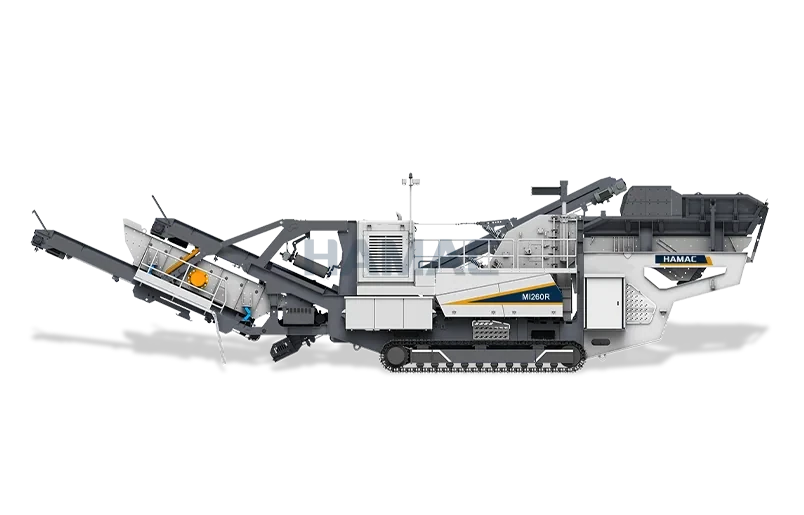
Overview
Practical, numbers-first guidance on the Tracked Impact Crusher Plant — written for engineers specifying, buying and running crushing plants.
How it compares
- Primary reduction vs a gyratory for very high tonnage.
- Compression (cone) vs impact for shape vs wear.
- Mobile vs stationary for your site.
When to pick this machine
Tracked Impact Crusher Plant is chosen when its reduction mechanism and capacity match your material and product spec.
Reference data for this configuration
| Parameter | Reference value |
|---|---|
| Machine line | Tracked Impact Crusher Plant |
| Category | Tracked Crushing Plants |
| Assumed duty | contract crushing on short-term sites |
| Evaluation horizon | ten-year view |
Use the table as a checklist when comparing quotations for tracked impact crusher plant — a lower price often means one of these parameters was quietly reduced.
Published Tracked Impact Crusher Plant model data
| Model | MI260RE | MI350RE |
|---|---|---|
| Feeder | ||
| Volume(m³) | 7 | 7.5 |
| Feeding height(mm) | 4222 | 4124 |
| Maximum feed size(mm) | 600 | 600 |
| Feeding capacity(t/h) | 300 | 400 |
| Crusher | ||
| Host model | MIX2 | MIX3 |
| Return screen length×width(mm) | 1540x3600 | 1740x5000 |
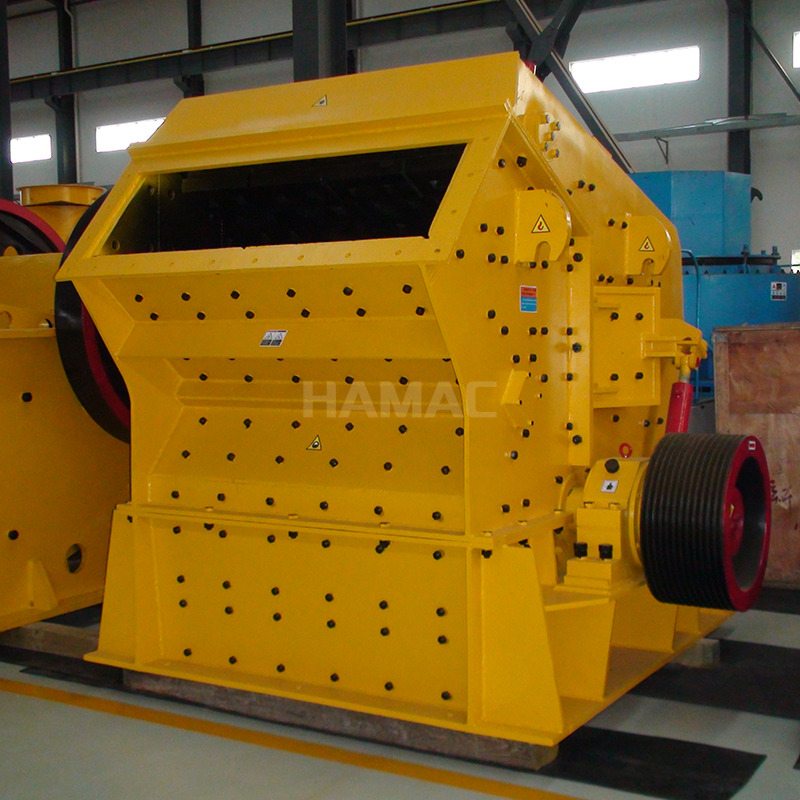
Boost your production with the HMC series Tracked Impact Crusher Plant—track-mounted for ultimate mobility, safety, and environmental care. Read the table column by column against contract crushing on short-term sites: the model you pick is the one whose published range brackets your target tonnage, not simply the largest machine in the series. Availability, motor rating and shipping data are re-confirmed for an existing quarry bench in the written HAMAC proposal.
Project profile these notes assume
| Assumption | Value |
|---|---|
| Operating duty | contract crushing on short-term sites |
| Primary objective | strict product cubicity |
| Evaluation horizon | ten-year view |
| Site condition | an existing quarry bench |
| Operating team | a small contractor crew |
Change any one of these assumptions and the recommended configuration for tracked impact crusher plant may change. HAMAC re-runs the same checks against your own numbers once the enquiry data sheet is received.
From enquiry to the first saleable tonne
- Include dust suppression, guarding, emergency stops and lock-out points in the layout drawing.
- Run a sieve analysis on a representative sample and attach the grading curve to the enquiry.
- Record the as-built settings and give the operator a written daily, weekly and monthly schedule.
- Plan training for a small contractor crew on CSS adjustment, liner change-out and lock-out / tag-out.
- Allocate screen area per deck; blinding and pegging are the most common hidden bottlenecks in a new plant.
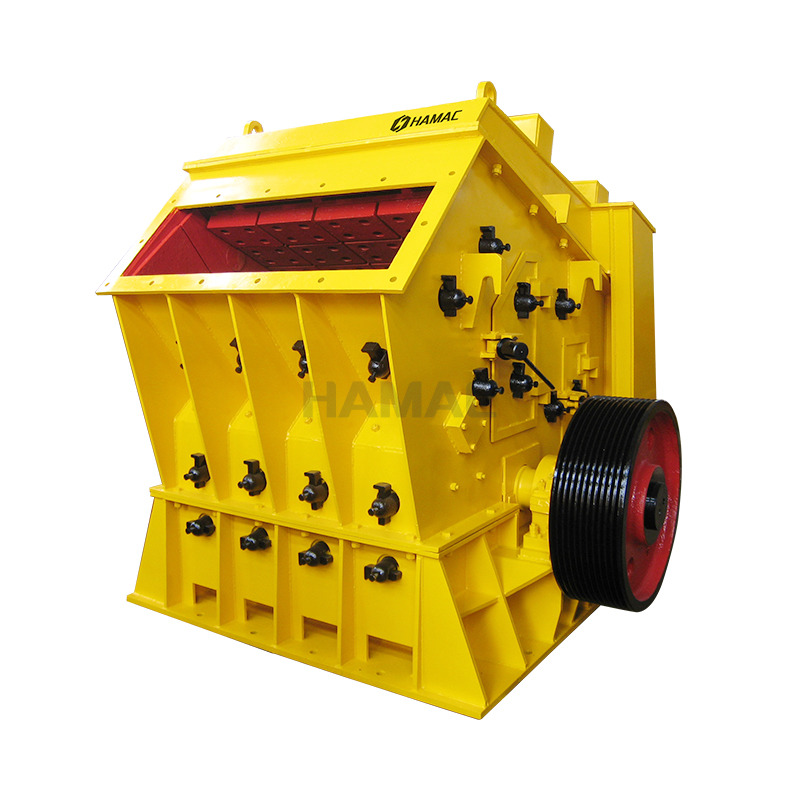
- Choose compression or impact reduction according to hardness, silica content and required particle shape.
- Sequence delivery so foundations cure while the equipment is still in manufacture.
- Define the acceptance test: sampling points, test duration, moisture range and who signs the protocol.
- Review the crusher chamber profile with the liner supplier against the feed material.
Each step has an owner and a document: flow sheet, general arrangement, foundation reference, packing list and acceptance protocol.
What to verify before you sign
- Saleable tonnes per hour at each product size, not gross crusher throughput, for your target tonnage.
- Written performance guarantee, sampling method and acceptance-test protocol.
- Closed-side setting range and whether automatic setting regulation is included.
- Product sampling points and the lab equipment needed for routine grading checks.
- Maximum feed lump and gradation — a chamber that cannot accept the top size will bridge on day one.
- Local service partner, technician travel time and visa requirements for your market.
- Choke-feed arrangement: surge bin, feeder control and level indication.
- Decommissioning or relocation value at the end of a ten-year horizon.
- Whether the quoted t/h is achieved at contract crushing on short-term sites or under ideal laboratory feed.
Score each supplier against the same ten items and keep the score sheet with the purchase file for the ten-year review.
Where the money actually goes
| Cost line | Indicative share | What moves the number |
|---|---|---|
| Equipment & drive packages | 54% | Model size, number of stages and automation level |
| Ocean freight & insurance | 8% | Destination port, container count and out-of-gauge cargo |
| Civil works & foundations | 8% | Soil conditions, dynamic loads and site preparation |
| Erection, commissioning & training | 7% | Local labour, supervision scope and schedule |
| First-year wear parts | 15% | Rock abrasiveness, liner grade and operating hours |
| Power, lubricants & consumables | 8% | kWh per tonne, local tariff and dust suppression water |
On contract crushing on short-term sites, the strict product cubicity objective changes which line deserves the most attention during value engineering.
Mistakes that cost more than the machine
- Selecting the cheapest liner alloy for hard, high-silica rock and paying for it in change-outs.
- Overlooking dust, noise and water permits in your market until erection has already started.
- Forgetting surge capacity — an intermittent loader starves the chamber and ruins particle shape.
- Buying on nameplate t/h without converting to saleable product at the specified fractions.
- Leaving tramp-iron protection out of the scope to save a small percentage of capital.
- Assuming the manufacturer's warranty covers wear parts and consumables.
- Undersizing the screen, then blaming the crusher for a plant that never reaches your target tonnage.
- Assuming a mobile plant can match a stationary line on high-tonnage, multi-product duty.
Every item on this list has cost someone a commissioning date; none of them requires new technology to avoid.
Commissioning checklist
- Check belt tracking, chute build-up and transfer-point dust.
- Confirm the direction and tension of every belt under no load.
- Verify chute liners, skirt rubber and impact bars after the first hour of feed.
- Record the baseline grading curve for each product fraction.
- Check hydraulic pressure, accumulator pre-charge and tramp-release function.
- Record power draw, tonnage and chamber pressure at steady state.
- Sample each product fraction and compare with the specification.
- Measure noise and dust at the operator position against the local limit.
For a small contractor crew, run through this list twice — once with the supervisor and once without.