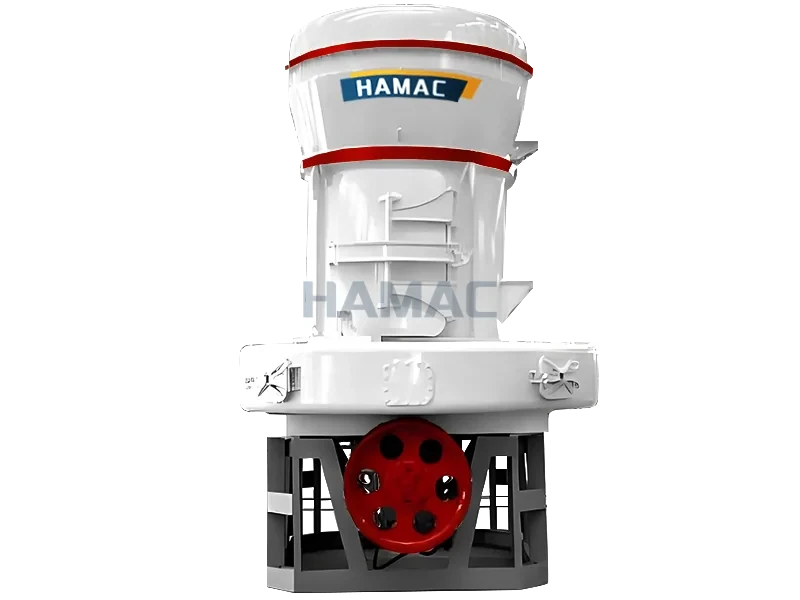
Overview
This page brings together the published MTW European Type Grinding Mill model data and the practical details of importing it into Oman — power supply, standards, shipping and commissioning. Popular feed materials in the market include Limestone, Gypsum.
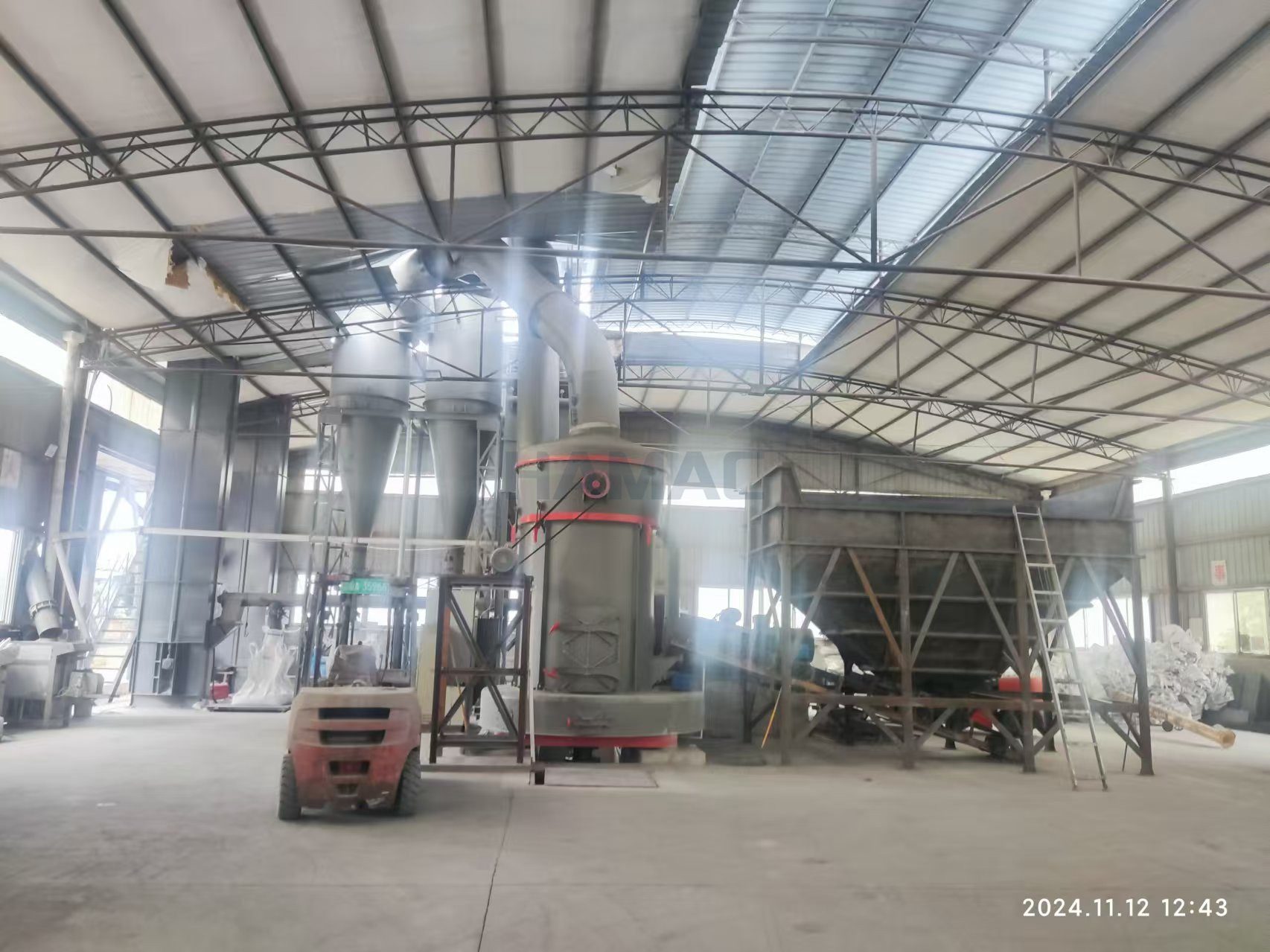
Published MTW European Type Grinding Mill data
| Published parameter | Nominal value |
|---|---|
| Quantity of roller (PCS) | 4 4 |
| Inner diameter of ring (mm) | 1100 1380 |
| Rotary speed of main frame (r/min) | 120 96 |
| Max. Feeding size (mm) | < 30 < 35 |
| Output size (mm) | 1.6~0.045 1.6~0.045 |
| Output fineness | 0.038 0.038 |
Local conditions in Oman
- Destination port: Salalah.
- Site supply: 415V 50Hz.
- Standards: OES.
- Common materials: Limestone, Gypsum.
- Region: Middle East.
Delivery scope
HAMAC quotes FOB, CFR or CIF to Salalah, sets motors and starters to 415V 50Hz, and supplies the certificate set applicable to OES. Workshop assembly, test, container loading plan and installation supervision are included in a turnkey scope.
Reference data for this configuration
| Parameter | Reference value |
|---|---|
| Destination port | Salalah |
| Site supply | 415V 50Hz |
| Local standards | OES |
| Region | Middle East |
| Machine line | MTW European Type Grinding Mill |
| Category | Grinding Mills |
| Assumed duty | seasonal road-project supply |
| Evaluation horizon | ten-year view |
The figures above are transcribed from published HAMAC data and from the material properties of the feed; site measurements take precedence.
Published MTW European Type Grinding Mill model data
| Item | MTW110 | MTW138 | MTW175 | MTW215 |
|---|---|---|---|---|
| Quantity of roller (PCS) | 4 | 4 | 5 | 5 |
| Inner diameter of ring (mm) | 1100 | 1380 | 1750 | 2150 |
| Rotary speed of main frame (r/min) | 120 | 96 | 75 | 65 |
| Max. Feeding size (mm) | < 30 | < 35 | < 40 | < 50 |
| Output size (mm) | 1.6~0.045 | 1.6~0.045 | 1.6~0.045 | 1.6-0.055 |
| Output fineness | 0.038 | 0.038 | 0.038 | 0.045 |
| Capacity (t/h) | 3.5~10 | 6.5~15 | 11~25 | 20-50 |
| Total weight (t) | 18 | 28.5 | 46 | 96 |
MTW European Tech. grinding mill (Raymond mill) is a national patented product developed by our company on the basis of absorbing European grinding technology and concepts. Read the table column by column against seasonal road-project supply: the model you pick is the one whose published range brackets your target tonnage, not simply the largest machine in the series. Availability, motor rating and shipping data are re-confirmed for a greenfield site in the written HAMAC proposal.
Project profile these notes assume
| Assumption | Value |
|---|---|
| Operating duty | seasonal road-project supply |
| Primary objective | simple operator maintenance |
| Evaluation horizon | ten-year view |
| Site condition | a greenfield site |
| Operating team | a rotating shift crew |
Change any one of these assumptions and the recommended configuration for mtw european type grinding mill may change. HAMAC re-runs the same checks against your own numbers once the enquiry data sheet is received.
From enquiry to the first saleable tonne
- Lay out conveyors, access ways, stockpile capacity and drainage before ordering steelwork.
- Plan training for a rotating shift crew on CSS adjustment, liner change-out and lock-out / tag-out.
- Log tonnes per liner set and kWh per tonne from day one so you have a real cost baseline within a quarter.
- Record the as-built settings and give the operator a written daily, weekly and monthly schedule.
- Set the closed-side setting or rotor speed against the required product fractions, then verify the expected reduction ratio.
- Sequence delivery so foundations cure while the equipment is still in manufacture.
- Include dust suppression, guarding, emergency stops and lock-out points in the layout drawing.
- Review the crusher chamber profile with the liner supplier against the feed material.
- Size the primary stage for your target tonnage with a 10–20% surge allowance — never on nameplate throughput alone.
Most delays at this stage come from missing feed data rather than from manufacturing capacity.
What to verify before you sign
- Screen deck count, aperture and area; ask for the efficiency calculation, not just the mesh size.
- Tramp-iron protection — hydraulic release, magnet and metal detection on the feed belt.
- Erection scope: supervision only, or full civil, mechanical and electrical installation.
- Delivery terms (FOB / CFR / CIF) with the destination port named explicitly.
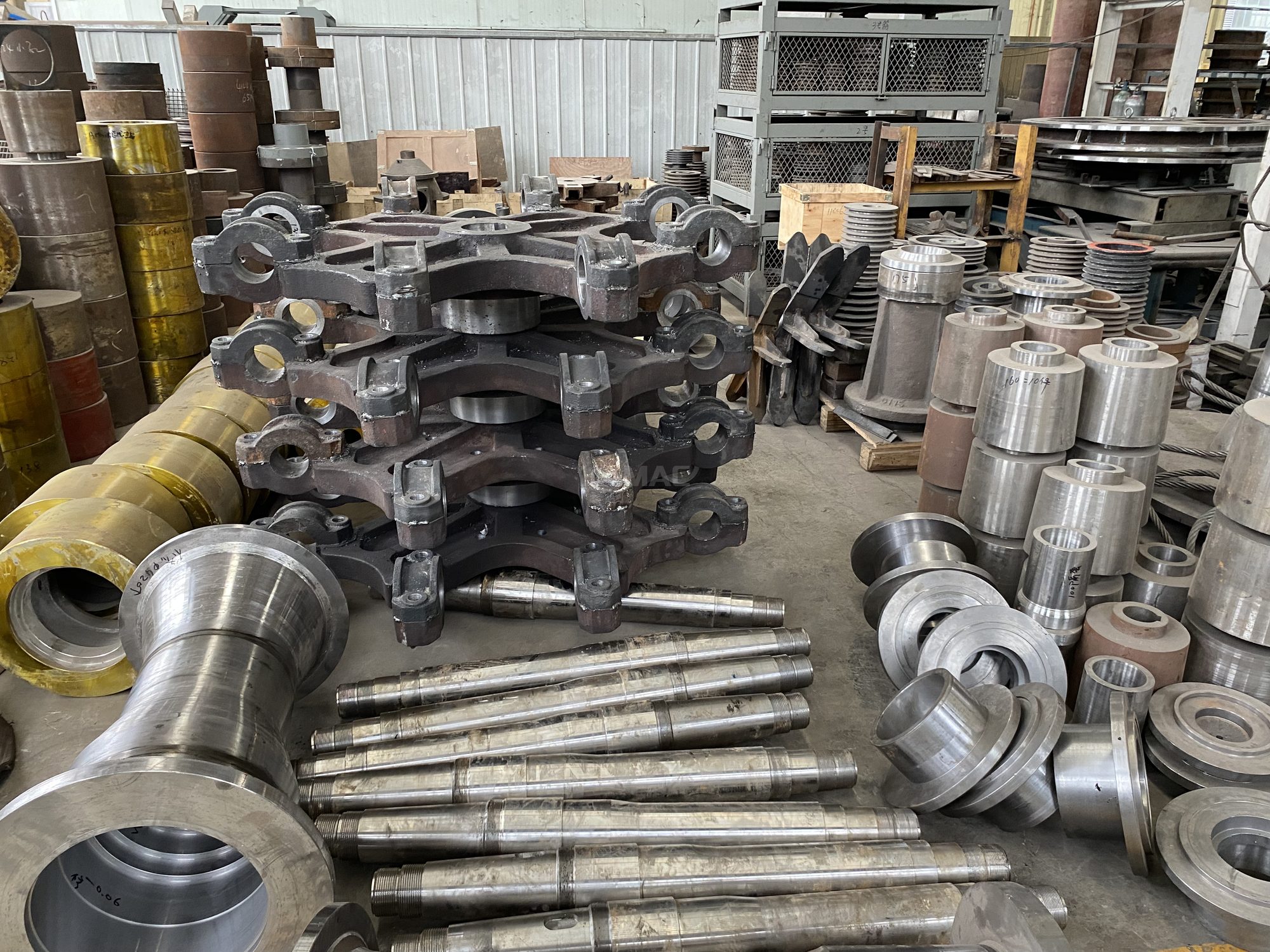
- Liner alloy: Mn22 matched to the rock, not to the lowest purchase price.
- Dust and noise control designed to the local emission limits for Oman.
- Wear-part interchangeability across machines in the same circuit.
- Guaranteed power draw and the simple operator maintenance trade-off it implies.
- Energy draw in kW and the expected kWh per tonne at the design duty.
The cheapest offer usually wins on equipment and loses on one of the last six items — freight terms, spares or the acceptance test.
Where the money actually goes
| Cost line | Indicative share | What moves the number |
|---|---|---|
| Equipment & drive packages | 53% | Model size, number of stages and automation level |
| Ocean freight & insurance | 11% | Destination port, container count and out-of-gauge cargo |
| Civil works & foundations | 8% | Soil conditions, dynamic loads and site preparation |
| Erection, commissioning & training | 7% | Local labour, supervision scope and schedule |
| First-year wear parts | 14% | Rock abrasiveness, liner grade and operating hours |
| Power, lubricants & consumables | 7% | kWh per tonne, local tariff and dust suppression water |
For mtw european type grinding mill at your target tonnage, wear parts and energy usually outweigh the difference between two purchase prices within three to five years.
Mistakes that cost more than the machine
- Letting the seasonal road-project supply duty be defined verbally instead of in the contract.
- Using one liner profile for both secondary and tertiary stages.
- Buying on nameplate t/h without converting to saleable product at the specified fractions.
- Omitting a bypass chute, so a single screen fault stops the whole line.
- Skipping the acceptance test, so no one has a baseline to measure degradation against.
- Assuming a mobile plant can match a stationary line on high-tonnage, multi-product duty.
- Ordering no spares with the plant and waiting six weeks for the first liner set.
- Planning the crusher but not the conveyors, transfer chutes and stockpile capacity around it.
For seasonal road-project supply, protect the simple operator maintenance requirement explicitly in the contract documents.
Commissioning checklist
- Confirm all guards, emergency stops and pull-wire switches function.
- Measure and log the as-new CSS / setting for future wear comparison.
- Record the baseline grading curve for each product fraction.
- Record power draw, tonnage and chamber pressure at steady state.
- Sample each product fraction and compare with the specification.
- Check lubrication levels, grease lines and oil cooler operation.
- Test emergency stops, pull wires and interlock trips in sequence.
- Introduce feed in graded steps: 25%, 50%, 75%, then full load.
On a greenfield site, allow extra time for the dust and noise measurements.