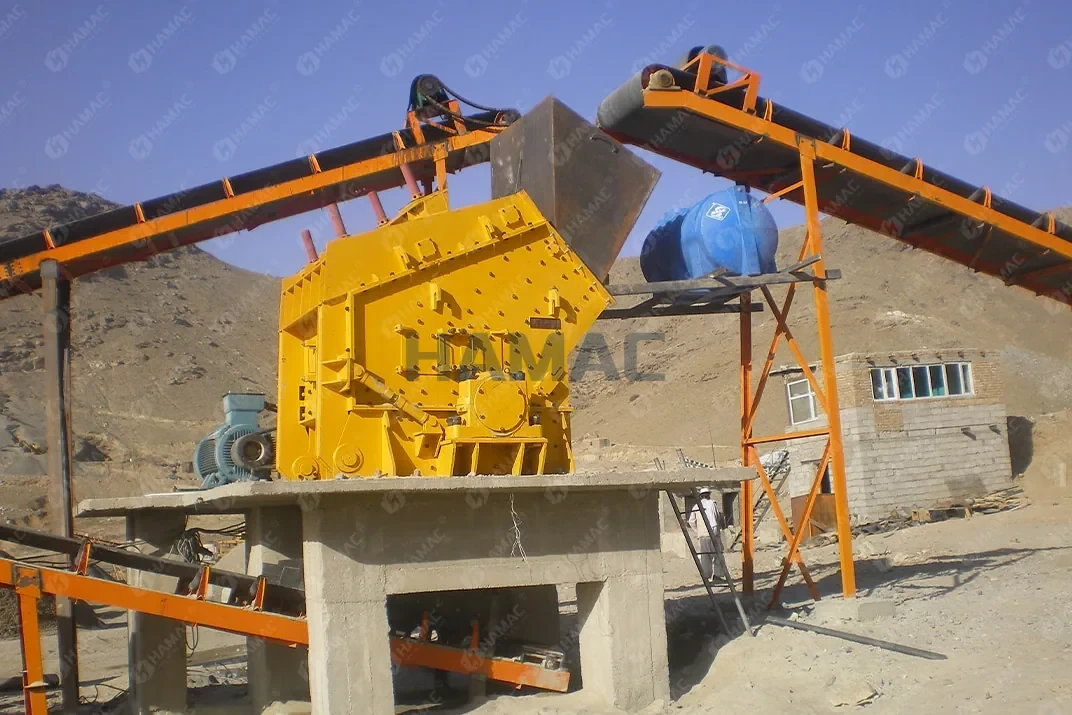
Overview
This page brings together the published PF Impact Crusher model data and the practical details of importing it into Argentina — power supply, standards, shipping and commissioning. Popular feed materials in the market include Limestone, Aggregates.
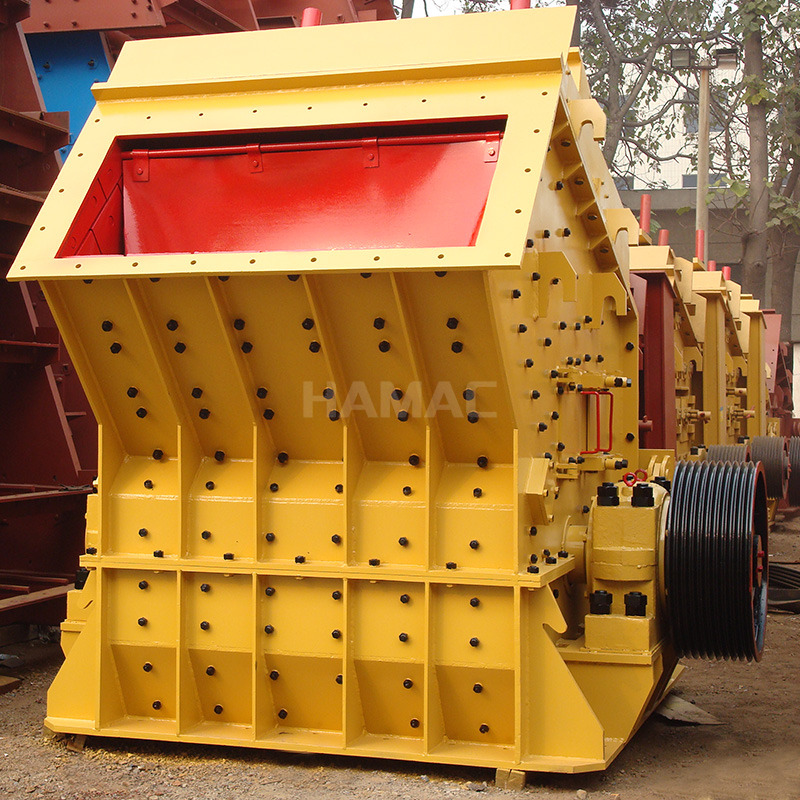
Published PF Impact Crusher data
| Published parameter | Nominal value |
|---|---|
| PF-1007 | Φ1000×700 mm 400×730 mm |
| PF-1010 | Φ1000×1050 mm 400×1080 mm |
| PF-1210 | Φ1250×1050 mm 400×1080 mm |
| PF-1214 | Φ1250×1400 mm 400×1430 mm |
| PF-1315 | Φ1320×1500 mm 860×1520 mm |
| PF-1520 | Φ1500×2000 mm 830×2040 mm |
Local conditions in Argentina
- Destination port: Buenos Aires.
- Site supply: 380V 50Hz.
- Standards: IRAM.
- Common materials: Limestone, Aggregates.
- Region: South America.
Delivery scope
HAMAC quotes FOB, CFR or CIF to Buenos Aires, sets motors and starters to 380V 50Hz, and supplies the certificate set applicable to IRAM. Workshop assembly, test, container loading plan and installation supervision are included in a turnkey scope.
Reference data for this configuration
| Parameter | Reference value |
|---|---|
| Destination port | Buenos Aires |
| Site supply | 380V 50Hz |
| Local standards | IRAM |
| Region | South America |
| Machine line | PF Impact Crusher |
| Category | Impact Crusher |
| Assumed duty | cement raw-meal preparation |
| Evaluation horizon | three-year view |
At cement raw-meal preparation, the ranking of these parameters changes: fast mobilisation usually becomes the deciding constraint rather than the headline tonnage.
Published PF Impact Crusher model data
| Model | Rotor size | Feed opening | Max. Feeding size | Capacity | Motor Power | Weight | Overall dimension |
|---|---|---|---|---|---|---|---|
| PF-1007 | Φ1000×700 mm | 400×730 mm | 300 mm | 30-70 t/h | 37-45 kW | 12 t | 2330×1660×2300 mm |
| PF-1010 | Φ1000×1050 mm | 400×1080 mm | 350 mm | 50-90 t/h | 45-55 kW | 15 t | 2370×1700×2390 mm |
| PF-1210 | Φ1250×1050 mm | 400×1080 mm | 350 mm | 70-130 t/h | 110 kW | 17.7 t | 2680×2160×2800 mm |
| PF-1214 | Φ1250×1400 mm | 400×1430 mm | 350 mm | 100-180 t/h | 132 kW | 22.4 t | 2650×2460×2800 mm |
| PF-1315 | Φ1320×1500 mm | 860×1520 mm | 500 mm | 130-250 t/h | 220 kW | 27 t | 3180×2720×2620 mm |
| PF-1520 | Φ1500×2000 mm | 830×2040 mm | 700 mm | 300-550 t/h | 315-400 kW | 50.6 t | 3959×3564×3330 mm |
| PF-1620 | Φ1600×2000 mm | 2000×1600 mm | 500 mm | 400-700 t/h | 400-500 kW | 58 t | 4259×3660×3450 mm |
| PF-1820 | Φ1800×2000 mm | 1260×2040 mm | 800 mm | 600-800 t/h | 630-710 kW | 83.21 t | 4400×3866×4009 mm |
The impact crusher (impact crusher) is a new generation of impact crusher developed in combination with the specific working conditions of the sand and gravel. Read the table column by column against cement raw-meal preparation: the model you pick is the one whose published range brackets your target tonnage, not simply the largest machine in the series. Availability, motor rating and shipping data are re-confirmed for a remote mine site in the written HAMAC proposal.
Project profile these notes assume
| Assumption | Value |
|---|---|
| Operating duty | cement raw-meal preparation |
| Primary objective | fast mobilisation |
| Evaluation horizon | three-year view |
| Site condition | a remote mine site |
| Operating team | an owner-operator team |
Change any one of these assumptions and the recommended configuration for pf impact crusher may change. HAMAC re-runs the same checks against your own numbers once the enquiry data sheet is received.
From enquiry to the first saleable tonne
- Record the as-built settings and give the operator a written daily, weekly and monthly schedule.
- Budget for water, dust extraction and spillage handling as part of the plant, not as an afterthought.
- Choose compression or impact reduction according to hardness, silica content and required particle shape.
- Allocate screen area per deck; blinding and pegging are the most common hidden bottlenecks in a new plant.
- Include dust suppression, guarding, emergency stops and lock-out points in the layout drawing.
- Size the primary stage for your target tonnage with a 10–20% surge allowance — never on nameplate throughput alone.
- Set the closed-side setting or rotor speed against the required product fractions, then verify the expected reduction ratio.
- Book container or flat-rack space to Buenos Aires and prepare the customs document set in advance.
- Survey the feed: the feed material; record top size, bulk density, moisture and clay content before fixing the flow sheet.
On cement raw-meal preparation, step ordering matters: survey and sampling must precede the equipment list, or the plant is sized to a guess.
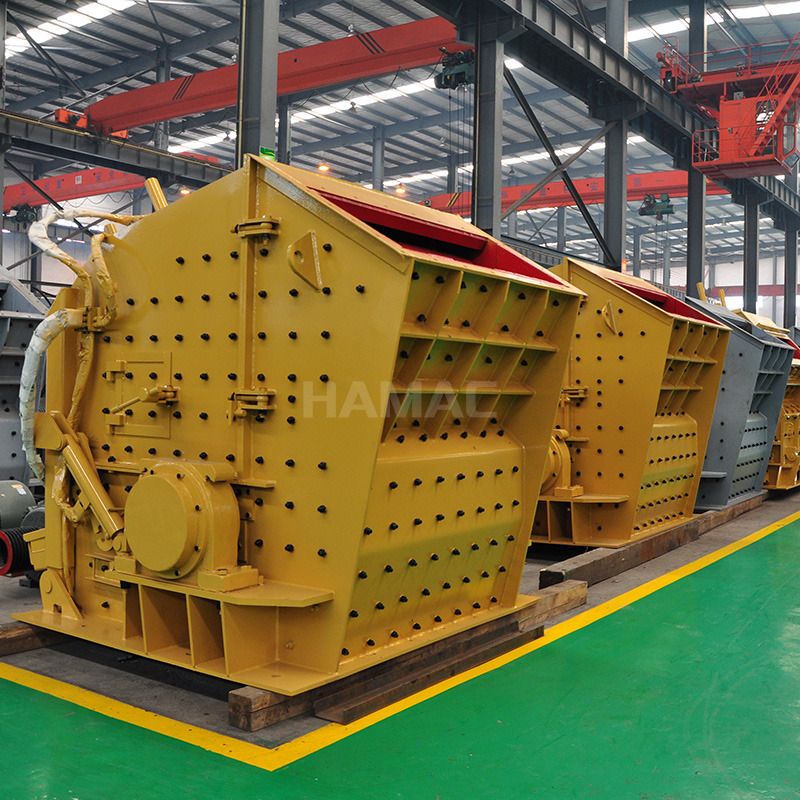
What to verify before you sign
- Liner alloy: Mn13 matched to the rock, not to the lowest purchase price.
- Written performance guarantee, sampling method and acceptance-test protocol.
- Tramp-iron protection — hydraulic release, magnet and metal detection on the feed belt.
- Choke-feed arrangement: surge bin, feeder control and level indication.
- Ambient temperature, altitude and dust load derating for motors and hydraulics.
- Dust and noise control designed to the local emission limits for Argentina.
- Whether the quoted t/h is achieved at cement raw-meal preparation or under ideal laboratory feed.
- Nameplate data for 380V 50Hz and the IRAM certificate set.
- Access for liner change-out — crane radius, lifting points and clearance around the chamber.
Ask each supplier to price the same list. Quotations for pf impact crusher only become comparable when the scope is identical.
Where the money actually goes
| Cost line | Indicative share | What moves the number |
|---|---|---|
| Equipment & drive packages | 53% | Model size, number of stages and automation level |
| Ocean freight & insurance | 11% | Destination port, container count and out-of-gauge cargo |
| Civil works & foundations | 8% | Soil conditions, dynamic loads and site preparation |
| Erection, commissioning & training | 7% | Local labour, supervision scope and schedule |
| First-year wear parts | 14% | Rock abrasiveness, liner grade and operating hours |
| Power, lubricants & consumables | 7% | kWh per tonne, local tariff and dust suppression water |
On cement raw-meal preparation, the fast mobilisation objective changes which line deserves the most attention during value engineering.
Mistakes that cost more than the machine
- Skipping the acceptance test, so no one has a baseline to measure degradation against.
- Planning the crusher but not the conveyors, transfer chutes and stockpile capacity around it.
- Ordering no spares with the plant and waiting six weeks for the first liner set.
- Selecting the cheapest liner alloy for hard, high-silica rock and paying for it in change-outs.
- Choosing screen apertures before the concrete or asphalt mix design is fixed.
- Forgetting surge capacity — an intermittent loader starves the chamber and ruins particle shape.
- Assuming a mobile plant can match a stationary line on high-tonnage, multi-product duty.
- Omitting a bypass chute, so a single screen fault stops the whole line.
For cement raw-meal preparation, protect the fast mobilisation requirement explicitly in the contract documents.
Commissioning checklist
- Dry-run the plant empty for the specified period and record vibration.
- Verify chute liners, skirt rubber and impact bars after the first hour of feed.
- Test emergency stops, pull wires and interlock trips in sequence.
- Check lubrication levels, grease lines and oil cooler operation.
- Confirm all guards, emergency stops and pull-wire switches function.
- Verify rotation direction on every motor before coupling.
- Introduce feed in graded steps: 25%, 50%, 75%, then full load.
- Agree the punch list, sign the hand-over protocol and file the as-built drawings.
On a remote mine site, allow extra time for the dust and noise measurements.