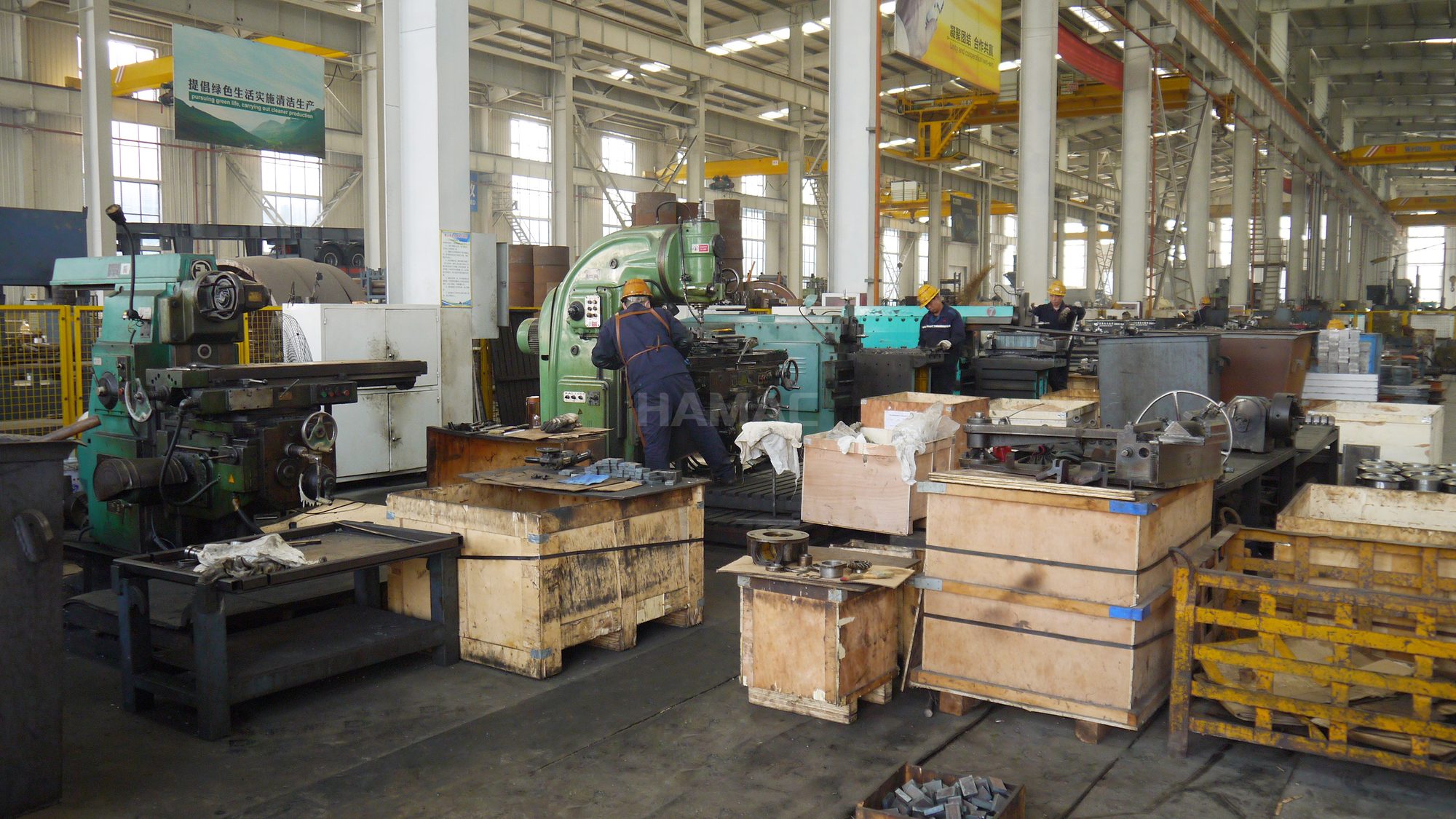
Overview
A 500–800 tph crushing plant is a common size for Poland. Main machines: dual primary + multi-cone. Large quarry / mine feed.
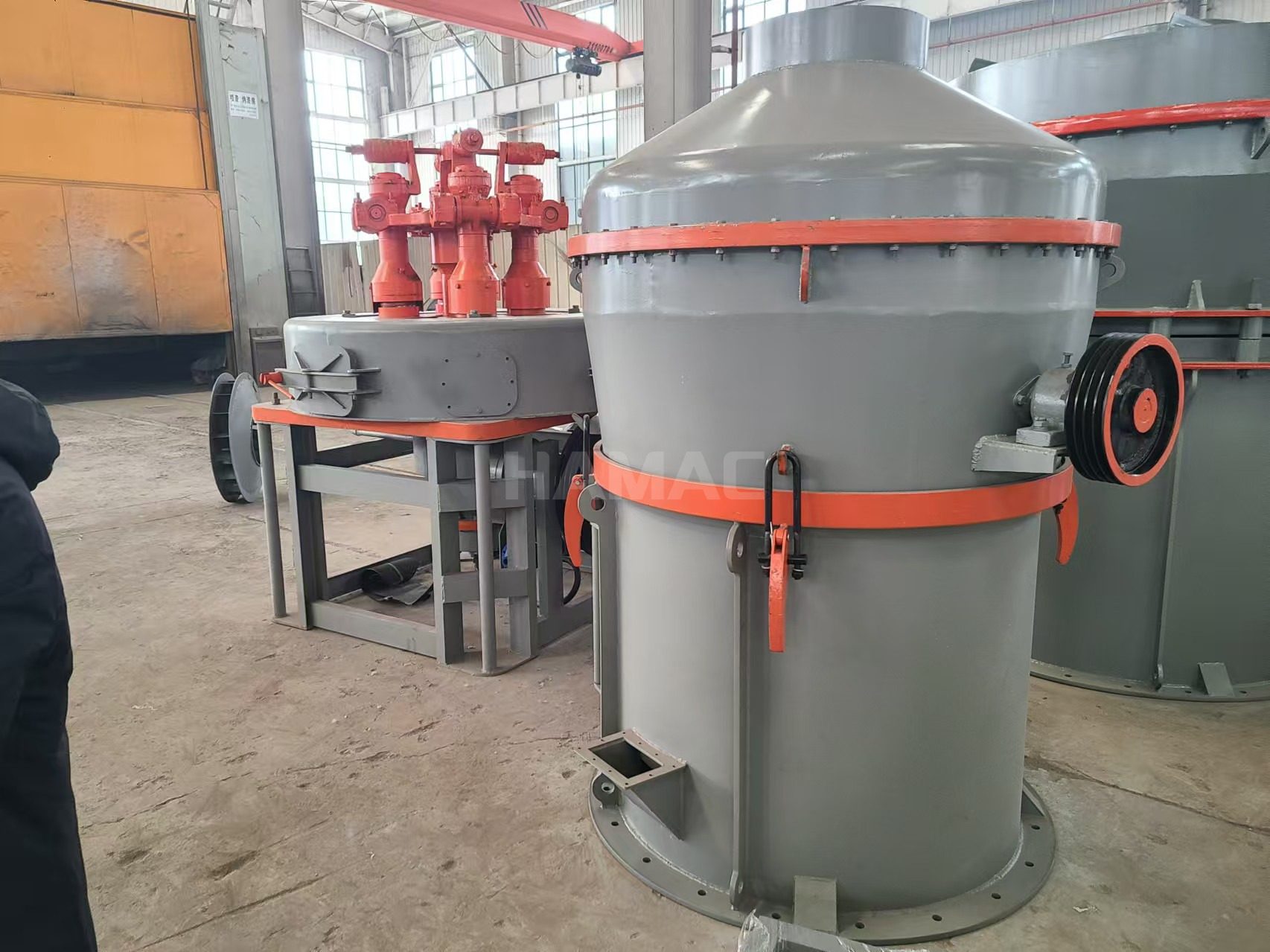
Main equipment
- dual primary + multi-cone
- Shipped to Gdańsk.
- Configured to 400V 50Hz / PN EN.
Selection
- Size to saleable t/h +10–20% surge.
- Hard rock → jaw+cone; soft → jaw+impact.
- Add VSI for sand/shape.
For Poland
- Port: Gdańsk.
- Voltage: 400V 50Hz.
- Standards: PN EN.
Reference data for this configuration
| Parameter | Reference value |
|---|---|
| Design capacity | 500–800 t/h |
| Typical main line | dual primary + multi-cone |
| Scale note | Large quarry / mine feed. |
| Destination port | Gdańsk |
| Site supply | 400V 50Hz |
| Local standards | PN EN |
| Region | Europe |
| Assumed duty | seasonal road-project supply |
| Evaluation horizon | ten-year view |
Treat this as a living sheet. Every revision of the flow sheet for Poland should update the same fields so the equipment list stays traceable.
Project profile these notes assume
| Assumption | Value |
|---|---|
| Operating duty | seasonal road-project supply |
| Primary objective | maximum mechanical availability |
| Evaluation horizon | ten-year view |
| Site condition | a confined urban yard |
| Operating team | a small contractor crew |
Change any one of these assumptions and the recommended configuration for the crushing and screening plant may change. HAMAC re-runs the same checks against your own numbers once the enquiry data sheet is received.
From enquiry to the first saleable tonne
- Record the as-built settings and give the operator a written daily, weekly and monthly schedule.
- Lay out the dual primary + multi-cone arrangement with straight conveyor runs and crane access for liner changes.
- Plan training for a small contractor crew on CSS adjustment, liner change-out and lock-out / tag-out.
- Choose compression or impact reduction according to hardness, silica content and required particle shape.
- Book container or flat-rack space to Gdańsk and prepare the customs document set in advance.
- Check bearing and lubrication arrangements against the ambient temperature range at the site.
- Run a sieve analysis on a representative sample and attach the grading curve to the enquiry.
- Commission with graded load, sample the product grading, then train operators on liner change-out and daily checks.
- Include dust suppression, guarding, emergency stops and lock-out points in the layout drawing.
On seasonal road-project supply, step ordering matters: survey and sampling must precede the equipment list, or the plant is sized to a guess.
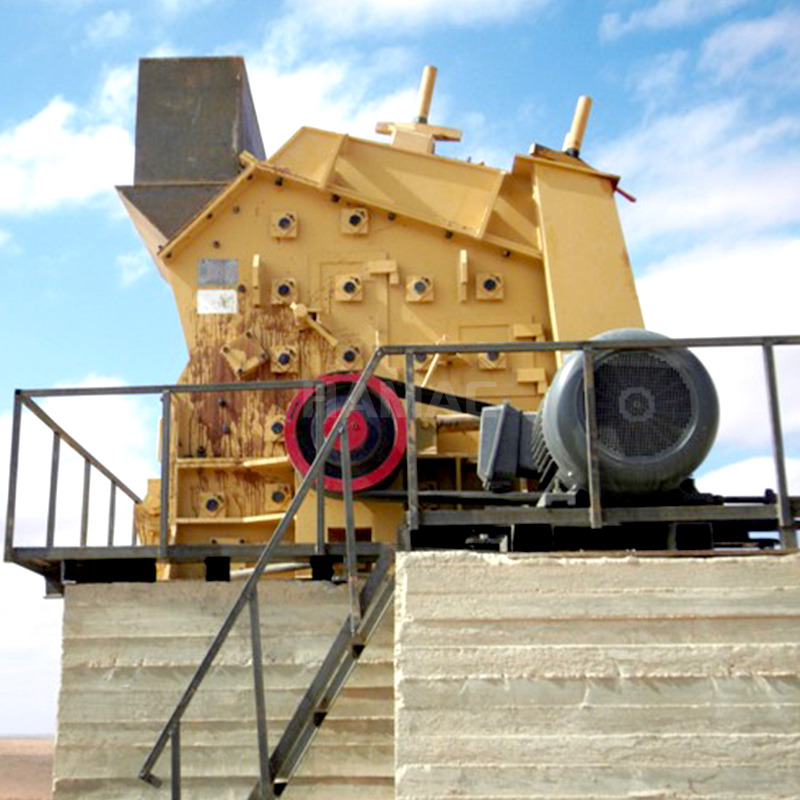
What to verify before you sign
- After-sales response time, technician availability and the warranty exclusions in writing.
- Control system language, telemetry and remote diagnostics availability.
- Erection scope: supervision only, or full civil, mechanical and electrical installation.
- Access for liner change-out — crane radius, lifting points and clearance around the chamber.
- Spare-parts consignment: one full liner or blow-bar set plus meshes, belts, bearings and seals.
- Guaranteed power draw and the maximum mechanical availability trade-off it implies.
- Product sampling points and the lab equipment needed for routine grading checks.
- Dust and noise control designed to the local emission limits for Poland.
- Whether the quoted t/h is achieved at seasonal road-project supply or under ideal laboratory feed.
Bring this list to the design review — it is cheaper to resolve an omission on paper than during commissioning.
Where the money actually goes
| Cost line | Indicative share | What moves the number |
|---|---|---|
| Equipment & drive packages | 53% | Model size, number of stages and automation level |
| Ocean freight & insurance | 11% | Destination port, container count and out-of-gauge cargo |
| Civil works & foundations | 8% | Soil conditions, dynamic loads and site preparation |
| Erection, commissioning & training | 7% | Local labour, supervision scope and schedule |
| First-year wear parts | 14% | Rock abrasiveness, liner grade and operating hours |
| Power, lubricants & consumables | 7% | kWh per tonne, local tariff and dust suppression water |
Model a low, base and high case for tonnes per liner set. The spread tells you more than a single optimistic estimate.
Mistakes that cost more than the machine
- Planning the crusher but not the conveyors, transfer chutes and stockpile capacity around it.
- Using one liner profile for both secondary and tertiary stages.
- Buying maximum mechanical availability on price alone and losing it in availability.
- Undersizing the screen, then blaming the crusher for a plant that never reaches 500–800 t/h.
- Letting the seasonal road-project supply duty be defined verbally instead of in the contract.
- Comparing quotations with different port terms and calling the lower number cheaper.
- Overlooking dust, noise and water permits in Poland until erection has already started.
- Skipping a geotechnical check and discovering settlement under the primary crusher at a confined urban yard.
Every item on this list has cost someone a commissioning date; none of them requires new technology to avoid.
Commissioning checklist
- Verify rotation direction on every motor before coupling.
- Record power draw, tonnage and chamber pressure at steady state.
- Dry-run the plant empty for the specified period and record vibration.
- Hand over the spare-parts list, manuals and maintenance schedule.
- Check lubrication levels, grease lines and oil cooler operation.
- Check belt tracking, chute build-up and transfer-point dust.
- Calibrate the belt scale and any level probes against a known load.
- Agree the punch list, sign the hand-over protocol and file the as-built drawings.
On a confined urban yard, allow extra time for the dust and noise measurements.