Overview
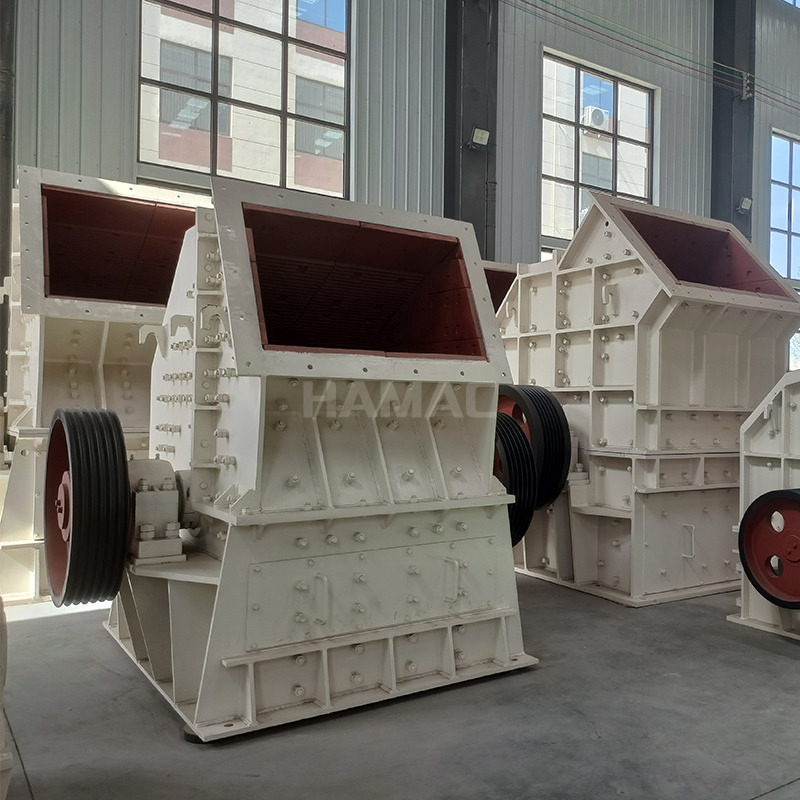
Selecting a crusher for quartz is about matching the breakage mechanism to the rock: compression for hard abrasive stone, impact for soft stone that needs shape.
Primary stage
- Jaw crusher: handles the largest feed, robust on hard rock.
- For Quartz: a heavy-duty jaw is the safe primary choice.
Secondary / tertiary
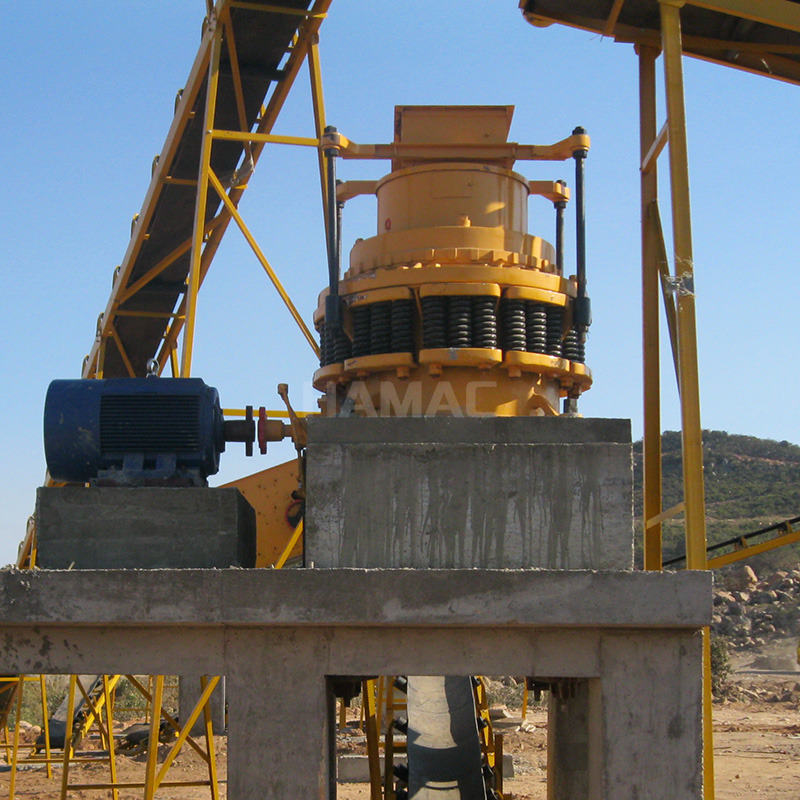
- Cone crusher: compression, best wear life on abrasive rock.
- Add VSI only when sand or strict shape is required.
Common mistakes
- Undersizing the primary (causes bridging).
- Using impact crushers on very high-abrasion rock (blow-bar blow-out).
- Ignoring screen area (bottlenecks the whole line).
Reference data for this configuration
| Parameter | Reference value |
|---|---|
| Feed material | Quartz |
| Mohs hardness | 7 |
| Compressive strength | ~150 MPa |
| Abrasiveness | High |
| Recommended circuit | jaw + cone + VSI |
| Assumed duty | contract crushing on short-term sites |
| Evaluation horizon | single-project view |
HAMAC engineers fill in the same fields on the project data sheet, which is why two plants of similar tonnage can still require different machines.
Project profile these notes assume
| Assumption | Value |
|---|---|
| Operating duty | contract crushing on short-term sites |
| Primary objective | lowest energy per tonne |
| Evaluation horizon | single-project view |
| Site condition | a remote mine site |
| Operating team | a rotating shift crew |
Change any one of these assumptions and the recommended configuration for quartz crushing may change. HAMAC re-runs the same checks against your own numbers once the enquiry data sheet is received.
From enquiry to the first saleable tonne
- Set the closed-side setting or rotor speed against the required product fractions, then verify the expected reduction ratio.
- Plan training for a rotating shift crew on CSS adjustment, liner change-out and lock-out / tag-out.
- Size the primary stage for your target tonnage with a 10–20% surge allowance — never on nameplate throughput alone.
- Allocate screen area per deck; blinding and pegging are the most common hidden bottlenecks in a new plant.
- Record the as-built settings and give the operator a written daily, weekly and monthly schedule.
- Log tonnes per liner set and kWh per tonne from day one so you have a real cost baseline within a quarter.
- Commission with graded load, sample the product grading, then train operators on liner change-out and daily checks.
- Review the crusher chamber profile with the liner supplier against Quartz (Mohs 7, ~150 MPa, high abrasion).
- Confirm site voltage, frequency and applicable conformity standards before manufacture.
A HAMAC project manager stays with the order from the first data sheet through hand-over in your market.
What to verify before you sign
- Tramp-iron protection — hydraulic release, magnet and metal detection on the feed belt.
- Energy draw in kW and the expected kWh per tonne at the design duty.
- Decommissioning or relocation value at the end of a single-project horizon.
- Wear-part interchangeability across machines in the same circuit.
- Product sampling points and the lab equipment needed for routine grading checks.
- Screen deck count, aperture and area; ask for the efficiency calculation, not just the mesh size.
- Local service partner, technician travel time and visa requirements for your market.
- Written performance guarantee, sampling method and acceptance-test protocol.
- Liner alloy: high-chrome iron is a common starting point for quartz at high abrasion.
For contract crushing on short-term sites, give the lowest energy per tonne line extra weight; a generic checklist will not rank the offers correctly.
Where the money actually goes
| Cost line | Indicative share | What moves the number |
|---|---|---|
| Equipment & drive packages | 52% | Model size, number of stages and automation level |
| Ocean freight & insurance | 8% | Destination port, container count and out-of-gauge cargo |
| Civil works & foundations | 8% | Soil conditions, dynamic loads and site preparation |
| Erection, commissioning & training | 7% | Local labour, supervision scope and schedule |
| First-year wear parts | 18% | Rock abrasiveness, liner grade and operating hours |
| Power, lubricants & consumables | 7% | kWh per tonne, local tariff and dust suppression water |
On contract crushing on short-term sites, the lowest energy per tonne objective changes which line deserves the most attention during value engineering.
Mistakes that cost more than the machine
- Undersizing the screen, then blaming the crusher for a plant that never reaches your target tonnage.
- Choosing screen apertures before the concrete or asphalt mix design is fixed.
- Selecting the cheapest liner alloy for hard, high-silica rock and paying for it in change-outs.
- Specifying motors for the wrong voltage or frequency and rewinding them on site.
- Assuming a mobile plant can match a stationary line on high-tonnage, multi-product duty.
- Letting the contract crushing on short-term sites duty be defined verbally instead of in the contract.
- Overlooking dust, noise and water permits in your market until erection has already started.
- Skipping the acceptance test, so no one has a baseline to measure degradation against.
For contract crushing on short-term sites, protect the lowest energy per tonne requirement explicitly in the contract documents.
Commissioning checklist
- Sample each product fraction and compare with the specification.
- Measure noise and dust at the operator position against the local limit.
- Check hydraulic pressure, accumulator pre-charge and tramp-release function.
- Agree the punch list, sign the hand-over protocol and file the as-built drawings.
- Introduce feed in graded steps: 25%, 50%, 75%, then full load.
- Record the baseline grading curve for each product fraction.
- Verify rotation direction on every motor before coupling.
- Hand over the spare-parts list, manuals and maintenance schedule.
On a remote mine site, allow extra time for the dust and noise measurements.