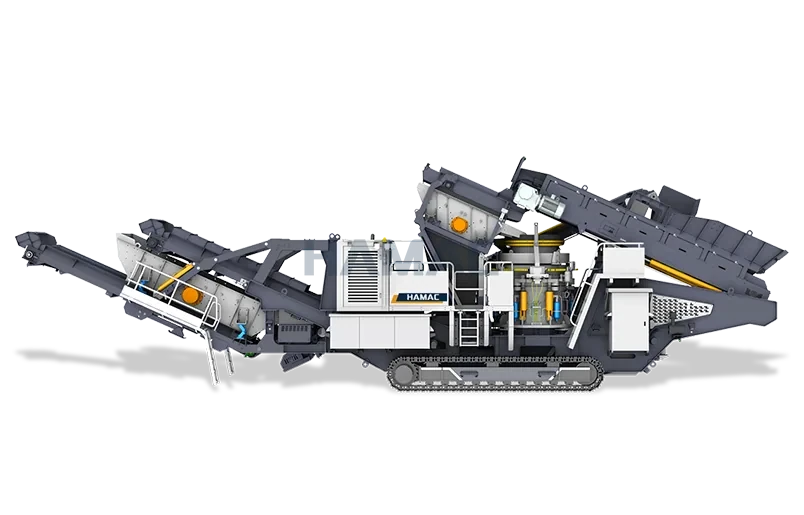
Overview
Buying a Crawler (Tracked) Cone Crusher THP Series direct from HAMAC removes the trading margin and gives you engineering support from enquiry to commissioning.
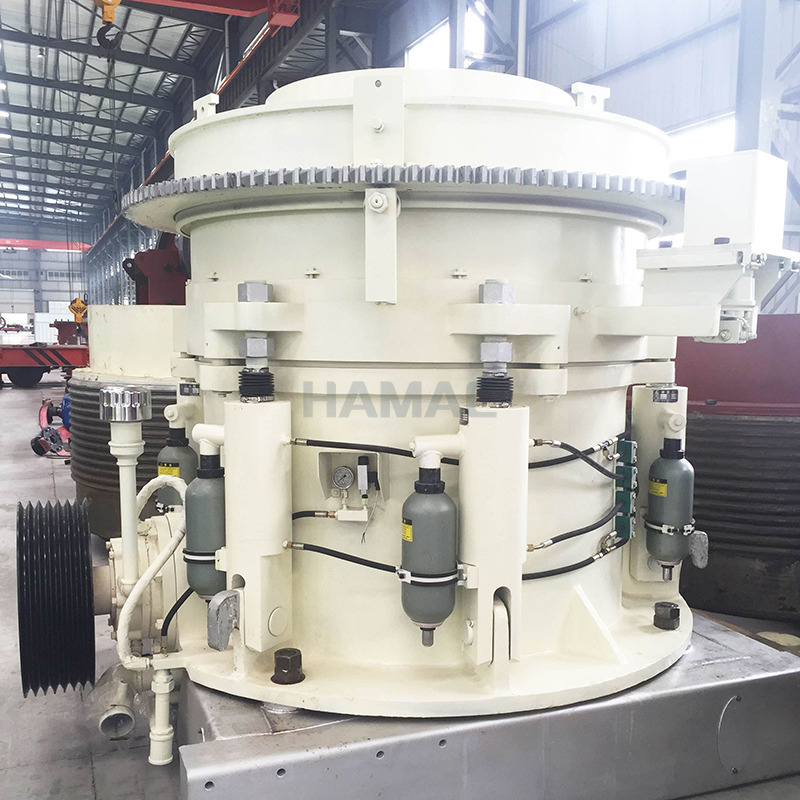
Why buy direct
- One project manager for the whole order.
- Workshop assembly, test and container loading plan.
- Flow-sheet design, layout and foundation reference.
- Installation supervision, training and 24h technical response.
Export & documentation
Quoted FOB / CFR / CIF. Documentation applicable to your market (CE where required), Spanish manuals for LatAm, motors set to local voltage.
How to order
Send project data → receive design + budget in 24h → refine drawings → manufacture → install.
Reference data for this configuration
| Parameter | Reference value |
|---|---|
| Machine line | Crawler (Tracked) Cone Crusher THP Series |
| Category | Tracked Crushing Plants |
| Assumed duty | contract crushing on short-term sites |
| Evaluation horizon | seven-year view |
Treat this as a living sheet. Every revision of the flow sheet for your market should update the same fields so the equipment list stays traceable.
Published Crawler (Tracked) Cone Crusher THP Series model data
| Model | THP200 | THP300 | THP400 |
|---|---|---|---|
| Cone crusher | THP200 | THP300 | THP400 |
| Max. feeding size | 150 mm | 200 mm | 260 mm |
| Minimum outlet | 16 mm | 10 mm | 20 mm |
| Motor power | 160 kW | 220 kW | 280 kW |
| Return screen | YK1500×3800 | YK1600×4000 | YK1500×3800 |
| Generator | 320 kW | 500 kW | 500 kW |
THP200 / THP300 / THP400 tracked cone crushers for secondary hard-rock crushing, 150–260 mm feed and 160–280 kW crusher power. Read the table column by column against contract crushing on short-term sites: the model you pick is the one whose published range brackets your target tonnage, not simply the largest machine in the series. Availability, motor rating and shipping data are re-confirmed for an existing quarry bench in the written HAMAC proposal.
Project profile these notes assume
| Assumption | Value |
|---|---|
| Operating duty | contract crushing on short-term sites |
| Primary objective | lowest energy per tonne |
| Evaluation horizon | seven-year view |
| Site condition | an existing quarry bench |
| Operating team | a full-time plant team |
Change any one of these assumptions and the recommended configuration for crawler (tracked) cone crusher thp series may change. HAMAC re-runs the same checks against your own numbers once the enquiry data sheet is received.
From enquiry to the first saleable tonne
- Confirm site voltage, frequency and applicable conformity standards before manufacture.
- Set the maintenance stock list from the expected wear rate, not from a percentage of the equipment price.
- Budget for water, dust extraction and spillage handling as part of the plant, not as an afterthought.
- Define the acceptance test: sampling points, test duration, moisture range and who signs the protocol.
- Choose compression or impact reduction according to hardness, silica content and required particle shape.
- Sequence delivery so foundations cure while the equipment is still in manufacture.
- Plan training for a full-time plant team on CSS adjustment, liner change-out and lock-out / tag-out.
- Run a sieve analysis on a representative sample and attach the grading curve to the enquiry.
- Include dust suppression, guarding, emergency stops and lock-out points in the layout drawing.
The sequence is deliberately front-loaded — decisions taken before manufacture are cheap, changes made on site are not.
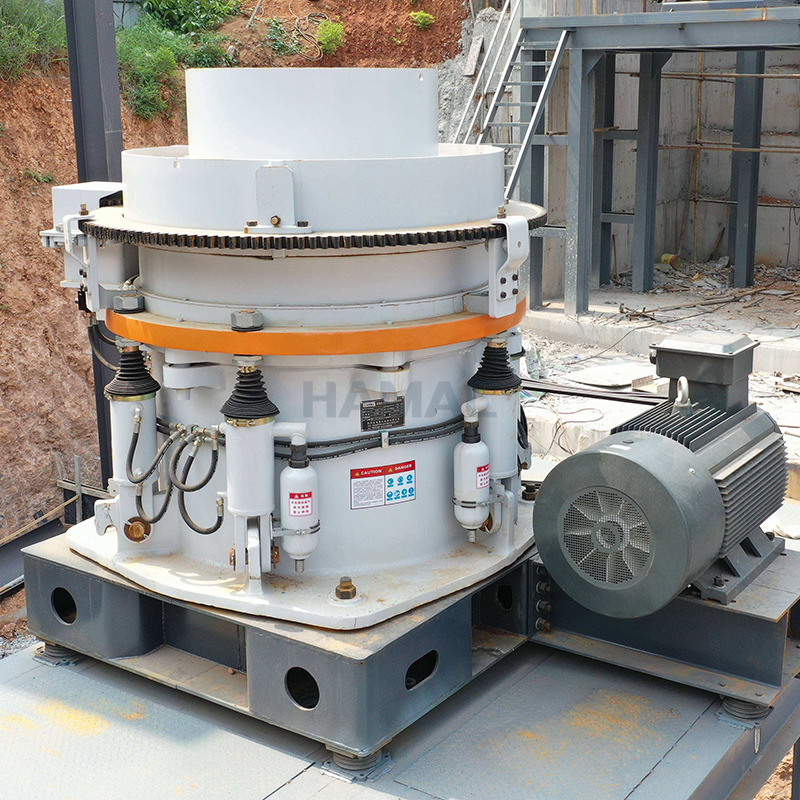
What to verify before you sign
- Spare-parts consignment: one full liner or blow-bar set plus meshes, belts, bearings and seals.
- Spare motor, gearbox and hydraulic pump lead times from the nearest HAMAC stock point.
- Written performance guarantee, sampling method and acceptance-test protocol.
- Liner alloy: Mn18 matched to the rock, not to the lowest purchase price.
- Local service partner, technician travel time and visa requirements for your market.
- Choke-feed arrangement: surge bin, feeder control and level indication.
- Tramp-iron protection — hydraulic release, magnet and metal detection on the feed belt.
- Closed-side setting range and whether automatic setting regulation is included.
- Maximum feed lump and gradation — a chamber that cannot accept the top size will bridge on day one.
Bring this list to the design review — it is cheaper to resolve an omission on paper than during commissioning.
Where the money actually goes
| Cost line | Indicative share | What moves the number |
|---|---|---|
| Equipment & drive packages | 54% | Model size, number of stages and automation level |
| Ocean freight & insurance | 8% | Destination port, container count and out-of-gauge cargo |
| Civil works & foundations | 8% | Soil conditions, dynamic loads and site preparation |
| Erection, commissioning & training | 7% | Local labour, supervision scope and schedule |
| First-year wear parts | 15% | Rock abrasiveness, liner grade and operating hours |
| Power, lubricants & consumables | 8% | kWh per tonne, local tariff and dust suppression water |
A seven-year view normally reverses the ranking of two otherwise similar offers once wear and energy are included.
Mistakes that cost more than the machine
- Planning the crusher but not the conveyors, transfer chutes and stockpile capacity around it.
- Skipping the acceptance test, so no one has a baseline to measure degradation against.
- Assuming the manufacturer's warranty covers wear parts and consumables.
- Using one liner profile for both secondary and tertiary stages.
- Assuming a mobile plant can match a stationary line on high-tonnage, multi-product duty.
- Overlooking dust, noise and water permits in your market until erection has already started.
- Specifying motors for the wrong voltage or frequency and rewinding them on site.
- Omitting a bypass chute, so a single screen fault stops the whole line.
Review the list with a full-time plant team before the order is placed — they will recognise most of them.
Commissioning checklist
- Verify rotation direction on every motor before coupling.
- Test emergency stops, pull wires and interlock trips in sequence.
- Hand over the spare-parts list, manuals and maintenance schedule.
- Check belt tracking, chute build-up and transfer-point dust.
- Check hydraulic pressure, accumulator pre-charge and tramp-release function.
- Introduce feed in graded steps: 25%, 50%, 75%, then full load.
- Measure and log the as-new CSS / setting for future wear comparison.
- Confirm all guards, emergency stops and pull-wire switches function.
For a full-time plant team, run through this list twice — once with the supervisor and once without.