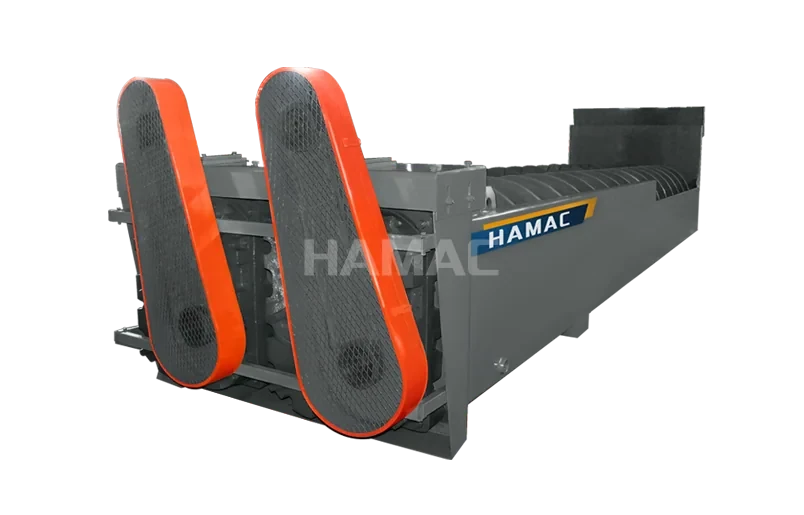
Overview
Published Screw Type Sand Washing Machine specifications below are nominal values transcribed from HAMAC data. Actual performance depends on feed gradation, moisture, setting and screening efficiency.
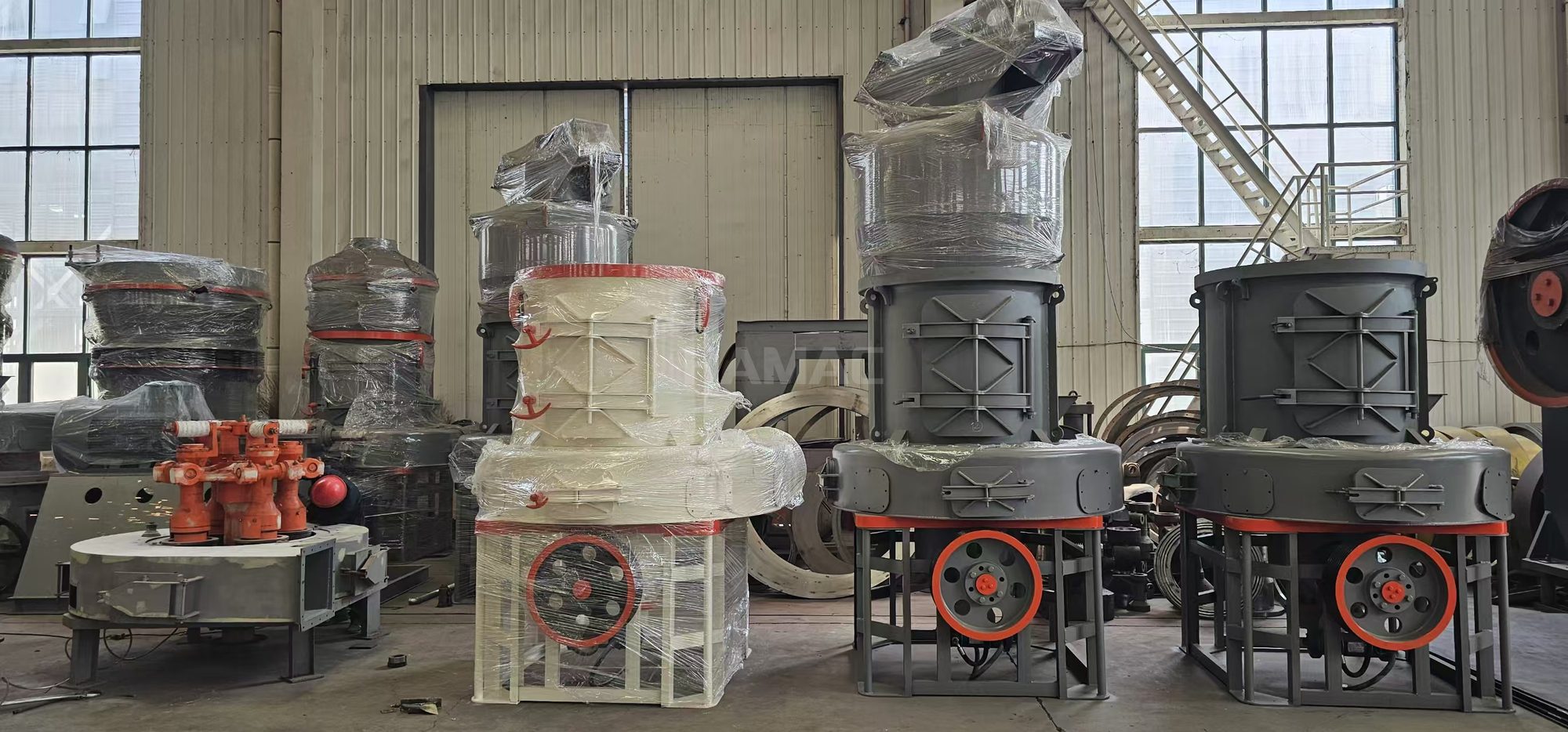
Specification table
| Parameter | Value |
|---|---|
| LXS-515 | 515 6715 |
| LXS-765 | 765 7620 |
| LXS-915 | 915 7650 |
| LXS-1115 | 1115 9782 |
| 2LXS-915 | 915 7650 |
| 2LXS-1115 | 1115 9782 |
How to read the data
- Rated capacity is at a specified CSS / setting and material — treat it as saleable product, not crusher throughput.
- Feed size limit protects the chamber; oversize feed causes bridging.
- Motor power scales with rotor / chamber size, not linearly with capacity.
Selecting the right model
Match the model to your target t/h at the required product size, then confirm with a HAMAC engineer before order.
Reference data for this configuration
| Parameter | Reference value |
|---|---|
| Machine line | Screw Type Sand Washing Machine |
| Category | Supporting Equipments |
| Assumed duty | demolition and recycling duties |
| Evaluation horizon | seven-year view |
These values are the starting point for a written proposal on screw type sand washing machine; they are nominal and should be confirmed against a sample test before manufacture.
Published Screw Type Sand Washing Machine model data
| Model | Diameter of spiral (mm) | Width of washing tank (mm) | Feeding size (mm) | Spiral rotation speed (r/min) |
|---|---|---|---|---|
| LXS-515 | 515 | 6715 | ≤10 | 38 |
| LXS-765 | 765 | 7620 | ≤10 | 26 |
| LXS-915 | 915 | 7650 | ≤10 | 21 |
| LXS-1115 | 1115 | 9782 | ≤10 | 17 |
| 2LXS-915 | 915 | 7650 | ≤10 | 21 |
| 2LXS-1115 | 1115 | 9782 | ≤10 | 17 |
The high-efficiency screw type sand washing machine is widely used in industries such as highways and hydropower to clean, dewater, and grade sand and gravel materials. Read the table column by column against demolition and recycling duties: the model you pick is the one whose published range brackets your target tonnage, not simply the largest machine in the series. Availability, motor rating and shipping data are re-confirmed for an existing quarry bench in the written HAMAC proposal.
Project profile these notes assume
| Assumption | Value |
|---|---|
| Operating duty | demolition and recycling duties |
| Primary objective | fast mobilisation |
| Evaluation horizon | seven-year view |
| Site condition | an existing quarry bench |
| Operating team | a full-time plant team |
Change any one of these assumptions and the recommended configuration for screw type sand washing machine may change. HAMAC re-runs the same checks against your own numbers once the enquiry data sheet is received.
From enquiry to the first saleable tonne
- Set the maintenance stock list from the expected wear rate, not from a percentage of the equipment price.
- Set the closed-side setting or rotor speed against the required product fractions, then verify the expected reduction ratio.
- Commission with graded load, sample the product grading, then train operators on liner change-out and daily checks.
- Book shipping, prepare the packing list and confirm the container loading plan.
- Choose compression or impact reduction according to hardness, silica content and required particle shape.
- Confirm site voltage, frequency and applicable conformity standards before manufacture.
- Sequence delivery so foundations cure while the equipment is still in manufacture.
- Size the primary stage for your target tonnage with a 10–20% surge allowance — never on nameplate throughput alone.
- Budget for water, dust extraction and spillage handling as part of the plant, not as an afterthought.
Shortening this sequence is possible on an existing quarry bench, but only where the feed and product specification are already fully defined.
What to verify before you sign
- Erection scope: supervision only, or full civil, mechanical and electrical installation.
- Guaranteed power draw and the fast mobilisation trade-off it implies.
- Availability of a full-time plant team for liner changes and the lifting equipment on site.
- Closed-side setting range and whether automatic setting regulation is included.
- Ambient temperature, altitude and dust load derating for motors and hydraulics.
- Wear-part interchangeability across machines in the same circuit.
- Energy draw in kW and the expected kWh per tonne at the design duty.
- Saleable tonnes per hour at each product size, not gross crusher throughput, for your target tonnage.
- Nameplate data for local voltage, frequency and the applicable conformity scheme.
The relative weight of each item changes with the project: wear parts dominate on abrasive rock, availability dominates on remote sites.
Where the money actually goes
| Cost line | Indicative share | What moves the number |
|---|---|---|
| Equipment & drive packages | 54% | Model size, number of stages and automation level |
| Ocean freight & insurance | 8% | Destination port, container count and out-of-gauge cargo |
| Civil works & foundations | 8% | Soil conditions, dynamic loads and site preparation |
| Erection, commissioning & training | 7% | Local labour, supervision scope and schedule |
| First-year wear parts | 15% | Rock abrasiveness, liner grade and operating hours |
| Power, lubricants & consumables | 8% | kWh per tonne, local tariff and dust suppression water |
For screw type sand washing machine at your target tonnage, wear parts and energy usually outweigh the difference between two purchase prices within three to five years.
Mistakes that cost more than the machine
- Buying fast mobilisation on price alone and losing it in availability.
- Letting the demolition and recycling duties duty be defined verbally instead of in the contract.
- Leaving tramp-iron protection out of the scope to save a small percentage of capital.
- Overlooking dust, noise and water permits in your market until erection has already started.
- Specifying motors for the wrong voltage or frequency and rewinding them on site.
- Comparing quotations with different port terms and calling the lower number cheaper.
- Selecting the cheapest liner alloy for hard, high-silica rock and paying for it in change-outs.
- Using one liner profile for both secondary and tertiary stages.
Review the list with a full-time plant team before the order is placed — they will recognise most of them.
Commissioning checklist
- Calibrate the belt scale and any level probes against a known load.
- Sample each product fraction and compare with the specification.
- Check lubrication levels, grease lines and oil cooler operation.
- Confirm the direction and tension of every belt under no load.
- Measure and log the as-new CSS / setting for future wear comparison.
- Introduce feed in graded steps: 25%, 50%, 75%, then full load.
- Test emergency stops, pull wires and interlock trips in sequence.
- Check hydraulic pressure, accumulator pre-charge and tramp-release function.
Keep the signed record; it is the only defensible baseline for later performance disputes.