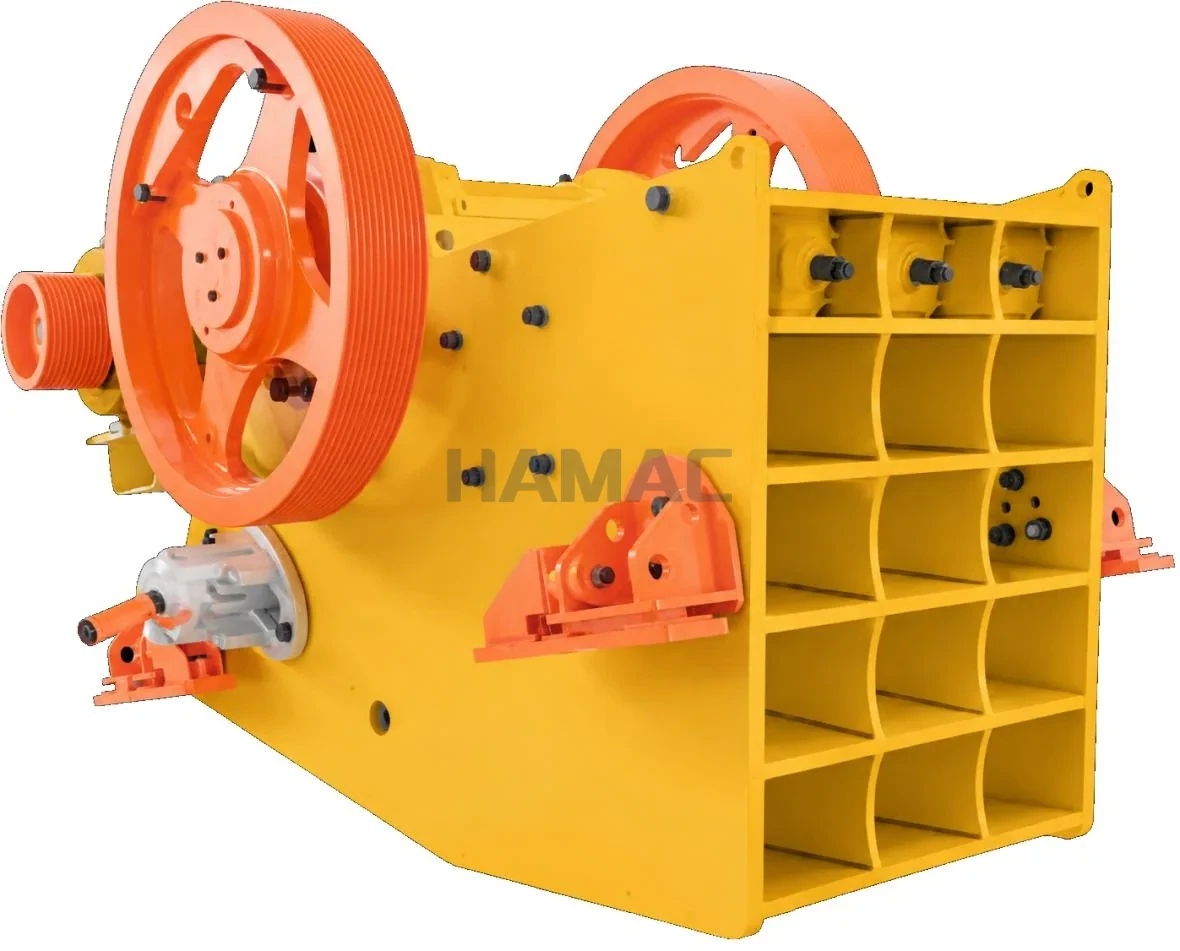
Overview
Buying a C Series Jaw Crusher direct from HAMAC removes the trading margin and gives you engineering support from enquiry to commissioning.
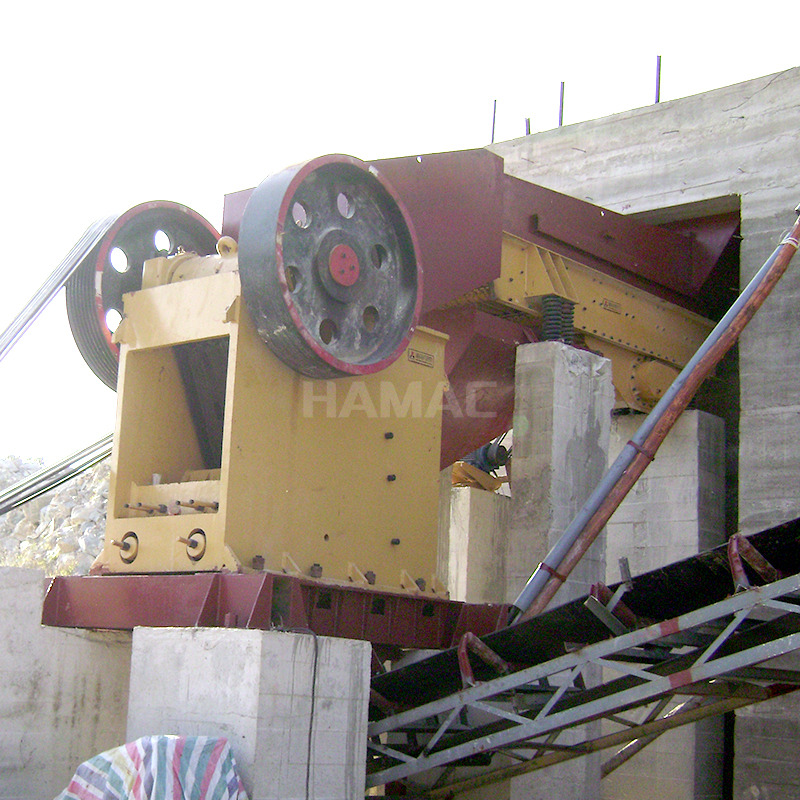
Why buy direct
- One project manager for the whole order.
- Workshop assembly, test and container loading plan.
- Flow-sheet design, layout and foundation reference.
- Installation supervision, training and 24h technical response.
Export & documentation
Quoted FOB / CFR / CIF. Documentation applicable to your market (CE where required), Spanish manuals for LatAm, motors set to local voltage.
How to order
Send project data → receive design + budget in 24h → refine drawings → manufacture → install.
Reference data for this configuration
| Parameter | Reference value |
|---|---|
| Machine line | C Series Jaw Crusher |
| Category | Jaw Crusher |
| Assumed duty | mine pre-beneficiation feed |
| Evaluation horizon | seven-year view |
Treat this as a living sheet. Every revision of the flow sheet for your market should update the same fields so the equipment list stays traceable.
Published C Series Jaw Crusher model data
| C-series model | Typical mobile / modular configuration | Nominal plant capacity (t/h) | Source |
|---|---|---|---|
| SC96 / C96 | K3-C96-2C mobile jaw plant | 80–150 | HAMAC catalogue p.16 |
| SC106 / C106 | K3-C106-2C mobile jaw plant | 100–250 | HAMAC catalogue p.16 |
| SC110 / C110 | K3-C110-2C mobile jaw plant | 200–300 | HAMAC catalogue p.16 |
| C96 + HP200 | K3-C96-HP200-4C four-in-one plant | 100–200 | HAMAC catalogue p.18 |
| C96 + PFV1214 | K3-C96-PF1214-4C four-in-one plant | 100–200 | HAMAC catalogue p.18 |
New-generation C-series primary jaw crusher with higher structural strength, larger crushing ratio and lower cost per tonne than conventional PE machines. Read the table column by column against mine pre-beneficiation feed: the model you pick is the one whose published range brackets your target tonnage, not simply the largest machine in the series. Availability, motor rating and shipping data are re-confirmed for a confined urban yard in the written HAMAC proposal.
Project profile these notes assume
| Assumption | Value |
|---|---|
| Operating duty | mine pre-beneficiation feed |
| Primary objective | lowest cost per tonne |
| Evaluation horizon | seven-year view |
| Site condition | a confined urban yard |
| Operating team | a small contractor crew |
Change any one of these assumptions and the recommended configuration for c series jaw crusher may change. HAMAC re-runs the same checks against your own numbers once the enquiry data sheet is received.
From enquiry to the first saleable tonne
- Review the crusher chamber profile with the liner supplier against the feed material.
- Book shipping, prepare the packing list and confirm the container loading plan.
- Verify the electrical single-line diagram, cable sizing and starter type with the local utility.
- Plan training for a small contractor crew on CSS adjustment, liner change-out and lock-out / tag-out.
- Run a sieve analysis on a representative sample and attach the grading curve to the enquiry.
- Commission with graded load, sample the product grading, then train operators on liner change-out and daily checks.
- Sequence delivery so foundations cure while the equipment is still in manufacture.
- Record the as-built settings and give the operator a written daily, weekly and monthly schedule.
- Log tonnes per liner set and kWh per tonne from day one so you have a real cost baseline within a quarter.
Most delays at this stage come from missing feed data rather than from manufacturing capacity.
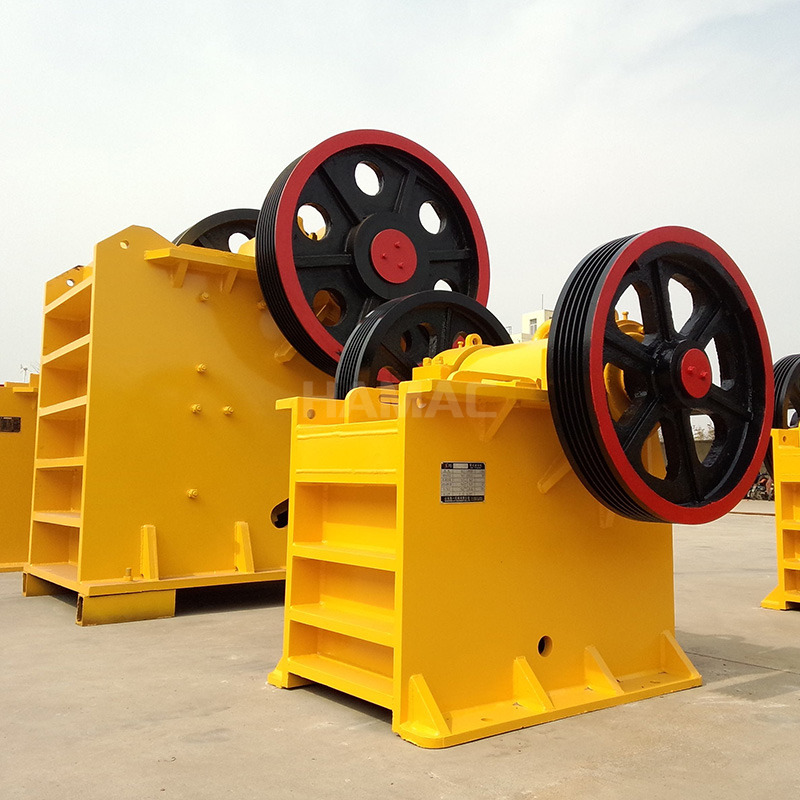
What to verify before you sign
- Dust and noise control designed to the local emission limits for your market.
- Closed-side setting range and whether automatic setting regulation is included.
- Access for liner change-out — crane radius, lifting points and clearance around the chamber.
- Wear-part interchangeability across machines in the same circuit.
- Liner alloy: Mn18 with ceramic inserts matched to the rock, not to the lowest purchase price.
- Decommissioning or relocation value at the end of a seven-year horizon.
- Choke-feed arrangement: surge bin, feeder control and level indication.
- Tramp-iron protection — hydraulic release, magnet and metal detection on the feed belt.
- Availability of a small contractor crew for liner changes and the lifting equipment on site.
Ask each supplier to price the same list. Quotations for c series jaw crusher only become comparable when the scope is identical.
Where the money actually goes
| Cost line | Indicative share | What moves the number |
|---|---|---|
| Equipment & drive packages | 54% | Model size, number of stages and automation level |
| Ocean freight & insurance | 8% | Destination port, container count and out-of-gauge cargo |
| Civil works & foundations | 8% | Soil conditions, dynamic loads and site preparation |
| Erection, commissioning & training | 7% | Local labour, supervision scope and schedule |
| First-year wear parts | 15% | Rock abrasiveness, liner grade and operating hours |
| Power, lubricants & consumables | 8% | kWh per tonne, local tariff and dust suppression water |
Freight to your market is volatile; ask for the quotation to state validity and the port basis rather than a single delivered number.
Mistakes that cost more than the machine
- Skipping the acceptance test, so no one has a baseline to measure degradation against.
- Planning the crusher but not the conveyors, transfer chutes and stockpile capacity around it.
- Forgetting surge capacity — an intermittent loader starves the chamber and ruins particle shape.
- Omitting a bypass chute, so a single screen fault stops the whole line.
- Buying on nameplate t/h without converting to saleable product at the specified fractions.
- Letting the mine pre-beneficiation feed duty be defined verbally instead of in the contract.
- Buying lowest cost per tonne on price alone and losing it in availability.
- Leaving tramp-iron protection out of the scope to save a small percentage of capital.
Every item on this list has cost someone a commissioning date; none of them requires new technology to avoid.
Commissioning checklist
- Dry-run the plant empty for the specified period and record vibration.
- Agree the punch list, sign the hand-over protocol and file the as-built drawings.
- Verify rotation direction on every motor before coupling.
- Check belt tracking, chute build-up and transfer-point dust.
- Measure and log the as-new CSS / setting for future wear comparison.
- Calibrate the belt scale and any level probes against a known load.
- Verify chute liners, skirt rubber and impact bars after the first hour of feed.
- Record the baseline grading curve for each product fraction.
The commissioning record becomes the reference for every liner change in the seven-year plan.