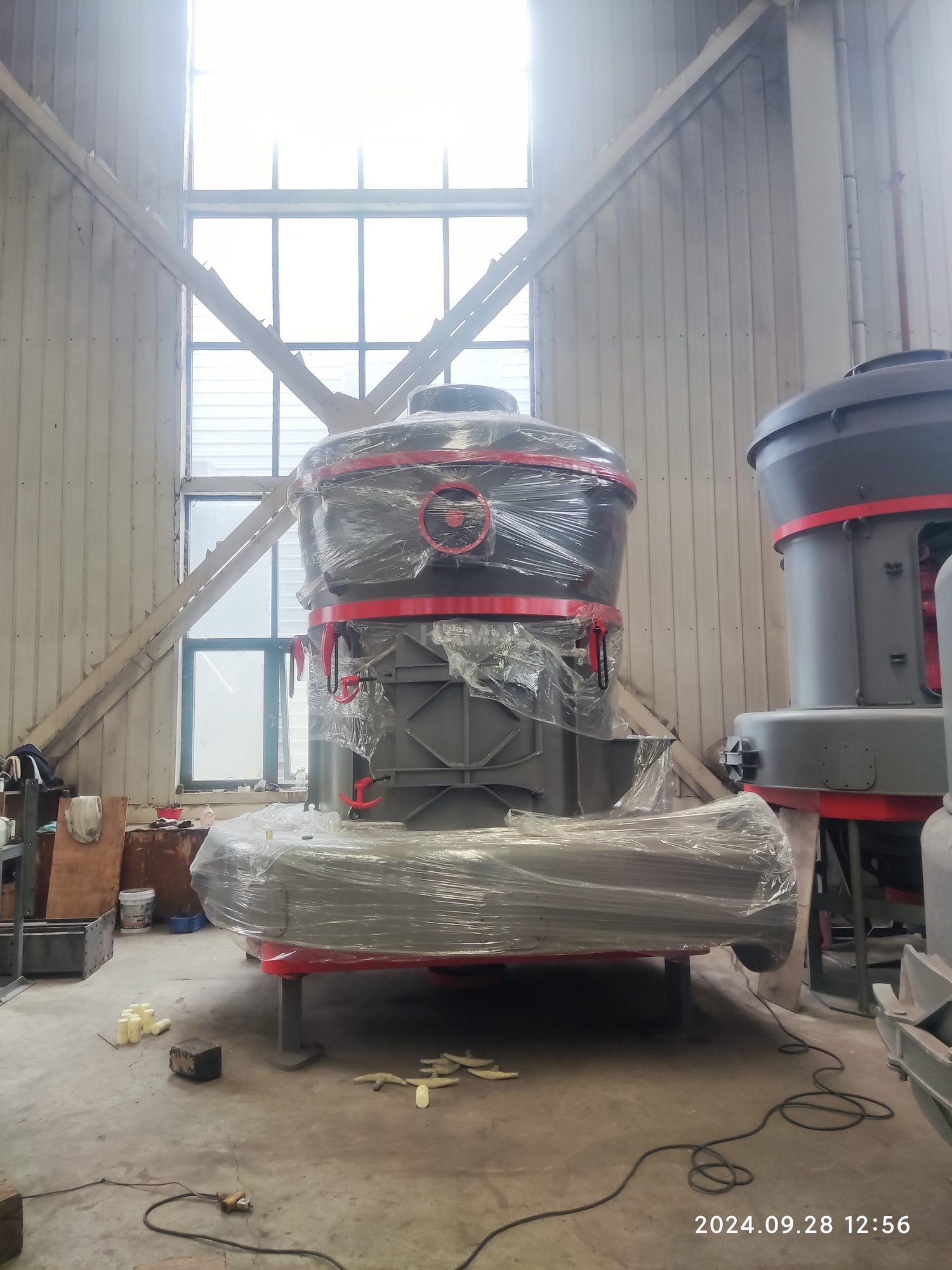
Overview
Published LM Vertical Coal Mill specifications below are nominal values transcribed from HAMAC data. Actual performance depends on feed gradation, moisture, setting and screening efficiency.
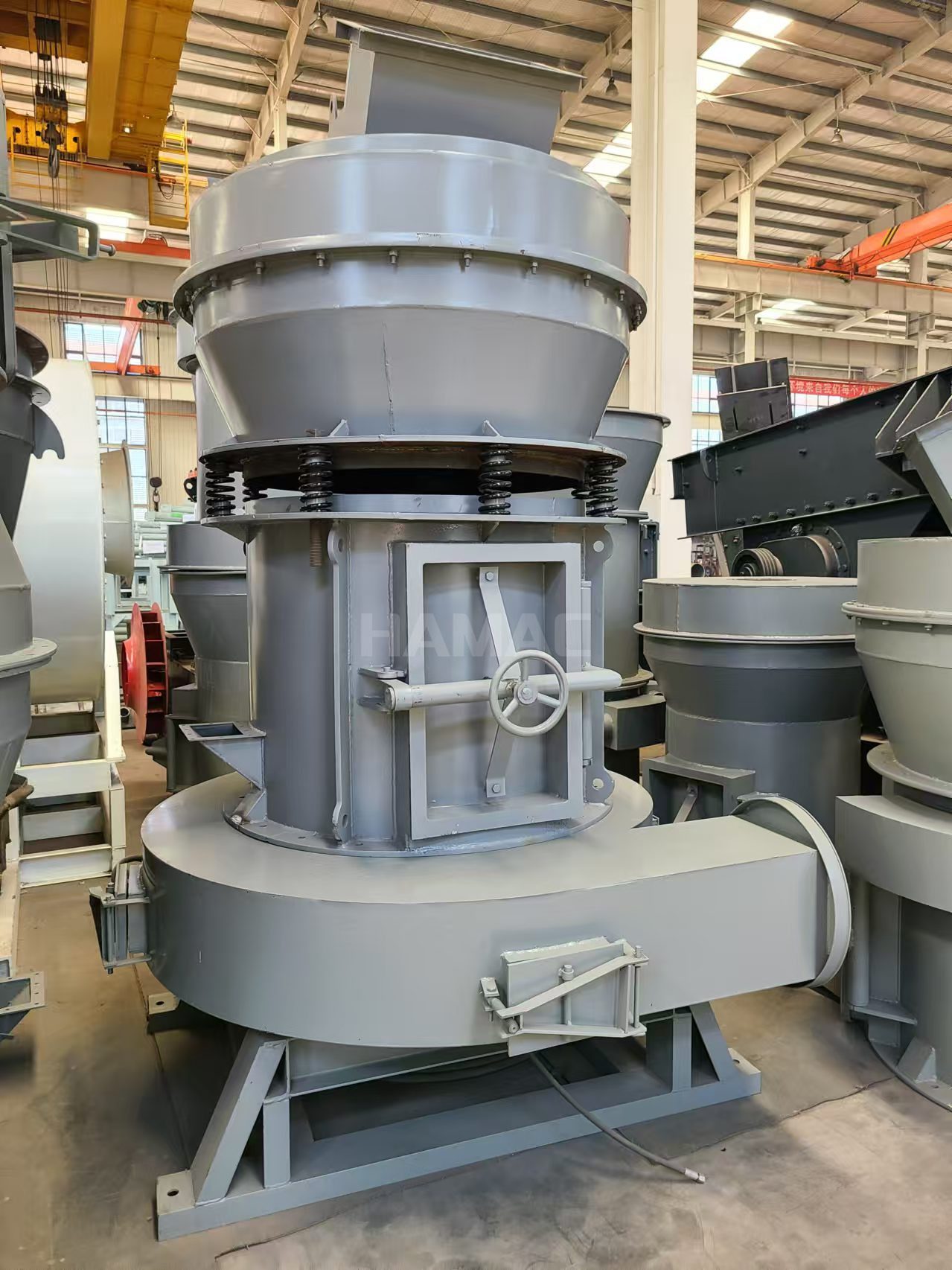
Specification table
| Parameter | Value |
|---|---|
| Finished fineness | 20-400 mesh (0.8-0.045 mm) Set at the classifier |
| Nominal capacity | 3-60 t/h Varies with material and moisture |
| Maximum feed size | 30-50 mm Requires pre-crushing |
| Typical materials | Limestone, calcite, gypsum, talc, barite Mohs <= 7, moisture <= 6% |
| Power supply | 380 / 415 / 440 V, 50 or 60 Hz Configured to destination grid |
How to read the data
- Rated capacity is at a specified CSS / setting and material — treat it as saleable product, not crusher throughput.
- Feed size limit protects the chamber; oversize feed causes bridging.
- Motor power scales with rotor / chamber size, not linearly with capacity.
Selecting the right model
Match the model to your target t/h at the required product size, then confirm with a HAMAC engineer before order.
Reference data for this configuration
| Parameter | Reference value |
|---|---|
| Feed material | Coal |
| Mohs hardness | 2 |
| Compressive strength | ~40 MPa |
| Abrasiveness | Low |
| Recommended circuit | impact / jaw with gentle reduction |
| Machine line | LM Vertical Coal Mill |
| Category | Grinding Mills |
| Assumed duty | high-tonnage aggregate supply |
| Evaluation horizon | five-year view |
The figures above are transcribed from published HAMAC data and from the material properties of coal; site measurements take precedence.
Published LM Vertical Coal Mill model data
| Parameter | Typical value | Engineering note |
|---|---|---|
| Finished fineness | 20-400 mesh (0.8-0.045 mm) | Set at the classifier |
| Nominal capacity | 3-60 t/h | Varies with material and moisture |
| Maximum feed size | 30-50 mm | Requires pre-crushing |
| Typical materials | Limestone, calcite, gypsum, talc, barite | Mohs <= 7, moisture <= 6% |
| Power supply | 380 / 415 / 440 V, 50 or 60 Hz | Configured to destination grid |
LM Vertical Coal Mill for limestone, calcite, barite, gypsum, talc, dolomite, kaolin and coal powder projects, producing 20-400 mesh (0.8-0.045 mm) at 3-60 t/h with an integrated classifier and dust collection. Read the table column by column against high-tonnage aggregate supply: the model you pick is the one whose published range brackets your target tonnage, not simply the largest machine in the series. Availability, motor rating and shipping data are re-confirmed for a greenfield site in the written HAMAC proposal.
Project profile these notes assume
| Assumption | Value |
|---|---|
| Operating duty | high-tonnage aggregate supply |
| Primary objective | fast mobilisation |
| Evaluation horizon | five-year view |
| Site condition | a greenfield site |
| Operating team | a mixed local and expatriate team |
Change any one of these assumptions and the recommended configuration for lm vertical coal mill may change. HAMAC re-runs the same checks against your own numbers once the enquiry data sheet is received.
From enquiry to the first saleable tonne
- Check bearing and lubrication arrangements against the ambient temperature range at the site.
- Review the crusher chamber profile with the liner supplier against Coal (Mohs 2, ~40 MPa, low abrasion).
- Run a sieve analysis on a representative sample and attach the grading curve to the enquiry.
- Set the closed-side setting or rotor speed against the required product fractions, then verify the expected reduction ratio.
- Define the acceptance test: sampling points, test duration, moisture range and who signs the protocol.
- Apply impact / jaw with gentle reduction; the reduction mechanism must suit low abrasion and a compressive strength near 40 MPa.
- Book shipping, prepare the packing list and confirm the container loading plan.
- Log tonnes per liner set and kWh per tonne from day one so you have a real cost baseline within a quarter.
- Size the primary stage for your target tonnage with a 10–20% surge allowance — never on nameplate throughput alone.
A HAMAC project manager stays with the order from the first data sheet through hand-over in your market.
What to verify before you sign
- Tramp-iron protection — hydraulic release, magnet and metal detection on the feed belt.
- Control system language, telemetry and remote diagnostics availability.
- Choke-feed arrangement: surge bin, feeder control and level indication.
- Whether the quoted t/h is achieved at high-tonnage aggregate supply or under ideal laboratory feed.
- Spare-parts consignment: one full liner or blow-bar set plus meshes, belts, bearings and seals.
- Closed-side setting range and whether automatic setting regulation is included.
- Saleable tonnes per hour at each product size, not gross crusher throughput, for your target tonnage.
- Energy draw in kW and the expected kWh per tonne at the design duty.
- Product sampling points and the lab equipment needed for routine grading checks.
Bring this list to the design review — it is cheaper to resolve an omission on paper than during commissioning.
Where the money actually goes
| Cost line | Indicative share | What moves the number |
|---|---|---|
| Equipment & drive packages | 55% | Model size, number of stages and automation level |
| Ocean freight & insurance | 9% | Destination port, container count and out-of-gauge cargo |
| Civil works & foundations | 9% | Soil conditions, dynamic loads and site preparation |
| Erection, commissioning & training | 7% | Local labour, supervision scope and schedule |
| First-year wear parts | 13% | Rock abrasiveness, liner grade and operating hours |
| Power, lubricants & consumables | 7% | kWh per tonne, local tariff and dust suppression water |
On high-tonnage aggregate supply, the fast mobilisation objective changes which line deserves the most attention during value engineering.
Mistakes that cost more than the machine
- Overlooking dust, noise and water permits in your market until erection has already started.
- Choosing screen apertures before the concrete or asphalt mix design is fixed.
- Specifying motors for the wrong voltage or frequency and rewinding them on site.
- Buying on nameplate t/h without converting to saleable product at the specified fractions.
- Assuming the manufacturer's warranty covers wear parts and consumables.
- Skipping a geotechnical check and discovering settlement under the primary crusher at a greenfield site.
- Buying fast mobilisation on price alone and losing it in availability.
- Leaving tramp-iron protection out of the scope to save a small percentage of capital.
Review the list with a mixed local and expatriate team before the order is placed — they will recognise most of them.
Commissioning checklist
- Measure and log the as-new CSS / setting for future wear comparison.
- Verify chute liners, skirt rubber and impact bars after the first hour of feed.
- Check belt tracking, chute build-up and transfer-point dust.
- Calibrate the belt scale and any level probes against a known load.
- Hand over the spare-parts list, manuals and maintenance schedule.
- Sample each product fraction and compare with the specification.
- Verify rotation direction on every motor before coupling.
- Confirm all guards, emergency stops and pull-wire switches function.
For a mixed local and expatriate team, run through this list twice — once with the supervisor and once without.