Overview
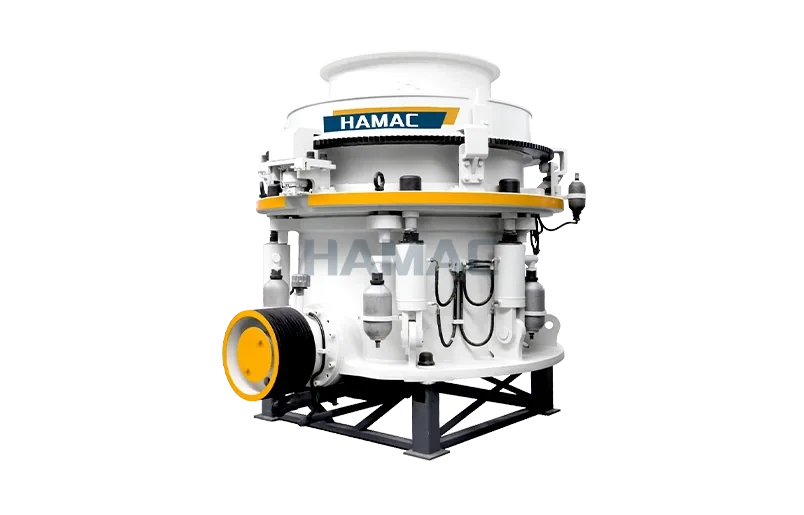
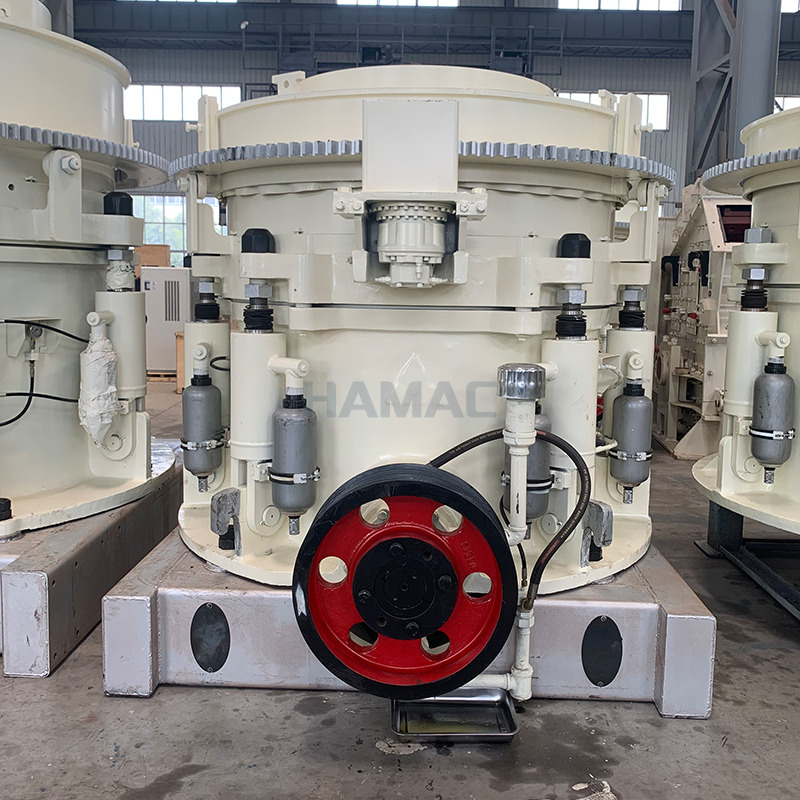
Wear parts are the largest variable cost on a HP Hydraulic Cone Crusher. HAMAC supplies matched consumables and a recommended stock list with every plant.
Main consumables
- Chamber liners / blow bars / Impact plates.
- Rotors, distributor plates and anvils (VSI).
- Screen meshes for every deck.
- Belts, bearings, seals and sensors.
Liner material grade
Mn13 / Mn18 / Mn22 work-harden under impact; high-chrome resists abrasion in low-impact duties. Choice follows the rock, not the price.
Recommended stock
- One full set of chamber liners or blow bars.
- Screen meshes for every deck.
- Belts, bearings and seals.
- Electrical consumables and sensors.
Reference data for this configuration
| Parameter | Reference value |
|---|---|
| Machine line | HP Hydraulic Cone Crusher |
| Category | Cone Crusher |
| Assumed duty | mine pre-beneficiation feed |
| Evaluation horizon | single-project view |
These values are the starting point for a written proposal on hp hydraulic cone crusher; they are nominal and should be confirmed against a sample test before manufacture.
Published HP Hydraulic Cone Crusher model data
| Model | Crushing Chamber | Standard type | Short head type | Power | Capacity |
|---|---|---|---|---|---|
| Feeding opening | Min. Discharge opening | Feeding opening | Min. Discharge opening | ||
| HPT200 | Extra Coarse(EC) | ||||
| Coarse(C) | 185 mm | 19 mm | 76 mm | 10 mm | |
| Medium(M) | 125 mm | 17 mm | 54 mm | 6 mm | |
| Fine(F) | 95 mm | 13 mm | 23 mm | 6 mm | |
| Extra fine(EF) | 10 mm | 5 mm | |||
| HPT300 | Extra Coarse(EC) | 230 mm | 25 mm | ||
| Coarse(C) | 210 mm | 20 mm | 10 mm |
HP Series of highly efficient Hydraulic Cone Crusher is a world-level cone crusher introduced with the up-to-the-minute technology of Germany. Read the table column by column against mine pre-beneficiation feed: the model you pick is the one whose published range brackets your target tonnage, not simply the largest machine in the series. Availability, motor rating and shipping data are re-confirmed for a brownfield extension in the written HAMAC proposal.
Project profile these notes assume
| Assumption | Value |
|---|---|
| Operating duty | mine pre-beneficiation feed |
| Primary objective | lowest energy per tonne |
| Evaluation horizon | single-project view |
| Site condition | a brownfield extension |
| Operating team | a mixed local and expatriate team |
Change any one of these assumptions and the recommended configuration for hp hydraulic cone crusher may change. HAMAC re-runs the same checks against your own numbers once the enquiry data sheet is received.
From enquiry to the first saleable tonne
- Set the closed-side setting or rotor speed against the required product fractions, then verify the expected reduction ratio.
- Commission with graded load, sample the product grading, then train operators on liner change-out and daily checks.
- Sequence delivery so foundations cure while the equipment is still in manufacture.
- Record the as-built settings and give the operator a written daily, weekly and monthly schedule.
- Allocate screen area per deck; blinding and pegging are the most common hidden bottlenecks in a new plant.
- Set the maintenance stock list from the expected wear rate, not from a percentage of the equipment price.
- Run a sieve analysis on a representative sample and attach the grading curve to the enquiry.
- Size the primary stage for your target tonnage with a 10–20% surge allowance — never on nameplate throughput alone.
- Confirm the haul-road and stockpile plan with a brownfield extension in mind before fixing conveyor lengths.
A realistic programme reserves time for permits, foundation curing and shipping to your market before any steel is cut.
What to verify before you sign
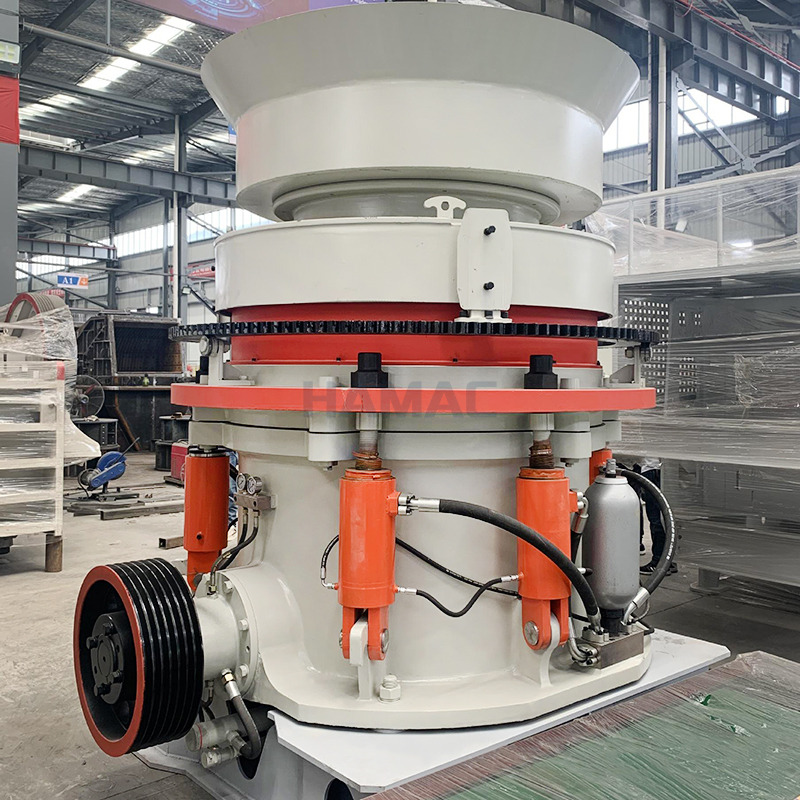
- Maximum feed lump and gradation — a chamber that cannot accept the top size will bridge on day one.
- Tramp-iron protection — hydraulic release, magnet and metal detection on the feed belt.
- Liner alloy: Mn18 with ceramic inserts matched to the rock, not to the lowest purchase price.
- Delivery terms (FOB / CFR / CIF) with the destination port named explicitly.
- Nameplate data for local voltage, frequency and the applicable conformity scheme.
- Written performance guarantee, sampling method and acceptance-test protocol.
- Decommissioning or relocation value at the end of a single-project horizon.
- Ambient temperature, altitude and dust load derating for motors and hydraulics.
- Closed-side setting range and whether automatic setting regulation is included.
The relative weight of each item changes with the project: wear parts dominate on abrasive rock, availability dominates on remote sites.
Where the money actually goes
| Cost line | Indicative share | What moves the number |
|---|---|---|
| Equipment & drive packages | 54% | Model size, number of stages and automation level |
| Ocean freight & insurance | 8% | Destination port, container count and out-of-gauge cargo |
| Civil works & foundations | 8% | Soil conditions, dynamic loads and site preparation |
| Erection, commissioning & training | 7% | Local labour, supervision scope and schedule |
| First-year wear parts | 15% | Rock abrasiveness, liner grade and operating hours |
| Power, lubricants & consumables | 8% | kWh per tonne, local tariff and dust suppression water |
Model a low, base and high case for tonnes per liner set. The spread tells you more than a single optimistic estimate.
Mistakes that cost more than the machine
- Undersizing the screen, then blaming the crusher for a plant that never reaches your target tonnage.
- Skipping a geotechnical check and discovering settlement under the primary crusher at a brownfield extension.
- Buying on nameplate t/h without converting to saleable product at the specified fractions.
- Ignoring clay and moisture until the first wet season, when decks blind and chambers pack.
- Omitting a bypass chute, so a single screen fault stops the whole line.
- Planning the crusher but not the conveyors, transfer chutes and stockpile capacity around it.
- Ordering no spares with the plant and waiting six weeks for the first liner set.
- Choosing screen apertures before the concrete or asphalt mix design is fixed.
On a brownfield extension, the civil and logistics items deserve as much attention as the crusher itself.
Commissioning checklist
- Confirm the direction and tension of every belt under no load.
- Dry-run the plant empty for the specified period and record vibration.
- Check lubrication levels, grease lines and oil cooler operation.
- Verify rotation direction on every motor before coupling.
- Check hydraulic pressure, accumulator pre-charge and tramp-release function.
- Verify chute liners, skirt rubber and impact bars after the first hour of feed.
- Sample each product fraction and compare with the specification.
- Calibrate the belt scale and any level probes against a known load.
For a mixed local and expatriate team, run through this list twice — once with the supervisor and once without.