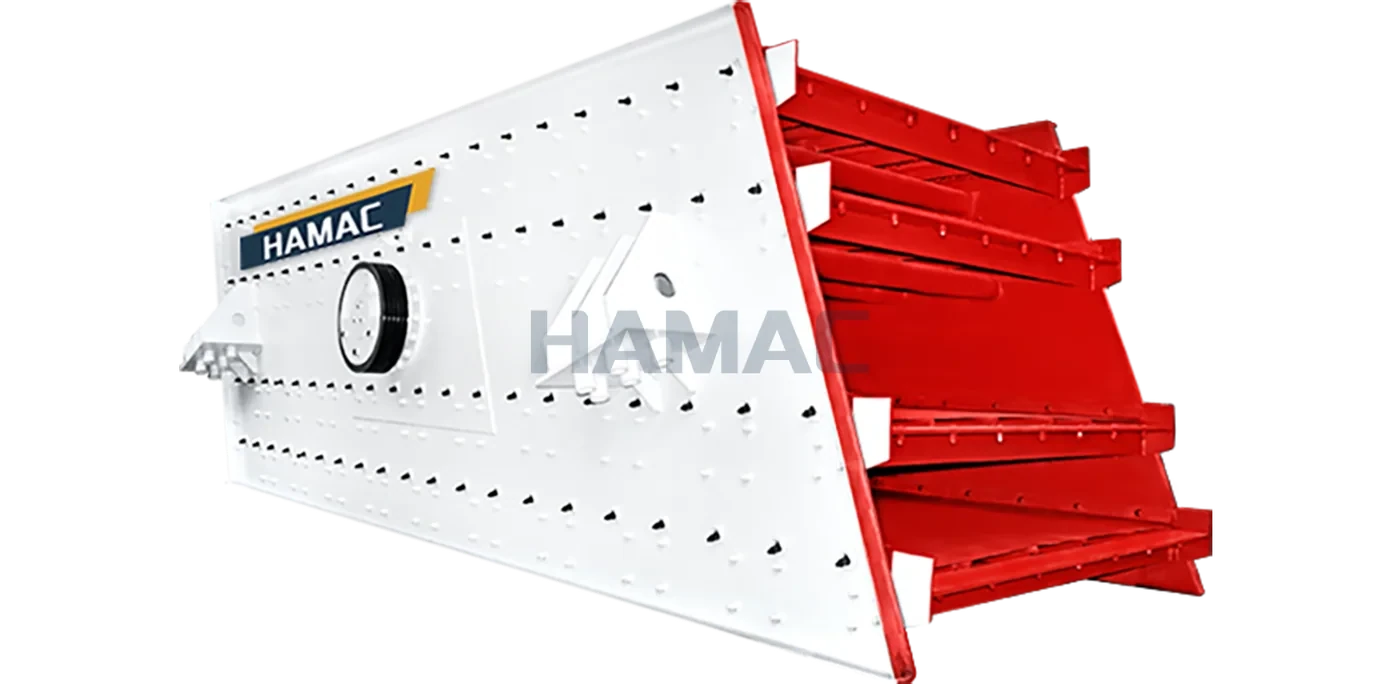
Overview
A simple, disciplined maintenance routine is the cheapest insurance against unplanned downtime on a Vibrating Screen.
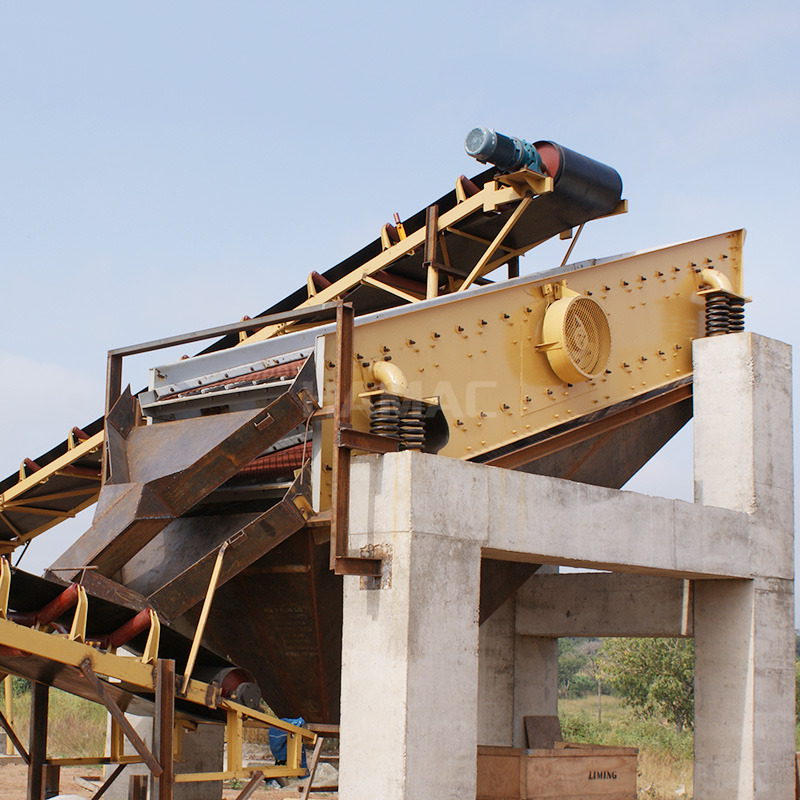
Daily
- Check lubrication levels and look for leaks.
- Inspect liners / blow bars for uneven wear.
- Listen for abnormal vibration or noise.
- Verify belt tension and guard position.
Weekly
- Grease bearings per the schedule.
- Check fasteners and hydraulic pressure.
- Clean screens and check mesh wear.
Monthly
- Measure liner wear and plan change-out.
- Inspect drives, couplings and motor.
- Review wear-part stock against lead time.
Safety
Lock-out / tag-out before any entry; never clear bridging under a running crusher; follow local standards and HAMAC manuals.
Reference data for this configuration
| Parameter | Reference value |
|---|---|
| Machine line | Vibrating Screen |
| Category | Supporting Equipments |
| Assumed duty | cement raw-meal preparation |
| Evaluation horizon | seven-year view |
Where a value is shown as nominal, the written proposal states the guaranteed figure for your material, feed grading and seven-year operating plan.
Published Vibrating Screen model data
| Model | Mesh Qty | Mesh Size | Freq | Capacity | Power | Dimension |
|---|---|---|---|---|---|---|
| YK1236 | 1 | 4.32 ㎡ | 800-900 r/min | 25-200 m³/h | 5.5 kW | 4110×1757×970 |
| 2YK1236 | 2 | 4.32 ㎡ | 800-900 r/min | 25-200 m³/h | 7.5 kW | 4142×1748×1340 |
| 3YK1236 | 3 | 4.32 ㎡ | 800-900 r/min | 25-200 m³/h | 11 kW | 4215×1748×1488 |
| 4YK1236 | 4 | 4.32 ㎡ | 800-900 r/min | 25-200 m³/h | 15 kW | 4336×1748×1840 |
| YK1545 | 1 | 6.75 ㎡ | 800-900 r/min | 45-380 m³/h | 11 kW | 4970×2048×823 |
| 2YK1545 | 2 | 6.75 ㎡ | 800-900 r/min | 45-380 m³/h | 15 kW | 5573×2110×1582 |
| 3YK1545 | 3 | 6.75 ㎡ | 800-900 r/min | 45-380 m³/h | 15 kW | 5610×2110×1776 |
| 4YK1545 | 4 | 6.75 ㎡ | 800-900 r/min | 45-380 m³/h | 18.5 kW | 5798×2110×2191 |
The YK Series Circular Vibrating Screen is designed for screening various ores and building materials, suitable for materials with moisture content no more than 5%. Read the table column by column against cement raw-meal preparation: the model you pick is the one whose published range brackets your target tonnage, not simply the largest machine in the series. Availability, motor rating and shipping data are re-confirmed for a confined urban yard in the written HAMAC proposal.
Project profile these notes assume
| Assumption | Value |
|---|---|
| Operating duty | cement raw-meal preparation |
| Primary objective | lowest energy per tonne |
| Evaluation horizon | seven-year view |
| Site condition | a confined urban yard |
| Operating team | a small contractor crew |
Change any one of these assumptions and the recommended configuration for vibrating screen may change. HAMAC re-runs the same checks against your own numbers once the enquiry data sheet is received.
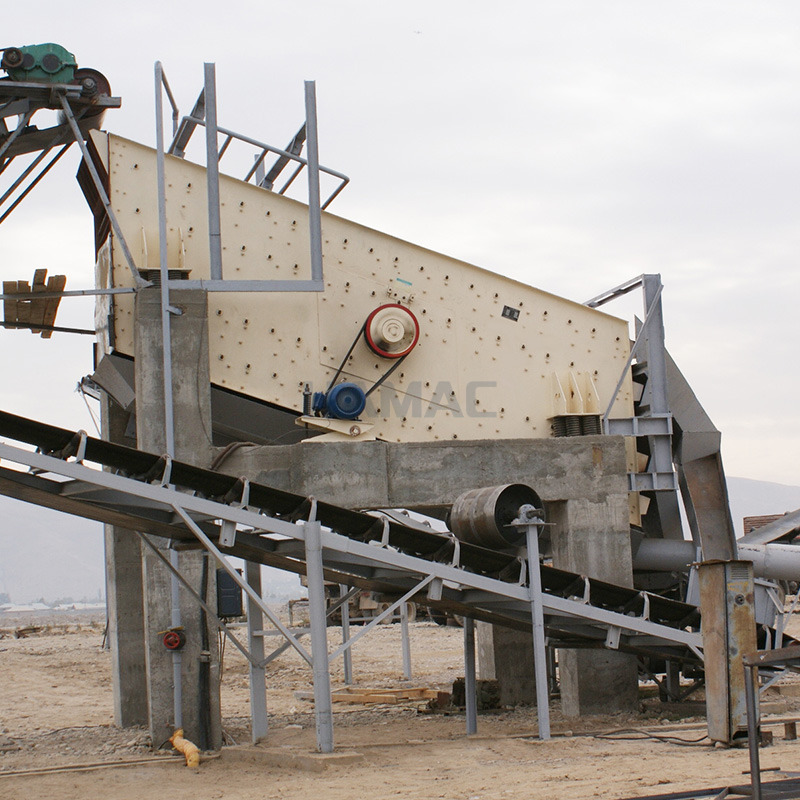
From enquiry to the first saleable tonne
- Run a sieve analysis on a representative sample and attach the grading curve to the enquiry.
- Budget for water, dust extraction and spillage handling as part of the plant, not as an afterthought.
- Lay out conveyors, access ways, stockpile capacity and drainage before ordering steelwork.
- Set the maintenance stock list from the expected wear rate, not from a percentage of the equipment price.
- Confirm the haul-road and stockpile plan with a confined urban yard in mind before fixing conveyor lengths.
- Set the closed-side setting or rotor speed against the required product fractions, then verify the expected reduction ratio.
- Confirm site voltage, frequency and applicable conformity standards before manufacture.
- Verify the electrical single-line diagram, cable sizing and starter type with the local utility.
- Include dust suppression, guarding, emergency stops and lock-out points in the layout drawing.
For a small contractor crew, the commissioning and training steps need more calendar time than the mechanical erection itself.
What to verify before you sign
- Screen deck count, aperture and area; ask for the efficiency calculation, not just the mesh size.
- Spare motor, gearbox and hydraulic pump lead times from the nearest HAMAC stock point.
- Nameplate data for local voltage, frequency and the applicable conformity scheme.
- After-sales response time, technician availability and the warranty exclusions in writing.
- Written performance guarantee, sampling method and acceptance-test protocol.
- Control system language, telemetry and remote diagnostics availability.
- Wear-part interchangeability across machines in the same circuit.
- Energy draw in kW and the expected kWh per tonne at the design duty.
- Dust and noise control designed to the local emission limits for your market.
The cheapest offer usually wins on equipment and loses on one of the last six items — freight terms, spares or the acceptance test.
Where the money actually goes
| Cost line | Indicative share | What moves the number |
|---|---|---|
| Equipment & drive packages | 54% | Model size, number of stages and automation level |
| Ocean freight & insurance | 8% | Destination port, container count and out-of-gauge cargo |
| Civil works & foundations | 8% | Soil conditions, dynamic loads and site preparation |
| Erection, commissioning & training | 7% | Local labour, supervision scope and schedule |
| First-year wear parts | 15% | Rock abrasiveness, liner grade and operating hours |
| Power, lubricants & consumables | 8% | kWh per tonne, local tariff and dust suppression water |
Freight to your market is volatile; ask for the quotation to state validity and the port basis rather than a single delivered number.
Mistakes that cost more than the machine
- Comparing quotations with different port terms and calling the lower number cheaper.
- Selecting the cheapest liner alloy for hard, high-silica rock and paying for it in change-outs.
- Letting the cement raw-meal preparation duty be defined verbally instead of in the contract.
- Skipping a geotechnical check and discovering settlement under the primary crusher at a confined urban yard.
- Omitting a bypass chute, so a single screen fault stops the whole line.
- Leaving tramp-iron protection out of the scope to save a small percentage of capital.
- Undersizing the screen, then blaming the crusher for a plant that never reaches your target tonnage.
- Forgetting surge capacity — an intermittent loader starves the chamber and ruins particle shape.
For cement raw-meal preparation, protect the lowest energy per tonne requirement explicitly in the contract documents.
Commissioning checklist
- Agree the punch list, sign the hand-over protocol and file the as-built drawings.
- Check belt tracking, chute build-up and transfer-point dust.
- Sample each product fraction and compare with the specification.
- Check lubrication levels, grease lines and oil cooler operation.
- Confirm the direction and tension of every belt under no load.
- Record power draw, tonnage and chamber pressure at steady state.
- Hand over the spare-parts list, manuals and maintenance schedule.
- Verify chute liners, skirt rubber and impact bars after the first hour of feed.
On a confined urban yard, allow extra time for the dust and noise measurements.