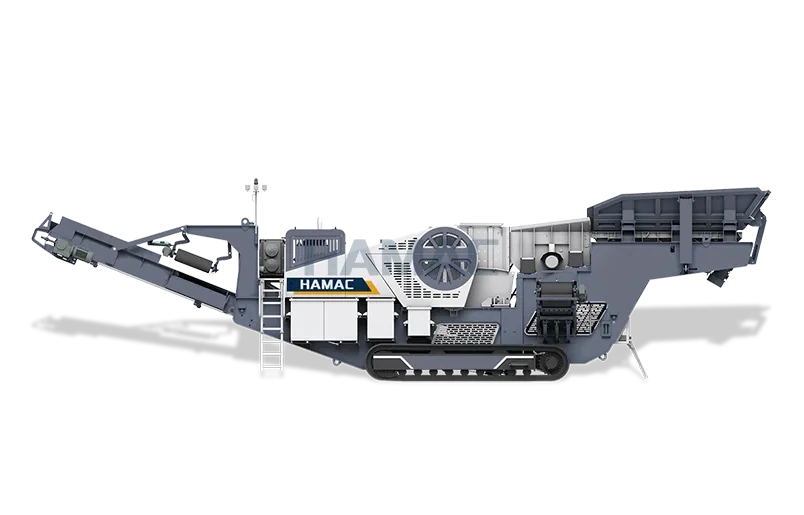
Overview
A simple, disciplined maintenance routine is the cheapest insurance against unplanned downtime on a Crawler (Tracked) Jaw Crusher TC Series.
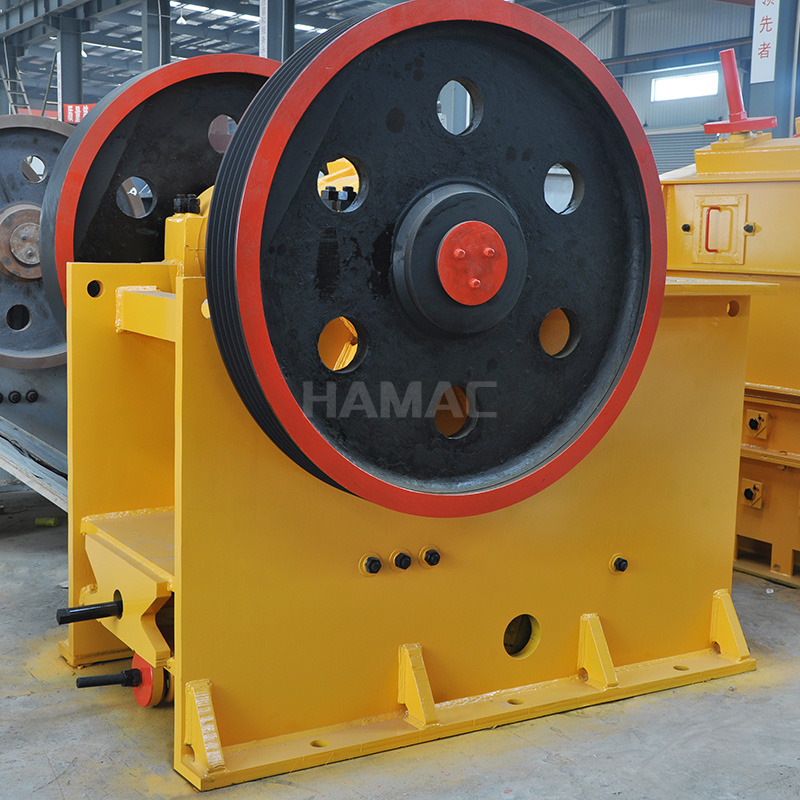
Daily
- Check lubrication levels and look for leaks.
- Inspect liners / blow bars for uneven wear.
- Listen for abnormal vibration or noise.
- Verify belt tension and guard position.
Weekly
- Grease bearings per the schedule.
- Check fasteners and hydraulic pressure.
- Clean screens and check mesh wear.
Monthly
- Measure liner wear and plan change-out.
- Inspect drives, couplings and motor.
- Review wear-part stock against lead time.
Safety
Lock-out / tag-out before any entry; never clear bridging under a running crusher; follow local standards and HAMAC manuals.
Reference data for this configuration
| Parameter | Reference value |
|---|---|
| Machine line | Crawler (Tracked) Jaw Crusher TC Series |
| Category | Tracked Crushing Plants |
| Assumed duty | continuous quarry production |
| Evaluation horizon | five-year view |
Ask for the same table from any competing supplier; without it, an offer for crawler (tracked) jaw crusher tc series cannot be compared on scope.
Published Crawler (Tracked) Jaw Crusher TC Series model data
| Model | TC106 | TC116 | TC120 |
|---|---|---|---|
| Jaw crusher | C106 | C116 | C120 |
| Max. feeding size | 600 mm | 650 mm | 740 mm |
| Minimum outlet | 70–200 mm | 70–200 mm | 70–175 mm |
| Crusher motor | 110 kW | 132 kW | 160 kW |
| Main conveyor | B1000 × 12 m | B1000 × 12 m | B1000 × 12.9 m |
| Generator | 300 kW | 300 kW | 360 kW |
TC106 / TC116 / TC120 tracked jaw crushers with 600–740 mm max feed, 110–160 kW crusher power and on-board 300–360 kW generator. Read the table column by column against continuous quarry production: the model you pick is the one whose published range brackets your target tonnage, not simply the largest machine in the series. Availability, motor rating and shipping data are re-confirmed for a remote mine site in the written HAMAC proposal.
Project profile these notes assume
| Assumption | Value |
|---|---|
| Operating duty | continuous quarry production |
| Primary objective | simple operator maintenance |
| Evaluation horizon | five-year view |
| Site condition | a remote mine site |
| Operating team | a small contractor crew |
Change any one of these assumptions and the recommended configuration for crawler (tracked) jaw crusher tc series may change. HAMAC re-runs the same checks against your own numbers once the enquiry data sheet is received.
From enquiry to the first saleable tonne
- Confirm the haul-road and stockpile plan with a remote mine site in mind before fixing conveyor lengths.
- Set the closed-side setting or rotor speed against the required product fractions, then verify the expected reduction ratio.
- Commission with graded load, sample the product grading, then train operators on liner change-out and daily checks.
- Check bearing and lubrication arrangements against the ambient temperature range at the site.
- Book shipping, prepare the packing list and confirm the container loading plan.
- Set the maintenance stock list from the expected wear rate, not from a percentage of the equipment price.
- Survey the feed: the feed material; record top size, bulk density, moisture and clay content before fixing the flow sheet.
- Budget for water, dust extraction and spillage handling as part of the plant, not as an afterthought.
- Plan training for a small contractor crew on CSS adjustment, liner change-out and lock-out / tag-out.
On continuous quarry production, step ordering matters: survey and sampling must precede the equipment list, or the plant is sized to a guess.
What to verify before you sign
- Written performance guarantee, sampling method and acceptance-test protocol.
- Ambient temperature, altitude and dust load derating for motors and hydraulics.
- After-sales response time, technician availability and the warranty exclusions in writing.
- Nameplate data for local voltage, frequency and the applicable conformity scheme.
- Product sampling points and the lab equipment needed for routine grading checks.
- Erection scope: supervision only, or full civil, mechanical and electrical installation.
- Saleable tonnes per hour at each product size, not gross crusher throughput, for your target tonnage.
- Local service partner, technician travel time and visa requirements for your market.
- Spare motor, gearbox and hydraulic pump lead times from the nearest HAMAC stock point.
These are the items HAMAC puts in the technical proposal; if another offer is silent on them, ask why.
Where the money actually goes
| Cost line | Indicative share | What moves the number |
|---|---|---|
| Equipment & drive packages | 54% | Model size, number of stages and automation level |
| Ocean freight & insurance | 8% | Destination port, container count and out-of-gauge cargo |
| Civil works & foundations | 8% | Soil conditions, dynamic loads and site preparation |
| Erection, commissioning & training | 7% | Local labour, supervision scope and schedule |
| First-year wear parts | 15% | Rock abrasiveness, liner grade and operating hours |
| Power, lubricants & consumables | 8% | kWh per tonne, local tariff and dust suppression water |
A five-year view normally reverses the ranking of two otherwise similar offers once wear and energy are included.
Mistakes that cost more than the machine
- Choosing screen apertures before the concrete or asphalt mix design is fixed.
- Assuming the manufacturer's warranty covers wear parts and consumables.
- Comparing quotations with different port terms and calling the lower number cheaper.
- Ordering no spares with the plant and waiting six weeks for the first liner set.
- Omitting a bypass chute, so a single screen fault stops the whole line.
- Selecting the cheapest liner alloy for hard, high-silica rock and paying for it in change-outs.
- Skipping a geotechnical check and discovering settlement under the primary crusher at a remote mine site.
- Buying on nameplate t/h without converting to saleable product at the specified fractions.
On a remote mine site, the civil and logistics items deserve as much attention as the crusher itself.
Commissioning checklist
- Check lubrication levels, grease lines and oil cooler operation.
- Dry-run the plant empty for the specified period and record vibration.
- Agree the punch list, sign the hand-over protocol and file the as-built drawings.
- Measure noise and dust at the operator position against the local limit.
- Verify chute liners, skirt rubber and impact bars after the first hour of feed.
- Check hydraulic pressure, accumulator pre-charge and tramp-release function.
- Introduce feed in graded steps: 25%, 50%, 75%, then full load.
- Measure and log the as-new CSS / setting for future wear comparison.
The commissioning record becomes the reference for every liner change in the five-year plan.