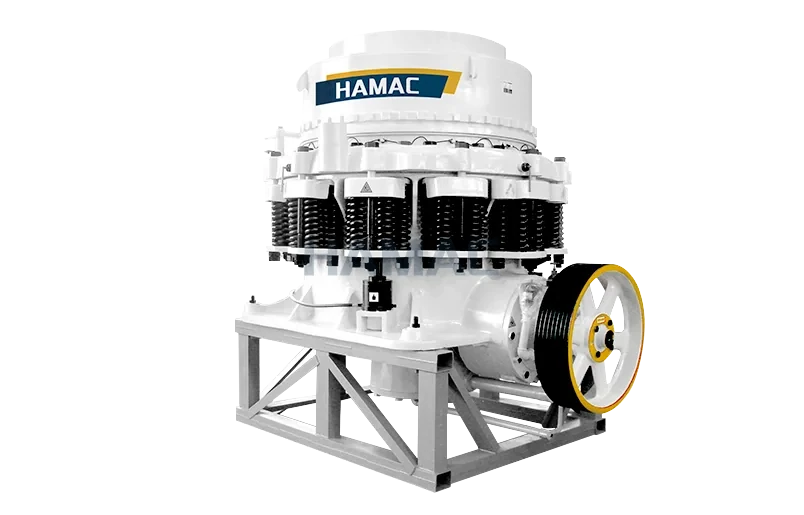
Overview
The Symons Cone Crusher is applied across aggregates, mining, beneficiation and recycling. The material properties decide whether it is the right machine.
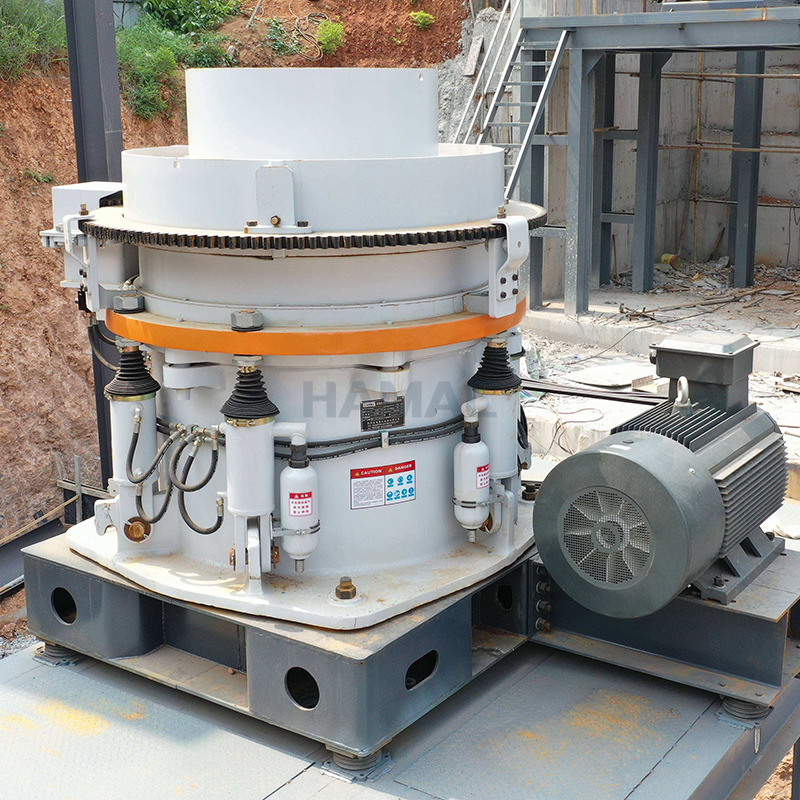
Materials it handles
- Hard rock: granite, basalt, andesite, gabbro.
- Soft rock: limestone, marble, dolomite.
- Ores: iron, copper, gold, manganese.
- Recycling: concrete, asphalt, C&D waste.
Industries
- Quarrying and construction aggregates.
- Metal ore crushing and beneficiation.
- Manufactured sand and road base.
- Cement raw meal and industrial minerals.
Typical configuration
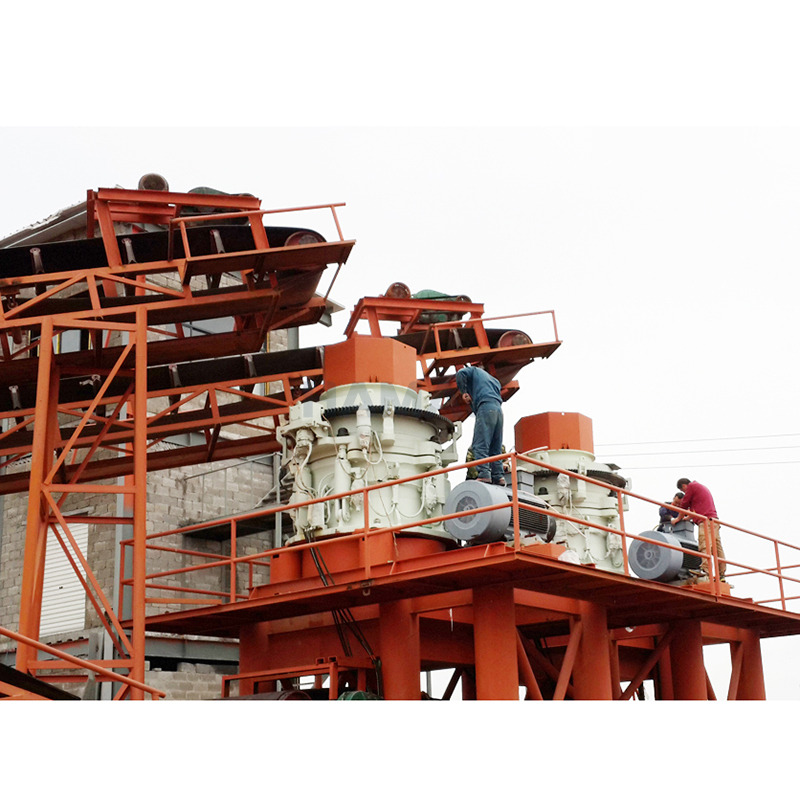
Usually combined with a feeder, screen and conveyors into a complete circuit, or as a module in a mobile plant.
Reference data for this configuration
| Parameter | Reference value |
|---|---|
| Machine line | Symons Cone Crusher |
| Category | Cone Crusher |
| Assumed duty | mine pre-beneficiation feed |
| Evaluation horizon | seven-year view |
At mine pre-beneficiation feed, the ranking of these parameters changes: maximum mechanical availability usually becomes the deciding constraint rather than the headline tonnage.
Published Symons Cone Crusher model data
| Model | SCC 3’ | SCC 4 1/4’ | SCC 5 1/2’ | SCC 7’ |
|---|---|---|---|---|
| Dia. | 900 mm (3’) | 1295 mm (4 1/4’) | 1650 mm (5 1/2’) | 2134 mm (7’) |
| Fine Closing Side | 83 mm | 109 mm | 188 mm | 253 mm |
| Fine Open Side | 102 mm | 137 mm | 209 mm | 278 mm |
| Medium Closing Side | 159 mm | 188 mm | 213 mm | 303 mm |
| Medium Open Side | 175 mm | 210 mm | 241 mm | 334 mm |
| Coarse Closing Side | 159 mm | 216 mm | 241 mm | 334 mm |
| Coarse Open Side | 175 mm | 241 mm | 268 mm | 369 mm |
| Outlet Setting | 9-22 mm | 13-38 mm | 16-38 mm | 19-38 mm |
S series Symons cone crusher is a kind of high efficiency cone crusher, which integrate optimization of cavity-type and reasonable stroke and advanced technology, and the conception of. Read the table column by column against mine pre-beneficiation feed: the model you pick is the one whose published range brackets your target tonnage, not simply the largest machine in the series. Availability, motor rating and shipping data are re-confirmed for a brownfield extension in the written HAMAC proposal.
Project profile these notes assume
| Assumption | Value |
|---|---|
| Operating duty | mine pre-beneficiation feed |
| Primary objective | maximum mechanical availability |
| Evaluation horizon | seven-year view |
| Site condition | a brownfield extension |
| Operating team | a full-time plant team |
Change any one of these assumptions and the recommended configuration for symons cone crusher may change. HAMAC re-runs the same checks against your own numbers once the enquiry data sheet is received.
From enquiry to the first saleable tonne
- Allocate screen area per deck; blinding and pegging are the most common hidden bottlenecks in a new plant.
- Include dust suppression, guarding, emergency stops and lock-out points in the layout drawing.
- Run a sieve analysis on a representative sample and attach the grading curve to the enquiry.
- Size the primary stage for your target tonnage with a 10–20% surge allowance — never on nameplate throughput alone.
- Define the acceptance test: sampling points, test duration, moisture range and who signs the protocol.
- Confirm site voltage, frequency and applicable conformity standards before manufacture.
- Log tonnes per liner set and kWh per tonne from day one so you have a real cost baseline within a quarter.
- Budget for water, dust extraction and spillage handling as part of the plant, not as an afterthought.
- Set the maintenance stock list from the expected wear rate, not from a percentage of the equipment price.
Each step has an owner and a document: flow sheet, general arrangement, foundation reference, packing list and acceptance protocol.
What to verify before you sign
- Whether the quoted t/h is achieved at mine pre-beneficiation feed or under ideal laboratory feed.
- Nameplate data for local voltage, frequency and the applicable conformity scheme.
- Guaranteed power draw and the maximum mechanical availability trade-off it implies.
- Screen deck count, aperture and area; ask for the efficiency calculation, not just the mesh size.
- Availability of a full-time plant team for liner changes and the lifting equipment on site.
- Access for liner change-out — crane radius, lifting points and clearance around the chamber.
- Local service partner, technician travel time and visa requirements for your market.
- Maximum feed lump and gradation — a chamber that cannot accept the top size will bridge on day one.
- Decommissioning or relocation value at the end of a seven-year horizon.
The cheapest offer usually wins on equipment and loses on one of the last six items — freight terms, spares or the acceptance test.
Where the money actually goes
| Cost line | Indicative share | What moves the number |
|---|---|---|
| Equipment & drive packages | 54% | Model size, number of stages and automation level |
| Ocean freight & insurance | 8% | Destination port, container count and out-of-gauge cargo |
| Civil works & foundations | 8% | Soil conditions, dynamic loads and site preparation |
| Erection, commissioning & training | 7% | Local labour, supervision scope and schedule |
| First-year wear parts | 15% | Rock abrasiveness, liner grade and operating hours |
| Power, lubricants & consumables | 8% | kWh per tonne, local tariff and dust suppression water |
For symons cone crusher at your target tonnage, wear parts and energy usually outweigh the difference between two purchase prices within three to five years.
Mistakes that cost more than the machine
- Choosing screen apertures before the concrete or asphalt mix design is fixed.
- Selecting the cheapest liner alloy for hard, high-silica rock and paying for it in change-outs.
- Undersizing the screen, then blaming the crusher for a plant that never reaches your target tonnage.
- Specifying motors for the wrong voltage or frequency and rewinding them on site.
- Buying on nameplate t/h without converting to saleable product at the specified fractions.
- Omitting a bypass chute, so a single screen fault stops the whole line.
- Assuming the manufacturer's warranty covers wear parts and consumables.
- Comparing quotations with different port terms and calling the lower number cheaper.
For mine pre-beneficiation feed, protect the maximum mechanical availability requirement explicitly in the contract documents.
Commissioning checklist
- Hand over the spare-parts list, manuals and maintenance schedule.
- Measure and log the as-new CSS / setting for future wear comparison.
- Confirm all guards, emergency stops and pull-wire switches function.
- Confirm the direction and tension of every belt under no load.
- Introduce feed in graded steps: 25%, 50%, 75%, then full load.
- Verify chute liners, skirt rubber and impact bars after the first hour of feed.
- Check hydraulic pressure, accumulator pre-charge and tramp-release function.
- Verify rotation direction on every motor before coupling.
For a full-time plant team, run through this list twice — once with the supervisor and once without.