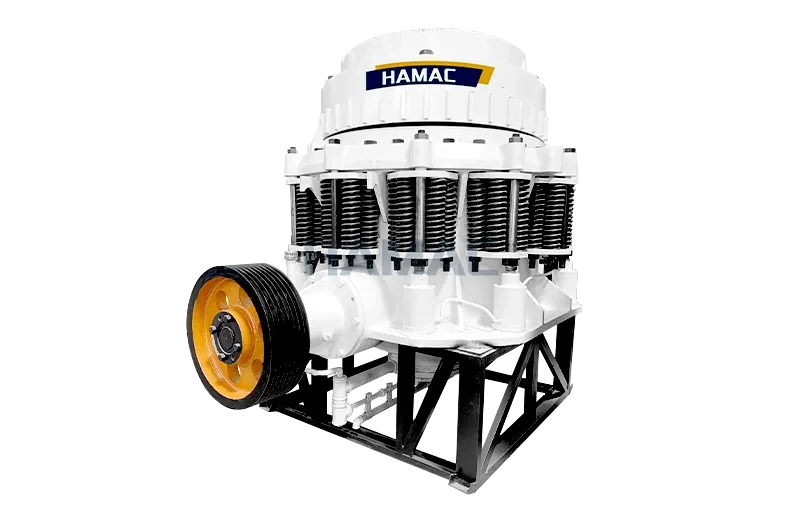
Overview
The Compound Cone Crusher is applied across aggregates, mining, beneficiation and recycling. The material properties decide whether it is the right machine.
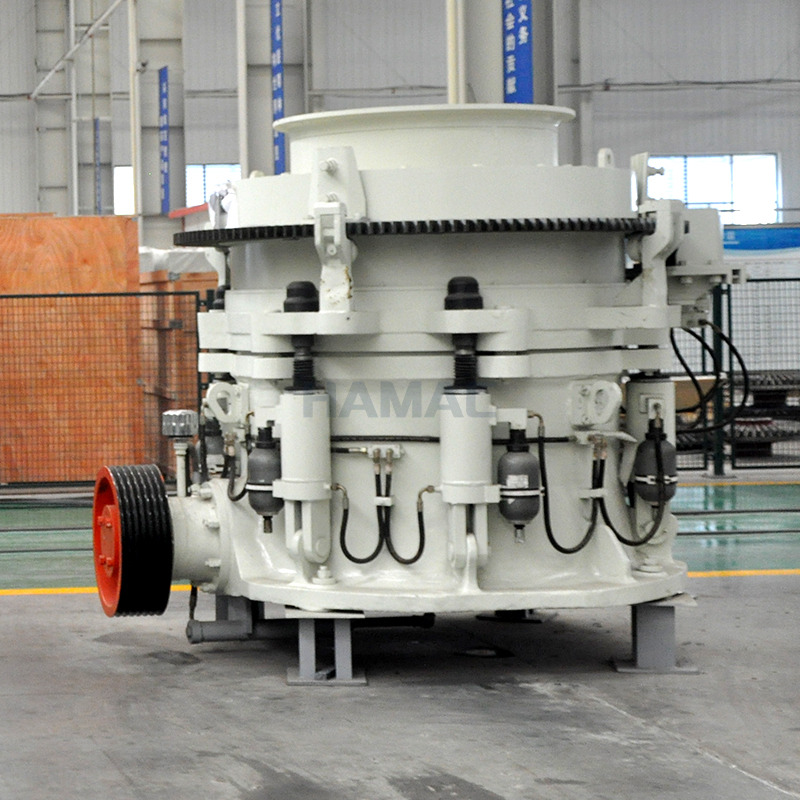
Materials it handles
- Hard rock: granite, basalt, andesite, gabbro.
- Soft rock: limestone, marble, dolomite.
- Ores: iron, copper, gold, manganese.
- Recycling: concrete, asphalt, C&D waste.
Industries
- Quarrying and construction aggregates.
- Metal ore crushing and beneficiation.
- Manufactured sand and road base.
- Cement raw meal and industrial minerals.
Typical configuration
Usually combined with a feeder, screen and conveyors into a complete circuit, or as a module in a mobile plant.
Reference data for this configuration
| Parameter | Reference value |
|---|---|
| Machine line | Compound Cone Crusher |
| Category | Cone Crusher |
| Assumed duty | high-tonnage aggregate supply |
| Evaluation horizon | ten-year view |
Use the table as a checklist when comparing quotations for compound cone crusher — a lower price often means one of these parameters was quietly reduced.
Published Compound Cone Crusher model data
| Model | Cavity Type | Stroke | Feed Limit | Exit Aperture | Capacity | Motor Power | Weight |
|---|---|---|---|---|---|---|---|
| HMC1650C2-D | Coarse | 34 mm | 300 mm | 35-65 mm | 280-610 t/h | 250 kw | 35 t |
| HMC1650C-D | Coarse | 34 mm | 260 mm | 30-60 mm | 265-580 t/h | 250 kw | 35 t |
| HMC1650Z-D | Medium Coarse | 34 mm | 240 mm | 25-60 mm | 240-550 t/h | 250 kw | 35 t |
| HMC1650S-X | Fine | 28 mm | 130 mm | 20-45 mm | 180-350 t/h | 250 kw | 35 t |
| HMC1400C-D | Coarse | 30 mm | 235 mm | 30-60 mm | 210-530 t/h | 220 kw | 25 t |
| HMC1400Z-D | Medium Coarse | 30 mm | 215 mm | 25-50 mm | 200-500 t/h | 220 kw | 25 t |
| HMC1400Z-X | Medium Coarse | 25 mm | 180 mm | 22-45 mm | 180-475 t/h | 220 kw | 25 t |
| HMC1400S-X | Fine | 25 mm | 100 mm | 19-40 mm | 130-260 t/h | 220 kw | 25 t |
HMC series compound spring cone crusher is a more convenient cone crusher which is researched on the base of traditional spring cone crusher. Read the table column by column against high-tonnage aggregate supply: the model you pick is the one whose published range brackets your target tonnage, not simply the largest machine in the series. Availability, motor rating and shipping data are re-confirmed for a confined urban yard in the written HAMAC proposal.
Project profile these notes assume
| Assumption | Value |
|---|---|
| Operating duty | high-tonnage aggregate supply |
| Primary objective | minimal civil works |
| Evaluation horizon | ten-year view |
| Site condition | a confined urban yard |
| Operating team | an owner-operator team |
Change any one of these assumptions and the recommended configuration for compound cone crusher may change. HAMAC re-runs the same checks against your own numbers once the enquiry data sheet is received.
From enquiry to the first saleable tonne
- Define the acceptance test: sampling points, test duration, moisture range and who signs the protocol.
- Include dust suppression, guarding, emergency stops and lock-out points in the layout drawing.
- Plan training for an owner-operator team on CSS adjustment, liner change-out and lock-out / tag-out.
- Set the maintenance stock list from the expected wear rate, not from a percentage of the equipment price.
- Verify the electrical single-line diagram, cable sizing and starter type with the local utility.
- Run a sieve analysis on a representative sample and attach the grading curve to the enquiry.
- Lay out conveyors, access ways, stockpile capacity and drainage before ordering steelwork.
- Size the primary stage for your target tonnage with a 10–20% surge allowance — never on nameplate throughput alone.
- Budget for water, dust extraction and spillage handling as part of the plant, not as an afterthought.
On high-tonnage aggregate supply, step ordering matters: survey and sampling must precede the equipment list, or the plant is sized to a guess.
What to verify before you sign
- Spare-parts consignment: one full liner or blow-bar set plus meshes, belts, bearings and seals.
- Saleable tonnes per hour at each product size, not gross crusher throughput, for your target tonnage.
- Erection scope: supervision only, or full civil, mechanical and electrical installation.
- Closed-side setting range and whether automatic setting regulation is included.
- Maximum feed lump and gradation — a chamber that cannot accept the top size will bridge on day one.
- Tramp-iron protection — hydraulic release, magnet and metal detection on the feed belt.
- Wear-part interchangeability across machines in the same circuit.
- Spare motor, gearbox and hydraulic pump lead times from the nearest HAMAC stock point.
- Guaranteed power draw and the minimal civil works trade-off it implies.
For high-tonnage aggregate supply, give the minimal civil works line extra weight; a generic checklist will not rank the offers correctly.
Where the money actually goes
| Cost line | Indicative share | What moves the number |
|---|---|---|
| Equipment & drive packages | 54% | Model size, number of stages and automation level |
| Ocean freight & insurance | 8% | Destination port, container count and out-of-gauge cargo |
| Civil works & foundations | 8% | Soil conditions, dynamic loads and site preparation |
| Erection, commissioning & training | 7% | Local labour, supervision scope and schedule |
| First-year wear parts | 15% | Rock abrasiveness, liner grade and operating hours |
| Power, lubricants & consumables | 8% | kWh per tonne, local tariff and dust suppression water |
The weighting shifts with hardness and scale — a hard feed pushes the wear line up, while a larger plant pushes equipment share up.
Mistakes that cost more than the machine
- Skipping a geotechnical check and discovering settlement under the primary crusher at a confined urban yard.
- Assuming the manufacturer's warranty covers wear parts and consumables.
- Using one liner profile for both secondary and tertiary stages.
- Skipping the acceptance test, so no one has a baseline to measure degradation against.
- Assuming a mobile plant can match a stationary line on high-tonnage, multi-product duty.
- Buying on nameplate t/h without converting to saleable product at the specified fractions.
- Undersizing the screen, then blaming the crusher for a plant that never reaches your target tonnage.
- Ordering no spares with the plant and waiting six weeks for the first liner set.
For high-tonnage aggregate supply, protect the minimal civil works requirement explicitly in the contract documents.
Commissioning checklist
- Check hydraulic pressure, accumulator pre-charge and tramp-release function.
- Confirm all guards, emergency stops and pull-wire switches function.
- Check belt tracking, chute build-up and transfer-point dust.
- Record the baseline grading curve for each product fraction.
- Confirm the direction and tension of every belt under no load.
- Agree the punch list, sign the hand-over protocol and file the as-built drawings.
- Measure noise and dust at the operator position against the local limit.
- Sample each product fraction and compare with the specification.
Keep the signed record; it is the only defensible baseline for later performance disputes.