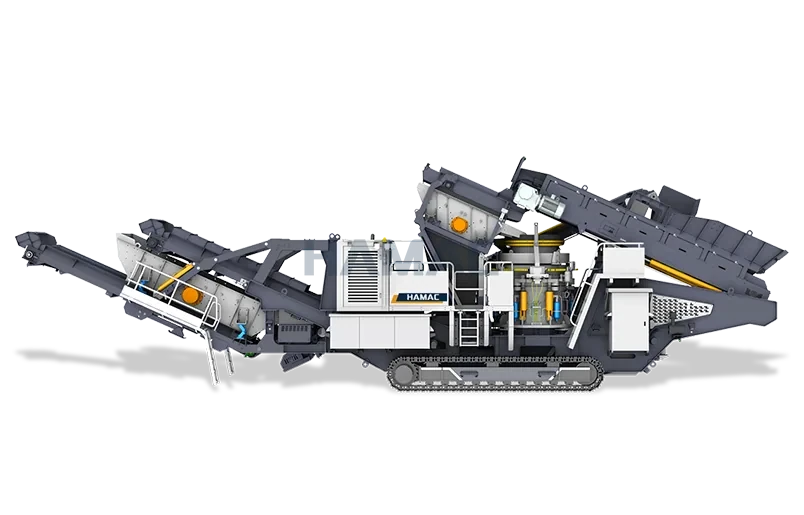
Overview
Practical, numbers-first guidance on the Crawler (Tracked) Cone Crusher THP Series — written for engineers specifying, buying and running crushing plants.
Abnormal noise / vibration
- Check for loose liner bolts or foreign metal in feed.
- Verify foundation bolts and coupling alignment.
- Listen for bearing distress; schedule replacement.
Low output
- Worn liners / blow bars reduce reduction.
- Wrong CSS / setting for target product.
- Screen blinding limits throughput.
Poor product shape
- Increase reduction in the shaping stage.
- Verify VSI rotor speed / anvil.
- Re-check screen mesh.
Reference data for this configuration
| Parameter | Reference value |
|---|---|
| Machine line | Crawler (Tracked) Cone Crusher THP Series |
| Category | Tracked Crushing Plants |
| Assumed duty | high-tonnage aggregate supply |
| Evaluation horizon | single-project view |
HAMAC engineers fill in the same fields on the project data sheet, which is why two plants of similar tonnage can still require different machines.
Published Crawler (Tracked) Cone Crusher THP Series model data
| Model | THP200 | THP300 | THP400 |
|---|---|---|---|
| Cone crusher | THP200 | THP300 | THP400 |
| Max. feeding size | 150 mm | 200 mm | 260 mm |
| Minimum outlet | 16 mm | 10 mm | 20 mm |
| Motor power | 160 kW | 220 kW | 280 kW |
| Return screen | YK1500×3800 | YK1600×4000 | YK1500×3800 |
| Generator | 320 kW | 500 kW | 500 kW |
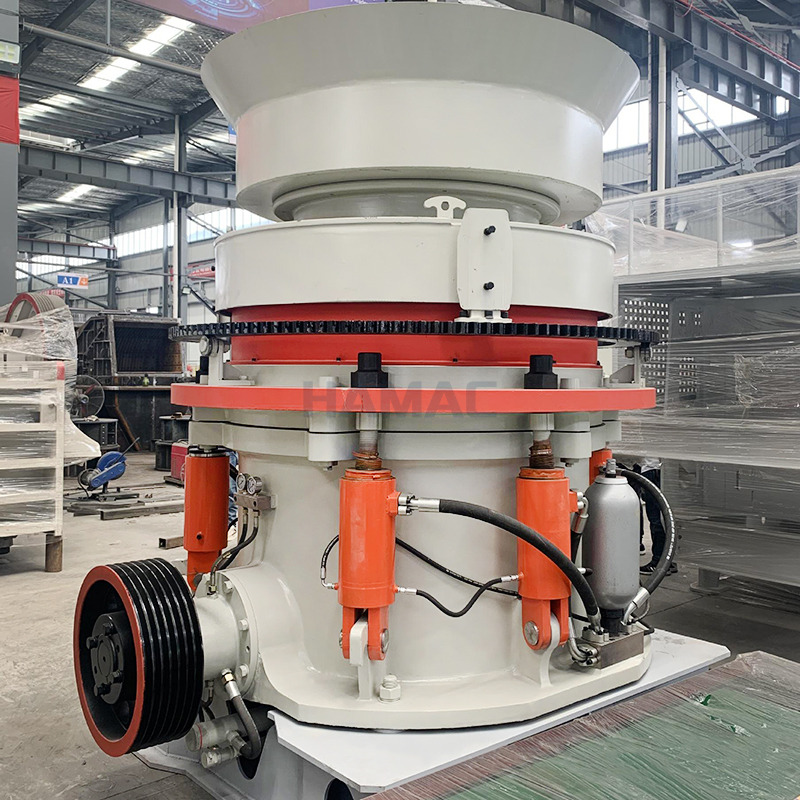
THP200 / THP300 / THP400 tracked cone crushers for secondary hard-rock crushing, 150–260 mm feed and 160–280 kW crusher power. Read the table column by column against high-tonnage aggregate supply: the model you pick is the one whose published range brackets your target tonnage, not simply the largest machine in the series. Availability, motor rating and shipping data are re-confirmed for a greenfield site in the written HAMAC proposal.
Project profile these notes assume
| Assumption | Value |
|---|---|
| Operating duty | high-tonnage aggregate supply |
| Primary objective | maximum mechanical availability |
| Evaluation horizon | single-project view |
| Site condition | a greenfield site |
| Operating team | a full-time plant team |
Change any one of these assumptions and the recommended configuration for crawler (tracked) cone crusher thp series may change. HAMAC re-runs the same checks against your own numbers once the enquiry data sheet is received.
From enquiry to the first saleable tonne
- Set the closed-side setting or rotor speed against the required product fractions, then verify the expected reduction ratio.
- Review the crusher chamber profile with the liner supplier against the feed material.
- Sequence delivery so foundations cure while the equipment is still in manufacture.
- Book shipping, prepare the packing list and confirm the container loading plan.
- Commission with graded load, sample the product grading, then train operators on liner change-out and daily checks.
- Lay out conveyors, access ways, stockpile capacity and drainage before ordering steelwork.
- Define the acceptance test: sampling points, test duration, moisture range and who signs the protocol.
- Allocate screen area per deck; blinding and pegging are the most common hidden bottlenecks in a new plant.
- Verify the electrical single-line diagram, cable sizing and starter type with the local utility.
Shortening this sequence is possible on a greenfield site, but only where the feed and product specification are already fully defined.
What to verify before you sign
- Dust and noise control designed to the local emission limits for your market.
- Written performance guarantee, sampling method and acceptance-test protocol.
- Guaranteed power draw and the maximum mechanical availability trade-off it implies.
- Wear-part interchangeability across machines in the same circuit.
- Local service partner, technician travel time and visa requirements for your market.
- Ambient temperature, altitude and dust load derating for motors and hydraulics.
- Maximum feed lump and gradation — a chamber that cannot accept the top size will bridge on day one.
- Access for liner change-out — crane radius, lifting points and clearance around the chamber.
- Choke-feed arrangement: surge bin, feeder control and level indication.
These are the items HAMAC puts in the technical proposal; if another offer is silent on them, ask why.
Where the money actually goes
| Cost line | Indicative share | What moves the number |
|---|---|---|
| Equipment & drive packages | 54% | Model size, number of stages and automation level |
| Ocean freight & insurance | 8% | Destination port, container count and out-of-gauge cargo |
| Civil works & foundations | 8% | Soil conditions, dynamic loads and site preparation |
| Erection, commissioning & training | 7% | Local labour, supervision scope and schedule |
| First-year wear parts | 15% | Rock abrasiveness, liner grade and operating hours |
| Power, lubricants & consumables | 8% | kWh per tonne, local tariff and dust suppression water |
The weighting shifts with hardness and scale — a hard feed pushes the wear line up, while a larger plant pushes equipment share up.
Mistakes that cost more than the machine
- Choosing screen apertures before the concrete or asphalt mix design is fixed.
- Assuming a mobile plant can match a stationary line on high-tonnage, multi-product duty.
- Letting the high-tonnage aggregate supply duty be defined verbally instead of in the contract.
- Skipping the acceptance test, so no one has a baseline to measure degradation against.
- Buying on nameplate t/h without converting to saleable product at the specified fractions.
- Using one liner profile for both secondary and tertiary stages.
- Overlooking dust, noise and water permits in your market until erection has already started.
- Buying maximum mechanical availability on price alone and losing it in availability.
For high-tonnage aggregate supply, protect the maximum mechanical availability requirement explicitly in the contract documents.
Commissioning checklist
- Hand over the spare-parts list, manuals and maintenance schedule.
- Measure and log the as-new CSS / setting for future wear comparison.
- Dry-run the plant empty for the specified period and record vibration.
- Record the baseline grading curve for each product fraction.
- Sample each product fraction and compare with the specification.
- Calibrate the belt scale and any level probes against a known load.
- Test emergency stops, pull wires and interlock trips in sequence.
- Introduce feed in graded steps: 25%, 50%, 75%, then full load.
On a greenfield site, allow extra time for the dust and noise measurements.