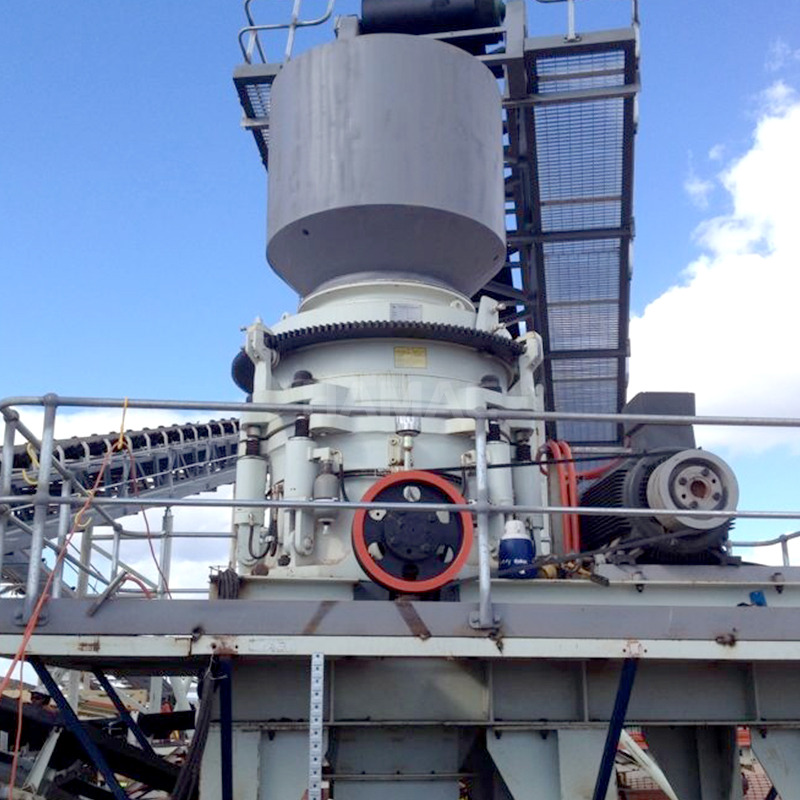
Overview
Quarries in Morocco typically process Limestone, Phosphates. The plant is sized to saleable tonnes per hour across 0–5, 5–10, 10–20 and 20–31.5 mm fractions rather than to crusher nameplate.
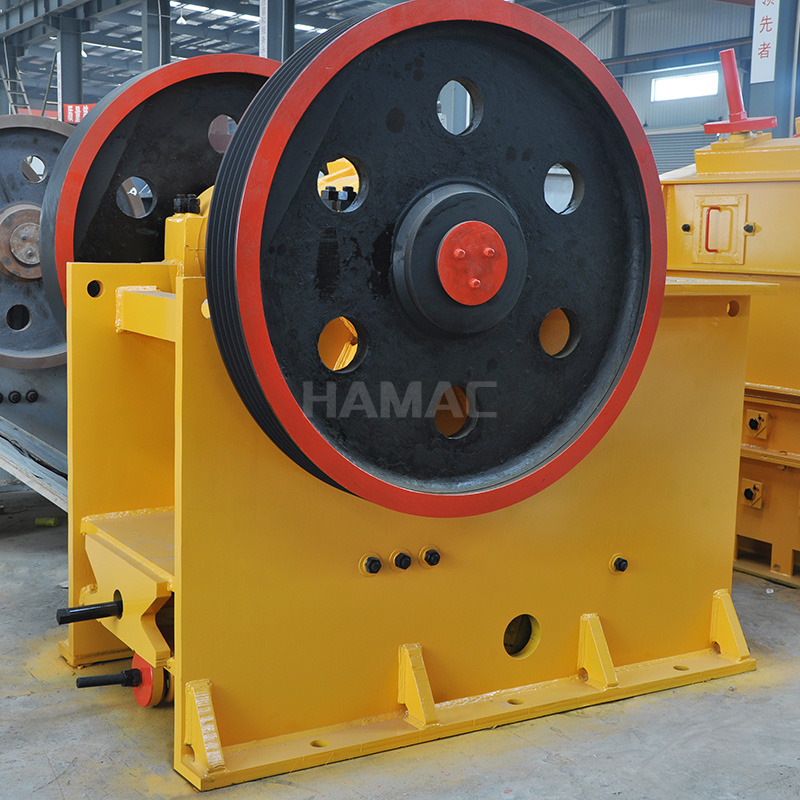
Scope of supply
- Primary jaw sized for the maximum feed lump.
- Secondary cone or impact matched to rock hardness.
- Multi-deck screens with adequate area for the fines fraction.
- Surge bin and controlled feed for consistent chamber load.
- Dust suppression and haul-road planning.
Market parameters for Morocco
| Item | Reference |
|---|---|
| Region | Africa |
| Port | Casablanca |
| Voltage / frequency | 380V 50Hz |
| Standards | NM |
| Typical feed | Limestone, Phosphates |
Reference data for this configuration
| Parameter | Reference value |
|---|---|
| Destination port | Casablanca |
| Site supply | 380V 50Hz |
| Local standards | NM |
| Region | Africa |
| Assumed duty | seasonal road-project supply |
| Evaluation horizon | single-project view |
Ask for the same table from any competing supplier; without it, an offer for the crushing and screening plant cannot be compared on scope.
Project profile these notes assume
| Assumption | Value |
|---|---|
| Operating duty | seasonal road-project supply |
| Primary objective | lowest cost per tonne |
| Evaluation horizon | single-project view |
| Site condition | a brownfield extension |
| Operating team | a small contractor crew |
Change any one of these assumptions and the recommended configuration for the crushing and screening plant may change. HAMAC re-runs the same checks against your own numbers once the enquiry data sheet is received.
From enquiry to the first saleable tonne
- Choose compression or impact reduction according to hardness, silica content and required particle shape.
- Record the as-built settings and give the operator a written daily, weekly and monthly schedule.
- Set the closed-side setting or rotor speed against the required product fractions, then verify the expected reduction ratio.
- Run a sieve analysis on a representative sample and attach the grading curve to the enquiry.
- Confirm the haul-road and stockpile plan with a brownfield extension in mind before fixing conveyor lengths.
- Commission with graded load, sample the product grading, then train operators on liner change-out and daily checks.
- Plan training for a small contractor crew on CSS adjustment, liner change-out and lock-out / tag-out.
- Review the crusher chamber profile with the liner supplier against the feed material.
- Allocate screen area per deck; blinding and pegging are the most common hidden bottlenecks in a new plant.
Each step has an owner and a document: flow sheet, general arrangement, foundation reference, packing list and acceptance protocol.
What to verify before you sign
- Control system language, telemetry and remote diagnostics availability.
- Delivery terms (FOB / CFR / CIF) with the destination port named explicitly.
- Maximum feed lump and gradation — a chamber that cannot accept the top size will bridge on day one.
- Spare-parts consignment: one full liner or blow-bar set plus meshes, belts, bearings and seals.
- Decommissioning or relocation value at the end of a single-project horizon.
- Closed-side setting range and whether automatic setting regulation is included.
- Ambient temperature, altitude and dust load derating for motors and hydraulics.
- Choke-feed arrangement: surge bin, feeder control and level indication.
- Screen deck count, aperture and area; ask for the efficiency calculation, not just the mesh size.
Bring this list to the design review — it is cheaper to resolve an omission on paper than during commissioning.
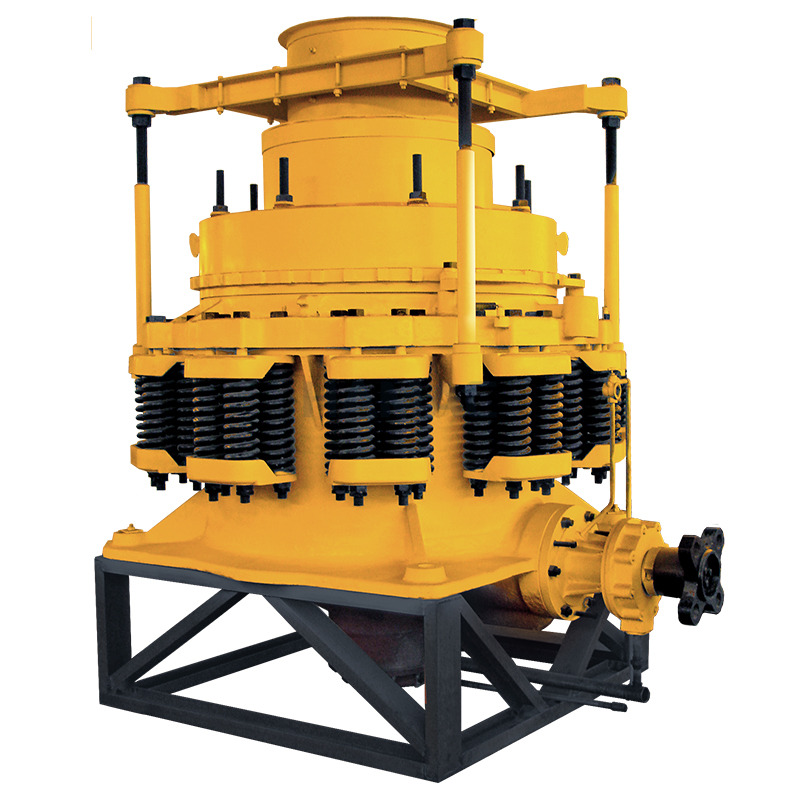
Where the money actually goes
| Cost line | Indicative share | What moves the number |
|---|---|---|
| Equipment & drive packages | 53% | Model size, number of stages and automation level |
| Ocean freight & insurance | 11% | Destination port, container count and out-of-gauge cargo |
| Civil works & foundations | 8% | Soil conditions, dynamic loads and site preparation |
| Erection, commissioning & training | 7% | Local labour, supervision scope and schedule |
| First-year wear parts | 14% | Rock abrasiveness, liner grade and operating hours |
| Power, lubricants & consumables | 7% | kWh per tonne, local tariff and dust suppression water |
Freight to Morocco is volatile; ask for the quotation to state validity and the port basis rather than a single delivered number.
Mistakes that cost more than the machine
- Omitting a bypass chute, so a single screen fault stops the whole line.
- Assuming a mobile plant can match a stationary line on high-tonnage, multi-product duty.
- Letting the seasonal road-project supply duty be defined verbally instead of in the contract.
- Undersizing the screen, then blaming the crusher for a plant that never reaches your target tonnage.
- Skipping a geotechnical check and discovering settlement under the primary crusher at a brownfield extension.
- Choosing screen apertures before the concrete or asphalt mix design is fixed.
- Ordering no spares with the plant and waiting six weeks for the first liner set.
- Buying lowest cost per tonne on price alone and losing it in availability.
On a brownfield extension, the civil and logistics items deserve as much attention as the crusher itself.
Commissioning checklist
- Sample each product fraction and compare with the specification.
- Introduce feed in graded steps: 25%, 50%, 75%, then full load.
- Confirm all guards, emergency stops and pull-wire switches function.
- Calibrate the belt scale and any level probes against a known load.
- Check belt tracking, chute build-up and transfer-point dust.
- Verify chute liners, skirt rubber and impact bars after the first hour of feed.
- Confirm the direction and tension of every belt under no load.
- Agree the punch list, sign the hand-over protocol and file the as-built drawings.
On a brownfield extension, allow extra time for the dust and noise measurements.