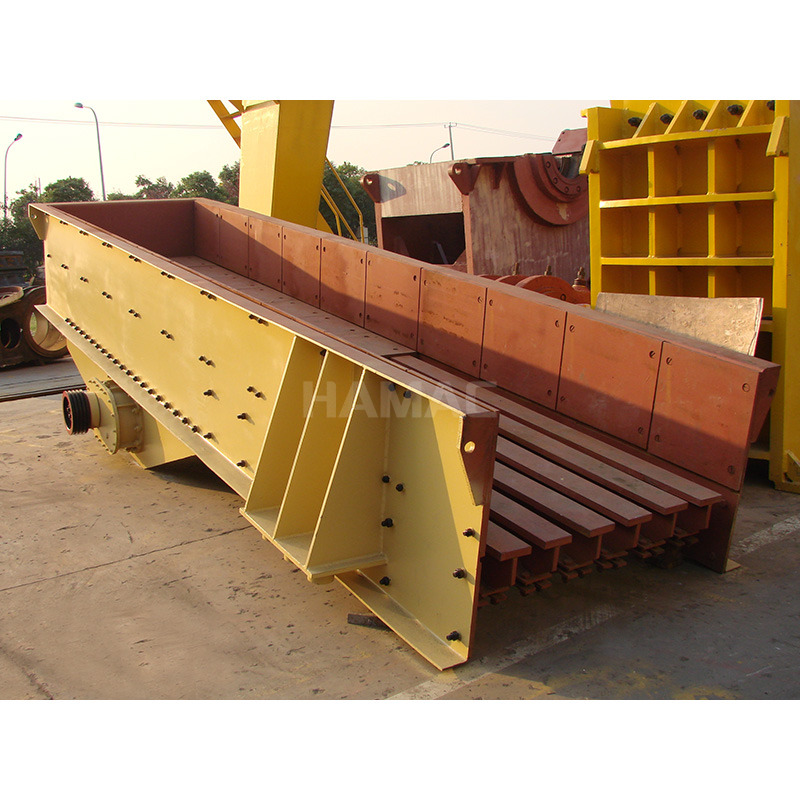
Overview
HAMAC supplies crushing and grinding equipment to Argentina, shipped to Buenos Aires and quoted to local standards (IRAM). Power is configured for 380V 50Hz.
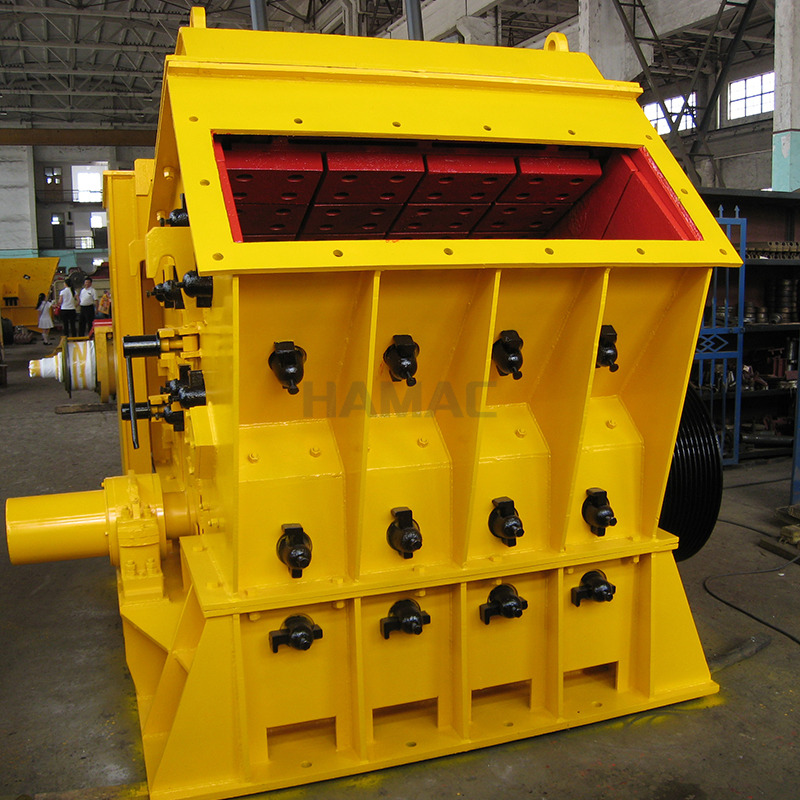
Crushing equipment for Argentina
- Popular material: Limestone, Aggregates.
- Destination port: Buenos Aires.
- Voltage / frequency: 380V 50Hz.
- Standards: IRAM.
What HAMAC provides
- Plant design for limestone and your capacity.
- Equipment configured to 380V 50Hz and IRAM.
- FOB / CFR / CIF quotation to Buenos Aires.
- Installation supervision, training and spare parts.
Logistics & documentation
HAMAC handles packing, container loading plan and the documentation required for Argentina, including certificates applicable to your market.
Reference data for this configuration
| Parameter | Reference value |
|---|---|
| Destination port | Buenos Aires |
| Site supply | 380V 50Hz |
| Local standards | IRAM |
| Region | South America |
| Assumed duty | high-tonnage aggregate supply |
| Evaluation horizon | three-year view |
HAMAC engineers fill in the same fields on the project data sheet, which is why two plants of similar tonnage can still require different machines.
Project profile these notes assume
| Assumption | Value |
|---|---|
| Operating duty | high-tonnage aggregate supply |
| Primary objective | strict product cubicity |
| Evaluation horizon | three-year view |
| Site condition | a coastal export terminal |
| Operating team | a rotating shift crew |
Change any one of these assumptions and the recommended configuration for the crushing and screening plant may change. HAMAC re-runs the same checks against your own numbers once the enquiry data sheet is received.
From enquiry to the first saleable tonne
- Define the acceptance test: sampling points, test duration, moisture range and who signs the protocol.
- Survey the feed: the feed material; record top size, bulk density, moisture and clay content before fixing the flow sheet.
- Log tonnes per liner set and kWh per tonne from day one so you have a real cost baseline within a quarter.
- Commission with graded load, sample the product grading, then train operators on liner change-out and daily checks.
- Confirm the haul-road and stockpile plan with a coastal export terminal in mind before fixing conveyor lengths.
- Lay out conveyors, access ways, stockpile capacity and drainage before ordering steelwork.
- Plan training for a rotating shift crew on CSS adjustment, liner change-out and lock-out / tag-out.
- Review the crusher chamber profile with the liner supplier against the feed material.
- Set the maintenance stock list from the expected wear rate, not from a percentage of the equipment price.
The sequence is deliberately front-loaded — decisions taken before manufacture are cheap, changes made on site are not.
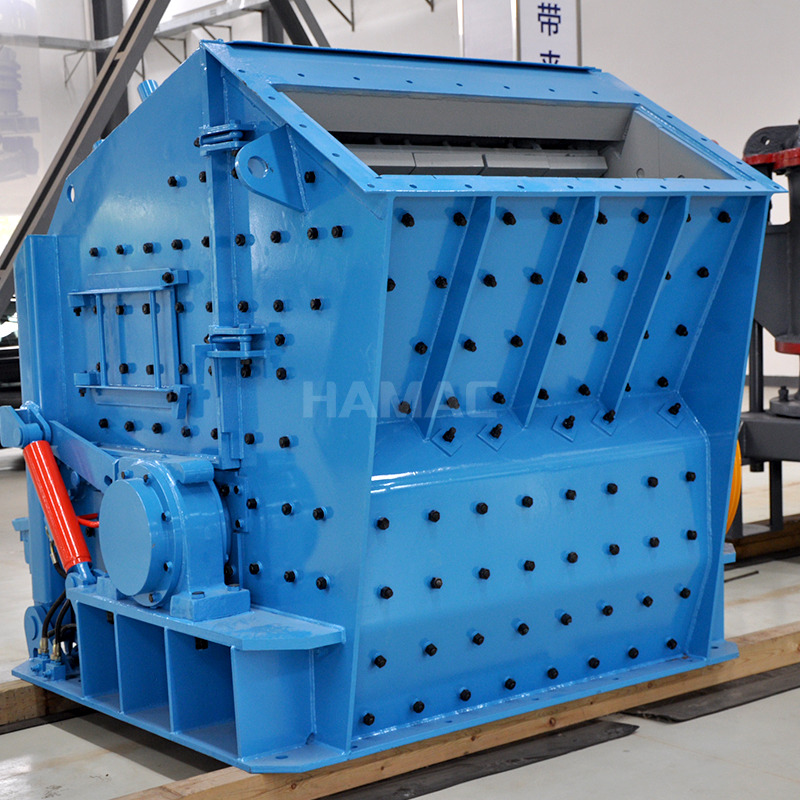
What to verify before you sign
- Choke-feed arrangement: surge bin, feeder control and level indication.
- Delivery terms (FOB / CFR / CIF) with the destination port named explicitly.
- Availability of a rotating shift crew for liner changes and the lifting equipment on site.
- Erection scope: supervision only, or full civil, mechanical and electrical installation.
- Dust and noise control designed to the local emission limits for Argentina.
- Written performance guarantee, sampling method and acceptance-test protocol.
- Screen deck count, aperture and area; ask for the efficiency calculation, not just the mesh size.
- Nameplate data for 380V 50Hz and the IRAM certificate set.
- Liner alloy: high-chrome iron matched to the rock, not to the lowest purchase price.
Share this list with a rotating shift crew as well as procurement; operators are the ones who live with the omissions.
Where the money actually goes
| Cost line | Indicative share | What moves the number |
|---|---|---|
| Equipment & drive packages | 53% | Model size, number of stages and automation level |
| Ocean freight & insurance | 11% | Destination port, container count and out-of-gauge cargo |
| Civil works & foundations | 8% | Soil conditions, dynamic loads and site preparation |
| Erection, commissioning & training | 7% | Local labour, supervision scope and schedule |
| First-year wear parts | 14% | Rock abrasiveness, liner grade and operating hours |
| Power, lubricants & consumables | 7% | kWh per tonne, local tariff and dust suppression water |
Model a low, base and high case for tonnes per liner set. The spread tells you more than a single optimistic estimate.
Mistakes that cost more than the machine
- Planning the crusher but not the conveyors, transfer chutes and stockpile capacity around it.
- Omitting a bypass chute, so a single screen fault stops the whole line.
- Forgetting surge capacity — an intermittent loader starves the chamber and ruins particle shape.
- Undersizing the screen, then blaming the crusher for a plant that never reaches your target tonnage.
- Buying on nameplate t/h without converting to saleable product at the specified fractions.
- Skipping the acceptance test, so no one has a baseline to measure degradation against.
- Ignoring clay and moisture until the first wet season, when decks blind and chambers pack.
- Assuming a mobile plant can match a stationary line on high-tonnage, multi-product duty.
For high-tonnage aggregate supply, protect the strict product cubicity requirement explicitly in the contract documents.
Commissioning checklist
- Verify chute liners, skirt rubber and impact bars after the first hour of feed.
- Record power draw, tonnage and chamber pressure at steady state.
- Sample each product fraction and compare with the specification.
- Agree the punch list, sign the hand-over protocol and file the as-built drawings.
- Measure noise and dust at the operator position against the local limit.
- Test emergency stops, pull wires and interlock trips in sequence.
- Check belt tracking, chute build-up and transfer-point dust.
- Check hydraulic pressure, accumulator pre-charge and tramp-release function.
The commissioning record becomes the reference for every liner change in the three-year plan.